
1877 Indian Head Penny Coin Value (Errors List & No Mint Mark Worth)
The 1877 Indian Head penny is one of America’s most valuable small cents. In Good condition (G-4), these coins fetch $400-$700, while uncirculated examples command $4,000-$6,000. Gem-quality MS-65+ specimens can exceed $100,000 at auction. This extreme value stems from an original mintage of just 852,500 pieces—all struck at Philadelphia without a mint mark—and an estimated survival rate of only 5,000 or fewer today. Counterfeits are common, making authentication essential for high-value coins.
- The 1877 Indian Head penny is a premier key date with only 852,500 minted and an estimated 5,000 or fewer surviving today.
- Condition drives value: from $400-$700 (Good) to $4,000-$6,000 (uncirculated) and up to $100,000+ for gem MS-65+ examples.
- Errors like off-center strikes can add $1,000-$2,000, but counterfeits are common—always authenticate high-value coins with PCGS or NGC.
How Much Is an 1877 Indian Head Penny Worth?
Condition Grade Values: Good to Gem Uncirculated
| Grade | Value Range | Description |
|---|---|---|
| Good (G-4) | $400 – $700+ | Heavily worn, major details visible but rim may be incomplete. |
| Very Fine (VF-20) | ~$1,450 | Moderate wear, major details sharp, some lettering wear. |
| Extremely Fine (EF-40) | $1,400 – $2,250 | Light wear on high points, overall sharp details. |
| Uncirculated (MS-60) | ~$4,750 | No wear, but may have contact marks or dull luster. |
| Gem Uncirculated (MS-65+) | $30,000 – $100,000+ | Perfect strike, brilliant luster, no visible flaws. |
Note: Color significantly impacts uncirculated values. “Red” (RD) coins command the highest premiums, followed by “Red-Brown” (RB), then “Brown” (BN). Cleaned coins lose substantial value—never attempt to clean an 1877 penny.
Why Is the 1877 Penny So Valuable? Rarity and Demand
The 1877 Indian Head penny’s value is driven by extreme scarcity. With an original mintage of only 852,500—all produced at the Philadelphia Mint—this date was already rare when first issued. The survival rate is dramatically low: experts estimate 5,000 or fewer examples exist today, making it far scarcer than the famous 1909-S Lincoln penny. This combination of low mintage and poor survival creates intense collector demand. The 1877 is universally recognized as the premier key date of the Indian Head penny series (1859-1909), which includes the 1859 Indian Head penny as its inaugural issue, and its value reflects that status across all condition grades.
The 1877: The Most Valuable Indian Head Penny
- Highest values in every grade: Even in Poor condition, an 1877 penny typically sells for $300-$500. No other Indian Head penny consistently commands such premiums across the entire grading spectrum.
- Key date status: The 1877 is the single most sought-after date in the entire Indian Head cent series. Collectors building date sets must have this coin, creating steady, high demand.
- Unmatched rarity: Of all Indian Head pennies in existence today, none is more difficult to find than the 1877. Its survival rate is estimated at less than 1% of the original mintage.
- Comparison to 1909-S: While the 1909-S Lincoln penny is famous, the 1877 Indian Head penny is actually rarer. Experts suggest only about 5,000 1877 pennies survive versus significantly more 1909-S examples.
- Auction records: High-grade MS-66 Red examples have sold for $100,000-$149,000, with the strongest prices recorded between 2007 and 2009 according to CoinWeek (2026).
Damage and Cleaning: Value Reduction Factors
- Cleaning destroys value: Any cleaning—polishing, dipping, or scrubbing—removes original patina and damages the coin’s surface. A cleaned 1877 penny may be worth 50-80% less than an uncleaned example of the same grade.
- Scratches and gouges: Surface scratches, especially across major design elements, reduce value significantly. Deep gouges can cut value in half even on rare dates.
- Dents and bends: Structural damage like dents or bends severely impacts value. However, due to the 1877’s rarity, even damaged examples often fetch over $400.
- Corrosion and pitting: Active corrosion or pitted surfaces are major detractors. These issues are often irreversible and greatly diminish collector appeal.
- Wear vs. damage: Normal circulation wear is expected and graded accordingly. But damage beyond normal wear—such as scratches from being stored with other coins—reduces value beyond the grade assessment.
1877 Indian Head Penny Errors: List and Premium Values
Off-Center Strikes: $1,000 to $2,000 Premiums
- What they are: Off-center strikes occur when the coin is not properly centered in the striking press, causing the design to be shifted toward one edge. This reveals more of the blank planchet on the opposite side.
- Value impact: According to CoinValueApp (2026), off-center 1877 penny errors typically sell for $1,000 to $2,000 depending on the degree of misalignment and overall condition.
- Degree matters: Coins with 10-25% off-center are most commonly encountered and command premiums in that range. More severe misalignment (50%+) can be worth even more but is extremely rare.
- Collector appeal: Error collectors actively seek off-center strikes. The more dramatic the shift while still showing a full date, the higher the premium.
- Grading consideration: Off-center errors are graded separately from standard coins. The grade reflects both the misalignment and the overall condition of the design that is present.
Repunched Dates: Rare Variants Increase Collector Demand
Repunched dates occur when the date digits were punched into the die multiple times, creating a doubled, blobby, or overlapping appearance. For the 1877 Indian Head penny, repunched dates are exceptionally rare but highly valued when discovered. The repunching typically shows as a doubling or shadow effect around the digits, most commonly visible on the “8” or the “7.” Because the 1877 is already a key date, any repunched date variant becomes a major rarity. Such coins can command premiums of 50-200% or more over standard 1877 pennies in similar condition. Authentication is critical, as some altered dates mimic repunching but are actually evidence of counterfeit attempts.
Planchet Defects: Lamination and Missing Metal
- Lamination cracks: These are thin, crack-like separations in the metal caused by impurities or incomplete bonding of the planchet layers. Lamination cracks can appear as hairline fissures across the coin’s surface.
- Missing metal (planchet flaws): Some 1877 pennies were struck on planchets with missing sections, resulting in irregular shapes or gaps in the design. These are dramatic errors that add significant premium.
- Collectibility: While not as common as off-center strikes, planchet defects are highly collectible. Their rarity on an already scarce date like 1877 makes them particularly valuable.
- Value impact: The premium depends on the severity and location of the defect. A small lamination crack might add 25-50%, while a major missing planchet error can double or triple the coin’s value.
- Authenticity: Genuine planchet errors are rare. Many “errors” seen on 1877 pennies are actually post-strike damage or counterfeit manipulations. Professional grading is essential to verify authenticity.
Why Does the 1877 Indian Head Penny Have No Mint Mark?
Philadelphia Mint Production: All 1877 Pennies Struck at One Facility
All genuine 1877 Indian Head pennies were produced at the Philadelphia Mint, which did not use a mint mark on its coins during this period. This is completely normal and expected. No ‘S’ (San Francisco), ‘D’ (Denver), or other mint marks appear on authentic 1877 Indian Head cents. The absence of a mint mark is actually a confirming characteristic of a genuine 1877. Any 1877 penny bearing a mint mark is either a counterfeit or an altered coin from another year. The Philadelphia Mint was the only facility producing Indian Head pennies in 1877, and its production practices at the time did not include mint marks.
Survival Rate: Only 5,000+ Examples Remain Today
| Metric | Estimate | Notes |
|---|---|---|
| Original Mintage | 852,500 | All struck at Philadelphia Mint |
| Estimated Survival (Standard Theory) | ~5,000 or fewer | Makes it scarcer than 1909-S Lincoln penny |
| Alternative Theory (Rick Snow) | Mintage <300,000, Survival <2,000 | Suggests actual mintage may be lower than recorded |
The survival rate of the 1877 Indian Head penny is remarkably low. Of the 852,500 originally minted, only about 5,000 or fewer are believed to exist today—a survival rate of less than 0.6%. Some experts, including noted numismatist Rick Snow, theorize that the actual mintage could be less than 300,000 and that fewer than 2,000 examples survive in all grades. This extreme scarcity, combined with high collector demand, drives the coin’s premium values. For comparison, the 1909-S Lincoln penny—another famous key date—has a significantly higher survival rate, making the 1877 Indian Head penny the rarer of the two.
Spotting Counterfeits: Authentication Tips from Experts
| Real 1877 Penny | Fake 1877 Penny |
|---|---|
| No mint mark (Philadelphia) | May have fake ‘S’ or ‘D’ mint mark added |
| Date styling: sharp, well-defined digits | Altered dates from 1871, 1873, or 1874 (changed ‘1’ to ‘7’) |
| Reverse: ‘N’ in ‘ONE’ is NOT shallow—bottom right corner is not as sharp as ‘N’ in ‘CENT’ | Counterfeits often show shallow ‘N’ in ‘ONE’—a known die marker weakness |
| Proper metal composition (copper-nickel 1859-1864; bronze 1864-1909) | Wrong metal weight or composition |
| Authentic wear patterns consistent with age | Artificial aging or tooling marks |
Counterfeits of the 1877 Indian Head penny are extremely common due to the coin’s high value. Fraudsters typically alter more common dates (like 1871, 1873, or 1874) by modifying the last digit to create a fake “1877” or by adding a fake mint mark to other years. The reverse design detail—the ‘N’ in “ONE”—is a key diagnostic: genuine business strikes have an ‘N’ that is not as sharp at the bottom right corner compared to the ‘N’ in “CENT.” Counterfeits often fail to replicate this subtle nuance. For any 1877 penny valued at $1,000 or more, authentication by a major grading service like PCGS or NGC is essential before purchase or sale.
The most surprising finding is that even damaged or heavily worn 1877 Indian Head pennies often sell for over $400 due to their extreme rarity. If you own an 1877 penny, have it authenticated and graded by PCGS or NGC to determine its true market value and protect your investment. Proper grading can reveal hidden value, especially in error varieties or high-grade examples.
Frequently Asked Questions About 1877 Indian Head Penny
Which Indian head penny is worth money?
So which Indian Head Pennies are worth money? The most valuable Indian Head Penny is the one that has a date of 1877, but other dates such as the 1863 Indian Head penny also attract collector interest and hold intrinsic value.
How many 1877 pennies are left?
Rick Snow theorizes that the actual mintage for the 1877 could be less than 300,000 and that the overall survivability is less than 2000 total coins in all grades/conditions(contrary to the Coin Facts data). The surviving population of the 1909-S IHC is actually closer to that of the 1908-S.
What wheat penny is worth $100,000?
1943 Wheat Penny: During World War II, copper was diverted for military use, leading to steel cents coated in zinc. A few accidental copper pennies were minted in 1943, making them some of the most valuable coins, worth up to $100,000 or more at auction.
How can you tell if a 1877 Indian Head penny is real?
The reverse does not have a shallow “N” in “ONE,” which is apparent on almost all business strike 1877 Indian Head Cents. Note the bottom right corner of the N and how it is not as sharp as the “N” in “CENT.” This counterfeit 1877 Indian Head Cent might fool some less-experienced collectors.
Related Coins
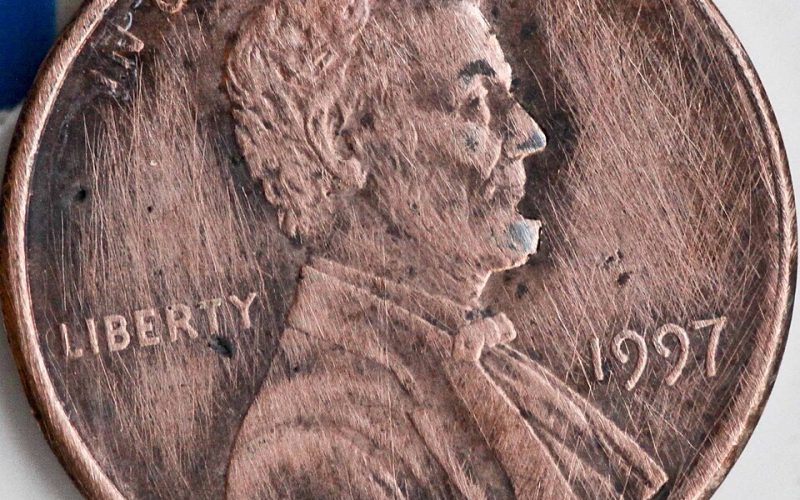 Penny
Penny
1997 Penny Coin Value (Errors List, “D”, “S” & No Mint Mark Worth)
1997 pennies are generally worth face value ($0.01) in circulated condition, but high-grade examples and specific error varieties can command significant premiums, as seen with…
 Penny
Penny
1977 Penny Coin Value (Errors List, “D”, “S” & No Mint Mark Worth)
In 2026, a 1977 penny is typically worth just $0.01 if circulated, but uncirculated examples in top condition can sell for $50 to $200 or…
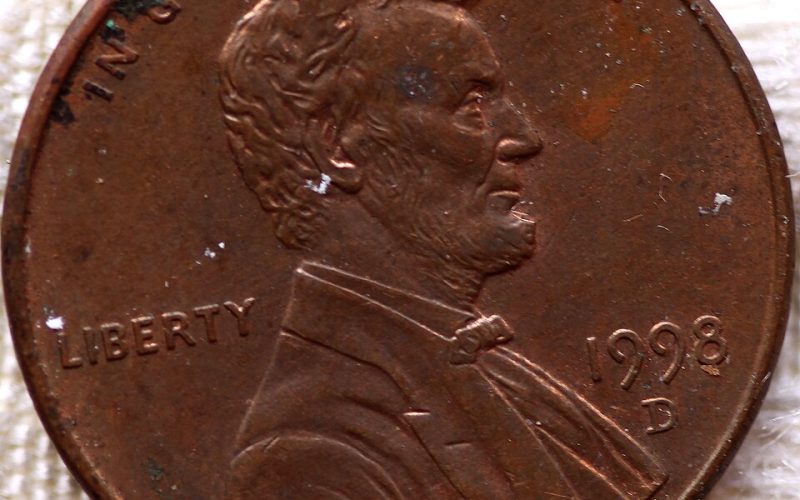 Penny
Penny
1998 Penny Coin Value (Errors List, “D”, “S” & No Mint Mark Worth)
1998 pennies are typically worth just one cent, but a rare 1998-S Close AM proof can sell for over $5,000, making it one of the…