
1918 Penny Coin Value (Errors List, “D”, “S” & No Mint Mark Worth)
A 1918 Lincoln Wheat Penny is worth between $0.50 and $5 in typical circulated condition, but rare examples can sell for thousands of dollars. These classic coins were minted at three locations: Philadelphia (no mint mark), Denver (D), and San Francisco (S). Mint marks significantly affect value, with San Francisco issues often commanding the highest premiums due to lower mintage. Additionally, error varieties like the 1918-D doubled die obverse or the 1890 Indian Head Penny errors can add substantial value, making careful examination essential for collectors and dealers alike.
- 1918 penny values range from $0.50-$5 circulated to $300-$6,500+ for high-grade red specimens, with mint mark (D, S, no mint) being primary factor.
- The 1918-D doubled die obverse (DDO) is the most sought-after error, showing doubling on LIBERTY and the date, adding thousands to value.
- Mintage numbers vary: Philadelphia (288M), Denver (47.8M), San Francisco (34.7M), with San Francisco being scarcest in high grades.
What Is the Value of a 1918 Penny by Mint Mark?
Circulated vs Uncirculated: 1918 Penny Price Ranges by Mint Mark
| Mint Mark | Circulated Condition (G-VG) | Uncirculated Condition (MS-60 to MS-63) | High-Grade Red (MS-64+) |
|---|---|---|---|
| No Mint Mark (Philadelphia) | $0.50–$5 | $20–$150+ | $300–$6,500+ |
| 1918-D (Denver) | $1–$10 | $100–$200+ | $3,000+ |
| 1918-S (San Francisco) | $1.50–$15 | $125–$500+ | $6,000+ |
The 1918-S consistently shows the highest value across all condition categories due to its lowest mintage of 34,680,000, making it the scarcest of the three. Philadelphia pennies, despite a mintage of 288,104,634, show surprising strength in high-grade red examples because so few survived in pristine condition. Denver issues (47,830,000 mintage) offer moderate values that jump dramatically in Mint State, with red examples exceeding $3,000. This demonstrates that mintage alone doesn’t determine value—survival rate and collector demand are equally critical. For a comprehensive overview of penny values across different years, see the main Penny value guide.
Original Red Color Premium: RD vs RB vs BN Value Differences
For copper coins like the 1918 penny, color is a major value driver that often outweighs mint mark and grade differences. Red (RD) means the coin retains its original mint luster with no significant toning—this is the most desirable state. Red-Brown (RB) indicates partial toning, with red still visible but brown areas present on high points or recesses. Brown (BN) means the coin is fully toned to a brown patina, often with shades ranging from light to dark. Original red is rare because copper oxidizes readily, especially on coins that have been handled or stored in less-than-ideal conditions over the past century. The value difference is substantial: at the same grade, RD can be worth 2 to 10 times more than RB or BN. For example, an MS-65 1918-D in RB might sell for $500, while the same grade in RD could fetch $3,000-$5,000. Third-party grading services like PCGS and NGC assign color designations that significantly impact market value and liquidity. Collectors should always prioritize original red when building a high-value collection, as it represents the coin’s pristine state from the mint.
Record Auction Prices: $78,000 for 1918 No Mint Mark and $45,600 for 1918-D
The most valuable 1918 pennies ever sold represent the absolute pinnacle of condition and color, achieved by only a handful of survivors. A 1918 no mint mark in MS-67 Red sold for $78,000, setting a record for the issue according to coinvalueapp.com. A 1918-D in MS-66+ Red fetched $45,600, while a 1918-S reached $64,000 in MS-66 grade (coinvaluechecker.com). These prices are not typical—they reflect Gem Uncirculated specimens with perfect strikes and full original red luster. Such high grades are extraordinarily rare for any 1918 penny due to the age and copper composition. Most 1918 pennies in existence are heavily circulated or show significant toning. The auction records demonstrate that a combination of perfect condition, original red color, and strong mint mark (especially San Francisco) can push values into the five-figure range. For collectors, these sales highlight the importance of preserving original red luster and avoiding any cleaning that might damage the delicate surface.
1918 Penny Errors That Increase Value
1918-D Doubled Die Obverse (DDO): The Most Sought-After Error
The 1918-D Doubled Die Obverse (DDO) is the most valuable error variety for this year, appearing exclusively on Denver mint issues. This dramatic doubling occurs during the die-making process when the hub impressions are misaligned, causing the design to be impressed twice at slightly different angles. Look for clear doubling on the word “LIBERTY” and the date 1918, especially on the loops of the “B” and the tops of the digits. The doubling is visible under 10x magnification and must be distinct from wear or light striking. Significant DDO examples can add thousands of dollars to a coin’s value, even in lower grades. A circulated 1918-D with clear DDO might sell for $500-$2,000, while a high-grade example could exceed $10,000. This error is rare because the Mint quickly corrected the die alignment issue after only a few thousand coins were struck. Collectors actively seek 1918-D pennies with pronounced doubling, making authentication by a professional grading service essential for verifying and maximizing value. Doubled die errors also appear on earlier issues; the 1863 Indian Head Penny values page discusses similar varieties, and the 1859 Indian Head Penny errors page provides additional examples.
Re-Punched Mint Mark (RPM): D and S Variants
- What is RPM? A Re-Punched Mint Mark occurs when the mint mark letter is punched into the die multiple times, leaving a secondary impression underneath the primary letter. This happened at both Denver and San Francisco mints in 1918 due to die adjustment procedures. The Mint workers would reposition the mint mark punch to ensure proper placement, sometimes leaving evidence of the first attempt.
- How to identify: Examine the mint mark under 10x magnification. Look for a ghostly secondary “D” or “S” shadow beneath the main letter, often offset slightly to the left or right. The best examples show both impressions clearly, with the underlying letter fully or partially visible.
- Value impact: RPM errors add $40 to several hundred dollars depending on clarity and severity. A well-defined RPM can double or triple a coin’s value compared to a normal mint mark. For common 1918 pennies, this premium makes the error worthwhile to seek.
- Notable variant: Some 1918-D pennies show an S mint mark that was first punched, then covered with a D. This “S over D” error is particularly desirable and commands premiums at the higher end of the RPM range, sometimes exceeding $200 for high-grade examples.
For mintage data on other years, refer to the 1877 Indian Head Penny rarity guide.
Other Error Types: Planchet, Die, and Strike Issues
- Off-Center Strikes: When the coin blank is not properly centered in the press, resulting in an off-center design. The value increase depends on the percentage off-center; 10% off-center can add $100-$500, while extreme off-centers (50%+) may reach $1,000+. The design should remain fully visible.
- Planchet Errors: These occur when the metal blank is defective. Examples include missing planchet (no metal fed, resulting in a blank), wrong planchet (different metal or size), or layered planchet (improper bonding). Such errors are rare and can add $200-$2,000+ depending on severity.
- Die Cracks: When a die develops a crack, it transfers a raised line onto the coin. Minor die cracks are common and add little value, but severe die cracks that obscure design elements can add $50-$300.
- Clipped Planchets: The metal blank is cut incorrectly, leaving a missing segment. This creates a distinctive curved clip. Value depends on size and location; small clips add $100-$300, while large clips can exceed $500.
While these errors can enhance value, the 1918-D DDO and RPM remain the most sought-after and valuable varieties for this year. Understanding grading is essential for all US coins; the 1888 Indian Head Penny varieties page explains how grade affects value.
Key Factors: Mintage, Condition, Color, and Cleaning Advice
Mintage Numbers: Philadelphia (288M), Denver (47.8M), San Francisco (34.7M)
| Mint Mark | Mintage |
|---|---|
| No Mint Mark (Philadelphia) | 288,104,634 |
| 1918-D (Denver) | 47,830,000 |
| 1918-S (San Francisco) | 34,680,000 |
The 1918-S has the lowest mintage at 34,680,000, making it the scarcest of the three overall. However, mintage alone doesn’t tell the full story—survival rate in high grades is equally critical. The Philadelphia mint produced 288,104,634 pennies, but so few survived in original red condition that high-grade examples can rival or exceed Denver values. Denver’s 47,830,000 mintage places it in the middle, with values that increase sharply in Mint State. This data shows that for 1918 pennies, condition and color often outweigh raw mintage numbers when determining value. A well-preserved Philadelphia red cent can be worth more than a circulated San Francisco piece, despite the latter’s lower mintage. Collectors should prioritize eye appeal and grade over mint mark alone.
How Condition Grading Affects 1918 Penny Value
Condition grading is the single most important factor in determining a 1918 penny’s value, often more impactful than mint mark or errors. The scale ranges from Good (G) to Mint State (MS). A Good coin shows heavy wear with major designs still visible but merged. Very Good (VG) has moderate wear with details separated. Fine (F) and Very Fine (VF) show less wear, with VF retaining about 50% of original detail. Extremely Fine (EF) and About Uncirculated (AU) have minimal wear, mostly on high points. Mint State (MS) coins show no wear, with MS-60 being the lowest Mint State and MS-70 being perfect. Value jumps dramatically with each grade improvement. Circulated grades (G-VF) typically range $0.50-$15. Uncirculated MS-60 to MS-63 range $100-$500. Gem MS-64+ examples with original red can reach $3,000-$6,500+. A coin just one grade higher can be worth 2 to 5 times more, making grading expertise essential for accurate valuation and investment decisions.
Color Designations: Red (RD), Red-Brown (RB), Brown (BN) and Their Worth
Cleaning Advice: Should You Clean Your 1918 Penny?
The question of cleaning 1918 pennies has a clear answer for most cases: “Go ahead and clean it if you want. Its numismatic value is not very much but it is a nice old coin!” This advice applies to common circulated 1918 pennies worth $0.50 to $15, where cleaning simply improves appearance without affecting market value. However, for uncirculated or error coins with significant numismatic value, cleaning is strongly discouraged. Abrasive methods or harsh chemicals can damage the surface, remove original luster, and permanently reduce value by 50% or more. In fact, a cleaned high-grade red penny may be worth less than an uncleaned brown example. If you choose to clean a low-value penny, use mild soap, warm water, and a soft cloth—never polish, scrub, or use metal cleaners. For valuable specimens, leave any cleaning to professional conservationists. Remember: original patina is part of a coin’s character and value. When in doubt, consult a reputable dealer or grading service before cleaning any 1918 penny that might be worth more than $100. Color considerations apply to all copper coins; see 1889 Indian Head Penny worth for similar analysis.
The most surprising fact about 1918 pennies is that a common circulation coin can fetch $78,000 in perfect MS-67 Red condition—a stark reminder that even everyday coins can hold extraordinary value when preserved exceptionally. To determine your 1918 penny’s worth, start by identifying the mint mark (none, D, or S) under 10x magnification. Next, check for the prized 1918-D doubled die on LIBERTY and the date—this error alone can add thousands. Assess condition: is it worn or uncirculated? Note the color—original red is critical for top values. Finally, compare your findings to current price guides and consider professional grading for high-grade or error specimens. A systematic examination of your collection could reveal a small fortune hidden in plain sight. Explore other valuable wheat pennies in our 1893 Indian Head Penny errors article.
Frequently Asked Questions About 1918 Penny
Are 1918 pennies rare?
The 1918 Rare Wheat Penny is a highly collectible coin due to its rarity and unique features. This circulated Small Cent from the United States has a brown color and is certified by the U.S. Mint.
What is the mintage of a 1918 S wheat penny?
The 1918-S Lincoln Wheat Penny had a mintage of 34,680,000. These 1918-S Lincoln Cent coins are 95% copper and 5% zinc and tin. Each of these coins have a diameter of 19mm.
Related Coins
 Penny
Penny
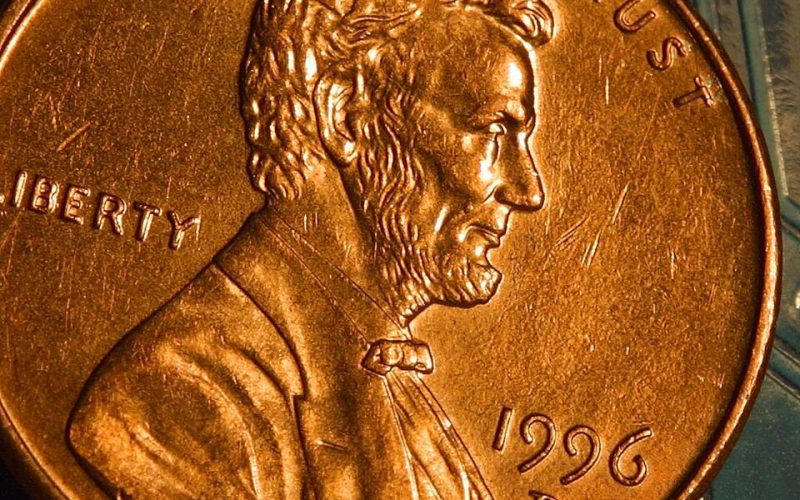
1996 Penny Coin Value (Errors List, “D”, “S” & No Mint Mark Worth)
Most 1996 pennies are worth just one cent in circulation, but specific mint marks and error varieties can increase their value significantly. The 1996-D from…
1936 Wheat Penny Value: Complete Guide to Mint Marks, Errors & Worth in 2026
Discover the 1936 Wheat Penny value for 2026. Learn how mint marks (D, S, no mint mark) and errors like Doubled Die affect worth. Get current price ranges and auction records.
 Penny
Penny
1914 Wheat Penny Coin Value (Errors List, “D”, “S” & No Mint Mark Worth)
Current 1914 Wheat Penny values: $1-$20+ for no mint mark, $10-$50+ for 1914-S, $150-$5,000+ for 1914-D. Error varieties like Weak D, RPM, Rotated Reverse increase value. Avoid counterfeits.