
1944 Wheat Penny Coin Value (Errors List, “D”, “S” & No Mint Mark Worth)
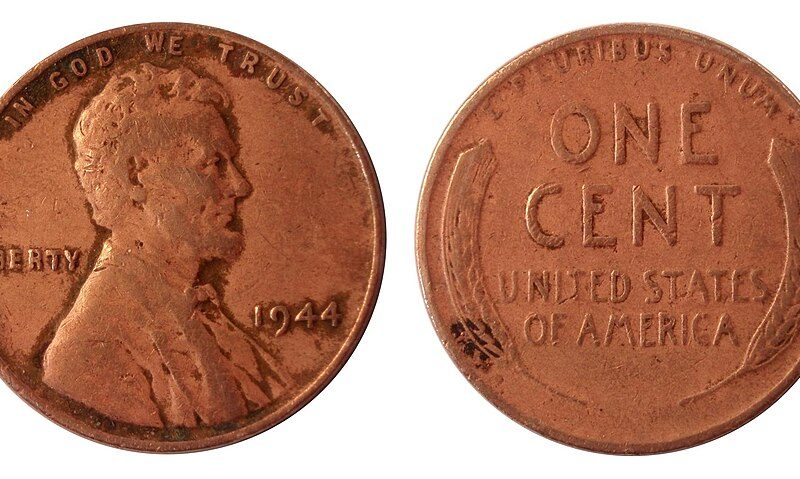
A 1944 wheat penny is generally worth $0.10–$0.50 in circulated condition, but rare errors can exceed $30,000. These pennies were minted at three locations: Philadelphia (no mint mark), Denver (D), and San Francisco (S). Most 1944 wheat pennies are common and only worth face value unless they are in exceptional condition or have a minting error. The most valuable varieties are the 1944 steel-planchet error and the 1944-D/S over-mintmark error. Understanding mint marks and error types is essential for determining whether your 1944 penny is worth a few cents or thousands of dollars.
- 1944 wheat pennies are common with typical values of $0.10–$0.90, but mint mark affects scarcity: Denver (D) and San Francisco (S) are slightly scarcer than Philadelphia (no mint mark).
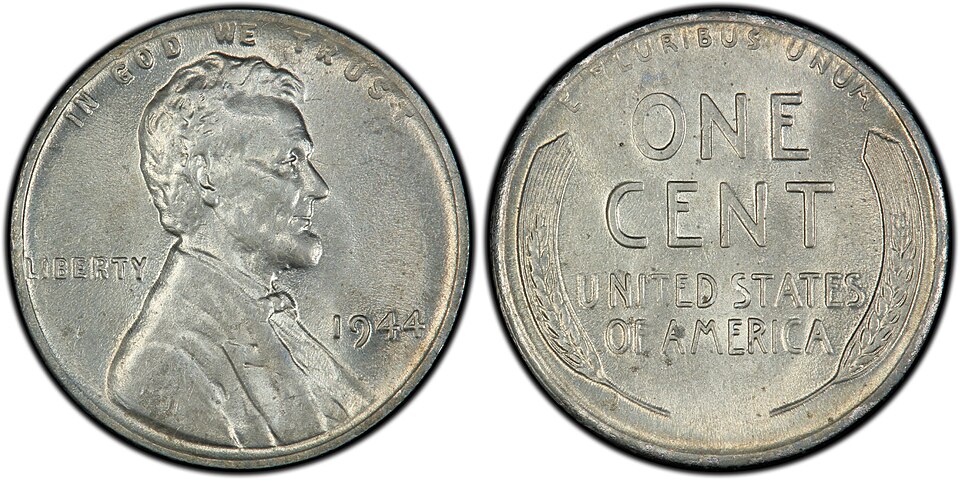
- The 1944 steel penny error is extremely rare (less than 50 known) and can be worth $30,000–$100,000+; identify it with a magnet test (steel sticks) and weight (2.7g vs 3.11g for bronze).
- The 1944-D/S over-mintmark error, where a San Francisco S is under the Denver D, is a valuable variety worth $35–$100+ in circulated condition and up to $3,000+ in Mint State.
1944 Wheat Penny Value: Regular Issues vs Rare Errors
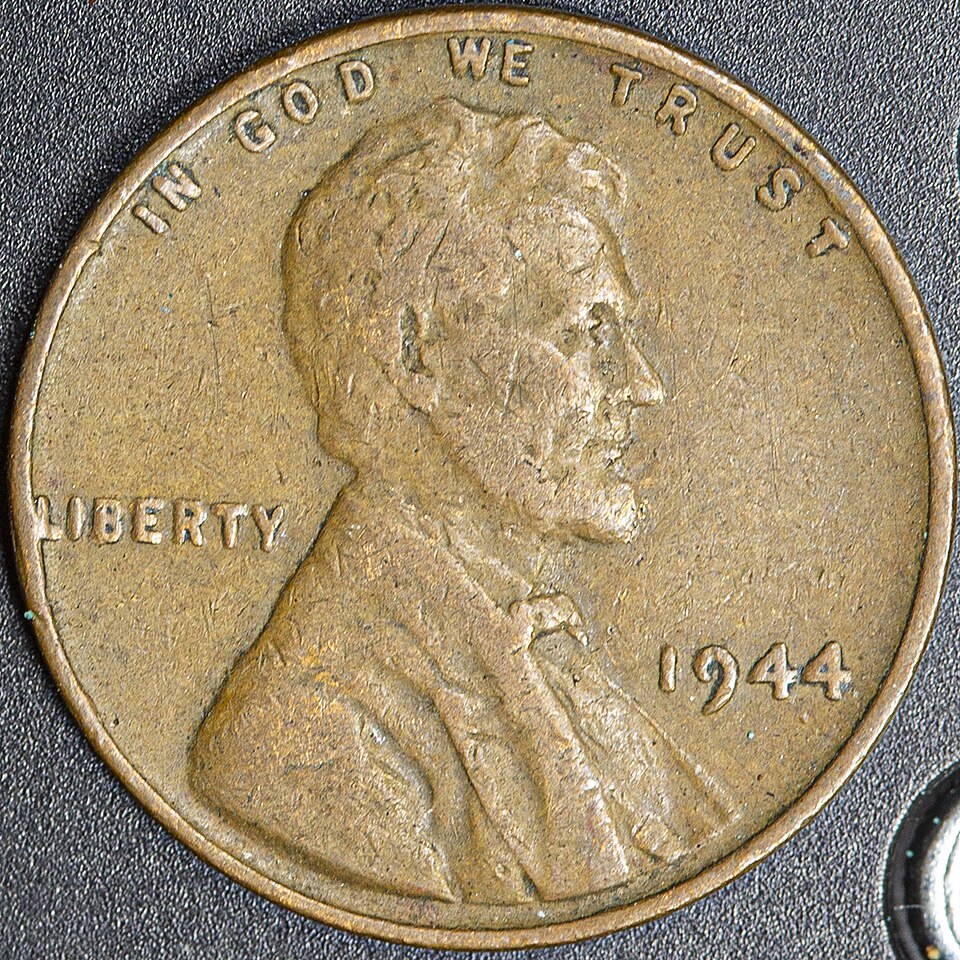
Most 1944 wheat pennies fall into the regular issue category, meaning they were minted normally with bronze planchets at one of three facilities. These common coins have modest values unless they survive in exceptionally high grades. However, a handful of error varieties from 1944 command extraordinary premiums due to their rarity and collector demand. The key to understanding 1944 wheat penny values is distinguishing between normal mint-mark variations and genuine minting errors that transform an ordinary cent into a numismatic treasure.
Regular Issue Values: No Mint Mark, D, and S Compared
The 1944 wheat penny was produced in large quantities at three U.S. Mint facilities. Philadelphia (no mint mark) issued the highest volume, making these the most common. Denver (D) and San Francisco (S) minted fewer coins, giving them slight scarcity premiums even in circulated condition. The table below shows typical market values for each mint mark in average circulated and uncirculated condition as of 2026.
| Mint Mark | Circulated Condition | Uncirculated Condition |
|---|---|---|
| No Mint Mark (Philadelphia) | $0.20–$0.90 | $5–$20+ (MS-65+ only) |
| 1944-D (Denver) | $1–$5 | $50–$80+ |
| 1944-S (San Francisco) | $1–$5 | $60–$90+ |
Philadelphia-mint 1944 pennies without a mint mark dominate the market due to massive production. Denver and San Francisco issues carry small premiums even in worn condition because fewer survived. All three mint marks become significantly more valuable in Mint State grades, especially MS-65 and above where eye appeal, luster, and sharp details command collector premiums.
Which 1944 Pennies Are Worth More Than Face Value?
The vast majority of 1944 wheat pennies in circulation today are worth only a few cents to a few dollars. High mintage numbers during World War II mean these coins are abundant. For a 1944 penny to exceed face value, it typically must meet one of two criteria: either it grades MS-65 or higher (for Philadelphia issues), or it exhibits a genuine minting error. Even lower-grade Denver and San Francisco mint marks usually fetch only $1–$5 because they were produced in substantial quantities but less than Philadelphia. The real value lies in pristine condition examples and error varieties that escaped quality control. A 1944 penny in perfect uncirculated condition with full original mint luster can be worth 20–100 times its face value, while certain errors multiply that value further.
The 1944 Steel Penny: $30,000–$100,000+ Off-Metal Error
The most valuable 1944 wheat penny variety is the steel-planchet error. During 1943, the U.S. Mint switched to steel cents due to copper shortages. In 1944, production returned to bronze, but a small number of leftover 1943 steel planchets remained in the press hoppers. These were accidentally struck with 1944 dies, creating an extremely rare off-metal error. Less than 50 1944 steel cents are known to exist, and many counterfeits circulate. Genuine 1944 steel pennies weigh 2.7 grams (versus 3.11 grams for bronze) and stick to a magnet. Values range from $30,000 to over $100,000 depending on condition. A 1944 steel penny in Mint State can exceed $100,000 at auction. Collectors must be extremely cautious, as fakes are common. The magnet test and weight check are the first steps in authentication—any 1944 penny that sticks to a magnet warrants immediate expert examination.
1944 Penny Errors Worth Thousands: D/S Over-Mintmark & More
Beyond the steel penny, several other 1944 error varieties offer significant premiums over regular issues. The most famous is the 1944-D/S over-mintmark, where a San Francisco mint mark die was mistakenly used beneath a Denver mint mark. This creates a visible “D over S” variety that collectors prize. Other errors like double die obverse and doubled eyelid also add value, though typically less than the D/S over-mintmark. Off-center strikes round out the major error categories for 1944 wheat pennies. Each error type has distinct visual characteristics that help with identification.
What Does a 1944 D Over S Penny Look Like?
The 1944-D/S over-mintmark error occurs when a die with an underlying San Francisco “S” was re-engraved with a Denver “D” on top. The result is a mint mark that shows both letters upon close inspection. The underlying S is much higher than the D; the top of the S is clearly visible above the D, and the diagonal stroke of the S snugs up against the inside top of the D. This variety is fairly well-documented, with over 120 examples graded in Mint State by PCGS as of 2011. Values vary dramatically by condition: circulated examples sell for $35–$100+, while MS65 Red (RD) specimens command $950–$3,000. The auction record for this error reached $115,000 for an MS63 coin, according to coin-identifier.com. The D/S error is one of the most sought-after 1944 varieties and appears regularly in error coin collections.
1944-D Double Die Obverse: $200–$600+ in Mint State
A second notable 1944 error is the double die obverse on Denver-mint coins. This occurs when the obverse die is hubbed twice in misalignment, causing elements to appear doubled. The date shows the most obvious doubling—numbers appear thick, distorted, and sometimes clearly doubled on close inspection. The 1944-D double die is a recognized variety in major grading service populations. In Mint State, these coins typically sell for $200–$600+, with higher grades and strong eye appeal pushing prices toward the upper end. The doubling is most visible on the date numerals and may also affect Lincoln’s hair details and the lettering. This variety appeals to collectors who specialize in doubled die errors from the wheat cent series.
Other Valuable 1944 Penny Errors: Doubled Eyelid & Off-Center Strikes
Several other 1944 error varieties add measurable value to otherwise common pennies:
- 1944-D Doubled Eyelid: A minor but collectible variety where Lincoln’s eyelid appears doubled. Values range from $5–$15 in circulated condition.
- Off-Center Strikes: Coins struck off-center show missing design elements near the rim. Slight off-center (5–10%) brings $20–$60. Severe off-center (over 50%) can exceed $250, especially if the date remains fully visible.
- These errors are less common than the D/S over-mintmark but still represent a significant premium over regular 1944 pennies. Off-center errors are particularly interesting because the degree of offset directly correlates with value—the more dramatic the misalignment, the higher the price.
How to Identify 1944 Wheat Penny Mint Marks and Errors?
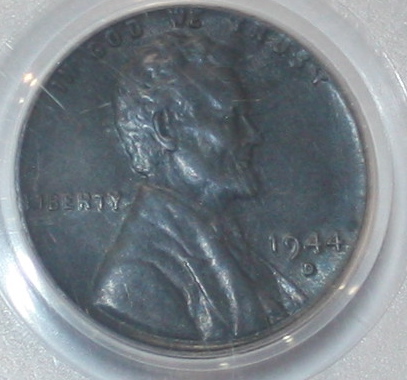
Identifying mint marks and errors on 1944 wheat pennies requires careful examination under good lighting. The mint mark location is consistent across all 1944 wheat cents: it appears directly beneath the date on the obverse. Philadelphia coins have no mint mark, Denver coins show a small “D”, and San Francisco coins show an “S”. Error varieties often involve the mint mark area (like the D/S over-mintmark) or other design elements. A simple two-step test can instantly identify the most valuable error—the steel penny—while magnification helps spot subtle doubling or over-mintmarks.
Magnet Test and Weight: Quick Steel Penny Check
The fastest way to screen any 1944 wheat penny is the magnet and weight test. A genuine 1944 bronze penny weighs 3.11 grams and does not stick to a magnet. A rare 1944 steel error penny weighs 2.7 grams and strongly attracts a magnet. This physical difference is unmistakable. If your 1944 penny sticks to a magnet, you may have discovered a coin worth $30,000–$100,000+. The weight difference is also significant—steel is lighter than bronze. Use a precise digital scale for accurate measurement. This test is the first step in authentication because it immediately separates the ultra-rare steel variety from common bronze coins. Given that less than 50 genuine steel 1944 pennies exist, finding one would be extraordinary. However, be aware that many fakes exist, so even a magnetic 1944 penny requires professional verification before assuming high value.
Finding Mint Marks: No Mark, D, and S Beneath the Date
Locating the mint mark on a 1944 wheat penny is straightforward. Turn the coin to the obverse (heads side) and look directly below the date near the rim. Three possibilities exist:
- No mint mark: Indicates Philadelphia Mint. These are the most common.
- D: Indicates Denver Mint. Slightly scarcer than Philadelphia.
- S: Indicates San Francisco Mint. The rarest of the three regular mint marks in uncirculated condition.
For error identification, examine the mint mark area closely with a 10x loupe. The 1944-D/S over-mintmark shows a D over an underlying S. The underlying S is positioned higher, with its top visible above the D and its diagonal stroke touching the inside top of the D. This distinctive arrangement helps distinguish a genuine D/S from normal wear or damage. Other mint mark errors include S/D (San Francisco over Denver) and repunched mint marks, though these are less common than the D/S.
Condition Impact: Why High Grades Command Premiums
Condition, or grade, is the single most important factor determining a 1944 wheat penny’s value after rarity. The grading scale runs from Poor (P-1) to Perfect Mint State (MS-70). For common Philadelphia 1944 pennies, values remain low until reaching MS-65 or higher. At MS-65, the coin must have full original mint luster, no visible contact marks, and excellent eye appeal. For Denver and San Francisco issues, even lower uncirculated grades (MS-60 to MS-63) carry premiums because fewer high-grade examples survive. Error coins show an even steeper grade premium. A 1944-D/S error in worn condition (G-4 to VG-8) might sell for $35–$100, but the same error in MS-65 Red jumps to $950–$3,000. The difference reflects collector demand for pristine, original coins with full color and sharp details. When evaluating any 1944 penny, condition assessment is critical—what looks like a common coin to the casual observer may actually be a high-grade rarity worth hundreds of dollars.
For collectors interested in Indian Head pennies from earlier years, the 1859 Indian Head penny value guide covers similar error varieties and mint mark concepts. The 1863 Indian Head penny also features valuable errors worth exploring. The 1877 Indian Head penny coin value represents a key date with significant scarcity premiums.
The most surprising fact about 1944 wheat pennies is that a single steel-planchet error can be worth $30,000–$100,000+ while the vast majority are worth less than a dollar. This extreme value disparity makes careful examination essential. The immediate action step: use a magnet test on any 1944 pennies you encounter. A magnetic response instantly identifies the ultra-rare steel variety. For non-magnetic coins, check the mint mark beneath the date and assess condition. Even a regular 1944-D or 1944-S in high grade can be worth $50–$90+, while a D/S over-mintmark error in Mint State reaches thousands. Proper identification separates ordinary change from numismatic treasures.
Related Coins
 Penny
Penny
1989 Penny Coin Value (Errors List, “D”, “S” & No Mint Mark Worth)
Title: 1989 Penny Coin Value (Errors List, “D”, “S” & No Mint Mark Worth) Meta description: 2026 1989 penny value guide. Identify mint marks D,…
 Penny
Penny
1984 Penny Coin Value (Errors List, “D”, “S” & No Mint Mark Worth)
A 1984 penny is typically worth just one cent in circulation, but a rare doubled die error can increase its value to $100–$300 or more.…
1898 Indian Head Penny Coin Value (Errors List & No Mint Mark Worth)
An 1898 Indian Head penny typically sells for $3 to $4 in average circulated condition, but mint-state examples can exceed $60, and high-grade specimens can…