
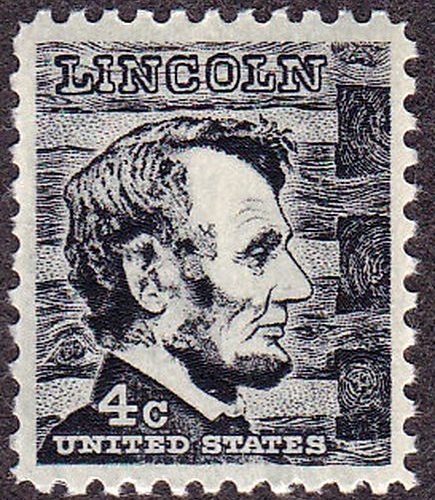
Most 1965 pennies are worth only 1 cent or a few cents, but rare error coins and pristine uncirculated specimens—such as the 1859 Indian Head penny errors—can sell for hundreds or even thousands of dollars. With over 1.5 billion minted without mint marks, these coins are extremely common in circulation, yet specific varieties like a doubled die or a coin struck on a dime planchet command significant premiums. This guide breaks down the exact 2026 values and shows you what to look for.
- Common circulated 1965 pennies (no mint mark) are worth $0.01–$0.10, essentially face value plus a tiny copper premium.
- Uncirculated coins (MS-60 to MS-65) range from $0.50 to $2.00, while gem-quality red coins (MS-67+) can exceed $1,000, with auction records over $3,000.
- Key error varieties to find: doubled die obverse (doubling in “LIBERTY”), struck-on-dime planchet (~$300), and clipped planchet. Ignore “L on rim” claims—these are common damage, not valuable errors.
1965 Penny Value by Condition: From Face Value to $3,000+
The value of a 1965 Lincoln penny depends almost entirely on its condition. Most coins you find in circulation are heavily worn and worth only their face value or a small copper premium. However, if you happen to have an uncirculated specimen or a rare error, the value jumps dramatically. Understanding the condition grading scale is essential to determining what your coin is truly worth in the 2026 market, including valuable 1863 Indian Head penny errors.
Circulated vs. Uncirculated Price Ranges: 2026 Market Data
The 2026 market for 1965 pennies follows a clear three-tier structure based on condition. Circulated coins in average condition dominate the market and remain at base value. Uncirculated coins command a modest premium, while high-grade gem-quality examples are exceptionally rare and valuable.
| Condition Grade | 2026 Value Range | Description |
|---|---|---|
| Circulated | $0.01 – $0.10 | Heavy wear, visible scratches, loss of original luster |
| Uncirculated (MS60-MS65) | $0.50 – $2.00 | No circulation wear, may have contact marks; MS-65 is choice uncirculated |
| High Grade (MS67+ Red) | $1,000+ (records over $3,000) | Perfect strike, flawless surfaces, full original red (RD) luster |
The sharp value jump between circulated and uncirculated grades reflects the basic economics of supply and demand. With over 1.5 billion 1965 pennies minted, worn examples are plentiful and not scarce. Uncirculated coins, however, represent a tiny fraction of the mintage that survived without being released into circulation. The leap to MS-67+ is even more dramatic because achieving perfect condition from this high-mintage year is extremely difficult—most coins have minor contact marks or weak strikes.
High-Grade Records: When MS67+ Red Pennies Sell for $3,000+
While finding a 1965 penny in uncirculated condition is possible, discovering one in MS-67 or higher with full red luster is exceptionally rare. Auction records show that such gem-quality specimens have sold for over $3,000, with some reaching even higher prices when professionally graded by PCGS or NGC. The “full red” designation (RD) is critical—these coins must retain their original copper luster without any toning or discoloration.
What makes an MS-67+ 1965 penny so scarce? First, the sheer volume of coins minted means that even small imperfections were common. Second, the 1965-1967 period used a special satin finish for Special Mint Sets, but business strikes were produced with standard minting pressures that sometimes resulted in weak strikes. A perfect MS-67 requires not only flawless surfaces but also a strong, sharp strike with full details. Professional grading is essential for these high values; a self-assessed “uncirculated” coin often falls short of the rigorous standards required for MS-67+ pricing.
Copper Content vs. Face Value: Why Common 1965 Pennies Are Cheap
The 1965 Lincoln penny contains 95% copper and 5% zinc, giving it a melt value of approximately 2-3 cents based on current copper prices. This metal value represents the absolute ceiling for worn, common-date pennies. Since over 1.5 billion were minted without mint marks, supply far outstrips collector demand for average-condition examples.
Unless an error is present or the coin is in exceptionally high grade, the copper content is the only intrinsic value. This fundamental economic reality explains why you cannot sell a typical 1965 penny for more than a few cents. Collectors and dealers have no reason to pay a premium for a coin that is readily available in circulation. The market efficiently prices these common dates at or slightly above melt value, with any premium only appearing for coins that are demonstrably rare or in superior condition.
1965 Penny Error Varieties Worth Premiums
Error coins represent the most exciting aspect of 1965 penny collecting, with 1877 Indian Head penny errors being similarly prized in other series. While the vast majority of 1965 pennies are ordinary, minting mistakes created a small number of varieties that are worth significantly more than face value. These errors occur when something goes wrong during the striking process—wrong planchet, misalignment, die defects, or clipped blanks. Identifying these errors requires careful examination, but the potential rewards make the effort worthwhile.
Struck on Dime Planchet: The $300 Silver Error
One of the most valuable 1965 penny errors is the coin struck on a dime planchet. This mistake happens when a blank intended for a Roosevelt dime (10¢) is accidentally fed into the penny press. The result is a coin that is noticeably smaller and lighter than a normal penny, with a silvery appearance instead of the usual copper color.
Key characteristics to identify:
- Weight: approximately 2.5 grams (vs. 3.11 grams for a normal penny)
- Diameter: about 17.9 mm (vs. 19.0 mm for a normal penny)
- Appearance: silvery color, no full rim on the reverse
- Edge: may lack the normal reeding or plain edge details
Circulated examples of this error typically sell for around $300. Uncirculated specimens can fetch higher prices. The value depends on the clarity of the strike and the overall condition. This error is rare but not unheard of—a few dozen may exist. If you suspect you have one, weigh it carefully and compare the size to a known penny.
Doubled Die Obverse: Spotting Doubling in “LIBERTY” and “IN GOD WE TRUST”
The doubled die error occurs when the die hub makes two impressions on the working die, creating a shadow or doubled effect on the struck coin. For 1965 pennies, the most sought-after doubled die variety shows clear doubling in the word “LIBERTY” and the phrase “IN GOD WE TRUST” on the obverse.
To identify this error:
- Use a 10x magnifier or loupe.
- Examine the letters in “LIBERTY” for visible separation or doubling, especially in the “B” and “R” areas.
- Check the motto “IN GOD WE TRUST” for duplicated letters or a ghost image.
- Look for overall doubling of the date and Lincoln’s portrait details.
Clear, dramatic doubling commands the highest premiums. Minor doubling may only add a small premium over the base value. This error is relatively uncommon in 1965 pennies but not extremely rare. Collectors actively seek these varieties, and well-defined examples can sell for $50 to several hundred dollars depending on the severity and grade.
Clipped Planchet Errors: Curved Missing Sections
A clipped planchet error occurs when the metal blank (planchet) is missing a piece before striking, usually because the metal strip was not properly fed. The result is a coin with a curved or irregular edge where the clip appears. The error is obvious to the naked eye—the coin simply looks like a piece is missing.
Value depends on the size and location of the clip:
- Small clips (under 5% of the coin’s edge): $5–$20
- Medium clips (5-15%): $20–$100
- Large, dramatic clips (over 15%): $100–$500 or more, depending on grade and eye appeal
The 1965 penny’s copper color makes clipped planchet errors easy to spot—the missing section creates a clean, curved void. These errors are not extremely rare but are collectible. The market values them based on the clip’s prominence and the coin’s overall condition. A heavily clipped coin in good grade can still be worth a significant premium over face value.
Debunking the “L” on Rim Myth: Why These Aren’t Valuable
A common misconception among new collectors is that a weak “L” in “LIBERTY” touching the rim of a 1965 penny is a rare and valuable error. You may see listings on eBay or Reddit asking $1,200–$1,500 for such coins. This is misinformation. The “L” appearing close to the rim is normal for 1965-1967 Lincoln cents due to die spacing and is not an error.
What you are seeing is either:
- Normal die alignment for these years
- Post-mint damage (wear or scratches that obscure the “L”)
- A weak strike that simply did not fully impress the letter
These coins are not rare and do not command high premiums. The research specifically notes “frequently misinformed listings” and that these are “common, often post-mint damage, and rarely hold high value.” Do not pay a premium for a 1965 penny based solely on the “L” touching the rim. Focus instead on the genuine errors described above—doubled die, planchet errors, or clipped planchet—for real collector value.
Why 1965 Pennies Have No Mint Mark: The Coinage Act of 1965
The absence of a mint mark on 1965 pennies is not an error—it is a deliberate historical policy, similar to the case of 1888 Indian Head penny no mint mark. Understanding this context helps collectors recognize that all 1965-1967 Lincoln cents were produced without mint marks, making the date itself unremarkable from a mint mark perspective. The value comes entirely from condition and errors, not from mint mark scarcity.
5 Billion Minted: Philadelphia Production Without Marks
The total mintage for 1965 Lincoln pennies stands at 1,497,224,900 coins—over 1.5 billion. All of these were struck at the Philadelphia Mint without a mint mark, a characteristic shared with 1889 Indian Head penny no mint mark examples. This massive production run was part of a temporary suspension of mint marks on cents, quarters, and half-dollars from 1965 through 1967.
The Coinage Act of 1965 was passed to address a national coin shortage. The public was hoarding silver coins, causing a circulation crisis. By removing mint marks from circulating coins, the Mint made it harder for collectors to identify and remove coins from circulation, thereby increasing the supply available for everyday transactions. For pennies, this meant three full years of “P” mint mark absence, even though the coins were still produced primarily at Philadelphia.
Special Mint Sets (SMS) vs. Regular Business Strikes
While all 1965 pennies lack a mint mark, there is a minor variation worth noting: the 1965 Special Mint Set (SMS). The Mint produced approximately 2.3 million SMS pennies, which were sold in collector sets rather than released into circulation.
SMS pennies differ from regular business strikes in two key ways:
- They have a distinctive satin finish rather than the standard business strike appearance.
- They were handled with more care, so they often have better eye appeal.
However, SMS pennies are still common in the numismatic market and carry only a small premium—typically $1 to $5 over a regular uncirculated example. They are NOT proof coins; proofs were not produced for 1965 Lincoln cents. The SMS designation simply indicates a special finish for collectors, but these coins are not rare and do not approach the values of high-grade business strikes or error coins.
How the 1965-1967 No-Mint-Mark Policy Worked
The Coinage Act of 1965 suspended mint marks on three denominations: the cent, quarter, and half-dollar, similar to the 1890 Indian Head penny no mint mark production. This policy applied to all three years—1965, 1966, and 1967. During this period:
- The Philadelphia Mint continued producing these coins without a “P” mint mark.
- The Denver and San Francisco Mints also produced coins for circulation but omitted their respective “D” and “S” mint marks.
- No proof sets were struck in 1965; proof production resumed in 1968 with mint marks restored.
The policy ended in 1968 when mint marks returned to circulation coins. For 1965 pennies specifically, this means every single business-strike penny has no mint mark. There is no “D” or “S” variety for 1965—the only way to get a mint mark is through a mint-made error. This uniformity simplifies collecting: if you have a 1965 penny with a mint mark, it is either damaged or an extremely rare error.
The irony of the 1965 penny is its abundance. With over a billion and a half minted, finding one in your change is inevitable. Yet within that sea of common dates, the same minting processes that produced billions also created rare errors—like the dramatic doubled die or the curious dime-planchet mistake—that are worth a small fortune. Your next step is simple: pull out any 1965 pennies, check their weight, examine the “LIBERTY” inscription closely, and assess their color. If you spot a clear error or a coin that looks unusually sharp and red, have it professionally graded; you might be holding a $300 error or a $1,000+ gem.
Frequently Asked Questions About 1965 Penny
How to tell if a 1965 penny is valuable?
Check its condition: Circulated 1965 pennies are worth $0.01–$0.10. Uncirculated coins (MS60–MS65) range from $0.50 to $2.00. High-grade mint state (MS67+ with full red luster) is worth $1,000+, with records over $3,000. Error varieties may also add value, including 1893 Indian Head penny errors that command premiums.
What is so special about a 1965 penny?
It has no mint mark due to the Coinage Act of 1965. Only in top condition (MS67+ with full original red luster) does it become valuable, worth $1,000+ and up to $3,000+. Most circulated examples are worth face value.
Related Coins
 Penny
Penny
1986 Penny Coin Value (Errors List, “D”, “S” & No Mint Mark Worth)
Discover 1986 penny values for 2026: mint marks D, S, no mint mark prices, error varieties like off-center, RPM, no L in Liberty. Find out which 1986 pennies are worth money.
 Penny
Penny
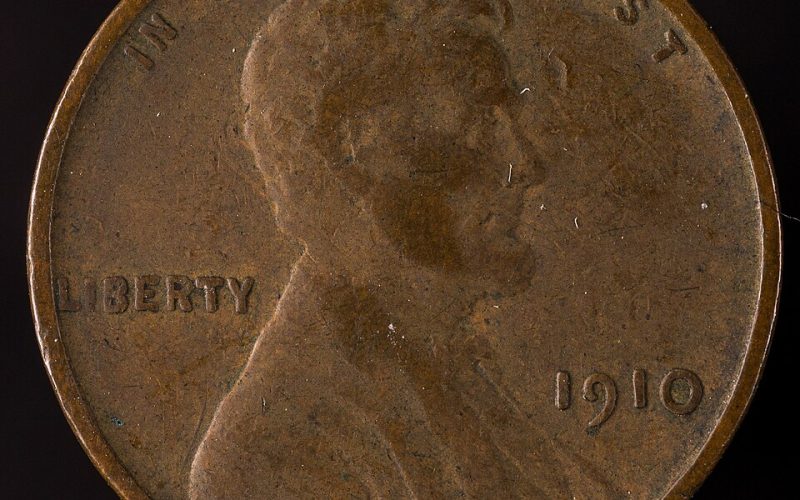
1910 Penny Coin Value (Errors List, “S” & No Mint Mark Worth)
A 1910-S Lincoln Wheat Penny in pristine condition sold for over $43,000 at auction in 2025. Your 1910 penny’s value depends first on its mint…
 Penny
Penny
1914 Wheat Penny Coin Value (Errors List, “D”, “S” & No Mint Mark Worth)
Current 1914 Wheat Penny values: $1-$20+ for no mint mark, $10-$50+ for 1914-S, $150-$5,000+ for 1914-D. Error varieties like Weak D, RPM, Rotated Reverse increase value. Avoid counterfeits.