
1969 Penny Coin Value (Errors List, “D”, “S” & No Mint Mark Worth)
Most 1969 pennies are worth just 2 cents. But a rare 1969-S Doubled Die Obverse error can fetch over $250,000. This guide separates the three mint mark varieties—1969-S (San Francisco), 1969-D (Denver), and 1969-P (Philadelphia, no mint mark)—and pinpoints which errors command serious money in 2026.
- The 1969-S Doubled Die Obverse is the rarest and most valuable, worth $250,000 to $600,000+ in top condition.
- Standard 1969-D and 1969-P (no mint mark) pennies are common, worth $0.02 to $0.50 in circulated condition, but pristine MS-67 grades can exceed $7,000.
- Key errors to check: doubled die lettering (1969-S), repunched ‘D’ mint mark, detached “floating roof” on the Lincoln Memorial, and missing “FG” initials on the 1969-D.
- Always have potential high-value coins graded by PCGS or NGC; machine doubling is common and worthless.
1969-S Doubled Die Obverse: The $250,000+ Penny
The 1969-S Doubled Die Obverse (DDO) is the undisputed king of 1969 pennies. This minting error occurred when the die was hubbed twice, creating a shadow-like doubling on the obverse design. Only a few dozen are believed to exist, making it one of the rarest modern U.S. error coins. In 2026, high-grade examples regularly sell for six figures at auction, with the finest specimens commanding well over $600,000.
Current 2026 Auction Prices for 1969-S DDO by Grade
The value of a 1969-S DDO increases dramatically with each grade step. Below is a 2026 price chart based on recent market data from Gainesville Coins, The Spruce Crafts, and Coin World market analysis:
| Grade | Value Range |
|---|---|
| MS-63 | $250,000 – $300,000 |
| MS-64 | $350,000 – $400,000 |
| MS-65 | $450,000 – $500,000 |
| MS-66 | $550,000 – $600,000 |
| MS-67 | $600,000+ |
The price escalation reflects extreme scarcity. Most 1969-S DDO coins that surface have heavy wear or contact marks. Finding a gem uncirculated example with full original mint luster and no flaws is exceptionally rare, hence the premium at MS-65 and above.
How to Visually Identify a Genuine 1969-S Doubled Die
Identifying a genuine 1969-S DDO requires careful examination under 10x magnification. The doubling appears as clear, separated “shadow” images on specific obverse elements:
- “LIBERTY” – Each letter shows a distinct secondary outline, especially on the left side of each stroke.
- “IN GOD WE TRUST” – The motto exhibits pronounced separation, most obvious on the “I” and “T” letters.
- Date – The 1969 date shows doubling on all four digits, with the “9” being particularly revealing.
Crucially, the ‘S’ mint mark itself is NOT doubled on the genuine DDO variety. If the mint mark shows doubling, it is likely a different error or a fake. Also, distinguish true hub doubling from common machine doubling (also called “strike doubling”). Machine doubling appears rounded, flat, and often on the reverse side of the design elements; it holds no extra value. Always have any suspected 1969-S DDO graded by PCGS or NGC due to high counterfeit risk.
What Is the Rarest Type of 1969 Penny?
The 1969-S Doubled Die Obverse is unequivocally the rarest and most valuable 1969 penny. While billions of regular 1969-D and 1969-P coins were minted, the DDO variety likely numbers only a few dozen known survivors. This combination of extreme rarity and high demand places it at the top of all 1969 penny values.
1969-D & No Mint Mark Penny Values: From 2 Cents to $7,000+
The vast majority of 1969 pennies are the regular issue coins from Denver (D) and Philadelphia (no mint mark). These are common modern cents, but condition still drives value from face value to several thousand dollars for pristine examples.
Circulated 1969-D and 1969-P (No Mint Mark) Value Chart
In average circulated condition, these pennies are worth only a few cents. Use this quick reference:
- Good (G-4 to G-6): $0.02 – $0.05
- Very Good (VG-8): $0.05 – $0.10
- Extremely Fine (EF-40): $0.10 – $0.20
- About Uncirculated (AU-50): $0.20 – $0.50
These ranges are based on 2026 market data from Bullion Sharks and the Fun Times Guide. Even in mid-grade uncirculated condition (MS-60 to MS-63), values only rise to $1-$3. The real jump occurs at the highest gem grades.
The $7,475+ 1969-D: Why High-Grade MS-67 Is So Valuable
Finding a 1969-D or 1969-P in MS-67 condition is a significant challenge. These coins must exhibit flawless surfaces, full original mint luster, and no contact marks from handling or bag storage. The 1969-D in particular is known for being poorly struck in many instances, making a fully sharp MS-67 even more scarce.
According to verified market data, a 1969-D graded MS-67 can command around $7,475. The Philadelphia issue (no mint mark) follows a similar but slightly lower trajectory, with MS-67 values in the $5,000-$6,000 range. These prices represent a 10,000x+ multiplier over the base circulated value, underscoring the power of condition in coin valuation.
1969-S Proof Pennies: The $5 to $100+ Range
Not all 1969-S coins are the rare doubled die. The San Francisco Mint also produced proof coinage for collectors. These proof pennies have a distinct appearance—sharper details, mirrored fields, and frosted devices—and are generally worth more than circulation strikes.
A 1969-S proof in lower grades (Proof-60 to Proof-63) typically sells for $5 to $10. Higher-grade proofs with strong cameo contrast can reach $50 to $100+, with Proof-65 Red examples sometimes exceeding $100. These are affordable entry points into the 1969-S variety, but they are entirely separate from the ultra-rare DDO error.
Key 1969 Penny Errors: Floating Roof, RPM, and No FG
Beyond the headline-grabbing DDO, several other error varieties on 1969 pennies attract collector interest. These are more common and less valuable but still add noticeable premiums over base value.
The 1969-D “Floating Roof” Error: A Common Die Break
The “floating roof” error appears on the Lincoln Memorial reverse. A portion of the roof seems to detach and float above the building, creating a striking visual effect. This is caused by a die break (also called a cud) where a piece of the die surface chipped off, leaving a raised, featureless area.
The floating roof is relatively common on 1969-D cents and typically adds a $1 to $5 premium in circulated condition. In higher uncirculated grades, the premium can be slightly higher. While not a major rarity, it is an easily spotted error that many collectors seek.
1969-D Repunched Mint Mark (RPM): How to Spot the Double ‘D’
A repunched mint mark (RPM) occurs when the mint mark punch is struck more than once, leaving a shadow or offset second image. On the 1969-D, the ‘D’ mint mark under the date may show a clear secondary ‘D’ offset to the right or left.
Step-by-step identification:
- Locate the ‘D’ mint mark to the right of the date.
- Use 10x magnification.
- Look for a second, incomplete ‘D’ overlapping the primary one. The secondary image often appears as a faint shadow or a partially formed letter.
- Confirm it is not simple die doubling (which would be on the entire design) but specifically on the mint mark.
RPMs on 1969-D pennies are collectible and typically worth $5 to $50+ depending on the visibility and severity of the repunch.
The 1969-D “No FG” Error: Missing Designer Initials
The “No FG” error refers to the missing initials of Frank Gasparro, the Chief Engraver who designed the Lincoln Memorial reverse. Normally, the tiny “FG” appears on the center steps of the memorial. On some 1969-D coins, these initials were omitted from the die.
This is a recognized variety with a clear value premium. Prices vary by copper color retention:
| Color Grade | Value Range |
|---|---|
| Brown (BN) | $80 – $100 |
| Red/Brown (RB) | $100 – $150 |
| Full Red (RD) | $150 – $250+ |
The No FG error is a perfect example of how a tiny missing detail can multiply a coin’s value by 100 times or more over its base circulated worth.
The 1969-D “No FG” error, while not as famous as the 1969-S DDO, demonstrates how subtle varieties can dramatically increase value. Before spending or storing any 1969 penny, especially those with an ‘S’ or ‘D’ mint mark, examine the date, lettering, and mint mark under strong magnification. If you see clear doubling on a 1969-S, or any irregularity like a repunched mint mark or missing initials on a 1969-D, handle the coin by the edges and seek immediate certification from PCGS or NGC. Professional grading is non-negotiable for high-value varieties, as machine doubling is common and many fakes exist.
Penny collectors should also explore other years in the Lincoln Memorial series. For historical context, see our guides to,,, and values.
Frequently Asked Questions About 1969 Penny
What errors increase a 1969-S penny’s worth?
The allure of the 1969-S penny lies primarily in its doubled die error, a minting anomaly that occurs during the coin-striking process. A doubled die error is characterized by the appearance of a shadow-like doubling on parts of the coin’s design, particularly noticeable in the date and lettering.
Which 1969 penny is worth money?
While the original edition pennies from 1909 can have significant collectable value, other editions of the Lincoln penny can be highly desired by coin collectors as well. A 1933-D, for example, may be valued at $2.30 or more. A 1931-S could be worth $40 or more.
How much is a 1969 no mint mark DDO penny worth?
1. 1969 Doubled Die Obverse (No Mint Mark) Value: The 1969 Doubled Die Obverse (DDO) penny is one of the most valuable U.S. error coins. If you happen to find one, its value can range from $10,000 to over $70,000, depending on its condition.
Related Coins
 Penny
Penny
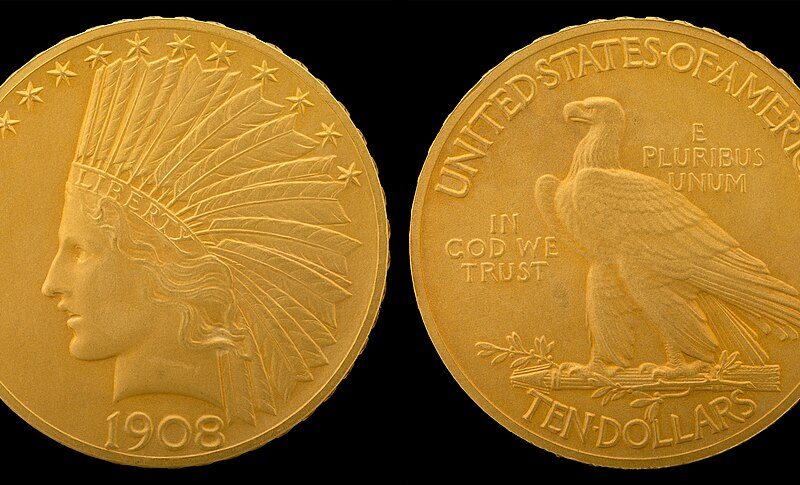
1908 Indian Head Penny Coin Value (Errors List, “S” & No Mint Mark Worth)
Discover 2026 values for 1908 Indian Head pennies. Compare no mint mark vs 1908-S prices, identify valuable errors like RPM, and learn what makes these coins worth from $2 to $1,000+.
 Penny
Penny
1989 Penny Coin Value (Errors List, “D”, “S” & No Mint Mark Worth)
Title: 1989 Penny Coin Value (Errors List, “D”, “S” & No Mint Mark Worth) Meta description: 2026 1989 penny value guide. Identify mint marks D,…
1935 Wheat Penny Coin Value (Errors List, “D”, “S” & No Mint Mark Worth)
The 1935 wheat penny represents one of the most accessible Lincoln cents for collectors, with over 300 million struck across three mints, yet pristine examples…