1971 Penny Coin Value (Errors List, “D”, “S” & No Mint Mark Worth)
A 1971-S Doubled Die Obverse error penny can sell for over $2,700 in 2026, while the vast majority of 1971 pennies—whether with no mint mark, “D,” or “S”—are worth only their face value of one cent unless they are in exceptionally high grade or possess a significant mint error. This guide provides current pricing and identification details for all 1971 Lincoln Memorial cent varieties.
- Most circulated 1971 pennies (no mint mark, D, S) are worth $0.01–$0.10 unless they have significant errors or are in pristine uncirculated condition.
- The 1971-S Doubled Die Obverse (DDO) is the most valuable regular-issue error, with Proof 66RD examples selling for over $2,700.
- High-grade 1971-D pennies (MS67+) can reach $100–$4,000, despite over 2.9 billion being minted.
- Any 1971 penny graded MS65 or higher by PCGS or NGC commands a significant premium over raw coins.
1971 Penny Values by Mint Mark: No Mint Mark, D, and S
The mint mark on a 1971 penny—whether absent (Philadelphia), “D” for Denver, or “S” for San Francisco—is the first factor in determining its potential value. For common dates like 1971, the mint mark alone does not create rarity; instead, it defines the baseline mintage and typical market value, which only increases with exceptional condition or errors.
Base Value Table: Circulated vs. Uncirculated Grades by Mint Mark
The following table summarizes the typical 2026 price ranges for 1971 pennies across three broad condition tiers. These ranges are based on recent sales data from major coin dealers and auction platforms.
| Mint Mark | Circulated (G-4 to VG-8) | Uncirculated (MS-63 to MS-65) | Gem Uncirculated (MS-66 to MS-67+) |
|---|---|---|---|
| No Mint Mark (Philadelphia) | $0.05–$0.10 | $5–$20 | $50–$300+ |
| 1971-D (Denver) | $0.05–$0.10 | $5–$25 | $100–$4,000 |
| 1971-S (San Francisco) | $0.10–$0.25 | $10–$50 | $50–$500+ |
The value jump from the Uncirculated (MS-63 to MS-65) tier to Gem Uncirculated (MS-66 to MS-67+) is dramatic for all mint marks, but especially for the 1971-D. This steep increase occurs because finding any 1971 penny in truly gem uncirculated condition is difficult. Over 2.9 billion 1971-D coins were struck, but most entered circulation and suffered wear, scratches, or corrosion. Even coins stored in bags or rolls often developed bag marks or lost their original red color. A specimen graded MS-67 or higher must have an exceptional strike, full original mint luster (often called “red” or “RD” in coin grading), and virtually no visible flaws. For a coin this common, such survival rates are very low, creating scarcity at the top end. Collectors should prioritize eye appeal and original color; a coin with a dark brown or spotted surface, even if technically high-grade, will fetch less than a bright red counterpart.
1971-D (Denver) Penny: The Most Common Mint Mark
The 1971-D Lincoln cent is one of the most heavily minted U.S. coins of all time. With a mintage exceeding 2.9 billion pieces, it is the definition of a modern common date. In average circulated condition, a 1971-D is worth its face value of one cent, or perhaps $0.05–$0.10 for a slightly better specimen.
Value exists almost exclusively at the very top of the grading scale. A 1971-D graded MS-67 or higher can sell for $100 to several hundred dollars, with auction records reaching up to $4,000 for a perfect MS-67RD example. However, typical sales for high-grade coins fall in the $100–$300 range. It is critical to note that even a visually stunning 1971-D will not realize its full potential without certification from a major grading service like PCGS or NGC. The market for high-grade modern coins is dominated by slabbed examples, and raw coins often sell for a fraction of the graded price. The 1971-D’s extreme abundance means that any coin not in pristine condition has little to no collector premium.
1971-S Proof and Business Strikes: Premiums for Finish
The “S” mint mark indicates the coin was struck at the San Francisco Mint. For 1971, this applies to both circulation strikes (business strikes) and proof coins. Understanding the difference is essential for accurate valuation.
- Business Strike (Circulation): The San Francisco Mint produced circulating pennies with the “S” mint mark from 1968 to 1974. A 1971-S business strike in average condition is only slightly more valuable than its Philadelphia or Denver counterparts, typically fetching $0.10–$0.25. These are common in circulated grades.
- Proof Coins: Starting in 1968, all U.S. proof coin production moved to the San Francisco Mint. Proofs are struck with specially polished dies and planchets, resulting in a mirror-like finish and sharp details. A standard 1971-S proof in a mid-grade like PR-65 is common and valued at $10–$50. Higher-grade proofs (PR-66 to PR-67) can reach $50–$200, particularly if they retain their original red color.
- Proofs with Errors: Proof coins with significant errors, such as the Doubled Die Obverse, enter a completely separate and much higher value tier, as detailed in the next section.
The presence of an “S” on a 1971 penny simply means it originated from San Francisco. For circulation coins, this was routine during 1968–1974. For proofs, the “S” has been standard since 1968. For more on the history of mint marks and which mints produced circulating coins in specific years, the Penny category page provides broader context.
Top 1971 Penny Error Varieties and Their Values
Error coins are where the 1971 penny series offers its most exciting and valuable opportunities. Not all errors are valuable; many are minor, common, and add little to no premium. The valuable errors are those that are dramatic, rare, and certified by a major grading service.
1971-S Doubled Die Obverse (DDO): The King of 1971 Errors
The single most valuable and sought-after 1971 penny variety is the 1971-S Doubled Die Obverse (DDO). This error occurs during the die-making process when the hub impression is made twice in slightly different positions, creating a doubled image on the die that then transfers to all coins struck from it.
On the 1971-S DDO, the doubling is most pronounced on the obverse lettering, specifically the word “LIBERTY” and the motto “IN GOD WE TRUST.” The doubling is typically clear and easily visible under 10x magnification, with each letter showing a distinct, separated shadow or outline. This is primarily a proof variety; while a few business strikes may exist, the vast majority of certified DDO examples are proofs.
A 1971-S Proof graded 66RD (Red) with a strong DDO can sell for over $2,700 according to recent auction data. Weaker examples of doubling, often called “common doubling” or “machine doubling,” are prevalent on many 1971-S proofs and are not valuable. The key is strong, separated doubling that is a result of the die itself, not the striking process. Always seek professional authentication (PCGS or NGC) before assigning a high value to a suspected DDO.
Other High-Value 1971-D Errors: Planchet and Die Failures
While the 1971-S DDO is the headline error, certain dramatic 1971-D errors also command substantial premiums. These are rare mint mistakes that escaped the Mint’s quality control.
- Struck on a Dime Planchet: This error occurs when a 1971-D cent is accidentally struck on a planchet (blank) intended for a Roosevelt dime. The resulting coin is smaller in diameter (17.91mm vs. 19.05mm), lighter in weight, and composed of copper-nickel clad instead of the copper-plated zinc of a standard 1971 cent. These are dramatic and highly collectible, with values typically ranging from $500 to $2,000+ for certified examples.
- Missing “U S T”: A rare die failure where the letters “U,” “S,” and “T” from “UNITED STATES OF AMERICA” on the obverse are partially or completely missing due to a clogged or damaged die. The coin shows a smooth, blank area where the letters should be. Values for this error range from $200 to $1,000+, depending on the severity and grade.
- Triple Strike Error: This occurs when a coin is struck three times in the press, either from the die bouncing or a misalignment. It results in overlapping, blurred designs. A 1971-D with a clear triple strike can sell for $300 to $1,500+.
All of these errors require professional grading and authentication by PCGS or NGC to verify their legitimacy and realize their full market value. Submitting a candidate coin is the only way to confirm its error status and condition.
How to Identify Common 1971 Penny Errors: A Practical Guide
Many collectors find what they believe is an error, only to discover it is a common, low-value variety. Use this checklist to separate significant, valuable errors from everyday anomalies.
| Feature | Normal 1971 Penny | Potential Error Indicator |
|---|---|---|
| Doubling | crisp, single lettering | Doubling: Letters or date show a clear, separated shadow under 10x magnification. Strong doubling on “LIBERTY” or “IN GOD WE TRUST” on a 1971-S may indicate a valuable DDO. |
| Strike Alignment | Design centered on the coin | Off-Center Strike: The entire design is shifted from the center, with a wide, uneven rim on one side. Minor off-center is common; dramatic shifts (e.g., date fully off) are rarer. |
| Planchet | 19.05mm diameter, copper-plated zinc, ~2.5g | Planchet Error: Wrong color (silver-gray = copper-nickel), wrong size (smaller/larger), wrong weight, or wrong metal composition. A coin that feels unusually light or heavy warrants weighing. |
| Die Condition | Complete, sharp design | Die Cracks/Chips: Raised metal lines (cracks) or missing design elements (chips). Single, small cracks are common and low-value. Large, dramatic cracks or missing major features (like part of Lincoln’s head) are more desirable. |
The rule of thumb: subtle, minor anomalies are common and worth little. Only dramatic, obvious errors that significantly alter the coin’s appearance have significant value, and even then, certification is mandatory. If your 1971 penny looks unusual, compare it side-by-side with a known normal example and use magnification. When in doubt, submit it to a grading service for a definitive opinion.
What Makes a 1971 Penny Rare? Grading, Certification, and Market Factors
For a coin minted in the billions, “rarity” seems contradictory. Yet, certain 1971 pennies are genuinely rare and valuable. Understanding the factors that create scarcity is key to accurate evaluation.
Condition is Everything: The MS65+ Threshold
The Sheldon scale grades coins from 1 to 70, with Mint State (MS) coins ranging from MS-60 (poor strike, heavy marks) to MS-70 (perfect). For modern, high-mintage coins like the 1971 penny, the MS-65 grade is the critical threshold where meaningful value begins.
An MS-65 coin is described as having “few minor marks” and “full original mint luster.” For copper coins, this means vibrant, original red color (RD) or red-brown (RB). The jump from MS-64 to MS-65 is substantial because MS-64 allows for more noticeable marks and slight dulling of luster. For the 1971-D, an MS-67 or better is exceptionally scarce. The combination of high mintage, the softness of copper (which scratches easily), and decades of improper storage means that finding a 1971-D with a perfect strike, no bag marks, and full red luster is a genuine challenge. This scarcity at the top end is what drives prices into the hundreds or thousands.
The Non-Negotiable Role of PCGS and NGC Certification
In today’s market, professional certification from PCGS (Professional Coin Grading Service) or NGC (Numismatic Guaranty Company) is not optional for valuable 1971 pennies—it is mandatory. The reasons are fourfold:
- Authentication: It verifies the coin’s genuineness, mint mark, and any error status. Without this, buyers are skeptical.
- Market Acceptance: Virtually all major coin dealers, auctions, and serious collectors will only pay premium prices for coins encapsulated in PCGS or NGC slabs. Raw coins are considered risky.
- Price Realization: Graded coins consistently sell for 30% to 200% more than their ungraded counterparts. The slab provides a trusted, third-party assessment of grade and authenticity that buyers are willing to pay for.
- Holder Protection: The sealed, hard plastic slab protects the coin from further damage and provides an attractive, secure display.
Grading a coin costs $20–$50 or more, depending on the service and turnaround time. Therefore, it only makes financial sense to submit a 1971 penny if you suspect it is in very high grade (MS-65+) or possesses a significant error. Submitting a common, circulated coin will result in a net loss.
What Makes a 1971 Penny Rare? Answering the Key Question
Synthesizing the factors above, a 1971 penny is rare and valuable only if it meets one of these criteria:
- It has a major, certified error (e.g., Doubled Die Obverse on a 1971-S proof, struck on a dime planchet, missing “U S T”).
- It is in an exceptionally high grade (MS-67 or better for 1971-D; MS-66 or better for 1971-S proofs or business strikes).
- It combines a significant error with a high grade.
Every other 1971 penny—the vast majority—is a common, low-value coin. There are no secret varieties or “key dates” for this year beyond the well-documented errors. The path to value is clear: either the coin is perfect, or it is dramatically flawed in a way the Mint did not intend.
The 1971-D, despite being the most minted Lincoln cent of its era, demonstrates this principle perfectly. Billions were made, yet an MS-67RD example is scarce enough to command four figures. This paradox exists because copper coins from this period are prone to corrosion and bag damage, and few survived the last 55 years in pristine condition. Your next step is simple: check your change and old piggy banks. A 1971-D with a sharp strike and full, original red color could be worth hundreds. If you find any 1971 penny that looks unusually clean, has doubling, or has any odd physical characteristic, do not clean it. Instead, submit it to PCGS or NGC for authentication and grading before attempting to sell.
Frequently Asked Questions About 1971 Penny
What is a 1971-S proof penny?
This coin is composed of 95% copper and 5% zinc, with a red color and a fineness of 0.95. It is uncirculated and comes with certification from the U.S. Mint.
Why does my penny have an S on it?
The San Francisco Mint made circulating coins with the “S” mint mark from 1854 to 1955. It later produced “S” nickels from 1968-1970, pennies from 1968-1974, and dollars from 1979-1981.
Related Coins
 Penny
Penny
1907 Indian Head Penny Coin Value (Errors List & No Mint Mark Worth)
In 2026, a 1907 Indian Head Penny in Good-4 condition sells for $1.60, while Mint State examples reach $553, making condition the primary value driver.…
 Penny
Penny
1968 Penny Coin Value (Errors List, “D”, “S” & No Mint Mark Worth)
Complete 2026 value guide for 1968 pennies. Find current prices for 1968-D, 1968-S, and no mint mark varieties. Error list includes RPM, DDO, DDR, and rare varieties worth up to $5,000+.
 Penny
Penny
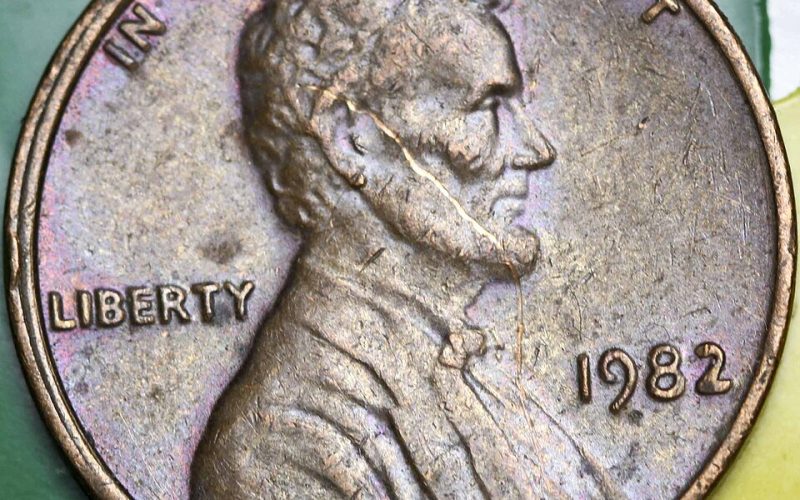
1982 Penny Coin Value (Errors List, “D”, “S” & No Mint Mark Worth)
The most valuable 1982 penny is the 1982-D Small Date Copper, worth $10,000 to $25,000 or more in 2026, due to its extreme rarity as…