
1988 Penny Coin Value (Errors List, “D”, “S” & No Mint Mark Worth)
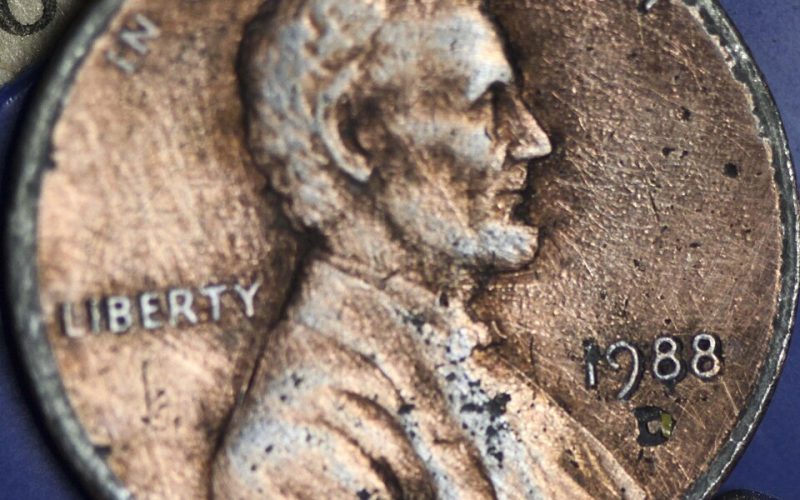
In 2026, the vast majority of 1988 Lincoln pennies are worth only their face value of 1 cent. However, specific mint marks—especially San Francisco proofs—and rare error varieties like the 1989 Reverse and Wide AM can increase worth to $100, $500, or more. Condition is critical: coins graded MS67 or higher command the highest premiums. While over 6 billion 1988 pennies were minted across Philadelphia and Denver, plus proof issues from San Francisco, only a tiny fraction carry the errors that collectors seek. This guide covers 2026 pricing, identification tips, and which varieties are truly valuable.
- Mint mark matters: Philadelphia (no mint mark) and Denver pennies are common in circulation; San Francisco proofs typically worth $6–$15+.
- Top errors drive value: The 1989 Reverse (Flared G) and Wide AM varieties are the most valuable, selling for $100 to $500+ in high grades.
- Condition is king: Uncirculated examples (MS-65+) of common mint marks worth $0.10–$0.30; MS67+ error varieties can reach $600+.
- Verify before buying/selling: Many “rare” 1988 pennies listed online are common; always cross-check with reputable numismatic sources.
1988 Penny Values by Mint Mark: Philadelphia, Denver, and San Francisco (2026 Prices)
1988 No Mint Mark (Philadelphia) Penny Value
- Mintage: Over 6 billion produced at the Philadelphia Mint, making it the most abundant 1988 penny.
- Circulated condition: Typically worth face value ($0.01) due to high availability.
- Uncirculated examples: Graded MS-60 to MS-63 fetch $0.10–$0.30.
- High-grade record: An MS68 specimen sold for $881, highlighting premium potential for pristine coins.
- General: Most 1988-P pennies are common; value comes from condition or rare errors.
The Philadelphia mint mark is absent on 1988 pennies, indicating they were struck at the original U.S. Mint. With a mintage exceeding 6 billion, these coins are extremely common in circulation. For most people, a 1988-P penny is worth exactly one cent. However, collectors seeking high-grade uncirculated examples, particularly those graded MS67 or higher, can pay hundreds of dollars. The record sale of an MS68 at $881 demonstrates that even common dates can achieve significant value when in exceptional condition. High-grade Philadelphia pennies are scarce because heavy circulation has worn down most survivors.
For values on earlier Indian Head pennies, refer to our 1859 Indian Head Penny guide.
1988-D Penny Value: Common with High-Grade Potential
- Mintage: 5,253,740,000 struck at the Denver Mint, nearly matching Philadelphia’s output.
- Circulated condition: Worth face value ($0.01) for the vast majority.
- Mid-grade uncirculated: MS-65 and above start around $0.30.
- High-grade premium: MS67+ can reach $45 to $600+, with an MS68RD selling for $1,495 in 2007.
- Rarity: High-grade Denver pennies are scarce due to heavy circulation and lower survival rates in top condition.
The 1988-D penny shares the same common status as its Philadelphia counterpart, with a mintage of over 5.25 billion. Most are found in circulation and are valued at one cent. However, the Denver issue shows a steeper value curve at the top end: coins graded MS67 or higher are rare and can sell for hundreds of dollars. The auction record of $1,495 for an MS68RD (red) example underscores the importance of condition. For collectors, finding a high-grade 1988-D in mint state is a notable achievement, and such coins often trade at significant premiums over face value.
Our 1863 Indian Head Penny article covers that key date in detail.
1988-S Proof Penny: Collector Premiums
- Mint mark: “S” indicates San Francisco, where proof coins were struck for collector sets.
- Production: Not released for circulation; only available in proof sets or as individual proofs.
- Value range: Typically $6–$15+ for lower proof grades (PR-60 to PR-63).
- High-grade: PR-65 and above can reach $30–$100+, with exceptional examples exceeding $200.
- Consistency: Even lower-grade proofs carry a premium over circulation issues due to limited supply and collector demand.
The 1988-S penny is fundamentally different from the Philadelphia and Denver issues because it was produced exclusively as a proof coin at the San Francisco Mint. These coins were sold in special collector sets and never entered general circulation. As a result, even heavily handled proof pennies retain a premium, typically starting at $6. High-grade proofs, especially those graded PR-65 or higher, are highly sought after and can command $30 to $100 or more. The proof mint mark makes the 1988-S an easy target for collectors building a complete set of Lincoln cents, and its consistent premium makes it a reliable hold for investors.
2026 Value Comparison Table for 1988 Pennies
| Mint Mark | Circulated | MS-65 | MS-67 | MS-68 / PR-68 |
|---|---|---|---|---|
| No Mint Mark (P) | $0.01 | $0.10–$0.30 | $0.30–$1.00 | $881 (record) |
| D | $0.01 | $0.30–$1.00 | $45–$200 | $1,495 (record) |
| S (Proof) | N/A | $6–$15 | $15–$50 | $100–$300+ |
Values are for standard 1988 pennies without error varieties. Error coins can be worth significantly more. Prices reflect 2026 market averages.
This table summarizes baseline values for 1988 pennies by mint mark and condition. Note that error varieties—such as the 1989 Reverse or Wide AM—are not included and can multiply these prices many times over. The jump from MS-65 to MS-67 is particularly steep for the Denver mint, illustrating how condition drives value even for common dates. For the San Francisco proof, the premium starts immediately at PR-60, reflecting its collector-only status.
For a comprehensive overview of all Lincoln penny values, visit our Penny guide.
Top 1988 Penny Error Varieties Worth $100 to $500+
1989 Reverse (Flared G) Variety: The Most Valuable 1988 Error
The 1989 Reverse, also known as the “Flared G” variety, is the most valuable error found on 1988 Lincoln cents. It occurs when a reverse die intended for 1989 pennies was mistakenly used to strike 1988 planchets. This transitional die error creates a distinct visual difference on the reverse (Lincoln Memorial) design.
The key identifier is the “G” in the “FG” initials (for designer Frank Gasparro) on the memorial’s steps. On a normal 1988 reverse, the “G” is narrow, angular, and block-like. In the 1989 Reverse, the “G” is noticeably flared—wider at the top and bottom, with a more rounded, open shape. Under 10x magnification, the difference is clear. The rest of the reverse design is identical to standard 1988.
Rarity: Very few examples are known. The 1988-P (Philadelphia) version is extremely rare, with perhaps only a few dozen certified. The 1988-D is even rarer, according to collector reports, making it the scarcest of the 1988 errors. Values reflect this scarcity: a 1988-P in average circulated condition (about Good) can sell for $100–$300. In higher grades, prices soar: MS-65 examples often exceed $500, and MS67+ can reach $1,000 or more. The 1988-D version commands a premium of 50–100% over the Philadelphia equivalent, with high-grade examples selling for several hundred to over $1,000.
Why it’s valuable: Transitional errors like this are highly prized because they represent a unique moment in minting history—the overlap of two design years. The 1989 Reverse is the premier variety for 1988 pennies and is a must-have for advanced Lincoln cent collectors. If you suspect you have one, handle it carefully and consider professional grading by PCGS or NGC to authenticate and maximize value.
For collectors of earlier Indian Head pennies, see our 1877 Indian Head Penny value guide.
Wide AM Reverse Error: Rare and Sought-After
The Wide AM variety is another highly valuable error on 1988 pennies, characterized by unusually wide spacing between the letters “A” and “M” in “AMERICA” on the reverse. This spacing is dramatically different from the standard “Close AM” used on most business strike Lincoln cents from 1993 through 2008, where the letters nearly touch. On 1988, the Wide AM is an anomaly and indicates a die mismatch or early die state.
To identify: Place the coin under 10x magnification and examine the word “AMERICA”. In a Wide AM, the gap between the A and M is clearly wider than the width of either letter. Use a ruler with millimeter markings under magnification to be precise. A Close AM (normal for later years) has the letters almost touching. On 1988, any Wide AM is an error and valuable.
Rarity: Wide AM examples on 1988 are very scarce. Only a handful have been certified by major grading services. This rarity drives strong demand among variety collectors.
Values: Depending on condition, Wide AM 1988 pennies can sell for $100–$500+. Lower-grade examples (Good to Very Fine) may fetch $100–$200. Higher grades (MS-65 and above) can reach $300–$800 or more. An MS67 could exceed $1,000. The Wide AM is considered one of the “modern rarities” of the Lincoln cent series and is a key variety for serious collectors.
Note: The Wide AM error also appears on other dates (1992, 1998, 1999, 2000), but the 1988 version is particularly valuable due to its early occurrence and low mintage of survivors.
Our 1888 Indian Head Penny article provides additional context on that year.
1988-D Repunched Mint Mark: Doubling Under Date
- What to look for: Under the date, the “D” mint mark shows clear doubling—essentially a second, offset “D” imprint overlapping the first.
- Cause: The mint mark was punched into the die twice, either from a repunch or a hubbed die error. This creates a doubled appearance.
- Identification: Use a 10x loupe; the doubling should be distinct and separated, not just wear or damage. Look for two complete D shapes, one slightly shifted.
- Value: Starting at $45 for lower grades; MS67+ can reach $200–$400. The premium increases with clarity of doubling and overall condition.
- Rarity: Only affects 1988-D pennies; not found on Philadelphia or San Francisco issues. It is a sleeper rarity that many casual collectors overlook.
The 1988-D repunched mint mark is a subtle but valuable error. It occurs when the D mint mark is punched into the die twice, creating a doubled appearance. Collectors look for a clear, separated secondary D under high magnification. This variety is exclusive to the Denver mint mark and is often overlooked, making it a sleeper rarity. Even in circulated condition, a clear repunch can add $45 or more; in high mint state, values climb significantly. Because it is confined to a single mint mark and year, it is a manageable target for collectors scanning pocket change. The 1988-D repunch is a perfect example of how a small minting flaw can create a coin worth hundreds of dollars.
Other 1988 Penny Errors: Doubled Die, Off-Center, Grease Strikes
- Doubled Die: Doubling appears on Lincoln’s ear, hair, or lettering on the obverse, or on the reverse design. Values range from $10 to $45+ depending on severity and grade. The most sought-after doubled dies show clear, separated doubling on major features.
- Off-Center Strikes: The coin design is not centered; the off-center percentage determines premium. Minor off-center (5-10%) may add $1–$5; moderate (10-30%) can add $5–$15; severe (over 30%) can reach $20–$50. The most valuable are dramatically off-center with full date and mint mark visible.
- Grease Strikes: Grease or debris on the die causes missing or weak elements, such as missing letters in “ONE CENT” or parts of the Lincoln Memorial columns. Minor grease strikes have small premiums ($2–$10); severe with large missing areas can be $20–$50. Coins with missing “LIBERTY” or “IN GOD WE TRUST” are especially notable.
- Note: These errors are more common than the top three varieties and thus less valuable, but they still add interest and can be found while examining coins for the major varieties. They are worth picking out of circulation if the premium exceeds face value.
While the 1989 Reverse, Wide AM, and repunched mint mark are the headline errors, other minor errors can also add modest value. Doubled dies, though not as dramatic as on older coins, appear occasionally and are collectible. Off-center strikes vary widely; the more dramatic the misalignment, the higher the premium. Grease strikes, often seen as blank areas, are common but severe examples with missing major design elements can be worth a small premium. These secondary errors are not primary targets but can be found while examining coins for the major varieties. They serve as a reminder to inspect every 1988 penny carefully, as any deviation from the norm may increase its worth.
How to Identify and Authenticate 1988 Penny Errors
Key Identification Features for 1988 Penny Error Varieties
Identifying 1988 penny errors requires careful examination with the right tools. Start with a 10x magnifying glass or loupe and good lighting. Follow this systematic approach:
- Check the reverse for the 1989 Reverse (Flared G): Locate the “FG” initials on the Lincoln Memorial steps. The “G” in the standard 1988 design is narrow and angular. In the 1989 Reverse, the “G” is flared—wider at the top and bottom, with a more rounded shape. Compare your coin to high-resolution reference images from varietyvista.com or the PCGS variety guide. The flared G is the single most important diagnostic.
- Measure AM spacing for Wide AM: Look at the word “AMERICA” on the reverse. In a Wide AM, the gap between the A and M is clearly wider than the width of either letter. Use a ruler with millimeter markings under magnification to be precise. A Close AM (normal for later years) has the letters almost touching. On 1988, any Wide AM is an error and valuable.
- Inspect the mint mark (1988-D only): Under the date, use magnification to examine the “D”. A repunched mint mark shows two distinct D shapes overlapping. The doubling should be clear and separated, not just wear or damage. The secondary D is usually slightly offset to the north or south.
- Scan for doubled die: On the obverse (heads), check Lincoln’s ear and hair for doubling. Also examine lettering such as “LIBERTY” and “IN GOD WE TRUST” for spreading or duplication. On the reverse, check the memorial columns and “ONE CENT” for doubling.
- Look for off-center strikes: Hold the coin with the design upright. If the design is not centered between the rim, measure the distance from the rim to the design on opposite sides. An off-center of 5% or more may add value; dramatic off-centers (over 20%) are more valuable.
- Check for grease strikes: Look for missing or weak elements, especially in the lettering or the columns of the Lincoln Memorial. Large missing areas, such as an absent “E” in “ONE” or missing columns, indicate a grease strike.
- Compare to reference images: Always cross-check with authenticated examples from reputable sources like varietyvista.com, coinforums, or the PCGS/NGC population reports. Many normal features are mistaken for errors.
- When uncertain, seek expert opinion: Consult a professional coin dealer or submit the coin to PCGS or NGC for authentication and grading. A professional opinion can confirm rarity and establish market value.
By following these steps, you can confidently identify the most valuable 1988 penny errors and avoid misidentifying common coins.
Our 1889 Indian Head Penny guide covers another transitional date.
Grading and Condition: Why MS67+ Is Critical for Value
The Sheldon grading scale, ranging from MS-60 (poor) to MS-70 (perfect), is the standard for assessing coin condition. For modern coins like the 1988 penny, mint state (MS) grades apply; proof coins use PR. Condition is the single most important factor in determining value, especially for error varieties.
For common 1988 pennies (no mint mark and D), the difference between a low mint state (MS-60) and a mid-grade (MS-63) is minimal—often just a few cents. However, once you reach MS-65, the scarcity increases sharply. The real jump occurs at MS-67 and above. At these levels, the coin must have perfect strike, full luster, and no visible flaws even under magnification. Only a tiny fraction of 1988 pennies survive in such condition because heavy circulation and poor storage have taken their toll.
Error varieties amplify this condition effect. A 1989 Reverse in MS-65 might sell for $100, but the same variety in MS-67 could fetch $500 or more. The 1988-D repunched mint mark shows a similar pattern: $45 at MS-65 versus $200+ at MS-67. This is because high-grade error coins are exceptionally rare; the combination of a scarce variety and pristine condition is the holy grail for collectors.
Professional grading by PCGS or NGC adds significant value. A coin encapsulated in a slab with a grade from these services is trusted by buyers and often sells for 2-5 times the price of an ungraded equivalent. Grading also protects the coin from damage and provides a permanent record of authenticity. For any 1988 error coin you suspect is valuable, grading is a worthwhile investment. The cost of grading ($20-$50) is easily offset by the price premium.
Even for common mint marks, condition can be dramatic. The record sale of an MS68 1988-P for $881—versus its face value—shows how a single grade point can transform a penny into a small fortune. Therefore, when evaluating 1988 pennies, always consider condition first; it can make a 10,000x difference in value.
Our 1890 Indian Head Penny article provides further insights.
Avoiding Fakes and Mislisted Coins on Marketplaces
The online marketplace is flooded with misidentified 1988 pennies. Sellers often label common coins as “rare” or “error” to attract uninformed buyers. Protecting yourself requires skepticism and verification.
Common red flags include:
- Vague descriptions like “rare error” without specifying the exact variety.
- Poor-quality photos that don’t clearly show the diagnostic feature (e.g., blurry images of the mint mark or reverse).
- Prices that seem too low for a claimed rare variety (if it’s truly rare, it won’t be cheap).
- Listings that use stock images instead of photos of the actual coin.
Verification steps:
- Demand high-resolution, well-lit photos that show the specific error area (e.g., close-up of the FG initials, AM spacing, or mint mark).
- Compare the coin to authenticated examples from reputable sources like varietyvista.com, coinforums, or the PCGS variety database.
- Consult a professional coin dealer for a second opinion before spending significant money.
- Consider buying only PCGS or NGC graded coins, as these have been authenticated by experts. Be aware that counterfeit slabs exist, so buy from reputable dealers.
- Use escrow services for high-value transactions.
- Remember that many “rare 1988 penny” claims on eBay are false; the coin is likely a common variety. The research note explicitly warns: “Many 1988 pennies listed as ‘rare’ on eBay are common coins; verify with reliable numismatic sites.”
By taking these precautions, you can avoid wasting money on misrepresented coins and focus on acquiring genuine, valuable 1988 error varieties.
A surprising insight: The 1988-D repunched mint mark is actually rarer than the Philadelphia 1989 Reverse, yet it receives far less attention from collectors. This undervaluation makes it a potential sleeper hit for those who can spot it. Action step: Pull out any 1988 pennies you have—use a 10x loupe to check the reverse for a flared “G” in the “FG” initials and measure the spacing of the “AM” in “AMERICA.” If you find either, handle the coin by the edges to avoid damage and consult a professional coin grader for authentication and potential value. Also inspect the mint mark under the date for doubling. These simple checks could uncover a coin worth hundreds of dollars, turning your spare change into a small fortune.
Our 1893 Indian Head Penny guide offers further insights into rare Indian Head varieties.
Frequently Asked Questions About 1988 Penny
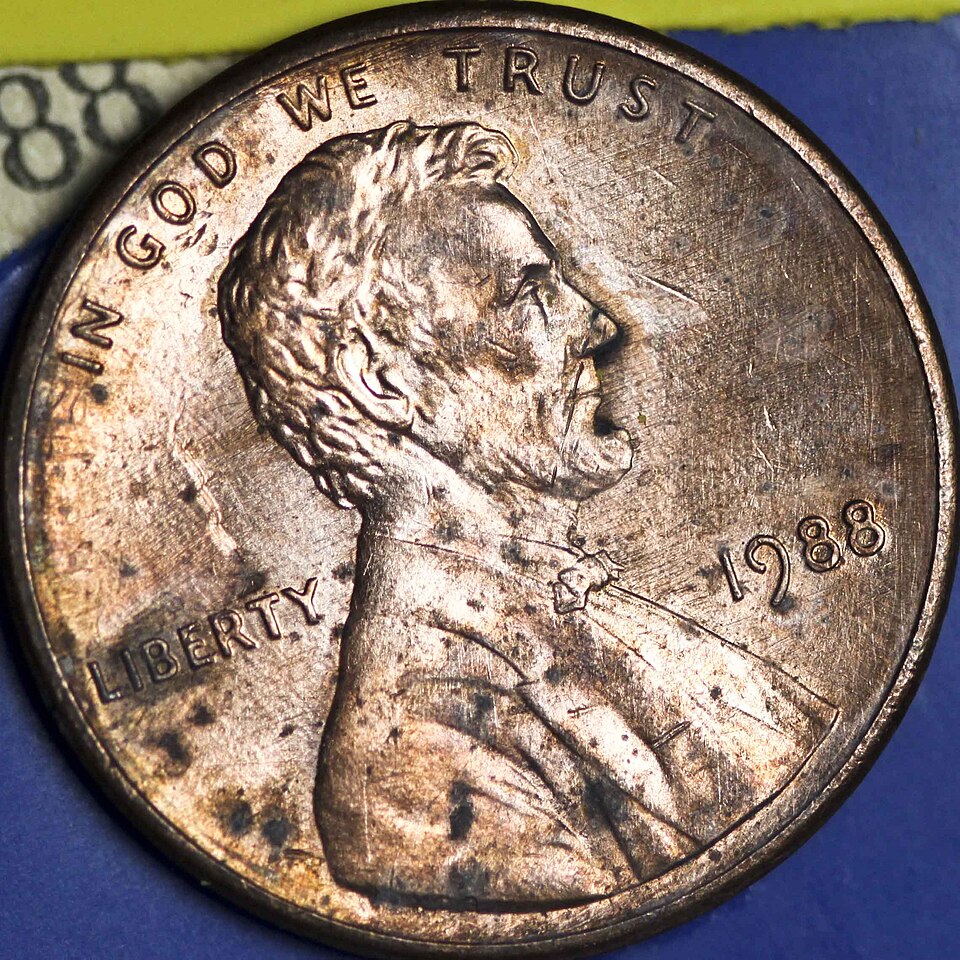
What makes a 1988 penny valuable?
Valuable 1988 pennies typically have a mint mark of ‘D’ or ‘S’ (proof) or are error varieties like the 1989 reverse. Key values: No Mint Mark (Philadelphia) MS-68 sells for $881; Denver ‘D’ MS-68 sells for $1,495; San Francisco ‘S’ proof PR-68 sells for $100–$300+.
Are there any rare 1988 penny varieties?
Yes. The top error is the 1989 reverse variety, where coins with this error in average condition (like MS-64) have sold for over $100, with prices rising. Other valuable errors are listed in the article’s error section, with values from $100 to $500+ for notable varieties in high grades.
Where can I sell my 1988 D penny?
For circulated 1988-D pennies in low grades, value is typically $0.01 (face value), and you can sell them to a local coin dealer. Higher-grade examples are valuable: an MS-65 is worth $0.30–$1.00, an MS-67 is worth $45–$200, and an MS-68 sold for a record $1,495.
Related Coins
 Penny
Penny
1970 Penny Coin Value (Errors List, “D”, “S” & No Mint Mark Worth)
2026 values for 1970 pennies. Find prices for no mint mark, D, and S mint marks. Identify key errors like Small Date and doubled die worth up to $24,000. Full guide.
 Penny
Penny
1942 Wheat Penny Coin Value (Errors List, D, S & No Mint Mark Worth) – 2026 Guide
2026 value guide for 1942 Wheat Pennies. Get prices for no mint mark, D, S, errors (DDO, RPM), and what makes them valuable. Updated market data.
1905 Indian Head Penny Coin Value (Errors List & No Mint Mark Worth)
A 1905 Indian Head penny (no mint mark, all from Philadelphia) is worth $2–$7 in average circulated condition today, while pristine uncirculated examples can reach…