
1991 Penny Coin Value (Errors List, “D”, “S” & No Mint Mark Worth)
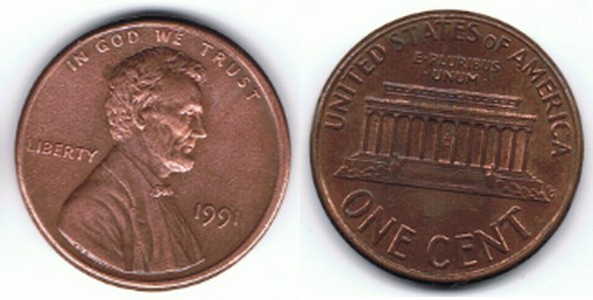
1991 Lincoln pennies are typically worth just 1 cent in circulation, but a 1991-D graded MS69RD sold for $11,400 at auction in 2025, demonstrating how mint mark and condition dramatically affect value. Key errors like BIE die breaks, off-center strikes, and double denomination on dime planchets can transform common change into collectibles worth $50 to over $2,000. This 2026 guide covers current market values for all 1991 mint marks—D, S, and Philadelphia (no mint mark)—and identifies the specific error varieties that command premium prices.
- 1991-D pennies are common but high-grade MS67-69 specimens range from $5 to over $11,000, with MS69RD setting auction records.
- Key error varieties include BIE die breaks ($5–$10), off-center strikes ($50+ for 50% off-center), and double denomination on dime planchets ($2,000+).
- Condition is critical: only brilliant red coins with no spots achieve MS67+ grades; professional grading from PCGS or NGC is essential for high-value sales.
1991 Penny Values by Mint Mark: D, S, and Philadelphia Compared
1991-D Penny Value: From Face Value to $11,400
The 1991-D penny from the Denver Mint had a massive mintage of 4.1 billion coins, making it one of the most common Lincoln Memorial cents. In circulated condition, these pennies are worth their face value of $0.01. The real value emerges with high-grade uncirculated specimens. Coins graded MS67 to MS69—the highest mint state grades—are exceptionally scarce despite the high mintage. A 1991-D graded MS69 Red (MS69RD) sold for $11,400 in 2025, according to CoinWeek. Most 1991-D pennies in everyday circulation show wear and have little collector value beyond their copper content. The scarcity of top-grade examples stems from the difficulty of preserving brilliant red copper luster on modern zinc-core pennies with copper plating.
1991-S Proof and Philadelphia Values: Premiums for Proof and Uncirculated
The San Francisco Mint produced approximately 2.8 million 1991 proof pennies, significantly fewer than circulation strikes. These proof coins were struck with special polished dies and planchets, resulting in a mirror-like finish. For 1991-S proof pennies, values depend heavily on the cameo contrast. Deep Cameo (DCAM) examples—where the design is frosted and the fields are mirror-bright—command the highest premiums, ranging from $5 to over $100 depending on grade. Regular proof finishes without strong cameo are valued lower, typically a few dollars.
Philadelphia-mint 1991 pennies (no mint mark) are also common in circulation, worth $0.01 when worn. However, uncirculated examples in Mint State grades can achieve modest premiums. According to Coin ID Scanner, Philadelphia pennies in MS65 to MS68 condition range from $1 to over $300. The highest grades for Philadelphia issues are rarer than for Denver, but the market demand is slightly lower, keeping prices below the 1991-D peak.
1991 Penny Value Chart by Mint Mark and Condition
The following table summarizes current 2026 market values for 1991 Lincoln pennies across major mint marks and grading levels:
| Mint Mark | Good (G-4) | Fine (F-12) | Very Fine (VF-20) | Extremely Fine (EF-40) | About Uncirculated (AU-50) | Mint State (MS-65) | Mint State (MS-67) | Mint State (MS-69) |
|---|---|---|---|---|---|---|---|---|
| 1991 No Mint Mark (Philadelphia) | $0.01 | $0.01 | $0.01 | $0.01 | $0.05-$0.10 | $1-$5 | $10-$50 | $100-$300+ |
| 1991-D | $0.01 | $0.01 | $0.01 | $0.01 | $0.05-$0.10 | $5-$20 | $50-$200 | $1,000-$11,000+ |
| 1991-S Proof | – | – | – | – | – | $2-$10 (regular) | $10-$50 (regular) | $50-$100+ (DCAM) |
The table reveals a dramatic pattern: all mint marks are worth face value in circulated grades up to About Uncirculated. Values begin to rise at the Mint State level, but the most explosive growth occurs at the top grades MS67-MS69. The 1991-D leads at MS69 due to collector demand for the highest grade of a high-mintage date. Proof coins follow a separate pricing structure, with DCAM examples commanding the highest premiums. Note that Philadelphia uncirculated coins show a steady increase but do not reach the same heights as 1991-D MS69, reflecting the market’s preference for the Denver issue at the top end.
1991 Error Penny Values: BIE, Off-Center, and Double Denomination
BIE Die Break Error: $5–$10 Premium
The BIE error (sometimes called “BIE die break”) occurs when a small vertical crack develops in the die between the letters “B” and “E” in the word “LIBERTY” on the reverse. This creates a raised line or bump that appears as an extra vertical stroke. The error is specific to 1991 pennies and is relatively common among minor die breaks. Collectors seek these because they are easy to spot with the naked eye or low magnification. Typical market value for a 1991 BIE error ranges from $5 to $10 in average circulated condition. Higher grades or more dramatic breaks can push prices toward the upper end. The BIE is considered a popular minor error that adds clear premium value without requiring extreme rarity. To identify, hold the coin with the reverse facing you and examine the letters “LIBERTY”—the line appears between the B and E, often looking like an extra serif on the B.
Off-Center Strikes: $50+ for 50% Off-Center
Off-center strikes happen when the coin is not properly centered in the press, causing the design to be shifted toward one edge. For 1991 pennies, an off-center error must be at least 10% off-center to add any collector premium. Minor off-center variations (under 10%) are common and usually not valuable. The most desirable are severe off-center strikes where a significant portion of the design is missing but the full date remains visible. A 50% off-center 1991 penny showing the complete date can sell for $50 or more, with higher prices for better condition and dramatic misalignment. The value depends heavily on how much design is missing and whether the date is fully legible. To measure, compare the distance from the design edge to the coin rim on opposite sides; a 50% off-center means one side has half the design cut off. These errors are popular with collectors of modern errors because they are dramatic and relatively affordable compared to other error types.
Double Denomination on Dime Planchet: $2,000+ Rarity
A double denomination error occurs when a 1991 penny is mistakenly struck on a planchet (blank) intended for a different denomination—in this case, a dime. The result is a penny that weighs approximately 2.27 grams instead of the standard 2.5 grams for a zinc Lincoln cent. The design is correctly stamped but on the smaller dime planchet, causing the coin to be undersized and underweight. This error is extremely rare for 1991 pennies and highly prized by collectors. Values start at $2,000 and can exceed that depending on grade and eye appeal. The weight difference is the most reliable test—use a precise scale to 0.01 grams. Visual inspection also shows the coin is slightly smaller in diameter than a normal penny. Because this error involves a cross-denomination mistake at the Mint, it is one of the most valuable 1991 penny varieties. A 1991 penny on a dime planchet would be a significant find and should be authenticated by a professional grading service.
Die Cracks and Other Minor Errors: $3–$150+
Die cracks and die breaks (other than BIE) appear as raised metal lines or small “pimples” on the coin’s surface. These occur when the steel die develops a fracture and metal fills the crack during striking. The value depends on the location, size, and visibility of the crack. Minor die cracks on the reverse or less prominent areas might add $3 to $20. More dramatic cracks that span major design elements or appear on the obverse (front) can reach $50 to $150+. Die breaks that cause missing metal or raised blobs are also collectible. These errors are less common than BIE but still appear in circulation occasionally. Collectors often seek them for error coin collections, especially if the crack is clearly visible and affects a notable part of the design. To spot, examine the coin under good light and magnification, looking for any raised lines or bumps that are not part of the intended design.
Condition Grading: The $11,000 Difference in 1991-D Pennies
Why MS67+ Grades Are So Rare for 1991 Pennies
Despite the 1991-D’s enormous mintage of 4.1 billion coins, high-grade examples in MS67 and above are surprisingly scarce. The primary reason is the inherent difficulty of preserving brilliant red copper luster on modern zinc-core pennies. The copper plating is thin and prone to toning, spotting, or oxidation over time. Most 1991 pennies entered circulation quickly and acquired wear. Even coins that were stored carefully often develop brownish toning or minor blemishes that prevent them from achieving the top grades. The Professional Coin Grading Service (PCGS) and Numismatic Guaranty Corporation (NGC) use strict standards for modern coins: an MS67 must have no visible flaws under 5x magnification, and MS68-MS69 require near-perfect surfaces with full original mint luster. For a 1991-D, only a tiny fraction of the surviving population meets these criteria. This scarcity drives the exponential price increase at the top grades—an MS69 can be worth 200 times or more than an MS65.
Red vs. Brown: How Color Affects Value
Color is a critical factor in grading 1991 pennies. “Red” (RD) refers to brilliant, original copper luster with no toning or oxidation. “Red-Brown” (RB) indicates partial toning, and “Brown” (BN) means the coin has fully oxidized to a darker patina. Only Red coins qualify for the highest grades (MS67+). Brown coins are typically valued at a significant discount, even if they are uncirculated. For example, an MS65RD might be worth $20, while the same coin graded MS65BN might be worth only $5. Spots, stains, or any form of corrosion further reduce value. Proper storage in airtight holders or Mylar flips helps preserve the red color, but many 1991 pennies have already toned over the past 35 years. When evaluating a coin, hold it under a light and look for uniform copper color; any dullness or discoloration will lower the grade and price. Grading services assign color designations as part of the grade, so a coin labeled MS67RD is significantly more valuable than MS67BN.
Professional Grading: PCGS and NGC Standards for 1991-D
For 1991-D pennies in MS65 condition or better, professional grading from PCGS or NGC is essential to unlock full market value. These two services set the industry standard, and their certified coins command higher prices in dealer and auction markets. The grading process involves authentication, condition assessment, and encapsulation in a tamper-evident slab. For 1991-D, the highest grade routinely awarded is MS69RD; MS70 is virtually nonexistent due to the coin’s manufacturing tolerances. Submitting a coin for grading costs $20-$50+ per coin depending on service level and value, so it makes economic sense only for coins likely to grade MS67 or higher. Collectors should cleanly weigh the potential return: a 1991-D that looks MS67+ under magnification may be worth the submission fee if it receives a high grade. PCGS and NGC both have population reports showing how many 1991-D pennies have been graded at each level—these reports help gauge rarity. A coin with a high grade from a major service will sell for substantially more than an ungraded equivalent, especially at the MS67-MS69 levels where premiums are steep.
Grading Impact Table: Value Jumps from MS65 to MS69
The following table illustrates how dramatically value increases with each grade step for the 1991-D penny:
| Grade | Typical Value Range (2026) | Notes |
|---|---|---|
| MS65 | $5 – $20 | Uncirculated but may have minor contact marks; luster may be slightly subdued. |
| MS66 | $10 – $50 | Better luster, fewer flaws; still may have small blemishes under magnification. |
| MS67 | $50 – $200 | Choice uncirculated; strong luster, no major flaws visible to naked eye. |
| MS68 | $200 – $1,000 | Gem quality; excellent luster, virtually flawless surfaces. |
| MS69 | $1,000 – $11,000+ | Nearly perfect; only the tiniest imperfections under 5x; full red luster. Auction records reach $11,400. |
The table shows an exponential rather than linear increase. Moving from MS65 to MS66 might double the value, but from MS68 to MS69 the multiplier can be 5-10x or more. This reflects the extreme scarcity of top-grade modern coins. A 1991-D in MS69RD is a trophy coin that serious collectors seek, and the auction record of $11,400 demonstrates the market’s willingness to pay for perfection. Most 1991-D pennies in circulation will never approach these grades, but if you suspect your coin is in high-grade uncirculated condition, professional grading is the only way to realize its full potential value. The jump from MS67 to MS68 alone can mean a 4x increase in price, underscoring how critical each grade step is for this date and mint mark.
Despite billions minted, 1991-D pennies in perfect MS69 condition are rarer than many realize—one sold for $11,400 in 2025. The most valuable errors, like double denomination on a dime planchet, can turn a 1-cent coin into a $2,000+ treasure. Action step: Weigh your 1991 pennies—if it weighs 2.5 grams, it’s standard; if lighter (around 2.27 grams), it may be on a dime planchet. Also, examine under magnification for BIE errors (line between B and E in LIBERTY) and off-center strikes. Any 1991-D in MS65 or better condition should be considered for professional grading to unlock its full market value. For a complete overview of penny values across all years and mint marks, consult the Penny value guide. While earlier Indian Head pennies like the 1893 Indian Head Penny have different value drivers, the principles of condition and error rarity apply universally. Likewise, these principles illustrate how scarcity and condition dominate value across the series.
Related Coins
1969 Penny Coin Value (Errors List, “D”, “S” & No Mint Mark Worth)
Most 1969 pennies are worth just 2 cents. But a rare 1969-S Doubled Die Obverse error can fetch over $250,000. This guide separates the three…
1940 Wheat Penny Value (2026): Errors List, D, S & No Mint Mark Worth
2026 values for 1940 wheat pennies. Compare no mint mark, D, & S mint marks. See error values: Doubled Die Obverse ~$70, Repunched Mint Mark $100-$175+. MS67-MS68 red coins reach $1,500-$7,500+.
1960 Penny Coin Value (Errors List, “D” & No Mint Mark Worth) – 2026 Guide
Complete 1960 penny value guide for 2026. Learn what 1960-D Small Date Over Large Date errors are worth ($200-$500+), RPM values, and how to identify Small vs Large Date. Includes price table.