
1993 Penny Value 2026: Errors List, D, S & No Mint Mark Worth
Most 1993 pennies are worth face value ($0.01), but rare errors like the 1993-D mule can exceed $50,000, and high-grade MS69 examples reach $4,600+. These coins were minted as part of the Lincoln Memorial Cent series, with production in Philadelphia (no mint mark), Denver (D), and San Francisco (S). While the vast majority of 1993 pennies have little numismatic value, specific mint marks, condition grades, and error varieties can command significant premiums among collectors, as seen with key date Indian Head Pennies like the 1863 Indian Head Penny. Understanding these differences helps you identify valuable coins in your collection or pocket change.
- The 1993-D mule error, struck with a Roosevelt dime reverse, is the most valuable, often selling for over $50,000 at auction.
- The 1993-D Close AM variety, where the A and M in AMERICA nearly touch, ranges from $50 to $300+ depending on grade and color.
- 1993-S proof pennies from San Francisco typically sell for $1-$5, with pristine PR69 DCAM examples fetching $10-$18.
1993 Penny Value Quick Reference 2026
Base Values: Circulated vs Uncirculated
- Common Circulation: These coins show wear and are typically worth face value ($0.01).
- Uncirculated (MS+): Coins with no wear but may lack strong luster range from $0.50 to $5+.
- High Grade (MS67-MS68): Well-struck with good luster, values rise to $30 to $100+.
- Superb Gem (MS69): Exceptional coins with perfect strike and original red luster can reach $1,000 to $2,000+.
Condition matters because collectors seek coins with original appearance and sharp details. The copper-plated zinc composition of 1993 pennies means that oxidation and handling quickly reduce luster. Higher grades like MS67+ are scarce, especially in red color, creating supply-demand imbalance that drives prices. Even a small improvement in grade can double or triple the value, making condition the primary factor in valuation, as demonstrated by key date Indian Head Pennies such as the 1890 Indian Head Penny.
1993-D, 1993-S, and Philadelphia Mint Values
| Mint Mark | Average Circulated | Uncirculated | High-Grade (MS68+) |
|---|---|---|---|
| 1993-D (Denver) | Face value ($0.01) | $0.50-$5+ | $2,500+ |
| 1993-S (San Francisco) | $1-$5 (proof only) | $1-$5 | $10-$18 (PR69 DCAM) |
| 1993 (Philadelphia, no mint mark) | Face value ($0.01) | $0.50-$5+ | Up to $5,000 (MS69) |
The mint mark significantly influences value due to mintage numbers and collector demand. Denver produced the highest quantity, but high-grade examples are still scarce. San Francisco only issued proof coins, which are collected in sets and have lower individual premiums unless in gem condition. Philadelphia coins are common but can achieve high prices in top grades due to the difficulty of finding perfect specimens, similar to the challenge of locating high-grade 1893 Indian Head Penny. Note that San Francisco proofs are never found in circulation, while Denver and Philadelphia business strikes are.
Error Values at a Glance: Mule, Close AM, Proof
- 1993-D Mule Error: $50,000+ — This dramatic error uses a Roosevelt dime reverse die, showing a torch and olive branch instead of the Lincoln Memorial.
- 1993-D Close AM Variety: $50-$300+ — The letters A and M in AMERICA on the reverse are almost touching, a feature rare on business strikes.
- 1993-S Proof: $1-$5 typical, $10-$18 for PR69 DCAM — Proof coins have a mirror-like finish and are struck with extra care.
Error coins are valuable because they are unintended and often scarce. The mule error is a major die combination mistake, making it extremely rare, similar to the scarcity of the 1877 Indian Head Penny. The Close AM is a subtle variety that resulted from die preparation differences and was not widely recognized until later. Proof coins, while not errors, are produced with special processes and sold directly to collectors, hence their premium over circulation issues. Error varieties like the mule and Close AM are highly prized, similar to key dates in earlier series such as the 1859 Indian Head Penny.
The 1993-D Mule Error: $50,000+ Penny with Dime Reverse
What is the rare error on the 1993 penny? The $50,000 Mule
A mule error occurs when a coin is struck with obverse and reverse dies that were never intended to be paired. In the case of the 1993-D mule, the obverse is a normal Lincoln cent die, but the reverse is from a Roosevelt dime die. This results in a penny that has Abraham Lincoln on the front and a torch with olive branch (the dime reverse) on the back. Such errors are extremely rare because the Mint has strict quality controls to prevent mismatched dies. The 1993-D mule is one of the most dramatic and valuable modern errors, with only a handful known to exist. Its rarity and the novelty of having a dime design on a cent drive its value well into five figures.
The value of this error starts at $50,000 for even low-grade examples, and prices can climb significantly for coins in better condition or with professional certification. Collectors of mint errors prize such anomalies because they represent genuine mistakes from the Mint, and the 1993-D mule is a standout due to the complete design mismatch. Finding one in circulation is virtually impossible, as they were quickly identified and removed from the production process.
1993-D Mule Value: $50,000+ for Roosevelt Dime Reverse
- Auction records: Certified 1993-D mules have sold for over $50,000 in recent years.
- Condition dependence: While condition always affects value, even heavily worn mules fetch high sums due to scarcity.
- Certification premium: Coins graded by PCGS or NGC with the mule error command a substantial premium over ungraded examples.
The high value is driven by extreme rarity and high demand among error coin collectors. Since only a few are known, each new discovery attracts significant attention. The fact that it is a modern coin (1993) makes it accessible to collectors who focus on post-1965 errors, further boosting demand. Authentication is crucial because counterfeit mules have been attempted, so grading from a major service adds trust and liquidity.
How to Identify a 1993-D Mule: Step-by-Step Guide
- Check the reverse design: Under 10x magnification, look for the Lincoln Memorial. If you see a torch and olive branch, it is a dime reverse.
- Verify the mint mark: The obverse must have a “D” mint mark below the date, indicating Denver.
- Confirm the date and lettering: The obverse should have the standard 1993 Lincoln cent design with no anomalies.
- Examine overall strike: Ensure there are no other errors that might indicate a different variety.
- Seek professional authentication: If you suspect a mule, do not clean the coin. Contact PCGS or NGC for submission to verify and grade.
Magnification is essential because the dime reverse details are small. The torch and olive branch are distinctly different from the Lincoln Memorial’s columns and dome. Also, note that the dime reverse will have the words “ONE DIME” missing, as that is on the obverse of a dime. The combination of a cent obverse with a dime reverse is a clear indicator. Given the high value, professional grading is recommended to avoid scams and to establish market value.
Rarity and Recent Auction Prices (2026)
The 1993-D mule is exceptionally scarce. Only a handful of examples have been certified by major grading services. In 2025 and 2026, auction results show that these coins consistently sell for $50,000 or more, with some reaching higher depending on grade and eye appeal. The demand remains strong because error collectors seek such dramatic varieties, and the 1993-D mule is considered a “trophy” coin for modern error collections. Its rarity is comparable to other famous modern errors like the 1958-D cent with a dime reverse, but the 1993-D is even less common.
The Mint likely produced very few mules before the error was detected and corrected. This low survival rate, combined with the fact that many were pulled from circulation early, means that available specimens are extremely limited. Collectors should be cautious of claims of ungraded mules, as authentication is critical to verify authenticity and condition.
How to Spot a 1993-D Close AM or Mule Error?
Close AM vs Wide AM: What’s the Difference in 1993?
The reverse of Lincoln Memorial Cents features the word “AMERICA” along the upper rim. The spacing between the letters A and M varies between “Wide AM” (a clear gap) and “Close AM” (the letters almost touch). In 1993, the Mint transitioned from Wide AM to Close AM for business strikes. However, on 1993-D cents, the Close AM variety is less common and therefore valuable. The Wide AM is the standard for most 1993 pennies, while Close AM is a variety that was intended for proof coins but appeared on some business strikes due to die reuse or preparation differences.
For collectors, identifying the spacing requires careful examination with magnification. The difference is subtle: in Close AM, the inner strokes of the A and M are almost connected, while in Wide AM, there is a distinct space. This variety is particularly sought after on 1993-D because it is rarer than on Philadelphia-minted 1993 cents. The Close AM on 1993-D is considered a major variety and lists for a significant premium over regular Wide AM examples.
1993-D Close AM Value by Grade: $10-$300+ Breakdown
| Grade | Value Range | Notes |
|---|---|---|
| Circulated/Low Grade | $10-$50 | Wear may obscure spacing; still premium over face value |
| MS63-MS65 | $50-$150 | Uncirculated with good luster; Close AM clearly visible |
| MS66+ (Gem) | $150-$300+ | Excellent strike, strong red color; high demand |
| Red (RD) Color | Adds 50-100% premium | Original copper luster increases desirability |
The value escalates with grade because higher grades preserve the coin’s original appearance and make the Close AM feature more pronounced. Red color is especially prized, as it indicates the coin has not been cleaned or toned. Even in lower grades, a confirmed Close AM variety will sell for many times face value due to its scarcity. Collectors should note that the Close AM is distinct from the Wide AM, and misidentification can lead to overpaying or missing a valuable coin.
What to look for on a 1993 D penny?: Close AM Identification Guide
- Use magnification: A 10x loupe is essential to see the fine details of the letter spacing.
- Locate “AMERICA”: Find the word on the reverse, just above the Lincoln Memorial.
- Check A and M spacing: In Close AM, the right stroke of the A almost touches the left stroke of the M. In Wide AM, there is a clear gap.
- Examine designer initials: The initials “FG” for Frank Gasparro are placed closer to the memorial on Wide AM and farther away on Close AM.
- Confirm mint mark: Ensure the obverse has a “D” mint mark, as Close AM is most valuable on 1993-D.
- Assess condition and color: Look for original red luster (RD) and any signs of cleaning or damage that might reduce value.
These steps help differentiate Close AM from the more common Wide AM. The designer initials’ position is a secondary indicator that can confirm the variety. Since the Close AM on 1993-D is valuable, it is worth spending time to examine multiple coins. However, be aware that other factors like strike quality and surface marks also affect value, so a holistic assessment is necessary.
Condition Factors: Red (RD) vs Red-Brown (RB) vs Brown (BN)
- Red (RD): The coin retains its original bright copper luster with no toning. This is the highest grade designation and can increase value by 50-100% or more over the same grade in brown.
- Red-Brown (RB): The coin shows a mix of original red and brown toning, often on high points. It is less valuable than RD but still commands a premium over fully brown coins.
- Brown (BN): The coin has fully oxidized to a brown color, typically due to exposure or improper storage. While still worth more than face value in uncirculated grades, it is the least valuable color designation.
Color reflects the coin’s storage history and original mint luster, which is particularly important for high-value coins like the 1888 Indian Head Penny. The copper-plated zinc composition of 1993 pennies is prone to toning, so finding RD examples becomes harder as time passes. For error varieties like Close AM, color is even more critical because it enhances the coin’s eye appeal. Collectors should handle coins carefully and store them in inert holders to preserve RD status. Condition is critical for all U.S. coins, whether modern pennies like the 1993 or historic issues such as the 1859 Indian Head Penny.
The most surprising discovery is that a common 1993-D penny in your pocket change could be worth $50,000 if it has the rare mule error with a dime reverse, a value comparable to key date Indian Head Pennies such as the 1889 Indian Head Penny. To check your coins, examine each 1993 penny under magnification for Close AM spacing on the reverse and any unusual designs. If you find a potential error, have it authenticated by professional grading services like PCGS or NGC to confirm its value and protect your investment.
Related Coins
 Penny
Penny
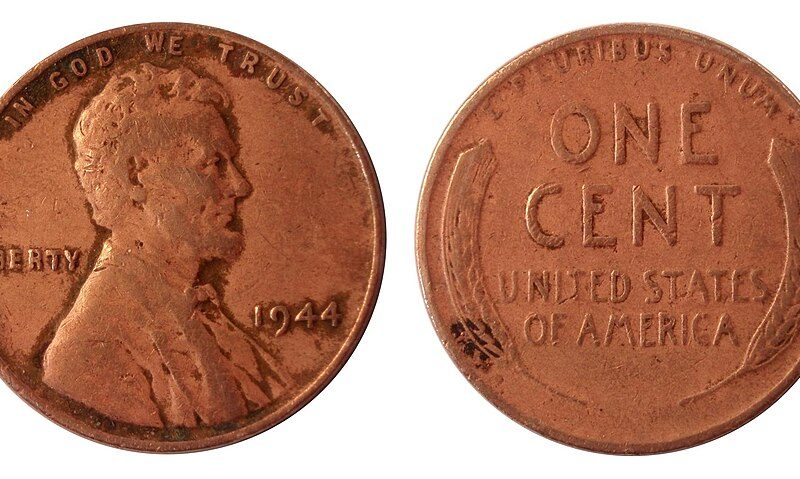
1944 Wheat Penny Coin Value (Errors List, “D”, “S” & No Mint Mark Worth)
Discover 1944 wheat penny values for 2026. Learn about mint marks (D, S, no mint mark), rare errors like steel and D/S over-mintmark, and how to identify valuable coins.
 Penny
Penny
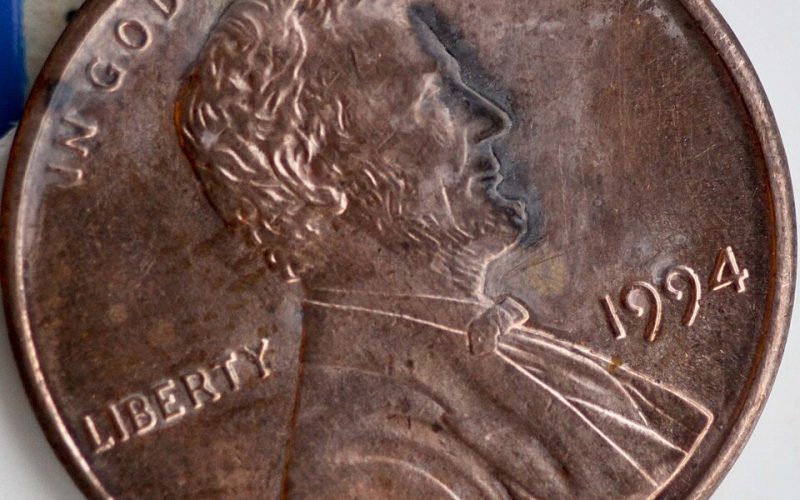
1994 Penny Coin Value (Errors List, “D”, “S” & No Mint Mark Worth)
1994 Penny Coin Value (Errors List, “D”, “S” & No Mint Mark Worth) A 1994 penny is generally worth face value ($0.01) in circulated condition,…
 Penny
Penny
1918 Penny Coin Value (Errors List, “D”, “S” & No Mint Mark Worth)
A 1918 Lincoln Wheat Penny is worth between $0.50 and $5 in typical circulated condition, but rare examples can sell for thousands of dollars. These…