
1994 Penny Coin Value (Errors List, “D”, “S” & No Mint Mark Worth)
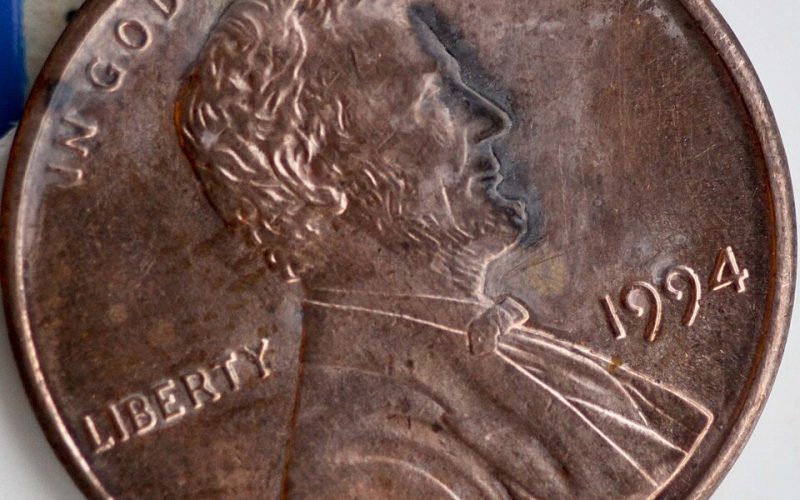
1994 Penny Coin Value (Errors List, “D”, “S” & No Mint Mark Worth)
A 1994 penny is generally worth face value ($0.01) in circulated condition, but uncirculated coins can bring $0.30–$4+, with the rare Doubled Die Reverse (DDR) error fetching $100–$200+. The mint mark—no mark (Philadelphia), “D” (Denver), or “S” (San Francisco proof)—is the first factor determining value, followed by condition and any error varieties. The most valuable 1994 penny is the Doubled Die Reverse (FS-801), featuring an extra column on the right side of the Lincoln Memorial, which has sold for up to $2,875 at auction.
- Mint mark matters: 1994-P (no mint mark) and 1994-D are common; 1994-S proofs are scarce but only valuable in high grades (PR65+).
- DDR error is king: The Doubled Die Reverse (FS-801) with an extra column in the Lincoln Memorial is the most valuable variety, selling for $100–$200+.
- Condition is critical: Uncirculated “red” coins in MS66-68 can command premiums over $600 for 1994-D, while circulated coins remain at face value.
1994 Penny Value: Mint Mark Breakdown and Current Prices
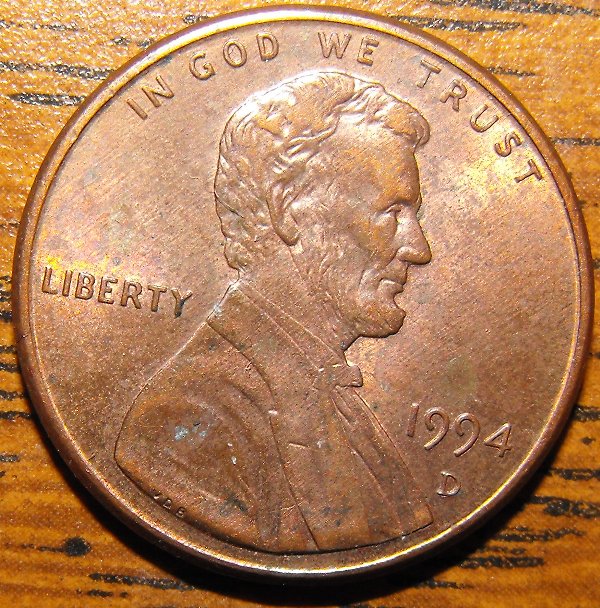
Value Chart by Mint Mark and Condition
The table below summarizes the typical market values for 1994 pennies across the three mint mark varieties and key condition tiers. All values are in USD and represent approximate ranges for 2026.
| Mint Mark | Circulated (worn) | Uncirculated (MS-65) | Proof (PR65) |
|---|---|---|---|
| 1994-P (no mint mark) | $0.01 | $0.30–$1+ | N/A |
| 1994-D | $0.01 | $0.30–$0.80 | N/A |
| 1994-S (proof) | N/A | N/A | $4.10 |
Uncirculated coins are worth significantly more than their circulated counterparts because they retain their original mint luster and show no wear. For modern pennies like the 1994, finding an uncirculated example is challenging; most entered circulation and were heavily used. “Red” (RD) coins with original copper color are especially desirable and carry the highest premiums within the uncirculated grade range. Even within uncirculated, condition varies from MS-60 (poor) to MS-70 (perfect), with each step adding value.
The 1994-S proof, despite its low mintage of 3.2 million, only fetches premiums in pristine condition. The $4.10 price point applies to a PR65, which is the baseline for proofs. Most proofs were handled by collectors and may have minor flaws; only gem-quality examples (PR69/70) are truly scarce and valuable. A PR70 can exceed $100, and a Deep Cameo (DCAM) version can reach $200–$400. Thus, mintage alone does not guarantee high value—condition remains the ultimate driver.
Mintage Numbers: Why 1994-P and 1994-D Are Common, 1994-S Is Scarce
The Philadelphia Mint produced 6.5 billion 1994 pennies with no mint mark, while the Denver Mint produced 7.1 billion with the “D” mint mark. These enormous figures make both varieties extremely common. In contrast, the San Francisco Mint produced only 3.2 million proof pennies bearing the “S” mint mark, a dramatically lower number that immediately signals scarcity.
Such high mintage for business strikes means that unless a coin is in perfect uncirculated condition, it will be worth only its face value of $0.01. The market is saturated, so supply overwhelms demand for average coins. The 1994-S proof, with its mintage of 3.2 million, is the rarest of the three. However, mintage alone does not guarantee high value. Many proof coins were sold to collectors who preserved them, but over time, some have been mishandled, toned, or scratched. Consequently, only those in pristine condition (PR69/70) command significant premiums. The baseline PR65 value is $4.10, but a PR70 can exceed $100.
It is essential to understand that mint mark type matters: business strikes (P and D) are intended for circulation, while proofs (S) are struck with special polished dies and planchets, resulting in a mirror-like finish. This difference in production means that even with lower mintage, the 1994-S proof’s value is heavily conditioned on its state of preservation. The ratio between business strike and proof mintage is over 2,000:1 (7.1 billion vs 3.2 million), yet the price ratio between a common uncirculated 1994-D ($0.80) and a PR65 1994-S ($4.10) is only about 5:1. This illustrates that condition and mint mark type modulate the impact of mintage on value.
What Does a 1994 D Penny Look Like?
A quick visual identification guide helps you recognize the three mint mark varieties and key design features.
- No Mint Mark (Philadelphia): The coin has no letter on the reverse or obverse indicating mint. It is the most common variety, with over 6.5 billion minted. The obverse shows Lincoln’s portrait with the date 1994; the reverse features the Lincoln Memorial. The absence of a mint mark is itself an identifier.
- “D” Mint Mark (Denver): A small “D” is located on the obverse, just below the date. This identifies the coin as struck at the Denver Mint. The “D” is typically about 1 mm in size and may be worn on heavily circulated coins. The Denver Mint produced over 7.1 billion of these, making them very common.
- “S” Mint Mark (San Francisco Proof): A small “S” appears below the date on the obverse, but only on proof coins. Proofs have a distinct appearance: mirror-like reflective fields and frosted, matte devices (raised design). The “S” is usually sharper and more defined than on business strikes. The 1994-S proof had a mintage of 3.2 million and is sold in special sets.
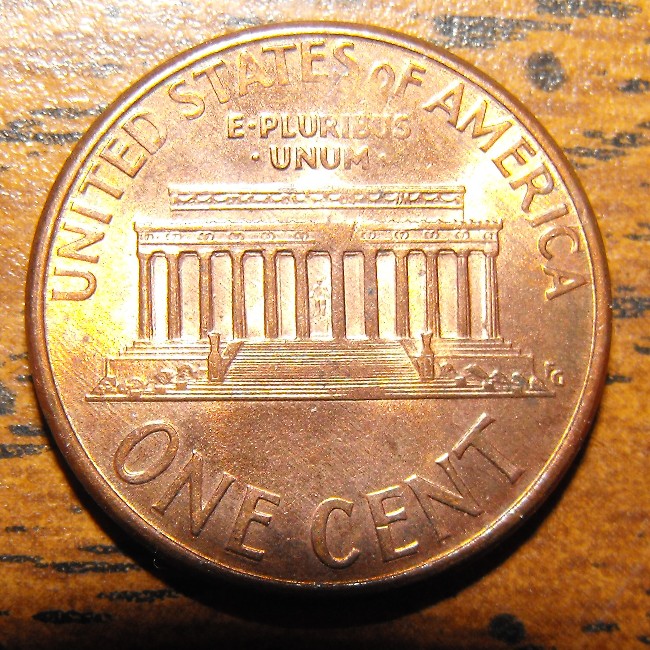
- Design Features: All 1994 pennies are Lincoln Memorial cents. The obverse (heads) displays Abraham Lincoln facing right, with “LIBERTY” above, “IN GOD WE TRUST” below, and the date 1994 to the right. The reverse (tails) shows the Lincoln Memorial building with a small Lincoln statue inside, surrounded by “ONE CENT” and “UNITED STATES OF AMERICA”. The memorial’s columns are a focal point for error spotting.
- Magnification Tip: Use a 10x magnifying loupe to examine the mint mark and the reverse design. The mint mark can be confused with post-mint damage; a genuine mint mark is incuse (recessed) and perfectly shaped. On proofs, the “S” may be more prominent due to the frosted effect.
- Error Spotting: The reverse’s Lincoln Memorial is where the Doubled Die Reverse (DDR) error occurs. Look carefully at the far-right column of the memorial for a faint extra column. This is the key to finding a valuable error. For guidance on identifying DDR, see the detailed section below.
For a comprehensive overview of penny values across all years, see our Penny guide. If you are interested in older Indian Head pennies, the 1859 Indian Head Penny value guide provides similar error-hunting techniques for classic dates.
1994 Penny Error Varieties: Identifying the Doubled Die Reverse (DDR)
Doubled Die Reverse (DDR) FS-801: The $100–$200+ Error
The Doubled Die Reverse (DDR) FS-801 is the most valuable error variety for 1994 pennies. It can sell for $100–$200+ in average condition, with high-grade examples reaching into the thousands. The auction record for a 1994 DDR is $2,875, demonstrating its desirability among error collectors.
This error results from a die clash during the minting process, causing a secondary impression to appear on the die. On the reverse, this manifests as an extra, faint column on the right side of the Lincoln Memorial building. The normal design shows a row of columns; the DDR adds a ghostly duplicate of the far-right column. The effect is subtle but unmistakable with magnification.
Follow these steps to identify a DDR:
- Hold the coin with the reverse (tails) side facing you. The reverse depicts the Lincoln Memorial, a classical temple with columns.
- Focus on the far-right column (the column at the extreme right when viewing the memorial). This column is part of the building’s colonnade.
- Look for a faint, shadow-like column immediately to the left of the normal column. It will be slightly offset and less distinct, but still recognizable as a column shape. Use a 10x magnifier and tilt the coin under a light to catch the doubling.
- Confirm that the doubling is on the column itself, not on the background or other elements. The extra column is a direct duplication of the adjacent column.
- Check other areas of the memorial to ensure the doubling is isolated to that column; the rest of the design should be normal.
The DDR can appear on any mint mark variety (1994-P, 1994-D, 1994-S), though it is rare across all. The FS-801 designation identifies this specific doubled die variety for the 1994 Lincoln Memorial cent. Value depends on the severity of the doubling, the coin’s grade, and the mint mark. A clear, well-centered DDR in MS-65 or better can easily exceed $200. Lower-grade examples still command $100+ due to the error’s rarity.
Because doubled die errors are highly valuable, professional grading by PCGS or NGC is recommended. They will verify the error and assign a grade, which significantly impacts market value. Look for the “DDR” or “FS-801” designation on the slab. The error is often found in the memorial bays (the spaces between columns); examine the entire memorial carefully, as the doubling may be subtle, and for error identification in Indian Head pennies, refer to the 1890 Indian Head Penny Coin Value guide. For collectors of earlier Indian Head pennies, similar error-hunting strategies apply; see our 1863 Indian Head Penny error guide for comparative examples.
Doubled Die Obverse (DDO): Less Common but Valuable
Doubled Die Obverse (DDO) occurs when the obverse (heads) die is doubled during hubbing, causing lettering and design elements to appear doubled. On 1994 pennies, DDO is less frequently encountered than the DDR but still adds significant value—often $50–$200+ in high grades.
Key areas to check with a 10x magnifier:
- “LIBERTY”: The word above Lincoln’s head often shows doubling, especially on the letters “B” and “Y”. Look for a clear secondary outline or shadow on these characters.
- “IN GOD WE TRUST”: This motto may exhibit doubling on various letters. The effect can be subtle or dramatic, depending on the die.
- Date: The digits “1994” sometimes show doubling, particularly on the “9” or “4”. Check each numeral carefully.
- Lincoln’s profile: Less commonly, doubling appears on the portrait itself, such as on the cheek or beard.
Identification tips: Doubling is usually horizontal (offset to the left or right). Compare with a known normal 1994 penny to spot anomalies. The doubling may be faint, so use good lighting and tilt the coin. DDO varieties on 1994 are not as well-documented as the DDR, but they exist and are sought by error collectors. Keep an eye out during coin rolls or collections.
Other Errors: Die Cracks and Chips
Die cracks and chips are common manufacturing defects on high-mintage coins like the 1994 penny. With billions of coins struck, the dies endure immense pressure and can develop fractures. A die crack appears as a raised line of metal on the coin (a “cud”) where the die has broken. A die chip is a small piece of the die that has broken off, leaving a missing area on the coin.
Most die cracks and chips are minor and located in inconspicuous areas, adding little to no value—perhaps $1–$5 above face. However, if the defect appears in a prominent location, such as within the bays (spaces) of the Lincoln Memorial on the reverse or on Lincoln’s face on the obverse, it can increase the coin’s value by $10–$50+.
The Lincoln Memorial design, with its many fine details, is particularly susceptible to die cracks. Collectors sometimes pay extra for dramatic cuds that span multiple columns or affect the memorial’s structure. A crack that runs through one of the memorial’s columns or across the statue of Lincoln inside can be especially desirable.
Identification: Use a magnifying glass to feel for roughness or raised lines. Die cracks often appear as raised, irregular ridges. Chips are missing metal areas that may look like small pits or gaps. Compare with a known good coin to spot anomalies. Remember that only mint-made errors (those occurring during striking) are collectible; post-mint damage does not add value.
While not as valuable as doubled die errors, die cracks and chips are worth noting because they are relatively common and can turn an ordinary penny into a small treasure, as exemplified by the 1893 Indian Head Penny Coin Value guide. They also provide insight into the minting process and die life. For a broader perspective on error varieties across different penny series, consult the 1877 Indian Head Penny error list.
Condition Grading: How MS66-68 and PR65/70 Affect 1994 Penny Values
Uncirculated Grades MS66-68: Premiums Up to $600+
Condition is the single most important factor for modern pennies like the 1994. The table below shows how values escalate with higher mint state grades for the business strike varieties (1994-P and 1994-D). All values are approximate and in USD.
| Grade | 1994-P Value | 1994-D Value |
|---|---|---|
| MS-65 | $0.30–$1+ | $0.30–$0.80 |
| MS-66 | $1–$5 | $1–$3 |
| MS-67 | $5–$20 | $5–$15 |
| MS-68 | $100–$300 | $600+ |
Uncirculated coins show no wear on any high points, retain full mint luster, and have original surfaces. “Red” (RD) coins with original copper color are most desirable; brown or toned coins are less valuable. The mint state scale ranges from MS-60 (poor) to MS-70 (perfect). For modern high-mintage coins, achieving grades above MS-65 is difficult because the coins were mass-produced and often have contact marks or minor flaws from handling during striking and bagging.
The jump to MS-68 is dramatic, especially for the 1994-D. Despite a mintage of over 7.1 billion, very few examples have survived in pristine condition. PCGS and NGC have graded only a handful of 1994-D pennies at MS-68, making them exceptionally rare. This scarcity drives the price to $600 or more. The 1994-P also sees a significant premium at MS-68 ($100–$300), though typically less than the Denver mint mark due to collector preference. Condition is the primary value driver for modern pennies; a common date in top grade can outvalue a rare date in lower grade.
Proof Coin Grades PR65/69/70: 1994-S Values
Proof coins are struck using specially polished dies and planchets, producing a mirror-like field and frosted devices. The 1994-S proof had a mintage of 3.2 million, but only those in gem condition command high premiums. The table below outlines typical values for the 1994-S proof across key grades.
| Grade | Approx Value | Notes |
|---|---|---|
| PR65 | $4.10 | Base proof value |
| PR67 | $10–$20 | Moderate premium |
| PR69 | $50–$100 | High-end, near-perfect |
| PR70 | $100–$200 | Perfect, investment-grade |
| PR70 DCAM | $200–$400 | Deep cameo adds significant premium |
Despite the relatively low mintage, most 1994-S proofs are not in gem condition. Many show hairline scratches, toning, or contact marks from handling. Only those graded PR69 or PR70 are considered flawless and thus valuable. The baseline PR65 at $4.10 is modest; the steep increase to PR69 ($50+) and PR70 ($100+) reflects the scarcity of perfect examples.
Deep Cameo (DCAM) is a designation awarded by PCGS and NGC when the contrast between frosted devices and mirrored fields is extremely strong. DCAM proofs are highly prized and can double or triple the value of a regular proof. For the 1994-S, a PR70 DCAM can reach $200–$400. Collectors should examine proofs under good lighting to assess the cameo effect; a strong cameo significantly boosts desirability.
How Condition Drives Value: From Circulated to Gem Quality
The value progression for 1994 pennies starkly illustrates the paramount importance of condition. A circulated coin, regardless of mint mark, is worth its face value of $0.01. Once a coin enters the uncirculated category (MS-60+), values begin to rise. A typical MS-65 uncirculated 1994-P or 1994-D fetches $0.30–$0.80. Moving up to MS-66 or MS-67 increases the price to the $5–$50 range. The leap to MS-68 is dramatic, with the 1994-D exceeding $600 and the 1994-P reaching $100–$300. This exponential curve shows that for modern high-mintage coins, condition is the scarcest attribute.
Proof coins follow a similar pattern. A 1994-S proof in PR65 is worth about $4.10. A PR67 may be $10–$20, a PR69 $50–$100, and a PR70 $100–$200. The DCAM designation can further boost values, with PR70 DCAM reaching $200–$400. Thus, each grade increment adds a multiplier, but the highest grades command disproportionate premiums due to extreme scarcity.
Even error coins are subject to condition sensitivity. A Doubled Die Reverse (DDR) in circulated condition might still be worth $100+, but an MS-65 DDR can exceed $200, and an MS-67 could approach $300. The same applies to Doubled Die Obverse (DDO) and die cracks—higher grades amplify value.
For collectors, this means careful examination of condition is essential before pricing a 1994 penny. Simple wear can reduce a coin from hundreds to pennies. Professional grading by PCGS or NGC provides an authoritative assessment and often increases marketability and price. When in doubt, submit any uncirculated-looking 1994 penny for grading; the potential reward far outweighs the cost for high-grade examples.
In summary, while mint mark and error varieties set the baseline, condition is the ultimate value driver for 1994 pennies. A perfect grade can transform a common coin into a valuable asset. For those exploring other penny series, the 1888 Indian Head Penny and 1889 Indian Head Penny guides offer similar insights into how condition affects value across different eras.
Despite the United States Mint producing over 7.1 billion 1994-D pennies, a perfect MS-68 specimen can sell for more than $600. This counterintuitive fact highlights that mintage numbers alone do not dictate value; the condition of a coin can create scarcity where none seems to exist. Even among billions, only a handful achieve gem quality due to the inevitable wear and handling that occurs during production and circulation.
Take action today: Pull out any 1994 pennies from your change or collection. First, identify the mint mark—no mark (Philadelphia), “D” (Denver), or “S” (San Francisco proof). Then, under a 10x magnifying glass, examine the reverse Lincoln Memorial carefully—look for a faint extra column on the far right, which indicates the valuable Doubled Die Reverse error. If you suspect such an error, do not clean the coin; handle it by the edges and store it in a protective holder. Next, assess condition: if the coin appears uncirculated with full luster and no wear, consider having it graded by PCGS or NGC. A high grade (MS-66 or above) can significantly increase value, especially for 1994-D. For any 1994-S proof, check for deep cameo effect and consider grading if it appears pristine. Finally, if you find a DDR or a high-grade example, consult a reputable coin dealer or auction house to maximize your return. The hunt for valuable pennies is ongoing, and your next coin could be worth hundreds.
Frequently Asked Questions About 1994 Penny
How much are 1994 pennies worth in MS-68 grade?
1994-P: $100–$300; 1994-D: $600+
What are the values for 1994 proof pennies in high grades?
PR67: $10–$20; PR69: $50–$100; PR70: $100–$200
How much are 1994 pennies worth in MS-68 grade?
1994-P: $100–$300; 1994-D: $600+
What are the values for 1994 proof pennies in high grades?
PR67: $10–$20; PR69: $50–$100; PR70: $100–$200
Related Coins
 Penny
Penny
1909 Indian Head Penny Coin Value (Errors List, “S” & No Mint Mark Worth)
Get 2026 values for 1909 Indian Head pennies. Compare 1909-S ($350-$20,000+) vs no mint mark ($4-$1,100+). Learn about S over Horizontal S errors and grading. Current prices.
 Penny
Penny
1974 Penny Coin Value (Errors List, D, S & No Mint Mark Worth)
Complete 1974 penny value guide: mint marks D, S, no mint mark, error varieties, grading factors. Current 2026 pricing for aluminum, doubled die, off-center & more.
 Penny
Penny
1926 Wheat Penny Coin Value (Errors List, “D”, “S” & No Mint Mark Worth)
Complete 2026 value guide for 1926 Wheat Pennies. Current prices for D, S, and no mint mark varieties. Error coins like Capped Die and Off-Center strikes valued up to $600+.