
1996 Penny Coin Value (Errors List, “D”, “S” & No Mint Mark Worth)
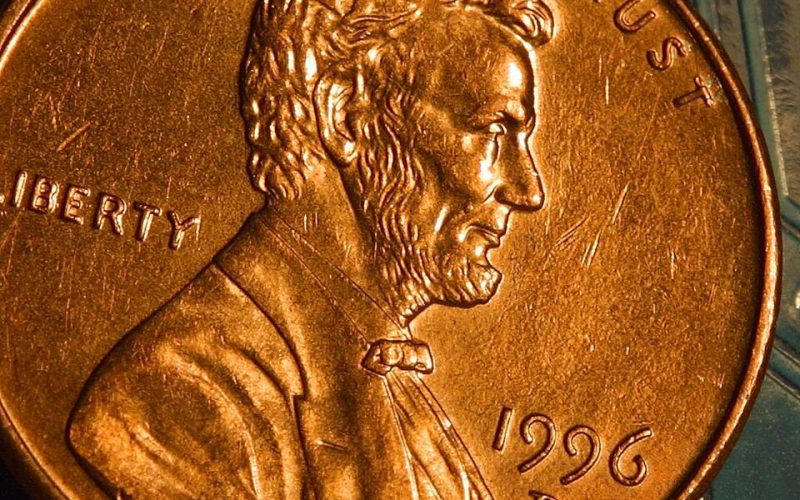
Most 1996 pennies are worth just one cent in circulation, but specific mint marks and error varieties can increase their value significantly. The 1996-D from Denver, for example, sells for $6–$17 in high mint-state grades. The rare Wide AM error, with its distinctive letter spacing, is the most valuable 1996 penny, often exceeding $200 in uncirculated condition. Additionally, 1996-S proof coins from San Francisco fetch $1–$5, while doubled die and double-strike errors add $10–$50+ premiums. For a comprehensive overview of penny values, see the Penny category. This 2026 guide provides current market values and clear identification tips for all 1996 penny types, including the no mint mark (Philadelphia), “D”, and “S” varieties.
- 1996 pennies with no mint mark (Philadelphia) are typically worth face value, while high-grade 1996-D cents from Denver fetch $6–$17.
- The most valuable 1996 penny is the rare Wide AM variety, featuring wider spacing between the A and M in AMERICA.
- Look for doubled die and double-strike errors, which can add $10–$50+ to the coin’s value in uncirculated condition.
1996 Penny Values by Mint Mark: Philadelphia, Denver & San Francisco
The value of a 1996 penny depends primarily on its mint mark and condition. Three main types exist: the no-mint-mark Philadelphia cent, the Denver “D” cent, and the San Francisco “S” proof. Each has distinct value ranges based on mintage numbers and survival rates in high grades. Below we break down the current 2026 market values for each. For historical context, see guides on 1859 Indian Head Penny values.
No Mint Mark (Philadelphia): Face Value to Small Premium
The 1996 penny with no mint mark was produced at the Philadelphia Mint, which historically did not use a mint mark on circulating coins until 1980 (and even then, only on some). These pennies are the most common of the 1996 issues. In average circulated condition, they are worth face value—$0.01. However, collectors prize coins that have never been handled, and high-grade uncirculated examples can command a small premium. A 1996 (no mint mark) graded MS-65 or higher typically sells for $0.25 to $0.50. The premium is modest because Philadelphia minted huge quantities and many high-grade survivors exist, but demand for perfect modern coins is steady. For perspective, an MS-67 might reach $1 at auction, but such grades are rare.
- MS-60 to MS-64: $0.05 – $0.15
- MS-65 to MS-67: $0.25 – $0.50
- MS-68 and above: $1+ (very rare)
These prices reflect 2026 market averages from dealer listings and auction results. The Philadelphia Mint also produced earlier Indian Head cents; see the 1863 Indian Head Penny guide for comparison.
Denver “D”: $6–$17 in High Mint State
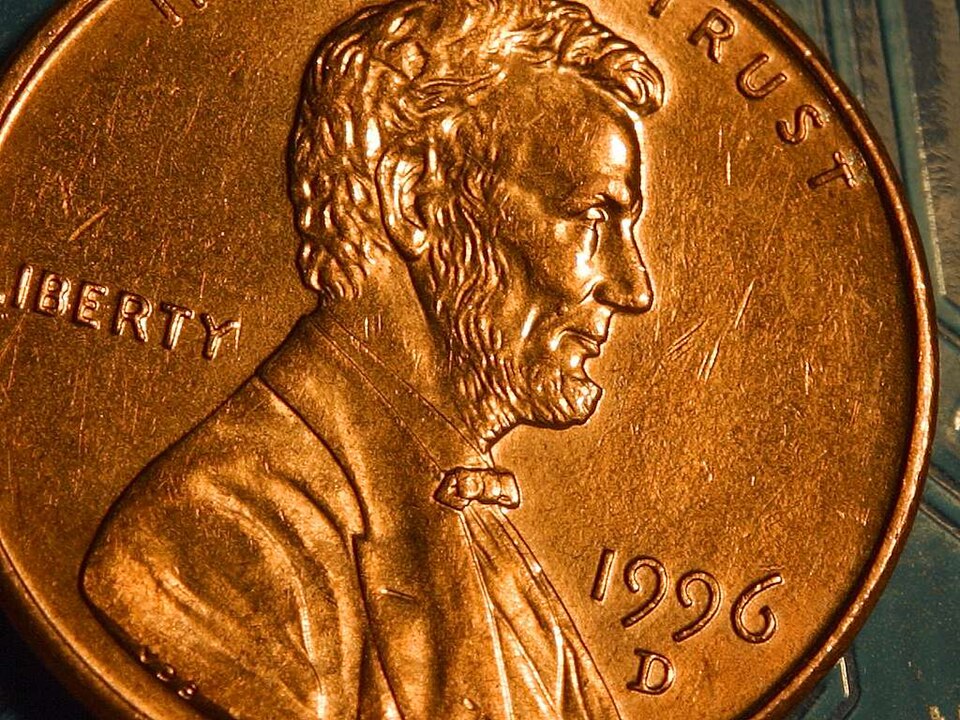
The 1996-D penny bears the “D” mint mark of the Denver Mint. With a mintage of 3.8 billion, it is also very common in circulation. Worn 1996-D pennies are worth $0.01. The value spikes dramatically for coins in mint state. A 1996-D graded MS-63 generally sells for $6 to $8, while an MS-65 can fetch $12 to $17. This premium exists because relatively few 1996-D cents survived in high grades; most were used heavily and lost their sharp details. Additionally, Denver mint marks are popular among collectors, creating consistent demand. Even a one-grade improvement—from MS-63 to MS-65—can nearly double the coin’s value. At the top end, an MS-67 has realized $18 in recent sales. These prices are for coins without any special errors; a Wide AM or doubled die would add substantial premiums.
San Francisco “S”: Proof Values from $1–$5
The 1996-S penny is a proof coin struck at the San Francisco Mint specifically for collector sets. These coins were never released into general circulation, so they typically exhibit sharp details and mirror-like fields (especially in Deep Cameo contrast). In proof condition, a 1996-S penny is worth $1 to $5 for grades PR-65 to PR-67. The modest premium reflects the fact that 1996 proof sets were produced in large quantities—millions were sold. However, a perfect PR-70 Deep Cameo can command $20 or more, particularly if it remains in its original mint packaging. Proof pennies are easily identified by the “S” mint mark and their superior strike quality. They represent an affordable entry point into proof coin collecting.
Summary Table: 1996 Penny Values by Condition
| Coin Type | Circulated Value | Uncirculated/Proof Value |
|---|---|---|
| 1996 (No Mint Mark) | $0.01 – $0.10 | $0.25 – $0.50 (MS-65+) |
| 1996-D | $0.01 – $0.10 | $6 – $17 (MS-63 to MS-65) |
| 1996-S Proof | N/A | $1 – $5 (PR-65 to PR-67) |
| 1996 Wide AM | $50 – $100 | $200 – $500+ (MS-65+) |
| 1996 Error (Doubled Die) | $10+ | $50+ (uncirculated) |
The 1996-D uncirculated premium stands out among regular issues because of its low survival rate in high grades. With 3.8 billion minted, most entered circulation and wore down quickly. Only a tiny fraction remained in mint condition, creating scarcity that drives prices to $6–$17 even for modest MS-63 grades. In contrast, the Philadelphia issue, while also common, sees less collector demand for high grades, keeping its premium modest. The 1996-S proof sits between them, offering a collectible option at a few dollars.
Error varieties like the Wide AM and doubled die dramatically exceed these prices due to extreme scarcity. The Wide AM, with its misaligned die hub, is a rare find in circulation—most were caught and removed early. Doubled die errors, resulting from die impression mistakes, are also scarce. Their values can reach $500 or more in top condition, far surpassing standard mint-mark premiums. Collectors actively seek these varieties, making them the most valuable 1996 pennies.
How Valuable Is the 1996 Wide AM Error Variety?
Among all 1996 pennies, the Wide AM error is the most valuable variety. This subtle design variation can turn a one-cent coin into a $200+ collectible. Understanding how to identify it and knowing its market value is essential for any serious penny hunter. Collectors of rare varieties may also explore 1877 Indian Head Penny errors for comparison.
What Is the 1996 Wide AM Error?
The 1996 Wide AM error is a die variety that affects the reverse (tails) side of the Lincoln Memorial cent. On the word “AMERICA,” the letters A and M are spaced abnormally wide apart. In normal 1996 business strikes, the A and M are almost touching—a design known as “Close AM.” The Wide AM variety occurred when the die hub was misaligned during the hubbing process, creating a noticeable gap between the letters. This is not a mint mark error; it is a design variation from the Philadelphia Mint (which produced the no-mint-mark cents). The Wide AM is extremely rare on circulation strikes but appears with slightly higher frequency in proof sets. Actually, it is rare in both formats. For 1996, Close AM is the standard; Wide AM is the valuable error. Collectors consider it one of the key modern varieties. For more on error identification, see the 1888 Indian Head Penny guide.
How Much Are 1996 Wide AM Pennies Worth?
- Circulated condition (light to moderate wear): $50 – $100
- Uncirculated condition (MS-63 to MS-64): $150 – $300
- High-grade uncirculated (MS-65 to MS-67): $200 – $500+
- Exceptional grades (MS-68 and above): $1,000+ (auction records)
These values reflect the rarity of the variety. Even a well-worn Wide AM can sell for 5,000 times face value. In uncirculated condition, the premium skyrockets due to collector demand for perfect examples. Always get a suspected Wide AM authenticated by a professional grading service like PCGS or NGC, as counterfeits exist.
Close AM vs. Wide AM: Visual Identification Guide
Spotting the difference requires careful examination. Follow this guide:
- Hold the coin with the Lincoln Memorial (reverse) facing up.
- Locate the word “AMERICA” along the bottom edge of the design.
- Focus on the two letters in the center: A and M.
- Close AM (normal): The A and M are almost touching; the inner strokes may nearly overlap or have only a hairline gap.
- Wide AM (error): There is a clear, wide space between the A and M—usually as wide as the letter “I” or wider.
Use a 10x magnifier for best results. Most 1996 pennies you find will be Close AM. The Wide AM is a rare variety that can appear on both no-mint-mark and proof 1996 pennies. If you suspect a Wide AM, compare it side-by-side with a known Close AM example and consider professional authentication before selling. Error coin grading standards are detailed for 1889 Indian Head Penny.
1996 Penny Error Coins: Doubled Die & Mint Mistakes Worth $10+
Beyond mint mark varieties, error coins offer another path to value. The 1996 penny exhibits several mint errors, including doubled die and double-strike varieties. These mistakes, though not as rare as the Wide AM, can still add $10 to $50+ to a coin’s worth. Learning to identify them helps you spot hidden treasures in your change. For more on error types, see the 1890 Indian Head Penny guide.
Doubled Die Obverse/Reverse: $50+ in Uncirculated Condition
Doubled die errors occur when the die is impressed twice during its creation, causing a doubled image on the coin. On 1996 pennies, look for doubling in these areas:
- Date: The “1996” may show two outlines of each digit, often with a slight offset. Significant date doubling is highly prized.
- LIBERTY (obverse): The word “LIBERTY” above Lincoln’s head can exhibit doubling, especially in the letters L, I, B, E, R, T, Y.
- IN GOD WE TRUST (reverse): The motto may appear doubled, particularly in the letters.
- Lincoln Memorial leaves (reverse): The veins on the memorial’s leaves can show doubling.
These doubled die varieties are relatively rare on 1996 pennies. In uncirculated condition (MS-65+), they can fetch $50 to $200 depending on the severity and eye appeal. Even circulated examples with clear doubling may sell for $10 to $30. Always verify with magnification and consider professional grading for authentication.
Double-Struck Coins: $10+ Premiums
Double-struck errors happen when a coin is struck twice by the press, causing a misaligned second impression. This differs from doubled die, which originates from the die itself. On a 1996 penny, a double-strike might appear as:
- A shadowy double image of Lincoln or the Memorial.
- Blurry or overlapping details, especially around the edges.
- The date or lettering may be offset or duplicated, giving a “ghost” effect.
These errors are less common than doubled die on 1996 pennies but still valuable. In circulated condition, expect a $10 to $50 premium. Uncirculated double-struck 1996 pennies can reach $50 to $100 or more, depending on the intensity of the second strike and the coin’s overall grade. Look for these errors in your spare change—they are findable but not abundant. If you suspect a double-strike, compare the alignment of design elements carefully. Complete penny value guides for all years are available, including 1893 Indian Head Penny.
Despite the massive mintage numbers—billions of 1996 pennies were produced—high-grade examples and error varieties are surprisingly scarce in circulation today. Most 1996-D cents that survived in mint state were saved by collectors or stored in rolls, not spent. The Wide AM error is so rare that even seasoned coin hunters may never encounter one. Action step: Examine every 1996 penny you come across. Use a 10x magnifier to check the spacing of the A and M in “AMERICA” on the reverse. Separate any 1996-D coins for potential grading—even a modest MS-63 can be worth $6. If you suspect a Wide AM or doubled die, submit it to PCGS or NGC for authentication; a certified coin can command a significant premium. Start your search in old coin rolls, inherited collections, or bank bundles.
Frequently Asked Questions About 1996 Penny
Are there any errors on the 1996 penny?
Yes, key errors include the 1996 Wide AM (circulated $50-$100, uncirculated $200-$500+) and doubled die (circulated $10+, uncirculated $50+).
What is special about a 1996 penny?
The 1996 Wide AM error is worth $200-$500+ in uncirculated condition (MS-65+), making it a standout variety.
Is 1996 penny supposed to have a close AM or wide AM?
1996 pennies normally have a close AM; the Wide AM error is worth $50-$100 circulated and $200-$500+ uncirculated.
Are 1996 coins rare?
Regular 1996 pennies are common with 3.8 billion minted, but error varieties like the Wide AM are rare and valuable.
Are there any errors on the 1996 penny?
Yes, key errors include the 1996 Wide AM (circulated $50-$100, uncirculated $200-$500+) and doubled die (circulated $10+, uncirculated $50+).
Related Coins
1903 Indian Head Penny Coin Value (Errors List & No Mint Mark Worth)
1903 Indian Head Penny values range from $1.50 to $150+ based on condition. Error varieties like Repunched Date (RPD) and Full Brockage fetch $250-$8,000. Get 2026 pricing and error identification guide.
 Penny
Penny
1916 Penny Coin Value (Errors List, “D”, “S” & No Mint Mark Worth)
Discover 1916 penny values for 2026. Get current prices for 1916-D, 1916-S, and no mint mark wheat pennies. Learn how error varieties can boost worth. Actionable guide for collectors.
1877 Indian Head Penny Coin Value (Errors List & No Mint Mark Worth)
The 1877 Indian Head penny is one of America’s most valuable small cents. In Good condition (G-4), these coins fetch $400-$700, while uncirculated examples command…