
1997 Penny Coin Value (Errors List, “D”, “S” & No Mint Mark Worth)
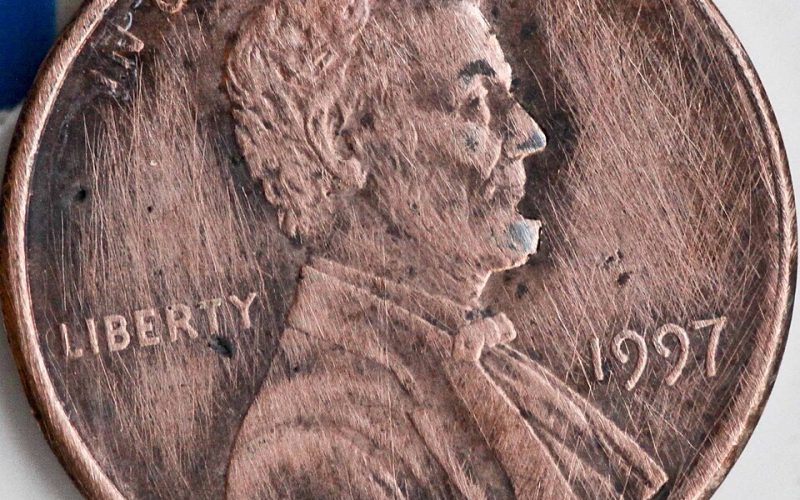
1997 pennies are generally worth face value ($0.01) in circulated condition, but high-grade examples and specific error varieties can command significant premiums, as seen with 1890 Indian Head pennies in top condition. The most valuable 1997 penny is the Doubled Earlobe (DDO) error, which can sell for $100-$1,000+ in top condition. This guide breaks down current 2026 market values by mint mark (D, S, no mint) and error type, with specific pricing tables and identification steps for collectors.
- Circulated 1997 pennies (any mint mark) are worth $0.01 face value.
- Uncirculated coins graded MS65+ can sell for $100 to $800+ depending on mint mark and condition.
- The 1997 Doubled Earlobe (DDO) error is the most valuable variety, with high-grade examples selling for $100-$1,000+.
- 1997-S San Francisco proof pennies are worth $2-$5 in Deep Cameo condition.
- Condition is critical: only coins graded MS67 or MS68 by PCGS or NGC command top prices.
1997 Penny Values by Mint Mark: What D, S, and No Mint Mark Coins Are Worth in 2026
The 1997 Lincoln Memorial penny was minted at three facilities: Philadelphia (no mint mark), Denver (D), and San Francisco (S). However, San Francisco only produced proof coins for collectors, not circulation. Values vary dramatically based on mint mark, condition, and whether the coin is a regular strike or proof. For modern cents like 1997, condition is the primary driver of value—most circulated examples remain at face value, while pristine uncirculated coins graded by PCGS or NGC can reach hundreds of dollars, unlike 1859 Indian Head pennies which can be valuable even in lower grades due to their key-date status.
1997 No Mint Mark (Philadelphia) Penny Value by Condition
Philadelphia-minted 1997 pennies are the most common in circulation, but high-grade examples are scarce due to heavy wear. The following table shows value ranges by condition grade in 2026:
| Condition Grade | Value Range |
|---|---|
| Good (G) to Very Good (VG) | $0.01 (face value) |
| Extremely Fine (EF) | $0.01-$0.05 |
| About Uncirculated (AU) | $0.05-$0.10 |
| MS60-MS64 (Uncirculated) | $0.10-$0.50 |
| MS65 | $50-$100 |
| MS66 | $100-$200 |
| MS67 | $200-$500 |
| MS68 | $900+ |
The jump from MS64 to MS65 reflects the scarcity of gem-quality Philadelphia cents from 1997. A 1997 penny graded MS68 Red (RD) by PCGS has a listed value of $900, making it one of the highest regular-strike values for this year, similar to 1893 Indian Head pennies in high grades. Coins in this pristine condition are extremely rare because 1997 pennies were heavily used in commerce. Professional grading from PCGS or NGC significantly impacts marketability and price realization.
1997-D Denver Penny Value by Condition
The 1997-D penny shares the same design but carries a “D” mint mark indicating production at the Denver Mint. While abundant in circulation, high-grade Denver cents are equally scarce. Value progression follows a similar pattern to Philadelphia but with slightly lower top-end prices for typical examples:
| Condition Grade | Value Range |
|---|---|
| Good (G) to Very Good (VG) | $0.01 (face value) |
| Extremely Fine (EF) | $0.01-$0.05 |
| About Uncirculated (AU) | $0.05-$0.10 |
| MS60-MS64 (Uncirculated) | $0.10-$0.50 |
| MS65 | $100-$200 |
| MS66 | $200-$400 |
| MS67 | $400-$700 |
| MS68 | $204 (typical), $863 auction record, elite up to $800 |
A 1997-D penny graded MS68 RD typically sells for around $204, but exceptional examples have fetched $863 at auction. The premium for high-grade Denver cents over Philadelphia at lower grades (MS65+) reflects collector demand for mint mark variety in modern series. However, the absolute top value for a regular 1997 penny remains the Philadelphia MS68 at $900.
1997-S San Francisco Proof Penny Value by Condition
The San Francisco Mint did not produce circulation-strike pennies in 1997. All 1997-S coins are proof specimens struck for collectors, featuring a Deep Cameo (DCAM) finish where frosted devices contrast sharply with mirrored fields. These proofs were sold in special sets and individually, and they command a consistent premium over face value:
| Proof Grade | Value Range (DCAM) |
|---|---|
| PR65 DCAM | $2-$3 |
| PR66 DCAM | $3-$4 |
| PR67 DCAM | $4-$5 |
| PR68 DCAM | $5-$7 |
Proof pennies from San Francisco are always more valuable than their circulation-strike counterparts, even in lower grades. The cameo contrast is a key factor—non-cameo proofs (if any exist) are worth less. For 1997, the $2-$5 range represents the current market for nicely graded DCAM examples. These coins are readily available from dealers and auctions, making them an accessible entry point for collectors.
What is a Rare 1997 Penny with No Mint Mark? Off-Center Errors and Varieties
While most no-mint-mark 1997 pennies are common, certain error varieties can add substantial value. The most notable is the Doubled Earlobe (DDO), covered in the next section. Another error type that collectors seek is the off-center strike, where the coin is not properly centered during minting, causing the design to shift toward the edge. An off-center 1997 penny may have letters touching the rim or missing portions of the design. Value depends on how far off-center the strike is and the coin’s overall condition—a severe off-center in high grade could add a 50-200% premium over a normal coin. However, off-center errors are generally less valuable than DDO varieties.
A common question is whether a “Wide AM” error exists for 1997. The answer is no. The spacing between the letters A and M on the reverse (the “AM” in “AMERICA”) changed from Wide AM to Close AM in 1998. All 1997 pennies have the normal Close AM spacing, so any claim of a valuable Wide AM 1997 penny is incorrect. Collectors should focus on genuine errors like DDO and off-center strikes rather than misidentified spacing variations.
1997 Penny Error Varieties: Doubled Earlobe (DDO) and Other Key Errors
Error varieties are where 1997 pennies can achieve truly significant value, and 1863 Indian Head penny errors are another area where mistakes create substantial premiums. The Doubled Earlobe is the king of 1997 varieties, but other errors like Doubled Die Reverse and off-center strikes also interest collectors. Understanding how to identify these errors—and knowing which ones are actually valuable—is essential for anyone searching pocket change or rolls.
The 1997 Doubled Earlobe (DDO) Error: $1,000+ Variety
The 1997 Doubled Earlobe (DDO) is a die clash error that produces a clear, extra earlobe on Lincoln’s portrait. This occurs when the obverse die strikes a previously struck coin or hub, transferring a ghostly secondary image. The result is a distinct doubling effect on Lincoln’s cheek and earlobe area. This variety is rare in high grades because most 1997 pennies circulated heavily before collectors began searching for it in the 2000s. High-grade examples (MS67-MS68) of the 1997 DDO have sold for $100-$1,000+, with the upper end representing pristine, professionally graded coins. The DDO is the single most valuable 1997 penny error and the primary target for variety hunters. Both Philadelphia (no mint mark) and Denver (D) mint marks can exhibit this error, but the Denver DDO is slightly more common.
How to Identify a 1997 DDO Penny: Visual Guide
Identifying a genuine DDO requires careful examination. Follow these steps:
- Clean the coin gently—use mild soap and water to remove dirt that might obscure details. Do not polish.
- Use 10x magnification—a loupe or microscope is essential to see subtle doubling.
- Focus on Lincoln’s earlobe—look for two distinct lobes: a primary lobe and a secondary, smaller lobe adjacent to it. The doubling should be clear and not a result of wear or damage.
- Check the date—some DDOs also show doubling on the date digits, especially the “9” and “7”.
- Compare with a known normal 1997 penny—side-by-side comparison makes doubling obvious.
- If suspected, consider professional grading—services like PCGS or NGC can authenticate the variety and assign a grade that maximizes value.
Avoid common pitfalls: scratches, nicks, or die scratches can mimic doubling. True DDO doubling is consistent with the design’s intended shape and appears as a raised, secondary image. When in doubt, consult a professional coin dealer or submit to a grading service for verification.
Is a 1997 Penny Close or Wide AM? Understanding the AM Error
The “AM” error refers to the spacing between the letters A and M in “AMERICA” on the reverse. For 1997 pennies, the correct spacing is Close AM—the letters are nearly touching. The Wide AM variety, where the A and M are clearly separated, did not appear until 1998 and is valuable for those years. All 1997 pennies, regardless of mint mark, have Close AM. Therefore, a 1997 penny with Wide AM does not exist as a recognized variety; any apparent spacing difference is likely due to wear, die variation, or misidentification. Collectors should not pay a premium for “Wide AM” on a 1997 penny—it is not a legitimate error. The focus should remain on genuine varieties like DDO and off-center strikes.
Other 1997 Penny Errors: Doubled Die Reverse and Off-Center Strikes
Beyond DDO, two other error types appear on 1997 pennies: Doubled Die Reverse (DDR): This error shows doubling on the reverse lettering, particularly on “UNITED STATES OF AMERICA” and “ONE CENT”. DDRs are less common and less valuable than DDO for 1997, but a high-grade DDR could still add a premium of $20-$100 over a normal coin, much like 1888 Indian Head penny errors which also carry significant premiums. Identification requires magnification and comparison with a normal reverse. Off-Center Strikes: As mentioned earlier, an off-center strike shifts the design away from the center. Severe off-centers (where design elements touch the rim) in high grade can be worth $5-$50 depending on severity. These are more common than DDO but still sought by error collectors.
- Doubled Die Reverse (DDR): This error shows doubling on the reverse lettering, particularly on “UNITED STATES OF AMERICA” and “ONE CENT”. DDRs are less common and less valuable than DDO for 1997, but a high-grade DDR could still add a premium of $20-$100 over a normal coin. Identification requires magnification and comparison with a normal reverse.
- Off-Center Strikes: As mentioned earlier, an off-center strike shifts the design away from the center. Severe off-centers (where design elements touch the rim) in high grade can be worth $5-$50 depending on severity. These are more common than DDO but still sought by error collectors.
Neither DDR nor off-center strikes approach the values seen with DDO, but they are worth checking for when examining 1997 pennies. Always prioritize condition—an error in MS67 is worth exponentially more than the same error in circulated condition, as evidenced by 1877 Indian Head pennies where high-grade examples are worth thousands.
Closing
The surprising insight about 1997 pennies is that modern, common coins can harbor valuable die errors like the Doubled Earlobe, turning a one-cent piece into a $1,000+ collectible, and 1889 Indian Head penny errors can similarly command high premiums. This occurs because die clashes and misalignments happen during production, and only a tiny fraction survive in high grade. The specific action you can take right now is: examine your 1997 pennies under magnification for DDO and off-center errors. If you find a candidate, submit it to PCGS or NGC for professional grading—a high-grade certification can multiply its value. For a complete overview of penny collecting across all years, visit the Penny category page.
Related Coins
1898 Indian Head Penny Coin Value (Errors List & No Mint Mark Worth)
An 1898 Indian Head penny typically sells for $3 to $4 in average circulated condition, but mint-state examples can exceed $60, and high-grade specimens can…
1954 Wheat Penny Coin Value (Errors List, “D”, “S” & No Mint Mark Worth)
Discover 1954 Wheat Penny values for 2026. Learn how mint marks (D, S, no mark) and errors like Doubled Die affect worth. Get price ranges and identification tips.
 Penny
Penny
1944 Steel Wheat Penny Coin Value (Errors List, D, S & No Mint Mark Worth)
Discover 1944 steel wheat penny values up to $450,000+. Learn about D/S overmintmark errors, mint mark prices for D, S, no mint mark, and how to spot fakes. Get 2026 pricing.