
1910 Penny Coin Value (Errors List, “S” & No Mint Mark Worth)
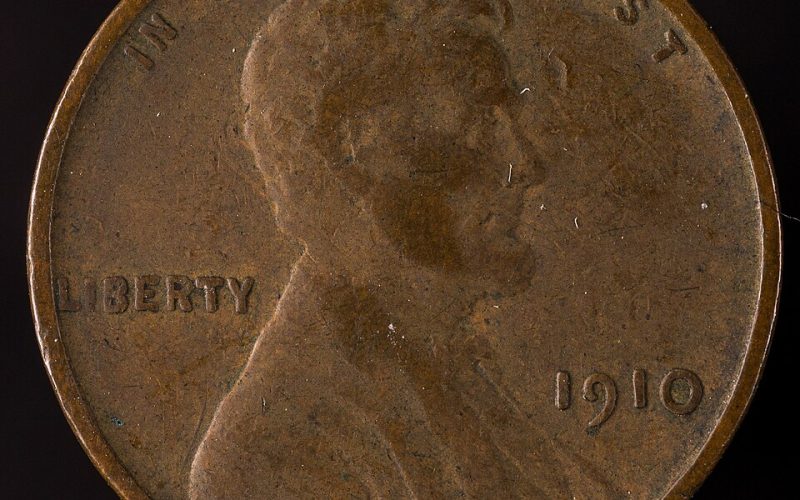
A 1910-S Lincoln Wheat Penny in pristine condition sold for over $43,000 at auction in 2025. Your 1910 penny’s value depends first on its mint mark—Philadelphia (no mint mark) or San Francisco (“S”)—and then on its condition and any error varieties. This 2026 guide provides exact price ranges and identifies the specific errors, like the S/S re-punched mint mark, that can transform a common cent into a major collectible worth tens of thousands.
- The 1910-S (San Francisco) is the scarce “key date,” worth $15-$30 in low grades and over $100 in higher uncirculated grades, while the common Philadelphia (no mint mark) is worth $0.25-$2 circulated.
- The most valuable error is the 1910-S/S re-punched mint mark (FS-301/302), with prices ranging from $28 for worn examples to over $20,000 for high-grade red coins.
- Condition is critical: a coin’s color (Red, Red-Brown, Brown) and grade (MS-60 to MS-67+) can mean a difference of $2 to $40,000+.
1910 Penny Value: What Your Coin is Worth in 2026
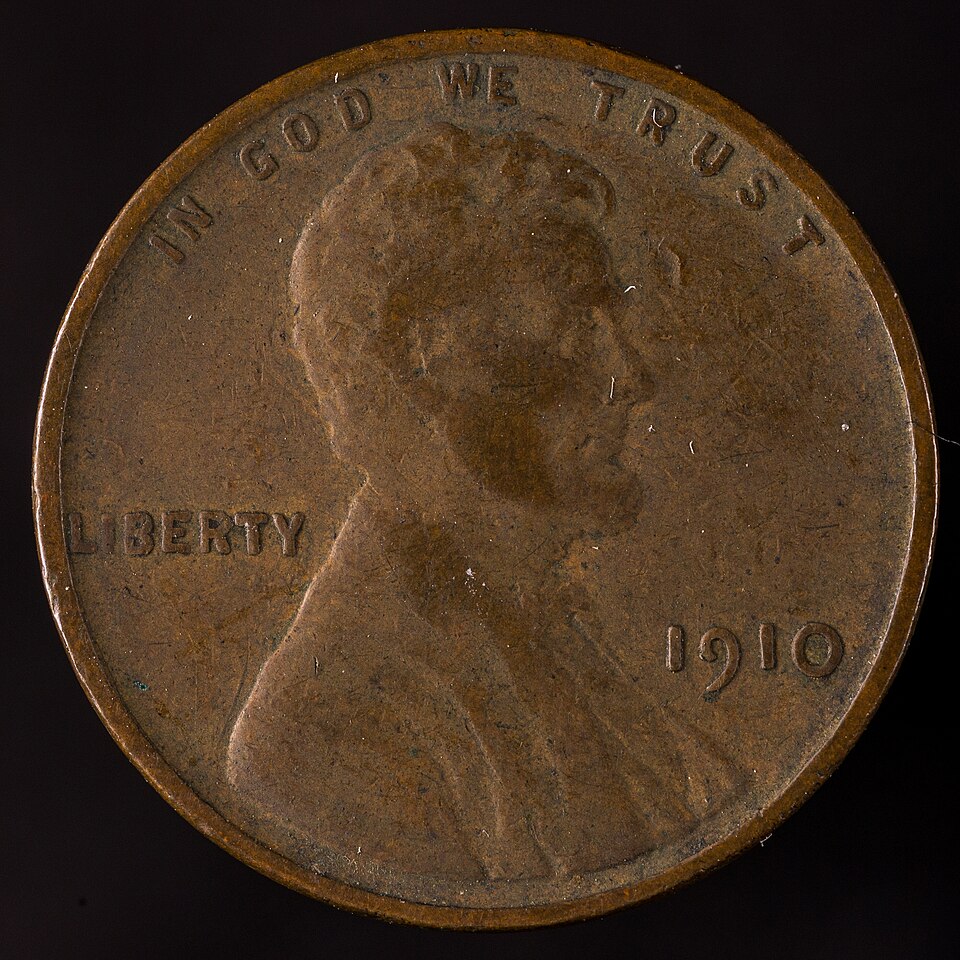
Mint Mark Value Comparison: Philadelphia (No Mint Mark) vs. 1910-S
- No Mint Mark (Philadelphia): The most common 1910 penny. Over 146 million were minted. In circulated condition (Good to About Good), expect $0.25–$2. In uncirculated grades, values start at $50 for MS-60 and rise to $500–$1,000+ for MS-65 and above.
- 1910-S (San Francisco): The scarce key date. Mintage was a fraction of Philadelphia’s, making it much harder to find. Low-grade circulated coins fetch $15–$30. Uncirculated examples begin at $100 for MS-60 and can exceed $5,000 for high-end MS-65+.
- 1910 Proof (Philadelphia): Only 4,000 matte proofs were produced. These are not for circulation and command $200–$2,000 depending on grade (PF-63 to PF-67).
The mint mark is the primary value driver. Philadelphia’s massive output makes its coins common, while San Francisco’s limited production creates scarcity. Proofs occupy a separate, rare tier.
Condition & Color: Why MS-65+ Coins Command $1,000+
Three color designations determine a coin’s visual appeal and value: Brown (BN), Red-Brown (RB), and Red (RD). Red coins retain their original copper luster and are the most prized. Over time, exposure to moisture and air causes toning, shifting color to Brown. A coin’s grade (MS-60 to MS-67) measures wear and surface quality. The difference between an MS-63 and an MS-65 can be substantial—often doubling or tripling the price. The record $43,000+ auction price for an MS-67 Red 1910-S illustrates the pinnacle: perfect condition, original mint luster, and the scarcest mint mark combined.
1910 Proof Penny: The Rare Matte Finish
Only 4,000 proof 1910 pennies were struck at Philadelphia using specially polished dies and planchets. This process creates a matte-like, satin finish distinct from the shiny circulation strikes. Proofs were sold directly to collectors and never entered general circulation. Their values are separate from regular mint marks: a PF-63 typically sells for $200–$400, while a high-grade PF-67 can reach $1,500–$2,000. Always verify the matte texture and sharp details to authenticate a proof.
Now that we’ve established baseline values for each mint mark and condition, let’s examine why the 1910-S stands out as the key date and what makes it so scarce.
Why the 1910-S is the Key Date Wheat Penny
Mintage & Scarcity: The Numbers Behind the Premium
The 1910-S is a “semi-key” date because its mintage was dramatically lower than Philadelphia’s. While Philadelphia produced 146,801,218+ circulation coins, San Francisco’s output was a small fraction—exact figures are not published but are estimated in the low millions. This supply gap means far fewer 1910-S pennies survive today, especially in uncirculated condition. Collectors building a complete Wheat Penny set must acquire the 1910-S, creating steady demand that outpaces the available supply and sustains its premium.
Value Tiers: From $15 Well-Worn to $100+ Uncirculated
The 1910-S’s price escalates clearly with grade:
- Heavily worn (Good/G-4): $15–$30 – heavy wear, date may be weak.
- Moderately worn (About Good/AG-3): $20–$40 – wear on high points, date readable.
- Uncirculated (MS-60 to MS-63): $100–$300 – no wear, but with contact marks or dullness.
- High-End Uncirculated (MS-64 to MS-65+): $500–$5,000+ – excellent luster, minimal flaws.
The jump from $15 to $100+ for any uncirculated coin shows how condition dramatically amplifies value.
Record Auction Sale: The $43,000+ MS-67 Red Example
The absolute peak for a 1910-S is an MS-67 Red coin. One such example sold for over $43,000 at a major 2025 Stack’s Bowers auction. This price reflects perfect preservation, original mint luster, and the coveted “Red” color. Only a handful of 1910-S pennies are known in this grade. The sale demonstrates that even a common-date cent can achieve rare-coin prices when condition and mint mark align perfectly. It also underscores why professional grading is essential for high-end examples—the difference between an MS-65 and an MS-67 can be tens of thousands of dollars.
Understanding the 1910-S’s scarcity and value tiers sets the stage for exploring error varieties, which can add another layer of premium on top of an already valuable coin.
Top 1910 Penny Errors That Increase Value
1910-S/S Re-punched Mint Mark (FS-301, FS-302): The Error
| Error Variety | Description | Brown (BN) Value | Red (RD) Value |
|---|---|---|---|
| FS-301 | Clear repunch, lower position | $28–$1,400+ | $285–$20,000+ |
| FS-302 | Repunch with slight offset | $30–$1,500+ | $300–$20,000+ |
The 1910-S/S re-punched mint mark is the most significant and valuable error for this date. It occurs when the ‘S’ mint mark was punched twice, creating a doubled appearance. The two recognized varieties are FS-301 (clear repunch, lower position) and FS-302 (repunch with slight offset). Values vary widely based on grade and color: a well-worn Brown example might sell for $28, while a high-grade Red coin can exceed $20,000. This error transforms a regular 1910-S into a major rarity that commands premiums far beyond a normal coin of the same grade.
Other Notable 1910 Penny Errors: Lamination & Double Die
While the S/S repunch dominates, other errors exist but are less common:
- Lamination Error: Flaking or peeling metal on the surface caused by impurities. Typically worth $25–$75 in circulated condition. The 1910-S lamination is a more affordable error entry point.
- Double Die Obverse (DDO): Doubling on letters or numbers from a misaligned die at Philadelphia. Values range from $50 for slight doubling to several thousand dollars for dramatic, well-preserved examples. DDOs are rare on 1910 pennies compared to later dates.
How to Identify a Genuine 1910-S/S Re-punched Mint Mark
Examine the “S” mint mark under 10x magnification. A genuine repunch shows a clear, secondary “S” impression overlapping or adjacent to the primary one. The two punches are distinct and crisp, not a weak or poorly struck single “S.” Common pitfalls include surface damage that mimics doubling or artificial alterations. For any suspected high-value error, professional authentication by PCGS or NGC is essential before purchase or sale. A certified error slab provides market confidence and liquidity.
The 1910 penny offers a fascinating spectrum: from common circulation strikes worth pocket change to error varieties that can exceed $20,000. The mint mark is the first filter—Philadelphia versus San Francisco. Condition is the second—color and grade can multiply value exponentially. Errors like the S/S repunch are the third—they create entirely new varieties with their own price guides. If you own a 1910 penny, start by identifying the mint mark. Then assess its color and wear. Finally, inspect the mint mark under magnification for any doubling. For any coin showing potential, the only way to unlock its true 2026 value is to submit it to a major grading service like PCGS or NGC. A sealed slab with a high grade is what serious collectors and auction houses require.
Frequently Asked Questions About 1910 Penny
What makes a 1910 penny rare?
This penny was made at two mints: Philadelphia and San Francisco. The San Francisco version is rarer because fewer were made, which makes it more valuable. The value of a 1910 penny depends on where it was made (mint mark), its condition, and its grade.
How much is a 1910 penny coin worth?
Current price is £63.00.
How many 1910 pennies were minted?
1910 Lincoln Cent: The Philadelphia Mint produced 4,083 1910 Proof Lincoln Pennies. These are matte Proofs worth up to $400 in a PF-63 state. The U.S. Mint at Philadelphia struck 146,801,218 Lincoln Cents the same year.
Related Coins
1902 Indian Head Penny Coin Value (Errors List & No Mint Mark Worth)
Discover the 1902 Indian Head penny value for 2026. Get current prices by condition, identify valuable errors like off-center strikes, and understand the no mint mark feature. Includes auction records and grading tips.
1863 Indian Head Penny Value Guide 2026: Errors, No Mint Mark & Current Prices
Get the 2026 market value of 1863 Indian Head pennies. Condition grades, error varieties worth thousands, and why no mint mark doesn't affect price. Complete pricing guide.
1951 Wheat Penny Value (2026): Mint Marks D, S, Philadelphia & Error Prices
Current 1951 wheat penny value: $0.05-$0.75 circulated. Key mint marks D, S, no mint mark. Error varieties like "L" Liberty & RPMs boost value to $100+.