
1953 Wheat Penny Coin Value (Errors List, “D”, “S” & No Mint Mark Worth)
Most 1953 wheat pennies in circulated condition are worth just 3 to 15 cents, but uncirculated examples and error varieties can range from $3 to over $18,000 depending on mint location, condition, and rarity. The key factors determining value are whether the coin was struck at Denver (“D”), San Francisco (“S”), or Philadelphia (no mint mark), plus any minting errors like doubled dies or repunched mint marks. Understanding these variables helps you identify whether your 1953 wheat penny is a common cent or a valuable collector’s item. For comprehensive information on wheat pennies, see our Penny guide.
- Most 1953 wheat pennies in circulated condition are worth 3–15 cents, but uncirculated examples range from $3 to $50+ depending on mint location.
- The 1953-S is the most valuable in high grades, with MS68 Red specimens selling for up to $18,000 at auction.
- Key errors like doubled die obverse, repunched mint mark (RPM), and clipped planchet can increase value from cents to hundreds or thousands of dollars.
1953 Wheat Penny: Price Differences by Mint Location (D, S, Philadelphia)
The 1953 Lincoln Wheat Penny exists in three mint location varieties, each with distinct price ranges. Philadelphia Mint coins (no mint mark) are the most common, while San Francisco (S) issues are scarcer in high grades, and Denver (D) occupies a middle ground. Understanding these differences is essential for accurate valuation.
2026 Market Prices by Mint Location and Condition
- No Mint Mark (Philadelphia): Circulated 3–10 cents; Uncirculated $3–$20+
- D (Denver): Circulated 3–10 cents; Uncirculated $3–$40+
- S (San Francisco): Circulated 5–15 cents; Uncirculated $5–$50+
According to Bullion Shark’s 2026 price guide, these ranges reflect typical dealer asking prices for coins in average circulated condition and mid-range uncirculated grades (MS-60 to MS-63). The spread between mint locations narrows in circulated condition but widens significantly for uncirculated coins, with San Francisco issues commanding the highest premiums. The record auction price for a 1953-S stands at $18,000 for an MS68 Red specimen, demonstrating the upper extreme of the market. Philadelphia-minted coins bear no mint mark, a tradition continuing from early U.S. coinage.
Mintage Numbers and Rarity: Why 1953-S Is Scarcer
The Denver Mint produced 700,515,000 wheat pennies in 1953, while the San Francisco Mint struck only 181,835,000. This means the San Francisco output was just 26% of Denver’s production. The Philadelphia Mint’s mintage for 1953 is not specified in current data, but historically it exceeded both branch mints in most years, making Philadelphia coins the most common of the three.
Lower mintage directly correlates with scarcity in high grades. Fewer 1953-S cents were minted, and fewer survived in pristine condition over the past 73 years. This scarcity drives up prices dramatically for MS-65 and higher examples. While a 1953-D in MS-67 might fetch a few hundred dollars, a comparable 1953-S can command 2 to 3 times that amount. The combination of lower original mintage and stricter grading standards for copper coins makes the 1953-S the most valuable of the three issues in top condition.
Error Varieties That Increase 1953 Wheat Penny Prices
Error varieties transform ordinary 1953 wheat pennies from common cents into collectible treasures. While most 1953 pennies are worth only face value or a small premium, specific minting mistakes can increase value by hundreds or even thousands of percent. The most sought-after error types include doubled dies, clipped planchets, and repunched mint marks.
Top Error Varieties: Doubled Die, Clipped Planchet, and Die Cracks
- Doubled Die Obverse (DDO): Occurs when the die impression is aligned imperfectly during multiple hubbings, causing doubling on design elements. Look for clear doubling on “LIBERTY,” the date, or “IN GOD WE TRUST.” Even minor doubling can add $50 to $200+; dramatic examples in high grades may reach $500+.
- Clipped Planchet: A portion of the metal blank is missing before striking, creating a crescent-shaped bite. This error is visually obvious and highly collectible. Clean clips typically sell for $100 to $300+ depending on size, location, and grade.
- Die Chips/Cracks: Raised metal blobs or lines appear where the die has chipped or cracked, often inside letters or on Lincoln’s head. Minor chips add $25 to $75; prominent cracks can push values to $150+.
These three error categories represent the most accessible and valuable varieties for 1953 wheat pennies. Collectors actively seek them, and prices reflect strong demand.
The 1953-S Repunched Mint Mark (RPM): Why It’s the Most Sought-After Error
The repunched mint mark (RPM) error is particularly significant for 1953-S pennies. This variety forms when the “S” mint mark is punched more than once at slightly different positions, creating a visible doubling or shadow effect. The 1953-S RPM is one of the more common RPMs in the wheat series, yet it remains highly desirable.
To identify a 1953-S RPM, examine the mint mark under 10x magnification. Look for a clear secondary “S” impression overlapping or adjacent to the primary one, usually most noticeable at the top or bottom curves. Clean, well-centered RPMs on high-grade coins can add $200 to $500+ over standard 1953-S values. In MS-65 or better condition with a strong RPM, prices can exceed $1,000.
The prominence of this error in search queries and collector discussions underscores its importance. For anyone evaluating a 1953-S penny, checking for RPM is a mandatory step before determining value.
How to Identify Valuable 1953 Pennies: Error and Grade Checklist
Evaluating a 1953 wheat penny requires a systematic approach. Follow this checklist to determine if your coin has significant value beyond its metal content:
- Identify the mint location: Check for “D” (Denver), “S” (San Francisco), or no mark (Philadelphia). This immediately places the coin in the correct value range.
- Examine date and lettering: Use a magnifier to inspect “LIBERTY,” the date, and “IN GOD WE TRUST” for any doubling. Even slight doubling indicates a doubled die error.
- Inspect the mint mark: For D and S mint mark coins, look carefully for repunching, doubling, or irregularities in the letter shape.
- Check the coin edge: Rotate the penny under light to spot any crescent-shaped missing metal (clipped planchet) or irregular edge.
- Assess overall condition: Determine if the coin is circulated (wear on high points) or uncirculated (no wear, original mint luster). Uncirculated coins are worth exponentially more.
- If uncirculated, evaluate copper color: Note whether the coin is fully red (RD), red-brown (RB), or mostly brown (BN). Red coins command the highest premiums.
This checklist covers the primary value drivers. If your 1953 penny passes these tests—especially showing an error or high-grade uncirculated condition—consider professional authentication and grading by PCGS or NGC.
1953 Wheat Penny Grading and Color: The MS-65+ Red Premium
Mint State Grading: From MS-60 to MS-67+ Price Jumps
Mint State (MS) grading uses a scale from 60 to 70, with each point representing increasingly perfect preservation. For 1953 wheat pennies, values remain relatively modest until MS-65, then rise sharply.
| Grade | 1953 (No Mint Mark) | 1953-D | 1953-S |
|---|---|---|---|
| MS-60 | $3–$8 | $4–$12 | $6–$15 |
| MS-62 | $5–$15 | $8–$25 | $10–$30 |
| MS-64 | $10–$30 | $15–$50 | $20–$75 |
| MS-65 | $20–$60 | $30–$100 | $50–$200 |
| MS-66 | $40–$120 | $60–$200 | $100–$400 |
| MS-67 | $80–$250 | $120–$400 | $200–$800 |
| MS-68 | $200–$600 | $300–$1,000 | $1,000–$18,000 |
The table illustrates the exponential value increase at the highest grades. An MS-68 1953-S in red copper can reach the $18,000 auction record, while the same grade in no mint mark or Denver might be worth $300–$1,000. The jump from MS-67 to MS-68 alone can represent a 10x to 20x increase, especially for San Francisco issues. This steep gradient means that even small improvements in grade yield substantial returns for collectors.
Red (RD) vs. Red-Brown (RB) vs. Brown (BN): Color Grades Explained
For uncirculated copper coins, color is graded on a three-tier scale:
- Red (RD): The coin retains 95% or more of its original mint red color. This is the highest grade for copper color and commands the maximum premium. RD coins are rare for 1953 issues due to copper’s tendency to tone over time.
- Red-Brown (RB): The coin shows 5% to 95% original red, with the remainder brown toning. RB coins are moderately valuable but typically worth 30% to 50% less than comparable RD examples.
- Brown (BN): Less than 5% original red remains; the coin is mostly brown. BN coins, while still uncirculated, sell at the lowest end of the uncirculated price spectrum.
Color assessment requires experience. Original mint luster appears bright and reflective, while toning is often darker and uneven. For 1953-S pennies specifically, an RD designation can double or triple the value of an otherwise identical RB coin. Collectors prioritize red copper, making color a critical factor in valuation.
Despite a total mintage of over 181 million 1953-S wheat pennies, perfect MS68 Red examples are extraordinarily rare. Strict grading standards mean only a handful have achieved this grade from major services like PCGS or NGC. The survival rate of pristine, fully red copper coins from 1953 is estimated at less than 0.001% of the original mintage. This extreme rarity explains the $18,000 auction record despite the coin’s seemingly common date.
If you own a 1953 wheat penny, use a 10x magnifier to check for doubling on lettering, repunched mint marks, and edge clipping. If the coin appears uncirculated with strong red color, consider professional grading by PCGS or NGC—the difference between an ungraded coin and a certified MS-65 can be $100 to $500+ depending on mint location.
For collectors interested in earlier Indian Head pennies, see our detailed guides for 1859,,, and Indian Head pennies.
Frequently Asked Questions About 1953 Wheat Penny
What errors increase a 1953-S penny's value?
The Repunched Mint Mark (RPM) error is one of the more sought-after errors for the 1953-S penny, struck at the San Francisco Mint. This error happens when the "S" mint mark is stamped more than once, with the impressions slightly misaligned.
How many 1953-S pennies were minted?
The 1953-S Wheat Penny had a total mintage of over 181 million coins struck at the San Francisco Mint. The 1953-S Wheat Penny is relatively common in many circulated and uncirculated grades, but can be harder to find in some of the highest grades.
How to tell if a 1953 penny is worth money?
Greetings and welcome back to the world of numismatics. We now take a look at Lincoln cent variety coins that you can look for from the 1953 penny issue, and there are quite a few interesting varieties.
What's so special about the 1953 penny?
Situated along both the left and right outer edges of the coin are two stalks of wheat, which explain why the coin is often referred to as a “Wheat Penny.” The Latin, and uniquely American, phrase “E Pluribus Unum” is arching over the reverse.
What is a rare coin from 1953?
Pennies are graded as Red, Red-Brown, or Brown. The last penny we looked at is obviously brown. This penny is red. All right, the color of the penny: red is always the best.
Related Coins
1939 Wheat Penny Coin Value (Errors List, “D”, “S” & No Mint Mark Worth)
A 1939 wheat penny can be worth anywhere from $0.10 for a well-circulated coin to over $14,000 for a pristine mint state example, depending on…
 Penny
Penny
1918 Penny Coin Value (Errors List, “D”, “S” & No Mint Mark Worth)
A 1918 Lincoln Wheat Penny is worth between $0.50 and $5 in typical circulated condition, but rare examples can sell for thousands of dollars. These…
 Penny
Penny
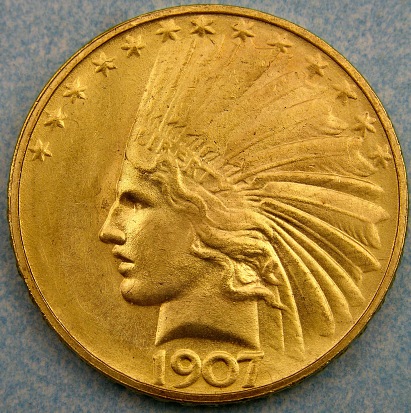
1907 Indian Head Penny Coin Value (Errors List & No Mint Mark Worth)
In 2026, a 1907 Indian Head Penny in Good-4 condition sells for $1.60, while Mint State examples reach $553, making condition the primary value driver.…