1984 Penny Coin Value (Errors List, “D”, “S” & No Mint Mark Worth)
A 1984 penny is typically worth just one cent in circulation, but a rare doubled die error can increase its value to $100–$300 or more. This guide breaks down the exact value for your 1984 penny based on mint mark—no mint mark (Philadelphia), D (Denver), or S (San Francisco)—and highlights the error varieties that matter. Whether you have a common cent or a potential treasure, here’s what you need to know in 2026. We’ll cover condition grades, mint mark differences, and how to spot the valuable doubled die obverse (DDO) that collectors seek. Plus, we identify which errors are worth ignoring.
- Common 1984 pennies (no mint mark or “D”) in circulated condition are worth $0.01–$0.10.
- The 1984 Doubled Die Obverse (DDO), with a doubled earlobe, is the most valuable error, worth $100–$300+.
- 1984-S proof pennies (San Francisco) are worth $0.50–$2.00 depending on quality.
- Over 5 billion 1984-D pennies were minted, making them very common unless in high uncirculated grade.
- Minor errors like plating blisters or missing “IN” generally add no extra value.
1984 Penny Value by Mint Mark: No Mint Mark, D, and S
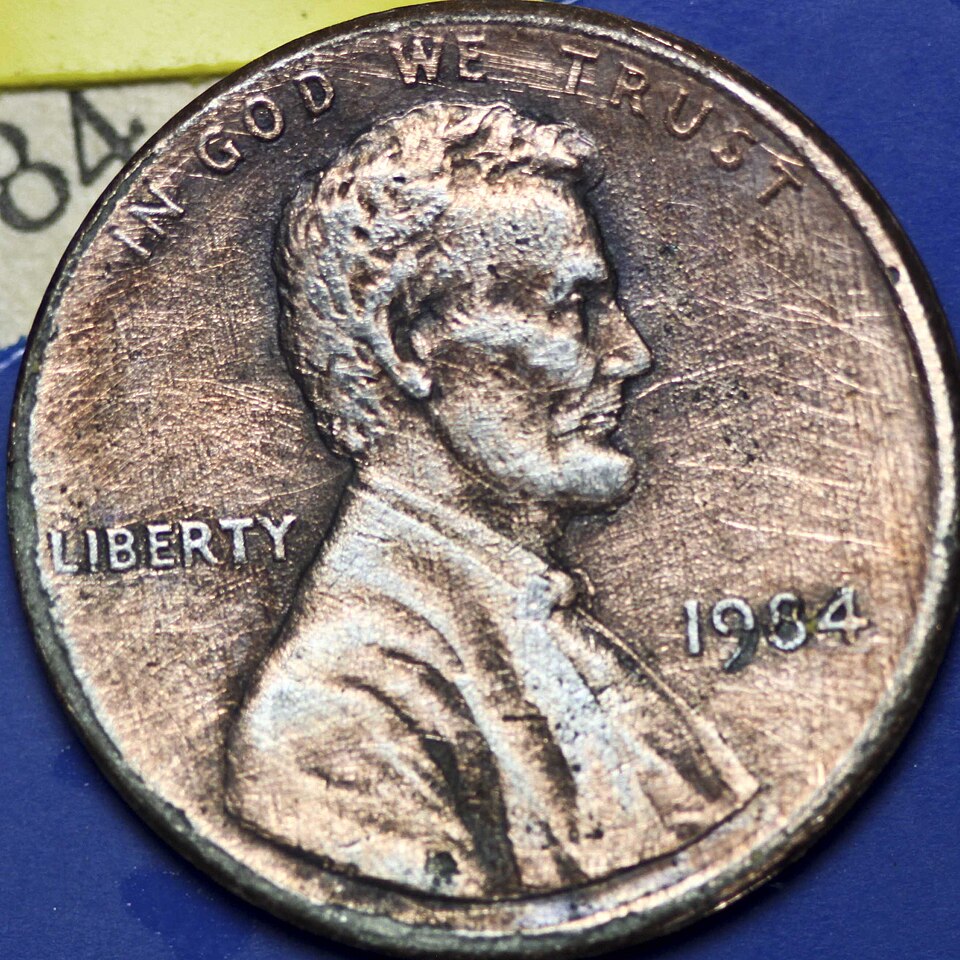
The 1984 penny comes in three mint mark varieties: no mint mark (Philadelphia), D (Denver), and S (San Francisco). Each has a distinct value range based on condition and rarity. For a comprehensive overview of penny values across all years, refer to our Penny guide. Below, we detail the current market values for each mint mark in 2026.
Philadelphia (No Mint Mark) Value: $0.01 to $0.10
- Good (G-4): $0.01–$0.02
- Very Fine (VF-20): $0.03–$0.05
- Extremely Fine (EF-40): $0.05–$0.10
In average circulated condition, a 1984 penny with no mint mark (Philadelphia) is worth its face value of one cent. Coins graded Good (G-4) show heavy wear but still retain basic design elements, trading for $0.01–$0.02. Very Fine (VF-20) examples have moderate wear with most details clear, valued at $0.03–$0.05. Extremely Fine (EF-40) coins show light wear on high points, fetching $0.05–$0.10. For uncirculated specimens in mint state (MS-65 or higher), prices rise to $0.30–$1.00+, especially if the coin retains its original red luster. However, the vast majority of 1984 Philadelphia pennies are common and sell for these modest amounts. The sole exception is the Doubled Die Obverse (DDO) error, which can increase value to $100–$300+ even on a no-mint-mark coin. No specific mintage figure for Philadelphia is cited in recent data, but the total 1984 Lincoln cent output was enormous, guaranteeing availability.
Denver (D) Mint Mark: Over 5 Billion Made, Typically Face Value
The 1984-D Lincoln cent bears a ‘D’ mint mark indicating production at the Denver Mint. With a mintage exceeding 5 billion, this is one of the most abundant Lincoln cents ever struck.
In circulated condition, these pennies are worth essentially face value ($0.01). Only coins in exceptional uncirculated condition (MS-65 or higher) achieve a premium, typically ranging from $0.30 to $1.00 or more, depending on luster and strike quality.
The Denver Mint also produced a small number of doubled die obverse errors, but these are extremely rare and can be worth $100–$300+ similar to their Philadelphia counterparts. For comparison, the 1859 Indian Head penny, also minted without a mint mark, has a different rarity profile; see our 1859 Indian Head penny value guide for details.
The 1984-D’s sheer abundance means that unless you have a high-grade example or a significant error, your coin is likely worth only a few cents.
San Francisco (S) Proof Only: $0.50 to $2.00
- Proof-60 to Proof-63: $0.50–$1.00
- Proof-65 or higher: $1.50–$2.00+
The 1984-S penny was struck exclusively for collector proof sets at the San Francisco Mint and never released for circulation. These coins exhibit sharper details, mirror-like fields, and often a cameo contrast between frosted devices and shiny backgrounds. Lower-grade proofs (Proof-60 to Proof-63) typically sell for $0.50–$1.00, while high-quality examples (Proof-65+) can reach $1.50–$2.00 or more. The ‘S’ mint mark is located below the date. Because proof mintages are limited—only a few hundred thousand were produced—1984-S proofs are scarcer than circulation strikes but still relatively affordable. A doubled die obverse on a 1984-S proof would be exceptionally rare and could command a substantial premium, though such examples are not commonly reported. For context, the 1863 Indian Head penny also has proof varieties; our 1863 Indian Head penny guide covers those.
Why Is the 1984 Doubled Die Obverse (DDO) So Valuable?
What Is a Doubled Die Obverse (DDO)?
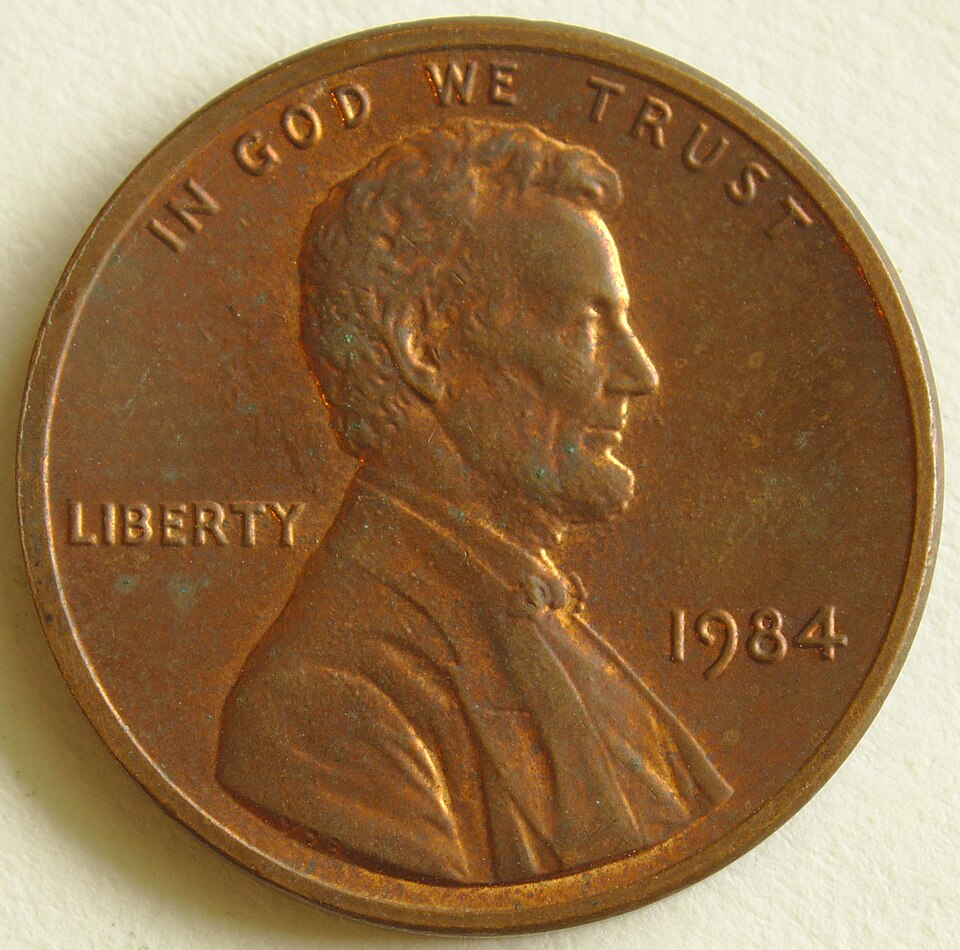
A doubled die obverse (DDO) error occurs when the die used to strike the coin is hubbed twice in misalignment during the die-making process. This transfers a doubled image onto the die, which then imparts doubled design elements onto the coin. The 1984 Lincoln cent is particularly notable for its doubled die variety, where Lincoln’s earlobe appears doubled. This error is one of the most sought-after modern doubled die varieties because it is relatively easy to spot yet occurs very rarely.
The cause lies in the hubbing process: the working die is supposed to be hubbed exactly once to transfer the design. If the die is hubbed a second time while slightly rotated or offset, a doubled image results. The 1984 DDO likely resulted from such a misalignment at the Philadelphia or Denver Mint. Collectors prize this variety for its clear doubling and the dramatic visual effect it creates. The rarity and distinctiveness drive its premium, with values ranging from $100 to $300+ depending on condition and severity.
How to Identify the 1984 DDO Doubled Earlobe
- Clean the coin: Gently wipe the obverse with a soft cloth to remove dirt and oils that could obscure details.
- Use a 10x magnifier: A loupe or magnifying glass with at least 10x power is essential to see fine details.
- Locate the date and Lincoln’s profile: Find the date on the right side and Lincoln’s portrait facing right.
- Focus on the earlobe: Look at the top left of Lincoln’s head, just below the hairline. In a normal 1984 penny, the earlobe is a single, smooth curve.
- Identify doubling: In a DDO, the earlobe shows two distinct, separated layers—like a shadow or outline. The doubling is usually clear and extends into the hair above. Also check the “LIBERTY” lettering; the “L” and “I” often show subtle doubling.
- Compare with a known normal: If possible, compare side-by-side with a regular 1984 penny to confirm the doubling is not just wear or damage.
Proper identification requires patience and good lighting. The doubled earlobe is the hallmark of the 1984 DDO, but other areas like the “LIBERTY” inscription may also exhibit doubling. Because this error is so valuable, many counterfeit or altered coins exist; if you suspect a DDO, consider professional authentication from a grading service like PCGS or NGC. For other years with notable doubled die errors, see our 1877 Indian Head penny guide and 1888 Indian Head penny guide.
1984 DDO Value: $100 to $300+ Based on Grade
| Grade | Value Range |
|---|---|
| G-4 (Good) | $100–$150 |
| VF-20 (Very Fine) | $150–$200 |
| EF-40 (Extremely Fine) | $200–$250 |
| AU-50 (About Uncirculated) | $250–$300 |
| MS-60 (Mint State) | $300–$400 |
| MS-63 | $400–$500 |
| MS-65 or higher | $500+ |
The value of a 1984 DDO increases sharply with grade, as higher-grade coins display the doubling more clearly and retain original luster. Even a well-worn example (G-4) can fetch $100–$150, while a pristine mint state coin (MS-65+) may exceed $500. The severity of the doubling also affects price; more dramatic doubling commands a premium. Professional grading from services like PCGS or NGC is highly recommended for DDOs, as authentication significantly boosts buyer confidence and resale value. For collectors interested in other rare error varieties, our 1889 Indian Head penny guide covers additional doubled die examples.
Other 1984 Penny Errors: What to Look For (and Ignore)
Common Minor Errors: Plating Blisters and Missing “IN”
- Plating blisters: Small bubbles or bumps on the surface caused by the zinc core reacting with the copper plating. These are very common and have little to no extra value.
- Missing “IN”: The word “IN” in the motto “In God We Trust” is absent due to a die fill or grease error. This occurs occasionally but is not rare and adds minimal premium.
Both of these errors are frequently encountered in circulated 1984 pennies and are generally not considered collectible unless in combination with other rare features. Plating blisters can sometimes be mistaken for more serious die cracks, but they are superficial and do not increase value. The missing “IN” error is a minor variety that collectors typically overlook. When evaluating a coin, focus on the doubled die first, as it is the only error with significant monetary value. For other minor anomalies, it’s usually not worth paying above face value.
Rare Errors: Misaligned Dies and ‘iberty’ Varieties
Beyond the doubled die, a few other error types can add a modest premium to a 1984 penny. Misaligned die errors occur when the die is not properly centered in the press, leading to off-center strikes or rotated reverses. These can be worth $5–$50 depending on the severity of the misalignment and the coin’s grade. Another interesting variety is the ‘iberty’ error, where the ‘L’ in ‘LIBERTY’ is weak, missing, or appears as an ‘I’ due to a die crack or over-polishing. This error is less common than the doubled die but still not particularly rare. It may add a small premium of $5–$20. Both of these errors are worth examining if you have a 1984 penny, but they do not approach the values seen with the DDO. When assessing a coin, use a magnifier to check for off-center striking (date and mint mark shifted) and inspect the ‘LIBERTY’ lettering carefully. For a comprehensive list of error varieties across Indian Head pennies, see our 1890 Indian Head penny errors and value guide and the 1893 guide, which cover similar misstrike types.
How to Examine Your 1984 Penny for Errors: A Quick Checklist
- Check the mint mark: Identify whether the penny has no mint mark (Philadelphia), ‘D’ (Denver), or ‘S’ (San Francisco). Proofs have an ‘S’ and a different finish.
- Inspect the date: Look for doubling, weakness, or repunching in the digits. The doubled die often affects the ‘8’ and ‘4’ as well.
- Examine Lincoln’s earlobe: Under 10x magnification, focus on the earlobe for the classic DDO doubling—two distinct layers.
- Check the ‘LIBERTY’ lettering: Doubling may appear on the ‘L’, ‘I’, ‘B’, etc. Also look for any missing or weak letters.
- Scan the entire surface: Look for plating blisters, cracks, or missing elements like the ‘IN’ in the motto.
- Assess strike quality: Ensure the rim is fully formed and details are sharp; weak strikes may indicate a die issue.
Following this systematic approach helps you identify any valuable features efficiently. Start with the mint mark and condition, then zero in on the doubled die, as it is the most valuable. If you find a potential DDO, compare it to known examples online or consult a professional. Remember, most 1984 pennies are common, so patience and careful observation are key to spotting the rare ones.
While the vast majority of 1984 pennies are worth face value, the doubled die obverse (DDO) stands out as a modern rarity that can turn a cent into a $300+ collectible. Most other errors, like plating blisters or missing “IN”, are common and add no value. Your best action is to carefully examine the earlobe of any 1984 penny with a 10x magnifier—if you see clear doubling, consider having it authenticated by a professional grading service like PCGS or NGC to confirm its value. For collectors interested in other years, our guides to Indian Head pennies, including the 1893 Indian Head penny errors and value guide, offer similar insights into mint marks and error varieties.
Frequently Asked Questions About 1984 Penny
What makes a 1984 penny rare?
So if you guys want a coin microscope to look at your coins up close and look for rare and valuable coins.
How many 1984 D pennies were made?
There were over 5 and a half billion 1984-D Lincoln Cents struck for circulation, making them very common.
Related Coins
1936 Wheat Penny Value: Complete Guide to Mint Marks, Errors & Worth in 2026
Discover the 1936 Wheat Penny value for 2026. Learn how mint marks (D, S, no mint mark) and errors like Doubled Die affect worth. Get current price ranges and auction records.
 Penny
Penny
1989 Penny Coin Value (Errors List, “D”, “S” & No Mint Mark Worth)
Title: 1989 Penny Coin Value (Errors List, “D”, “S” & No Mint Mark Worth) Meta description: 2026 1989 penny value guide. Identify mint marks D,…
 Penny
Penny
1957 Wheat Penny Coin Value (Errors List, “D” & No Mint Mark Worth)
Get 2026 values for 1957 wheat pennies. Compare no mint mark vs D mint mark worth. Learn which errors like DDO and RPM boost value to $100+. Current pricing inside.