
1998 Penny Coin Value (Errors List, “D”, “S” & No Mint Mark Worth)
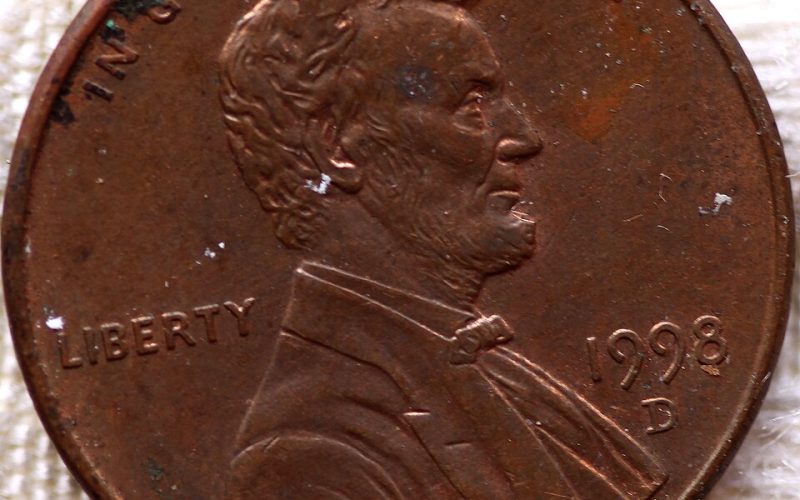
1998 pennies are typically worth just one cent, but a rare 1998-S Close AM proof can sell for over $5,000, making it one of the most valuable modern U.S. coins. Most 1998 pennies in everyday circulation have little value above face, yet specific error varieties and high-grade specimens can command hundreds or even thousands of dollars. The key to unlocking this value lies in three factors: mint mark, the spacing of the letters “AM” in “AMERICA” on the reverse, and the coin’s condition grade. This guide provides the 2026 market values for every 1998 penny mint mark and error variety, with clear identification steps so you can instantly determine if your coin is worth face value or a small fortune.
- No Mint Mark (Philadelphia): Circulated: $0.01–$0.10. Wide AM variety in MS65+: $500+.
- 1998-D (Denver): Circulated: $0.01–$0.10. High-grade MS67+: $30+.
- 1998-S (San Francisco Proof): Normal: $0.50–$2.00. Close AM variety: $280–$5,000+.
- Key Error: Check the reverse “AMERICA” spacing. Wide AM (letters far apart) on circulation strikes is rare. Close AM (letters touching) on proofs is rare.
1998 Penny Values by Mint Mark: D, S & No Mint Mark (2026 Prices)
The mint mark on a 1998 penny—or its absence—is the first clue to its potential value. Three mint marks exist for this year: no mint mark (Philadelphia), “D” (Denver), and “S” (San Francisco proof). Each has a distinct value structure based on mintage, intended use, and collector demand. The vast majority of 1998 pennies, regardless of mint mark, are worth only their face value of one cent when heavily worn. Premiums appear only in pristine condition or with specific design varieties.
Base Value Comparison: Circulated vs. Uncirculated
The table below shows the 2026 baseline values for 1998 pennies in common condition tiers. These figures represent typical market prices for regular coins without rare varieties.
| Mint Mark | Good/Very Good (Circulated) | Uncirculated (MS-63) | High Grade (MS-67+) |
|---|---|---|---|
| No Mint Mark (Philadelphia) | $0.01–$0.10 | $0.10–$0.25 | $30–$100 (regular) / $500+ (Wide AM) |
| 1998-D (Denver) | $0.01–$0.10 | $0.10–$0.25 | $30+ |
| 1998-S (San Francisco Proof) | $0.50–$2.00 | $1–$5 | $280–$5,000+ (Close AM) |
Proof coins from San Francisco start at a higher base value ($0.50–$2.00) because they were never released into circulation. The U.S. Mint produced proof sets specifically for collectors, using polished planchets and special striking techniques that yield a sharper appearance and mirror-like fields. Even a common 1998-S proof in average condition sells for a premium over its face value, while circulation strikes from Philadelphia and Denver are essentially worthless when worn.
The High-Value Exceptions: Wide AM & Close AM Premiums
Two specific design varieties break the normal value pattern and create the most significant price jumps for 1998 pennies. These are not strike errors but rather differences in the reverse die engraving, specifically the spacing of the letters “A” and “M” in the word “AMERICA.”
- No Mint Mark Wide AM: The most valuable circulation strike variety. On normal 1998 pennies (no mint mark and D), the A and M are close together (Close AM). The rare Wide AM variety shows the letters clearly spaced apart. In high-grade MS65+ condition, a 1998 Wide AM can sell for over $500, with lower-grade examples still fetching $20–$100+.
- 1998-S Close AM Proof: On proof coins, the situation reverses. The rare variety is when the A and M are touching (Close AM). Normal 1998-S proofs have a wider spacing. The Close AM proof variety commands extraordinary prices, ranging from $280 for lower grades to over $5,000 for pristine specimens.
These two varieties represent the pinnacle of 1998 penny collecting. The Wide AM on a circulation strike is a modern rarity that often goes unnoticed, while the 1998-S Close AM proof is a confirmed key date for the Lincoln Memorial cent series.
Critical 1998 Penny Errors: Wide AM, Close AM & Broadstrike Varieties
Beyond the mint mark and AM spacing, actual striking errors can also add value to 1998 pennies. However, not all errors are created equal. Some, like the AM varieties, are design-based and extremely valuable. Others, like broadstrikes, are genuine striking mistakes that collectors seek. Many common minor errors (doubled dies) on 1998 pennies are plentiful and add little to no premium. Knowing which errors matter saves you from wasting time on coins that are still worth only face value.
Wide AM vs. Close AM: How to Identify the $5,000 Error
The AM spacing is the single most important factor for 1998 penny values. The identification is straightforward but counterintuitive because it differs between circulation strikes and proofs.
For regular 1998 pennies (no mint mark or “D”): The normal, common design has the letters A and M in “AMERICA” touching or extremely close together (Close AM). The rare and valuable Wide AM error shows a clear, noticeable gap between the two letters. Use a 10x magnifier to be certain.
For 1998-S proof pennies: The rare and valuable variety is the opposite. The Close AM proof has the A and M touching. Normal 1998-S proofs have the letters spaced farther apart. This reversal is why the 1998-S Close AM proof can exceed $5,000—it’s the exception, not the rule, for proof coinage.
To check your coin: Flip it to the reverse (Lincoln Memorial side). Locate the word “AMERICA” above the memorial. Examine the spacing between the A and M. On a common 1998 penny, they will be nearly touching. If you see a wide gap, you may have a valuable Wide AM. On a 1998-S proof, if the A and M are touching, you have the rare Close AM variety worth hundreds to thousands.
Broadstrike Error: The Flat, Wide Penny Worth $80–$900
A broadstrike is a genuine striking error where the coin is struck outside the restraining collar that normally shapes the rim. This causes the coin to appear flatter and wider than normal, with an indistinct or missing rim. Broadstruck 1998 pennies are not common but do appear in circulation occasionally. Their value depends entirely on condition and the severity of the error.
- Value Range: $80–$900 depending on grade and how dramatic the broadstrike appears.
- Identification: The coin will look noticeably flatter and wider than a normal penny, with softened details around the edges. The date and lettering may be spread out.
- Rarity: Less common than AM spacing varieties but still a recognized error type that attracts premium prices in high grades.
Other Minor Errors (DDO/DDR): Usually Not Valuable
Doubled Die Obverse (DDO) and Doubled Die Reverse (DDR) errors occur when the die is hubbed twice in misalignment, creating a doubled appearance on design elements. While dramatic doubled dies on older coins (like the famous 1955 DDO) are worth fortunes, the 1998 penny has numerous minor DDO/DDR varieties that are plentiful and add minimal value. You might see slight doubling on the date or lettering, but unless the coin is in pristine MS-67+ condition, these minor varieties typically do not push the price beyond the normal high-grade premium of $30–$100. Focus your search on the AM spacing and broadstrikes for the best return.
Condition Rarities: Why MS67+ 1998 Pennies Command Premiums
For most 1998 pennies, condition is a secondary concern. A heavily worn coin is worth one cent regardless of mint mark. But when you reach the highest echelons of grading—MS-67, MS-68, MS-69—the value equation changes dramatically. The Professional Coin Grading Service (PCGS) and Numismatic Guaranty Company (NGC) use the “MS” (Mint State) scale to describe uncirculated coins, with numbers 60–70 indicating quality. For modern coins like 1998 pennies, the threshold where premiums spike is MS-67 and above.
The MS67+ Threshold: Where Values Spike
Most 1998 pennies, even uncirculated, are common in grades MS-63 through MS-66 and sell for only a few dollars. The real scarcity begins at MS-67. The coin must be flawless in strike, luster, and eye appeal to achieve these grades. The market data confirms this sharp jump:
- A regular 1998-D penny in MS-67 sells for around $30+.
- The same coin in MS-68 Red (original copper color) can bring over $130.
- The rarest 1998-S Close AM proof in MS-69 Red has auction records exceeding $3,000.
- The 1998 Wide AM (no mint mark) requires at least MS-65 to reach the $500+ tier, with higher grades commanding substantially more.
The takeaway: if you have a 1998 penny that looks perfect under magnification, consider professional grading. The difference between an MS-65 and an MS-68 can mean hundreds of dollars.
Color Matters: Red vs. Red-Brown vs. Brown
Condition grading includes a color component for copper coins. The original mint luster is a bright orange-red. Over time, copper oxidizes to red-brown (RB) and eventually brown (BN). For high-grade 1998 pennies, color is a major value driver.
- Red (RD): Full original mint red luster. Commands the highest premiums, often 2–5 times more than the same grade in RB or BN.
- Red-Brown (RB): Mixed red and brown toning. Mid-tier value.
- Brown (BN): Fully oxidized. Lowest value for the same grade.
A 1998-D MS-67 Red is worth significantly more than an MS-67 Brown. When storing your pennies, keep them in airtight holders to preserve the red color. Cleaning or handling will damage the luster and drastically reduce value.
Practical Takeaway
The most surprising insight about 1998 pennies is that the single most valuable error variety—the Wide AM—is found on the most common coin: the Philadelphia-minted penny with no mint mark. You don’t need to hunt for rare proof sets to find a small fortune; it could be hiding in your loose change. The 1998-S Close AM proof is valuable, but it’s already known and sought after by collectors. The Wide AM on a circulation strike remains relatively overlooked by the public.
Action step: Immediately get a 10x magnifier. Go through any 1998 pennies you have. Flip each to the reverse and examine the spacing between the A and M in “AMERICA.” If the letters are clearly far apart (Wide AM), you may have a coin worth $500 or more in good condition. If it’s a 1998-S proof and the letters are touching (Close AM), you could have a $5,000 coin. Do not clean or attempt to improve the coin’s appearance—this damages value. Store it in a protective plastic holder and consult a professional grading service if the grade appears high. This simple 2-second check is the fastest way to turn a penny into a prize.
Frequently Asked Questions About 1998 Penny
Is a 1998 penny supposed to be Close AM or Wide AM?
The valuable error varieties are Wide AM for No Mint Mark MS-67+ at $500+ and Close AM for 1998-S proof MS-67+ at $280–$5,000+. Regular 1998 pennies have standard AM spacing.
Are there any special 1998 penny editions?
The 1998-S proof penny with Close AM error in MS-67+ condition is worth $280–$5,000+. High-grade regular 1998 pennies (MS-67+) are valued at $30–$100 for No Mint Mark and $30+ for D.
Related Coins
 Penny
Penny
1942 Wheat Penny Coin Value (Errors List, D, S & No Mint Mark Worth) – 2026 Guide
2026 value guide for 1942 Wheat Pennies. Get prices for no mint mark, D, S, errors (DDO, RPM), and what makes them valuable. Updated market data.
 Penny
Penny
1963 Penny Coin Value (Errors List, “D” & No Mint Mark Worth)
In 2026, a 1963 Lincoln penny in circulated condition typically trades for $0.02 to $0.10, but pristine MS67 examples have sold for up to $2,820,…
 Penny
Penny
1993 Penny Value 2026: Errors List, D, S & No Mint Mark Worth
Discover 1993 penny values for 2026. Learn about rare errors like the $50,000 mule, Close AM ($50-$300+), and values for D, S, no mint mark coins. Get latest prices.