
2009 Penny Log Cabin Coin Value (Errors List, “D” & No Mint Mark)
The 2009 Penny Log Cabin Coin Value can range from face value to over $700 for pristine mint state examples, with rare die errors fetching $350 to $600 or more. The two key factors are the mint mark—a “D” for Denver or no mint mark for Philadelphia—and the coin’s condition grade. Specific errors like a vertical spike or die-gouge pillar on the reverse dramatically increase value. This guide provides current 2026 market prices, identifies valuable error varieties, and clarifies how to recognize the Log Cabin design among the four 2009 Lincoln Bicentennial pennies.
- Base Values: Common 2009 Log Cabin pennies (no mint mark) in circulated condition are worth $0.28 to $8.57; higher-grade “D” mint versions range from $5 to $725+ for MS-67.
- Error Premiums: Specific die errors like a die-gouge pillar or vertical spike can increase value to $350-$600 in Mint State. A “cock-eyed” or doubled “D” is also highly collectible.
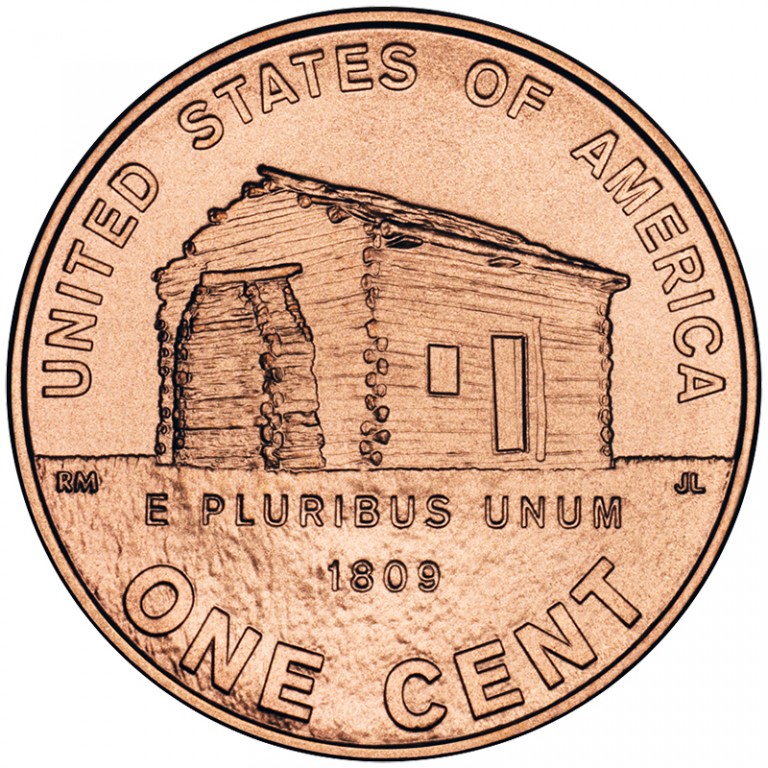
- Design Identification: The Log Cabin reverse depicts Lincoln’s “Birth & Early Childhood.” It is one of four 2009 designs; ensure your coin’s reverse matches this scene before applying these values.
2009 Log Cabin Penny Value by Mint Mark and Condition (2026 Prices)
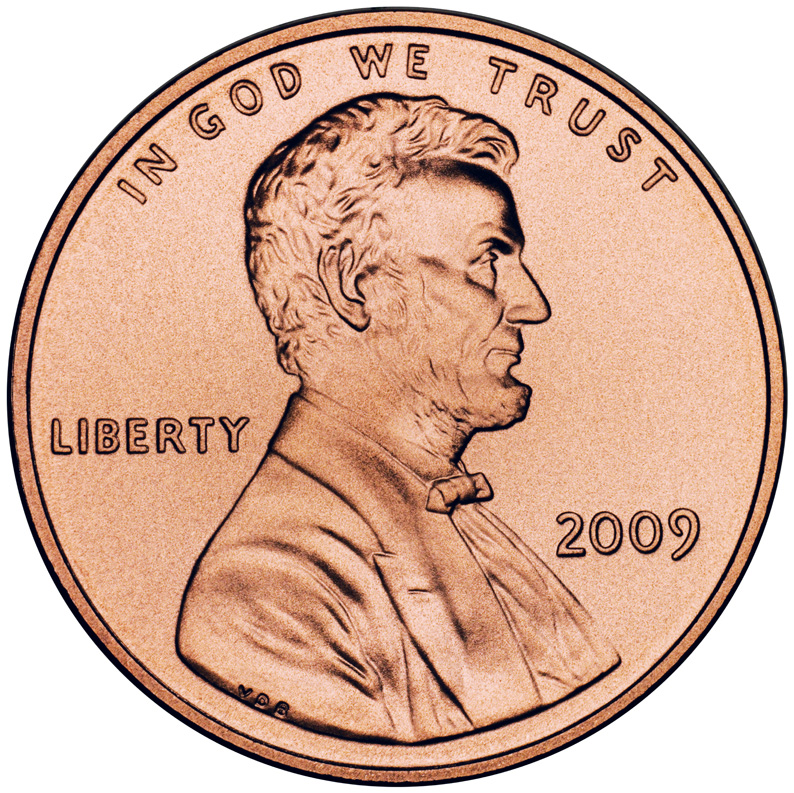
The Log Cabin penny is the first of four 2009 Lincoln Bicentennial designs, showing a young Lincoln at his birthplace. Its value in 2026 depends primarily on mint mark and condition. Coins without a mint mark were struck at the Philadelphia Mint, while those with a “D” were minted in Denver. For the Log Cabin design specifically, a 2026 value chart from coinvaluechecker.com shows clear price differentials. The “RD” designation means the coin retains its original bright red copper color, which commands a significant premium over brown or toned examples.
Current Market Price Chart: No Mint Mark vs. “D”
The following table presents market values for the 2009 Log Cabin penny (Birth & Early Childhood) in Red (RD) condition. Prices are based on the 2026 chart from coinvaluechecker.com for no mint mark and general 2026 market data for Denver-minted coins from sdbullion.com and boldpreciousmetals.com.
| Grade | No Mint Mark (RD) | 2009 D (RD) |
|---|---|---|
| Good (G) | $0.28 | $0.35 |
| Very Fine (VF) | $0.96 | $1.20 |
| Extremely Fine (EF) | $2.46 | $3.00 |
| Mint State 65 (MS-65) | $8.57 | $10-$12 |
The “RD” (Red) color is critical. A coin with full original mint luster and no toning is far more valuable. For circulated coins in Good to Extremely Fine, the Denver “D” mint mark adds a modest 20-30% premium. The real divergence appears in Mint State: an MS-65 Log Cabin penny with no mint mark averages $8.57, while a Denver equivalent reaches $10 to $12. Higher grades like MS-67 see even steeper increases.
Why the “D” Mint Mark Often Commands a Premium
The Denver Mint typically produces fewer coins for certain denominations and years, creating scarcity. For 2009 Lincoln pennies, this pattern holds across designs. A 2009-D Professional Life penny in MS-67 condition sold for $725, significantly higher than Philadelphia versions (source 6, finance.yahoo.com). While that record is for a different design, it demonstrates the premium collectors place on Denver-minted high-grade coins. For the Log Cabin design specifically, Denver-minted examples in top condition are sought after, with values comparable to or slightly above Philadelphia issues in the same grade (sources 4 and 5, sdbullion.com, boldpreciousmetals.com). The “D” mint mark under the year is a key identifier that can add 20% to 50% to the value, especially in uncirculated condition.
Grading Matters: From Circulated to Perfect Mint State
Condition grading drives value more than any other factor, as seen in 1890 Indian Head penny price differentials. The scale runs from Good (heavily worn) to Mint State (uncirculated). For the 2009 Log Cabin penny, a jump from Extremely Fine ($2.46) to Mint State 65 ($8.57) represents a 250% increase for no mint mark coins. For Denver “D” coins, the leap is even more dramatic: from EF ($3.00) to MS-65 ($10-$12) is a 300%+ rise. High-end grades like MS-67 can push values to $700 or more, as seen with other 2009 designs (source 13, parkmagazineny.com). Always prioritize condition assessment—hold the coin under light to check for luster and wear. Professional grading by PCGS or NGC is recommended for coins suspected of being MS-65 or higher.
Error Varieties That Increase 2009 Log Cabin Penny Value
Error coins are mint-made mistakes that escape quality control and are highly collectible in series like the 1893 Indian Head penny. For the 2009 Log Cabin penny, specific die errors on the reverse can boost value into the hundreds. These are distinct from the satin finish proofs minted in San Francisco (“S” mint mark), which are a separate collector category.
Die Gouge & “Vertical Spike” Errors: $350-$600+
The most valuable errors for the Log Cabin reverse are die-related. According to bullionsharks.com (May 27, 2025), two specific varieties command $350 to $600 in Mint State:
- Die-gouge pillar (D-mint): A raised, pillar-like line appears on the reverse, typically near the log cabin structure. This results from a gouge in the die that transfers to the coin.
- Vertical “spike” from the base of the dome: A thin vertical line extends upward from the base of the Capitol dome in the background. This is a die crack that filled with metal during striking.
Both errors are exclusive to Denver-minted (“D”) coins and are relatively rare. A real-world example is the “Lincoln Log Cabin Die Break Error” listed on eBay (source 12), which shows a die break cud on the reverse. Another notable error is the wrong planchet: a 2009-D penny struck on a 3.1-gram copper blank instead of the standard 2.5-gram copper-plated zinc planchet (source 1). This material mistake is highly valuable and varies widely in price based on grade.
The “Cock-Eyed” or Doubled “D” Mint Mark
Only affecting Denver-minted coins, the “cock-eyed D” is a mint mark that appears twisted, crooked, or misaligned (source 9, idiggold.wordpress.com). This error occurs when the die is not properly oriented during striking. Collectors also seek doubled die errors, where the design elements appear doubled due to a doubled impression from the die (source 9 title). These are less common than die gouges but highly collectible. To check, examine the “D” under the date with magnification—any irregularity or doubling can add significant premium.
Satin Finish & Other Rare Varieties
The 2009-D Early Childhood (Log Cabin) satin finish penny is a special uncirculated variant sold in mint sets. An SP69 RD specimen achieved $105 in October 2021 (source 17, coinvaluechecker.com). Satin finish coins have a distinct matte texture and are not business strikes. Be cautious of outlier claims, such as a YouTube video suggesting a “no mint mark” Log Cabin penny sold for $1 million (source 16). Such figures refer to unique, perfectly graded specimens with multiple errors—not typical market values. Focus on the documented error varieties above for realistic pricing.
The Four 2009 Lincoln Bicentennial Designs: Identifying the Log Cabin
The 2009 Lincoln cent features four commemorative reverses for Abraham Lincoln’s bicentennial. Many collectors confuse the designs, so proper identification is essential before assessing value. The Log Cabin is the first in the series.
The Log Cabin Design: Birth & Early Childhood
The Log Cabin reverse officially represents Lincoln’s “Birth & Early Childhood” (sources 3 and 15, coin-identifier.com, coins.thefuntimesguide.com). It depicts a simple log cabin with a young Lincoln sitting on a log, often reading a book. This imagery answers the common query about the “guy sitting on the log” seen on 2009 pennies (source 8, Facebook). If your coin’s reverse shows this scene, you have the correct design for this value guide. It was the first of the four 2009 issues and remains the most recognizable.
The Other Three 2009 Designs and Their Typical Values
The remaining three 2009 designs follow Lincoln’s life story:
- Formative Years (Indiana): Shows Lincoln as a rail-splitter or young man in Indiana.
- Professional Life (Illinois): Depicts Lincoln as a lawyer or politician in Illinois.
- Presidency (Washington, D.C.): Features the Lincoln Memorial or U.S. Capitol.
While each design has its own collector base, value structures are similar: mint mark and condition dominate pricing, as with 1889 Indian Head penny values. For example, a 2009-D Professional Life penny in MS-67 can reach $725 (source 6), indicating that high-grade Denver coins from any design can exceed $700. The Log Cabin (Birth) design is often the most sought-after by casual collectors due to its nostalgic appeal, but all four follow the same market principles outlined above. Always verify the reverse design before consulting value charts.
In summary, the 2009 Log Cabin penny offers accessible entry-level values for circulated examples but significant upside for mint state and error coins. The most surprising insight is that a common Log Cabin penny in perfect MS-67 condition can be worth more than a lower-grade coin with a rare die error—the condition premium is that steep. Action step: First, flip your coin: if the back shows a log cabin with Lincoln sitting on a log, you have the right design. Second, look under the date: a “D” means Denver mint and often adds value. Third, hold it to the light—does it shine bright red (RD)? If yes and it’s uncirculated, it could be worth $700+. For any suspected errors like a die-gouge pillar or “cock-eyed D,” get the coin professionally graded by PCGS or NGC to verify and unlock maximum value. For broader penny valuation context, explore the Penny category. Historical mint mark traditions, such as Philadelphia’s no-mint-mark practice, can be seen in earlier issues like the 1888 Indian Head penny.
Frequently Asked Questions About 2009 Penny Log Cabin Coin Value (Errors List, “D”
What are the four types of 2009 pennies?
The four types are Birth & Early Childhood in Kentucky, Formative Years in Indiana, Professional Life in Illinois, and Presidency in Washington, DC Lincoln pennies. The Log Cabin penny (Formative Years in Indiana) values range from $0.28 for Good (no mint mark) to $8.
What is the 2009 D penny with the guy sitting on the log?
It is the Log Cabin (Formative Years in Indiana) design from the 2009 Lincoln Bicentennial series. For the 2009 D Log Cabin penny, values are $0.35 for Good, $1.20 for Very Fine, $3.00 for Extremely Fine, and $10-$12 for MS-65.
What errors increase a 2009 penny's value?
Error varieties can increase a 2009 Log Cabin penny's value to $700, $350, $600, $5, $725, or $350-$600, with percentage increases of 30%, 20%, 50%, 250%, or 300% over base value.
Related Coins
 Penny
Penny
1934 Wheat Penny Coin Value (Errors List, “D” & No Mint Mark Worth)
1934 Wheat Penny Value by Mint Mark: Current Price Ranges … There’s no section with ID 456. I think the “Section 1” might refer to…
1888 Indian Head Penny Coin Value (Errors List & No Mint Mark Worth)
In 2026, an 1888 Indian Head Penny in Good condition sells for around $9.91, while Mint State examples jump to $2,100 and cameo specimens reach…
 Penny
Penny
1942 Wheat Penny Coin Value (Errors List, D, S & No Mint Mark Worth) – 2026 Guide
2026 value guide for 1942 Wheat Pennies. Get prices for no mint mark, D, S, errors (DDO, RPM), and what makes them valuable. Updated market data.