
1946 Wheat Penny Coin Value (Errors List, D, S & No Mint Mark Worth)
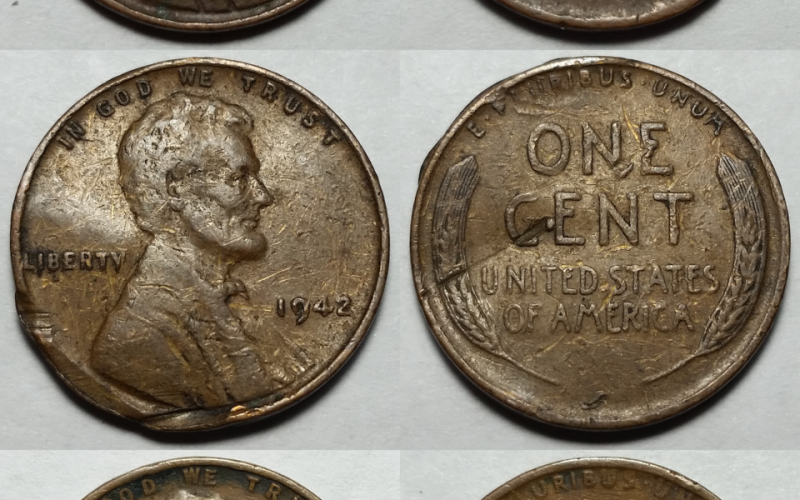
A 1946 Wheat Penny in circulated condition is typically worth between 2 to 10 cents, with the specific mint mark influencing the price, whereas 1889 Indian Head pennies in similar condition can be worth significantly more due to scarcity. Uncirculated examples can range from $0.35 to over $85, while high-grade red coins with strong strikes may sell for $50 or more. The most valuable errors, such as the 1946-S/D repunched mint mark, can push values well over $250, with certified examples exceeding $2,000.
- A 1946 Wheat Penny in circulated condition is typically worth 2-10 cents, with mint mark affecting price.
- Uncirculated examples range from $0.35 to over $85, and red MS-65+ can reach $50+.
- The most valuable error is the 1946-S/D repunched mint mark, with certified coins selling for over $2,000.
1946 Wheat Penny Value: 2026 Price Guide
Understanding the base value of a 1946 Wheat Penny requires separating coins by their mint mark and condition. These pennies were the last of the wartime copper alloy issues, containing 95% copper and 5% zinc. Their high mintage numbers make common circulated examples very affordable, but subtle differences in mint location and preservation create clear pricing tiers, unlike scarce dates like 1877 Indian Head pennies which command high premiums even in poor condition.
Circulated 1946 Pennies: 2 to 10 Cents Daily Value
- No Mint Mark (Philadelphia): 2–5+ cents in circulated condition.
- 1946-D (Denver): 3–5+ cents in circulated condition.
- 1946-S (San Francisco): 5–10+ cents in circulated condition.
The slight premium for the San Francisco “S” mint mark over the Philadelphia and Denver issues is consistent in circulated grades. Condition is the primary driver; even a lightly worn coin will be worth only a few cents, while heavy wear reduces value to the metal baseline. For context, earlier Indian Head pennies from the 19th century often carry higher premiums even in similar condition due to lower survival rates.
Uncirculated and Red Mint State Prices: $0.35 to $85+
The value increases dramatically for coins that never entered circulation. An uncirculated 1946 Wheat Penny, graded MS-60 or better, typically starts around $0.35 and can rise to $0.85 for mid-range Mint State. The significant jump occurs for coins graded MS-65 or higher that retain their original red (RD) color, similar to 1888 Indian Head pennies where high-grade red examples are highly sought after. These strong-strike examples with full mint luster are sought after by collectors and can command prices of $50 or more. The condition scale is critical: a coin graded MS-63 might be valued near the lower uncirculated range, while an MS-67 red could be several times the price of a comparable MS-65.
1946-S Mint Mark: Mintage and Premium
- Total Mintage: Over 198 million 1946-S pennies were struck at the San Francisco Mint.
- Market Premium: The “S” mint mark consistently commands a slight premium over no mint mark and “D” examples in comparable condition.
Despite a very high mintage of over 198 million coins, the 1946-S maintains a collectible premium. This is partly due to collector preference for completing mint mark sets and partly because many San Francisco issues from this era were saved in better condition. The premium is most noticeable in uncirculated grades. When comparing values, the 1946-S often sits at the top of the pricing tier for standard, non-error coins. For a broader perspective on mint mark rarities, 1863 Indian Head pennies show how different mints can affect scarcity and value across series.
Quick Value Comparison Table
| Mint Mark | Condition | Value Range (2026) |
|---|---|---|
| No Mint Mark (Philadelphia) | Circulated (Good-Very Good) | $0.02 – $0.05 |
| 1946-D (Denver) | Circulated (Good-Very Good) | $0.03 – $0.05 |
| 1946-S (San Francisco) | Circulated (Good-Very Good) | $0.05 – $0.10 |
| Any Mint | Uncirculated (MS-60 to MS-63) | $0.35 – $0.85 |
| Any Mint (Red) | Uncirculated (MS-65+) | $50.00+ (strong strike premium) |
This table synthesizes the standard market values. The highest values are reserved for coins with exceptional preservation and original mint red color. A coin’s specific grade from a service like PCGS or NGC will finalize its market price.
Valuable 1946 Penny Errors: S/D Overpunched and More
While common 1946 pennies are inexpensive, error varieties represent the true treasure hunt, much like 1890 Indian Head pennies with rare errors can be worth a premium. The most famous and valuable error for this date is the 1946-S/D repunched mint mark. Other dramatic errors like double strikes also carry significant premiums, often multiplying a coin’s value by hundreds or thousands of times.
The 1946-S/D Repunched Mint Mark: $250 to $2,000+
The 1946-S/D error is the king of 1946 varieties. It occurs when a “D” mint mark was first punched into the die, and then an “S” was punched directly over it. On the finished coin, a clear “D” is visible within or under the “S”. This overpunched mint mark (OMM) is the only one of its kind for the entire Lincoln Wheat cent series. On the open market, these coins regularly sell for over $250. However, when certified by a major grading service like PCGS or NGC, the value escalates significantly; documented sales show certified examples fetching over $2,000 for high-grade specimens. Some listings even reference a related 1946-S Inverted Mint Mark (FS-501) valued up to $468+ in MS-66 Red, but the S/D overpunched remains the most documented and valuable.
Double Strike and Major Misstrike Errors: $20 to $500+
- Double Strike: The coin was struck more than once by the dies, resulting in dramatic, doubled images of the date, lettering, or design elements.
- Major Misstrikes: Includes broadstrikes (coin struck outside the collar, making it larger and misshapen), clipped planchets (missing a piece of the metal blank), and other dramatic planchet or striking failures.
These errors are visually obvious and highly collectible. A 1946 penny with a clear double strike, especially on the date or “LIBERTY” text, will typically sell for $20 to $100 depending on severity and grade. More extreme misstrikes, like a broadstrike or a significant off-center strike that moves major design elements, can easily reach $100 to $500+. High-grade examples of these dramatic errors are worth far more than the standard coin and represent a key area for error coin specialists.
Other Error Types: Lamination and Off-Center
- Lamination Errors: Flaking or peeling metal on the coin’s surface, caused by impurities in the planchet. This creates a rough, sometimes peeling texture on parts of the design.
- Off-Center Strikes: The coin blank was not properly centered in the press, causing the entire design to be struck off-center. The degree of offset determines the premium.
These errors are less rare than the S/D overpunched or dramatic double strikes but still command premiums over face value. A noticeable off-center strike (e.g., date partially off the edge) might add $10 to $50 to a coin’s value. Lamination errors are valued based on the size and location of the flaw; a small lamination on the reverse might be worth a small premium, while a large one on the obverse could double or triple a coin’s value. They are less valuable than the major error types but are still important to identify.
How to Spot These Errors: Visual Guide
Finding these errors requires careful examination. Start with good lighting and at least 10x magnification.
- S/D Overpunched: Focus intensely on the mint mark, located below the date on the obverse. Use magnification to look for a “D” shape within the curves of the “S”. The top curve of the “D” is often visible.
- Double Strike: Look for any duplicated design elements—the most common are the date, the words “LIBERTY” or “IN GOD WE TRUST,” or the wheat ears on the reverse. The doubling will be exact and offset.
- Lamination: Scan the entire surface for rough, flaky, or peeling metal. This often appears as a raised line or area where the metal has separated.
- Off-Center: Check the position of the date and the word “LIBERTY” relative to the coin’s rim. If the design is not evenly spaced all around, it is off-center. The more the date or rim lettering is cut off, the greater the error’s value.
Patience and a systematic approach are key. Many valuable errors are subtle at first glance but become obvious under magnification. If you suspect a significant error, professional grading is the next step.
How to Identify Rare 1946 D and S Pennies?
The fame of the 1946-S/D error often overshadows other varieties. However, both 1946-D and 1946-S pennies can exhibit other collectible traits and errors that increase their value beyond the standard circulated and uncirculated price points. Understanding what to look for beyond the famous overpunched mint mark is essential for any serious collector.
Rare Errors on 1946 D Pennies: What Exists
While the 1946-S/D is the headline error, 1946-D pennies are not without their varieties. The Denver-minted 1946 penny can feature Repunched Mint Marks (RPMs), where the “D” was punched more than once, causing a doubled or blobby appearance. Off-center strikes and lamination errors also occur on 1946-D coins. These errors are generally less publicized and command smaller premiums than their San Francisco counterparts, but they are still collectible. For example, a standard 1946-D in uncirculated condition might be valued at $10 to $30, but an attractive off-center example could reach $50+. The key is that any deviation from the norm in a high-grade 1946-D can make it interesting to specialists.
How to Identify a Rare 1946 Penny: Key Features
- 1. Mint Mark Variety: The 1946-S/D overpunched is the most valuable. A normal “S” or “D” does not add premium, but an RPM on a “D” or an inverted “S” can.
- 2. Condition and Color: A coin graded MS-65 or higher with original red (RD) color is a prerequisite for high values. A weak strike will reduce the grade and value, even on an error coin.
- 3. Error Type and Severity: A dramatic double strike or a major off-center error is worth significantly more than a minor lamination. The error must be clear and substantial.
- 4. Overall Eye Appeal: Even with an error, a coin that is well-centered, has a strong strike, and good luster will sell for more. A combination of a major error and high grade is the ultimate target.
The intersection of these factors creates value. A common 1946-S in MS-65 red might be worth $50. A 1946-S with a minor lamination in the same grade might be worth $75. A 1946-S/D in MS-65 red is worth over $2,000. The mintage of the 1946-S was over 198 million, so finding one in flawless MS-67 condition is already a challenge. Finding one with the rare S/D error in that condition is exceptionally rare, hence the extreme value.
When to Get Your Coin Certified: Professional Grading Benefits
Professional certification from services like PCGS (Professional Coin Grading Service) or NGC (Numismatic Guaranty Company) is crucial for valuable 1946 pennies, especially errors, and similarly for 1893 Indian Head pennies where grading can authenticate and enhance value. Certification provides an authoritative grade and authentication, which is essential for establishing credibility and market value. For the 1946-S/D error, a certified coin in a high grade (e.g., MS-65 or MS-66) has a verifiable sales history in the thousands of dollars. An uncertified coin, even if genuine, will struggle to fetch a fraction of that price due to buyer skepticism. You should consider certification if: you suspect a major error like S/D or a double strike; you believe your coin is in MS-65 or better condition; or you are selling a coin valued over $100. The certification cost is a small investment relative to the potential increase in market value and buyer confidence it provides.
The single most surprising data point is the market’s willingness to pay over $2,000 for a certified 1946-S/D repunched mint mark penny in high grade. This transforms a common cent into a major collectible. Your immediate action should be to examine any 1946 wheat penny you own under at least 10x magnification, focusing on the mint mark for any sign of an overpunched “D” beneath an “S”. If you find such a feature, or if you have a coin you believe is in pristine uncirculated condition, contact a professional grading service for an evaluation.
Frequently Asked Questions About 1946 Wheat Penny
Are there any rare errors on 1946 D pennies?
This rare 1946 wheat penny D boasts a unique error on the rim, making it a must-have for any serious coin collector. The L error adds an extra level of interest to this already impressive coin. With its copper composition and business strike type, this coin is a true gem from the United States.
How many 1946 S pennies were minted?
The 1946-S Wheat Penny had a total mintage of over 198 million coins struck at the San Francisco Mint. The 1946-S Wheat Penny had a decent sized mintage, especially compared to previous years.
Related Coins
 Penny
Penny
1938 Wheat Penny Coin Value (Errors List, D, S & No Mint Mark Worth)
Current 1938 wheat penny values for 2026: Compare D, S & no mint mark prices. Error varieties like DDR & RPM premiums. Auction records and condition grading guide.
 Penny
Penny
1948 Wheat Penny Coin Value (Errors List, “D”, “S” & No Mint Mark Worth)
Discover the 2026 value of 1948 Wheat Pennies for all mint marks (D, S, no mint). Get error list with prices, mint mark comparison, and factors affecting worth. Learn what to look for!
 Penny
Penny
1956 Wheat Penny Coin Value (Errors List, “D” & No Mint Mark Worth)
150-160 characters, include keyword. Something like: "1956 Wheat Penny value guide for 2026. Find prices for 1956-D, no mint mark, and error varieties like Doubled Die. Learn how grading affects worth."