4 Reasons Why Cars Might Smell Like Rotten Eggs - Jalopnik

structuresxx/Shutterstock
In an ideal world, the only smell noticeable from inside a car's cabin would be the one emitted from the air freshener of choice, dangling down from the rear-view mirror. However, we do not live in an ideal world, and cars do occasionally emit some weird and wonderful smells. We've already done a guide to all the important smells your car makes before, covering everything from burning smells through to fishy smells, as well as why the A/C system might smell musty, and how to stop it, but there is another dangerous smell drivers need to be aware of in their cars: the smell of rotten eggs. There are a number of possible reasons for this foul, sulfurous scent inside the cabin, with the most common being catalytic converter failure, although transmission leaks and battery issues could also be the culprit.
Swapping out a catalytic converter can sometimes be expensive, as can repairing transmission leaks, or indeed replacing a battery, so it's important to recognize exactly where the smell is coming from before ordering any parts. Having a professional diagnose the issue is one way to go about it, but throughout this piece, we'll include tell-tale signs that can help point DIYers in the right direction when they start smelling rotten eggs in their car.
A failing catalytic converter is the most common symptom
Kenneth D. Love/Shutterstock
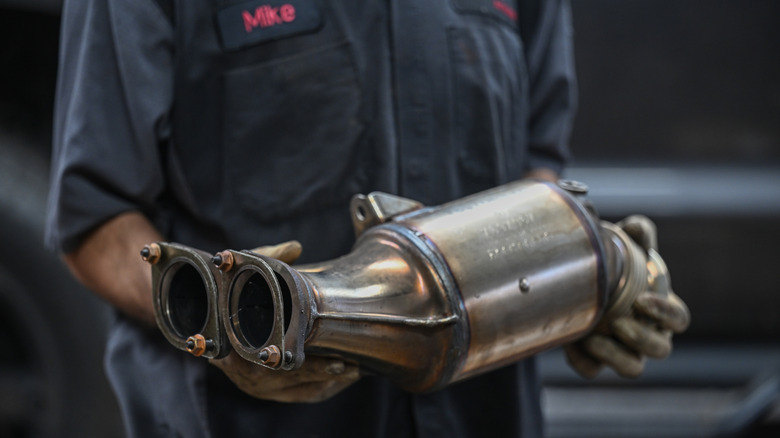
Unfortunately, the most expensive answer to a rotten egg smell in the car is also the most common. For the uninitiated, catalytic converters live within the exhaust system, and they were introduced in the 1970s as a way of reducing exhaust emissions. A catalytic converter essentially works by converting harmful gases, which would otherwise simply be emitted from the exhaust, into less-harmful substances. Over time, however, the catalytic converter can become clogged, and at this point, it's likely it will begin to overheat.
There are several ways to tell if a catalytic converter is clogged, but one of the first things a driver might notice if this happens is a rotten egg smell from the tail end of the exhaust. The issue in detail is that a clogged catalytic converter can not efficiently convert hydrogen sulfide into odorless sulfur dioxide as it normally would. Therefore, it's that unfiltered hydrogen sulfide that causes the sulfur smell, and it's a possible sign that a bill for a new catalytic converter could be on the way. These bills can also vary wildly. Depending on the vehicle, a universal-fit converter can cost around $200 to $300, while a direct-fit replacement built for a specific model and year could run owners up in excess of $2,000, and that's even before labor costs have been accounted for.
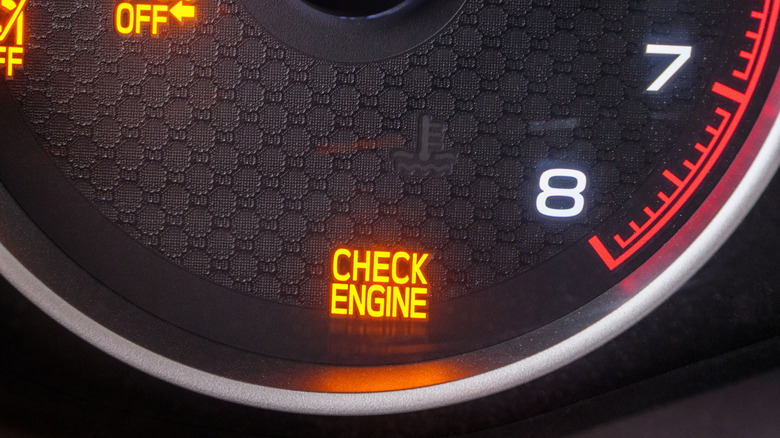
Other signs of a failing catalytic converter include an illuminated check-engine light, usually linked to a P0420 code, and a change in performance. Reduced acceleration and reduced fuel efficiency due to increased backpressure could indicate an issue, and a combination of these problems is probably all the evidence a DIYer would need to start suspecting their catalytic converter is crying out for help.
A faulty fuel pressure sensor could be the underlying issue
Topuria Design/Shutterstock
This is related to the catalytic converter issue above, and it's important to know. If a faulty fuel pressure sensor has resulted in damage to the catalytic converter, the last thing anyone wants to do is fit a new one and then have it get damaged again. In simplified terms, the role of a fuel pressure sensor is to tell the ECU how much fuel pressure is available, and from that info, the fuel pressure can be adjusted accordingly. A false reading from a faulty sensor could cause too much fuel to be delivered, resulting in the engine running too rich. Excess unburnt fuel then gets sent the way of the catalytic converter, which causes damage, and that's how we end up in the rotten-egg-smell situation.
Catching a faulty fuel pressure sensor early, and then having the repair made swiftly, could save owners from also having to spend out on a new catalytic converter. Fortunately, a faulty sensor will typically trigger a check engine light. DIYers can read this using an OBD-II scanner, and then decide whether to tackle it themselves or have a professional take it on. Either way, acting fast is key, before that rich mixture damages the catalytic converter and the rotten egg smell begins accompanying every drive. Thankfully, a failed pressure sensor replacement isn't all that expensive; owners should budget for an expense in the region of $250 to $400, although the exact cost will vary from car to car and from garage to garage.
Transmission fluid can have a pungent and eggy odor too

Nafadh/Shutterstock
Now that we've covered the main possible culprits, there are also a couple of less-likely issues that just might be the root cause of that rotten egg smell creeping into the cabin. One of which is a leaky transmission. See, some transmission fluids contain some form of sulfur –especially those used in manual transmissions — and so if there is a leak present, then the smell from that escaped fluid could be the issue.
Naturally, if the fluid was leaking onto the road, it wouldn't smell quite so strongly in the cabin. Therefore, leaking transmission fluid could be the cause of the smell if there are other components beneath or surrounding the transmission that could be trapping the fluid (and the smell), such as under-trays. Thankfully, a transmission fluid leak is generally quite easy to spot. Peeking beneath the car in the morning might reveal a puddle of fluid, and from here, owners can deduce whether that leaked fluid is a problem or not.
Generally speaking, transmission fluid is red, but often, so too is power steering fluid, so don't go jumping to conclusions. An inspection by a professional is likely the best approach. Repairs can vary in cost, but repairing a leak is always going to be cheaper than replacing a failed transmission, — think a couple hundred dollars, rather than a couple-thousand — so acting fast here is key.
The car's battery could be at fault
noPPonPat/Shutterstock
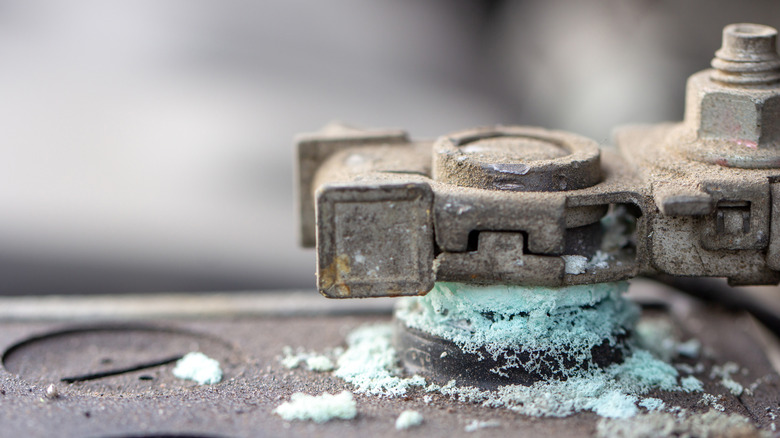
Another less likely issue could be that the car's battery is leaking. These batteries usually contain sulfuric acid, and so if that begins to leak out, the rotten egg smell associated with sulfur will be present. Naturally, this scent would be most noticeable under the hood – or wherever the battery is located – rather than at the end of the exhaust, which means it is quite easy to distinguish the source.
Now, it's extremely unlikely that a battery in fine health will be emitting such a smell, so begin by looking for obvious signs of wear. If it's physically damaged, overcharged by a faulty alternator, used in extremely cold conditions, or simply very old, then the chances of it being at fault rise significantly. If the battery is damaged or old, then changing it is a wise measure, regardless of whether an eggy scent is present or not, and fortunately, replacing a battery is generally quite affordable — up to $200 for a standard unit, whereas premium AGM batteries might command up to double this sum.
To make the most of and extend the life of a new battery, and to avoid any sulfuric smells from it in the future, be sure to avoid any long stationary periods, protect it from extreme temperatures, and keep it both clean and secure.