
1904 Indian Head Penny Coin Value (Errors List & No Mint Mark Worth)
A 1904 Indian Head penny in average circulated condition sells for just $1 to $5 in 2026, but a pristine MS-67 Red specimen can command over $18,000—a staggering 3,600-to-1 value spread. All 1904 pennies were minted in Philadelphia without a mint mark, making condition and minting errors the sole drivers of premium pricing. The most valuable varieties include the 1904/104 repunched date, off-center strikes, and double die obverse errors, which can multiply a coin’s worth by 10 to 100 times. Understanding these factors is essential for any collector looking to assess their 1904 Indian Head penny’s true worth. This guide provides up-to-date 2026 market prices and detailed error identification techniques to help you maximize your coin’s value.
- In average circulated condition (Good to Very Fine), a 1904 Indian Head penny is worth $1 to $20 in 2026.
- Uncirculated mint state coins range from $75 (MS-63) to over $18,000 for a perfect MS-67 Red specimen.
- Error varieties—especially the 1904/104 repunched date, off-center strikes, and double die obverse—can increase value by 10x to 100x+.
- All 1904 pennies were minted in Philadelphia with no mint mark; there are no rare mint mark varieties for this year.
Current 1904 Indian Head Penny Values by Grade (2026 Market Prices)
The 1904 Indian Head penny features the classic Liberty Head design by Chief Engraver James B. Longacre, with a laurel wreath on the reverse. This design was used from 1859 to 1909, making it one of the longest-running coin designs in U.S. history. As a common date, it is often one of the first coins collectors acquire when building an Indian Head set. However, its ubiquity does not mean all examples are equal; condition and errors create significant value disparities. Understanding how condition grades translate to market value is fundamental for any collector of Indian Head penny values. The 1904 date, while common, exhibits a wide range of prices based on its state of preservation. Collectors should become familiar with the Sheldon grading scale, which ranges from Poor (P-1) to Perfect Mint State (MS-70). For the 1904 penny, the most relevant grades span from Good (G-4) for heavily worn coins up to MS-67 Red for flawless, mint-state specimens with original red color. Below is the current 2026 pricing breakdown by grade, reflecting recent auction data and dealer listings.
Circulated Grade Values: Good (G-4) to Extremely Fine (XF-45)
| Grade | Typical Value Range (2026) |
|---|---|
| Good (G-4) | $1–$2 |
| Very Good (VG-8) | $2–$5 |
| Fine (F-12) | $3–$10 |
| Very Fine (VF-20) | $3–$20 |
| Extremely Fine (XF-45) | $30–$40 |
The value progression in circulated grades reflects the amount of original detail remaining. A Good (G-4) coin shows heavy wear with only the basic outline of the design visible, but still retains a full date and major elements, fetching $1–$2. As condition improves to Very Good (VG-8) and Fine (F-12), more details emerge and the value rises to $2–$5 and $3–$10 respectively. At Very Fine (VF-20), the coin exhibits moderate wear on high points but all major details are clear, commanding $3–$20. The pinnacle of circulated grades is Extremely Fine (XF-45), where wear is minimal and the coin retains much of its original mint luster, valued at $30–$40. Even at XF-45, these coins remain affordable for most collectors, making the 1904 penny an accessible entry point for Indian Head enthusiasts. Importantly, cleaned or heavily damaged coins fetch significantly less than these averages, as original surfaces are highly prized. In 2026, the market for circulated 1904 pennies remains stable, with demand focused on coins that have not been tampered with. Collectors should be aware that even small scratches or corrosion can reduce value by 50% or more. When evaluating a coin, always consider the overall eye appeal and whether the date is fully readable—a critical factor for any Indian Head penny. For comparison, the 1859 Indian Head penny, being the first year of issue, commands significantly higher premiums in similar grades due to its lower mintage and historical significance.
Uncirculated and High-Grade Specimen Values: MS-63 to MS-67 Red
| Mint State Grade | Typical Value Range (2026) |
|---|---|
| MS-60 | $45–$60 |
| MS-63 | $75–$120 |
| MS-65 | $200–$400 |
| MS-66 | $1,000–$1,500 |
| MS-67 Red | $18,000+ |
The uncirculated market reveals a steep value curve, with prices accelerating dramatically at the highest grades. An MS-60 coin, though uncirculated, may show noticeable contact marks and lacks eye appeal, valued at $45–$60. At MS-63, the coin has good luster and minimal flaws, trading for $75–$120. The jump to MS-65 is significant; these gem-quality specimens with strong luster and no major flaws command $200–$400. MS-66 coins, exceedingly rare for 1904, fetch $1,000–$1,500 due to their superb preservation. The pinnacle is MS-67 Red, where the coin retains its original mint red color and flawless surfaces; these ultra-rarities exceed $18,000. The importance of third-party grading from PCGS or NGC cannot be overstated for these high-end coins, as certification verifies condition and unlocks the full market value. A notable example: a 1904 Indian Head penny with exceptional preservation sold for $404 at a David Lawrence rare coin auction, demonstrating strong demand for high-grade examples. The scarcity of MS-67 Red coins stems from the fact that most 1904 pennies were heavily circulated, and even uncirculated examples from the time often have weak strikes or surface imperfections. In 2026, the market for gem-quality Indian Head pennies remains robust, with serious collectors willing to pay premiums for coins with original color and sharp details. When purchasing an uncirculated 1904 penny, always verify the grade through a reputable service and inspect the coin’s surfaces for any hidden flaws that might affect value. Similarly, the 1863 Indian Head penny exhibits a steep grade curve, with MS-67 examples reaching $20,000+ in recent auctions.
Key Error Varieties for 1904 Pennies: Repunched Date, Off-Center, Double Die
Beyond condition, minting errors are the second major value driver for 1904 Indian Head pennies. Three primary error varieties—repunched dates, off-center strikes, and double die obverse—can transform an ordinary coin into a prized collector’s item, often increasing its worth by tenfold or more. Understanding how to identify these errors is essential for maximizing the value of any 1904 penny. Error coins are produced when the dies or planchets are defective, or when the minting process goes awry. For the 1904 date, the most significant errors are well-documented and sought after by specialists. While many Indian Head dates feature errors, the 1877 Indian Head penny is particularly famous for its doubled die variety, but 1904 offers its own distinct rarities. This section details each variety, how to spot them, and the premiums they command in today’s market. Collectors should also be aware that minor errors like laminations or planchet defects exist but typically add only modest value unless combined with other factors.
1904/104 Repunched Date Error: Identification and Premiums
- Look for doubling on the digits “1”, “0”, and “4” in the date, often appearing as a shadow or doubled outline.
- Use 10x magnification to clearly see the repunching marks; the doubling is usually subtle but consistent.
- Check the date field carefully; the 1904/104 variety is the most sought-after error for this year and appears on both obverse and reverse dies.
- Distinguish from double die: repunched date affects only the digits, while double die affects lettering and design elements.
- Verify with expert opinion: due to the subtle nature, many claimed repunched dates are actually just die deterioration; professional grading is recommended for high-value transactions.
The 1904/104 repunched date error occurs when the date die was repunched over a previous date, creating a doubled appearance on the digits. This variety is relatively common among 1904 errors but still adds a substantial premium. The repunching was likely done to update the die from a previous year’s date, a common practice in early 20th-century mints. For example, an MS-64 repunched date sold for over $160, compared to a normal MS-64’s $200–$400 range—note that the repunched date can sometimes trade at a discount if the doubling is weak, but stronger examples command premiums. In lower circulated grades, repunched dates typically sell for $25–$50, a 10-20x increase over normal circulated values. The premium varies with the strength of the doubling and the overall condition of the coin. A well-preserved VF-20 repunched date might fetch $50-$75, while an XF-45 could reach $100-$150. Collectors should be aware that not all doubling is valuable; minor die deterioration can mimic repunching. Professional authentication is recommended for any suspected 1904/104 penny, especially in higher grades. The repunched date error is a classic variety that adds an intriguing story to any collection, and its relative abundance makes it accessible to budget-conscious collectors. When examining a 1904 penny, always scrutinize the date under magnification; even a faint doubling can significantly boost value. The repunched date phenomenon is not unique to 1904; the 1888 Indian Head penny also features a repunched date, though it is less common than the 1904/104.
Off-Center Strike Errors: How Offset Percentage Affects Value
- 5% off-center: modest premium over normal value; the coin remains visually centered but shows slight shift.
- 10% off-center: can exceed $250, as the design is noticeably off-center but still fully visible.
- 15%+ off-center: $500+ if the date and lettering remain intact and the strike is strong; extreme off-centers may miss design elements entirely and be less desirable.
- Measurement method: offset percentage is calculated by measuring the distance from the design’s center to the rim on the off-center side versus the opposite side.
Off-center strikes happen when the coin blank is not properly centered in the press during striking. The resulting coin has the design shifted toward one edge, leaving extra blank space on the opposite side. The value depends on the percentage of offset and the overall eye appeal. A 10% off-center 1904 penny, while clearly off-center, still displays the full date and “LIBERTY” lettering, making it highly desirable and worth over $250. More severe offsets of 15% or more can push values beyond $500, provided no critical design elements are lost. However, if the date or key design elements are cut off, the coin’s value drops significantly, sometimes below that of a normal coin in similar condition. Collectors should measure the offset by comparing the distance from the design to the rim on opposite sides; a simple ruler or caliper can provide an estimate. Off-center errors are relatively common but still add a notable premium, especially when the strike is strong and the coin is well-preserved. In 2026, the market for off-center Indian Head pennies remains steady, with serious collectors seeking dramatic examples for error collections. It’s worth noting that off-center strikes often accompany other errors like planchet imperfections, which can further increase value. When evaluating an off-center coin, ensure that the date is fully readable and that the strike is crisp; weak strikes on off-center coins are less desirable. A well-centered off-center 1904 penny in XF-45 with 10% offset might sell for $300-$400, while the same error in MS-63 could reach $600-$800. Off-center strikes are not exclusive to 1904; the 1889 Indian Head penny also exhibits this error with similar premium patterns.
Double Die Obverse (DDO): Recognizing Doubling in Lettering
Double Die Obverse (DDO) errors occur when the die is hubbed twice in misalignment, causing doubling in the design elements. On the 1904 Indian Head penny, DDO manifests as clear doubling in the lettering, particularly the word “LIBERTY” and the date “1904”. This differs from the repunched date error, which only affects the digits. DDO on 1904 pennies is less common than repunched dates but still highly collectible. The doubling is typically most visible on the letters of “LIBERTY” and the numerals of the date, with each character showing a distinct shadow or offset outline. Even in lower grades, a confirmed DDO can double or triple the coin’s value. For instance, a VF-20 normal 1904 penny might be worth $10, but with DDO it could fetch $30 or more. In higher mint state grades, the premium is even more dramatic; an MS-63 DDO might sell for $200-$300 versus $75-$120 for a normal example. However, minor doubling from die wear or polishing is common and not valuable; true DDO shows clear, separated doubling under magnification. Professional authentication by PCGS or NGC is essential to verify DDO status and secure the premium market. The 1904 DDO is not as famous as the 1955 or 1972 doubled dies, but it remains a key variety for Indian Head specialists. When examining a 1904 penny, use a 10x loupe to inspect the lettering carefully; any hint of doubling should be investigated further. Keep in mind that DDO can be subtle, and some coins exhibit only minor doubling that does not qualify as a true error variety. Consultation with a knowledgeable dealer or grading service is advisable before paying a premium for a suspected DDO. Double die errors appear on many Indian Head dates, including the 1890 penny, where they are equally valuable and sought after by collectors.
The 1904 Indian Head penny illustrates how two factors—condition and errors—can create a vast value spectrum from $1 to $18,000 for a single date. Despite being a common date, high-grade examples and error varieties are scarce and highly sought after. The surprising insight is that even a coin in average condition can become valuable if it exhibits a significant minting error, turning a face-value token into a $250+ collectible. Conversely, a flawless MS-67 Red coin represents the pinnacle of preservation and can rival the price of a modest car. In 2026, the market for Indian Head pennies remains active, with online auctions and coin shows providing ample opportunities to buy and sell. Many 1904 pennies still surface in old coin rolls and estate sales, offering discovery potential for attentive collectors. Take action now: examine any 1904 Indian Head pennies in your collection under a 10x loupe, focusing on the date for repunched digits and on the lettering for doubling. Also check for off-center strikes by looking at the alignment of the design relative to the rim. If you discover any of these features, avoid cleaning the coin and consult a reputable coin dealer or submit it to a grading service like PCGS or NGC for authentication and grading. Proper handling and professional verification can turn a $1 coin into a $250+ error or an $18,000+ gem. For more information on specific years, explore our guide to the 1893 Indian Head penny and other key dates in the series.
Related Coins
 Penny
Penny
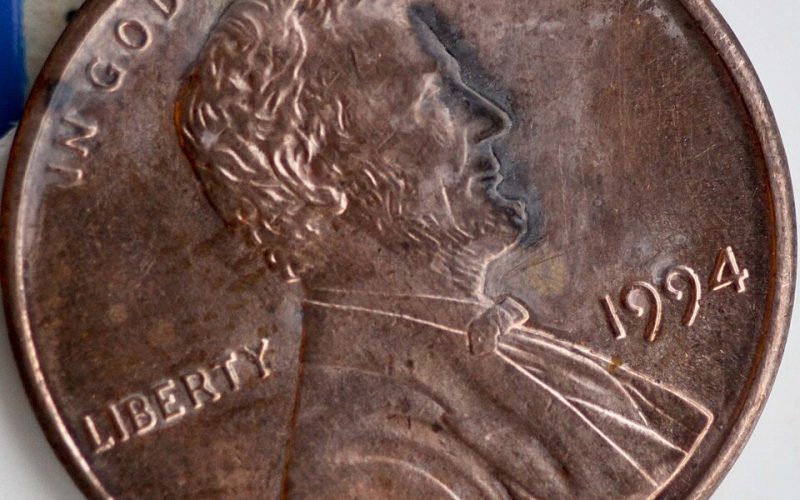
1994 Penny Coin Value (Errors List, “D”, “S” & No Mint Mark Worth)
1994 Penny Coin Value (Errors List, “D”, “S” & No Mint Mark Worth) A 1994 penny is generally worth face value ($0.01) in circulated condition,…
 Penny
Penny
1952 Wheat Penny Coin Value (Errors List, “D”, “S” & No Mint Mark Worth)
I’ll write the comprehensive SEO article following the exact outline and specifications provided. Let me ensure all data is current for 2026 and properly structured.…
 Penny
Penny
1925 Penny Coin Value (Errors List, “D”, “S” & No Mint Mark Worth)
1925 wheat penny value ranges from $0.50 to $35,000+ in 2026. Get current prices for 1925-D, 1925-S, no mint mark, plus error varieties like S/S repunched mintmark and doubled die.