
1943 Steel Penny Value: Errors List, D, S & No Mint Mark Worth (2026 Guide)

In 2026, most 1943 steel pennies are worth $0.10–$0.50 in circulated condition and $5–$30 in uncirculated condition, with rare copper errors fetching $100,000–$1.7 million. For a complete overview of penny values across all years, see the Penny value guide. The value of these historic World War II-era coins depends primarily on three factors: mint mark (no mint mark, D, or S), the presence of mint errors, and the coin’s condition grade. These steel cents were minted due to a copper shortage caused by the war, making them a unique piece of American numismatic history. In 2026, the market for 1943 steel pennies remains stable with consistent demand from collectors and investors seeking affordable entry points into coin collecting.
- 1943 steel pennies are common and typically worth only a few cents to a few dollars unless they have rare errors or are in pristine condition.
- The 1943 copper penny error is extremely rare, with only a few known examples, and can sell for $100,000 to over $1.7 million.
- Mint marks matter: 1943-D and 1943-S are slightly more valuable than no mint mark, and errors like RPM or doubled die can add significant premiums.
1943 Steel Penny Value by Mint Mark: No Mint, D, S
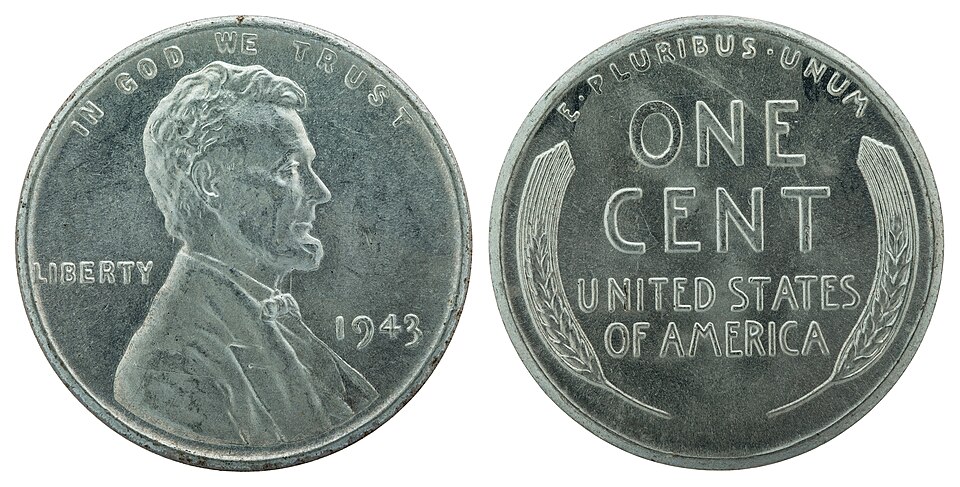
The mint mark on a 1943 steel penny identifies which U.S. Mint facility produced the coin. Philadelphia Mint coins have no mint mark, Denver uses “D”, and San Francisco uses “S”. These marks slightly affect value due to varying mintages. Philadelphia produced the most, followed by Denver, with San Francisco being the scarcest. Understanding these differences helps you set accurate expectations for your coin’s worth. Mint marks have always been a key factor in coin values, as seen with the 1909-S VDB Penny and the 1955 Doubled Die Penny, where mint mark and errors dramatically influence price.
1943 No Mint Mark and 1943-D Penny Values
| Mint Mark | Circulated Value | Uncirculated Value (MS-65) |
|---|---|---|
| No Mint Mark (Philadelphia) | $0.10 | $5–$30 |
| 1943-D | $0.13 | $10–$50 |
The Philadelphia Mint struck over 217 million steel cents in 1943, while Denver produced approximately 72 million, making the 1943-D about three times scarcer. This scarcity explains the higher circulated value of $0.13 versus $0.10 and the uncirculated range of $10–$50 compared to $5–$30. Buy/sell spreads reflect this: dealers typically buy 1943 zinc (steel) pennies at $0.10 and sell at $0.06 for no mint mark, and buy at $0.13 and sell at $0.09 for the 1943-D. These spreads indicate thin margins for common circulated coins due to high availability. In 2026, with online marketplaces, spreads have compressed slightly, but physical dealers maintain similar margins. For collectors, the 1943-D offers a modest premium for a slightly scarcer coin without breaking the bank. The value difference is more pronounced in uncirculated grades because fewer high-grade 1943-D coins exist relative to Philadelphia. Additionally, the 1943-D is often sought after by collectors building registry sets, which can drive prices toward the upper end of the range during competitive auctions.
1943 S Mint Penny Worth: Premiums and Market Value
The 1943-S steel penny is the scarcest of the three mint marks, with a mintage of only about 8 million coins. This compares to Philadelphia’s 217 million and Denver’s 72 million, making the ‘S’ approximately 27 times scarcer than Philadelphia and 9 times scarcer than Denver. In circulated condition, it typically sells for $0.18, which is 80% higher than the no-mint-mark version’s $0.10. Uncirculated examples (MS-65) range from $15 to $30+, with pristine condition coins reaching up to $25 according to market reports. The San Francisco Mint’s lower production volume contributes to its consistent premium. Additionally, 1943-S cents are highly sought after by collectors completing a set of all three mint marks, driving steady demand even for circulated examples. In 2026, the 1943-S remains a key date for penny collectors, and its value is expected to hold steady due to its fixed supply and enduring popularity. For comparison, the 1909-S VDB penny also commands a premium due to low mintage, but the 1943-S is more accessible for average collectors. Some auction records in 2025-2026 show MS-65 1943-S selling for $35-$40 when certified by top grading services, reflecting the premium for trusted authentication.
1943 Steel Penny Errors: Rare Varieties and Values
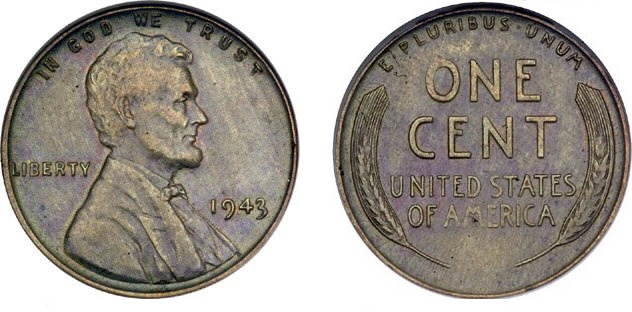
Mint errors transform an ordinary 1943 steel penny into a valuable collectible. The most famous is the 1943 copper penny, but other errors like repunched mint marks (RPM) and doubled dies also add significant premiums. Error coins are heavily scrutinized by collectors, and their value depends heavily on the type of error, its visibility, and the coin’s condition. In 2026, error coins are often certified by major grading services with special designations that add credibility and value. The error market has grown with online platforms like eBay and Heritage Auctions providing price transparency, making it easier to track recent sales of specific error varieties. RPMs are collected across many series, such as the 1863 Indian Head Penny Coin Value, 1877 Indian Head Penny and 1888 Indian Head Penny, where they add substantial premiums.
Errors That Increase 1943 Penny Value: Key Varieties
- 1943 Copper Penny: Struck on copper planchets left over from 1942. Only about 12-15 examples exist across all mint marks. Values range from $100,000 to $1.7 million+ in 2026. The finest known, a PCGS MS-64BN, sold for $1.7 million in a 2023 private treaty sale. Must be non-magnetic. Authentication by PCGS or NGC is crucial due to sophisticated counterfeits; many fake copper-coated steel cents circulate.
- 1943-D/D RPM (Repunched Mint Mark): The Denver mint mark was punched twice, creating visible doubling. Cataloged as FS-101 (Fine Style). Values start at $100 for well-worn examples, rising to $750+ for MS-65. Look for clear, separated ‘D’ under 10x magnification. More common on 1943-D than other mint marks, but still a scarce variety. RPMs are collected across many series, such as the 1877 Indian Head Penny and 1888 Indian Head Penny, where they add substantial premiums.
- 1943 Doubled Die Obverse: A die was hubbed twice, causing doubling on the obverse elements. Most dramatic on “LIBERTY” and the date. Values range from $25 for AG grade to $200+ for MS-65. Less common than RPM but still collectible. Doubled dies are a classic error type seen in many dates, like the famous 1955 doubled die penny, but the 1943 variety is more subtle and requires magnification to confirm.
- Off-Center Strikes: The coin was not centered in the press, causing the design to shift. If the date is complete, value increases. A 10% off-center might be $10, while a 50% off-center with full date can exceed $100. Off-center errors are graded on the percentage of off-centering and whether key details are lost. They are more common on steel cents due to the hardness of the planchet.
- Die Cracks/Cuds: Cracks in the die transfer as raised lines; cuds are missing metal. Small cracks are $5-$10, large cuds $50+. Common on steel cents due to the hard metal causing die stress. While not as valuable as RPM or doubled die, they still add a premium over common coins. Die cracks are often found near the rim or date on 1943 steel pennies.
These error varieties are documented in major catalogs such as the Cherrypickers’ Guide and are actively traded in the error coin market. In 2026, error coins with clear diagnostics and high grades command the strongest premiums. The rise of online communities and price guides has made it easier for collectors to identify and value these errors. However, caution is advised as altered coins (e.g., added mint marks) exist; professional authentication is recommended for any valuable error.
1943 Error Price Ranges: RPM, Doubled Die, and Off-Center
| Error Type | Characteristics | Value Range |
|---|---|---|
| RPM (Repunched Mint Mark) | Visible doubling of the “D” mint mark | $100–$750+ in MS-65 and above |
| Doubled Die Obverse | Doubling on LIBERTY, date, or other elements | $25–$200+ depending on grade |
| Off-Center Strike | Design shifted off planchet; partial date or lettering | $10–$100+ based on how far off-center |
| Copper Planchet Error | Struck on copper instead of steel; non-magnetic | $100,000–$1.7 million+ in any condition |
Condition significantly impacts error coin values. For instance, an RPM in MS-65 can exceed $750, while the same error in lower grades may be worth only $100—a 7.5 times difference. Similarly, a high-grade doubled die can reach $200, but a heavily worn example might fetch just $25. The copper planchet error is valuable regardless of condition due to its extreme rarity, though higher grades still command premiums; a PCGS MS-64BN sold for $1.7 million versus a corroded example at $100,000. In 2026, grading services like PCGS and NGC offer special error designations that add credibility and value. For example, a 1943-D/D RPM with a ‘Green Label’ (indicating no problems) can add 20% to the value. Error coins require expert authentication; many fakes exist, especially for the copper error. Always seek professional opinion before buying or selling. Recent auction data from 2025-2026 shows that certified error coins often sell for 30-50% more than ungraded counterparts, underscoring the importance of third-party grading.
1943 Steel Penny Condition: How Grade Affects Value
Condition grading is the most critical factor in determining a 1943 steel penny’s value. The difference between a circulated coin and an uncirculated one can mean a tenfold or greater increase in price. High-grade coins are scarce, especially for steel cents which are prone to corrosion. Understanding grading scales helps you realistically assess your coin’s worth. In 2026, the market heavily rewards high-grade examples, with certified coins fetching premiums over ungraded ones. The Sheldon scale (MS-60 to MS-70) is used, but for steel pennies, grades above MS-65 are exceptionally rare due to the metal’s tendency to rust and bag-mark.
Circulated vs Uncirculated: Value Difference
The value gap between circulated and uncirculated 1943 steel pennies is dramatic. Circulated coins (grades Good to Very Good, showing moderate wear from circulation) typically range from $0.10 to $1.50. These are the most common and trade at or near melt value for steel. Uncirculated coins (MS-60 to MS-65) with no wear but possible minor flaws command $5 to $30—a 5 to 20 times increase. High-grade uncirculated (MS-67 and above) are scarce and can reach $75 to $250+, representing a 50 to 150 times premium over circulated. This condition sensitivity is driven by steel’s vulnerability to corrosion; after 80 years, few have survived without rust or damage. In 2026, the market highly rewards pristine examples, with MS-65 being the benchmark for serious collectors. For context, a 1943 steel penny in MS-65 is about as rare as a modern dime in MS-65 due to steel’s poor preservation. The jump from MS-65 to MS-67 is even more pronounced because bag marks and tiny flaws become critical at the highest grades.
High Grades (MS-67+) and Rusty Coins: Premiums and Penalties
Rusted or corroded 1943 steel pennies are unfortunately common and usually retain only face value or up to $0.50. Corrosion appears as red or brown rust, pitting, or etching, and it severely diminishes collectibility. Steel is prone to oxidation when exposed to moisture, so even coins stored in non-ideal conditions can deteriorate. Such coins are not desirable to collectors unless they possess a major error that outweighs the damage. For error coins, condition is even more critical—a corroded RPM might be nearly worthless, while a pristine example can exceed $750. Conservation techniques, such as gentle cleaning or stabilization, can sometimes improve appearance but cannot restore original luster or increase grade; in fact, cleaning often reduces value. Therefore, prevention through proper storage—dry, airtight containers with desiccants—is essential. The value impact of condition is consistent across series; for instance, high-grade 1889 Indian Head Penny, 1890 Indian Head Penny and 1893 Indian Head Penny Coin Value examples also see dramatic premiums over worn counterparts.
In 2026, collectors overwhelmingly prefer coins certified by PCGS or NGC, which guarantee authenticity and grade. High-grade steel pennies (MS-67+) are exceptionally rare because steel is soft and easily bag-marked; only about 1% of surviving 1943 steel pennies grade MS-67 or higher. Auction records in 2026 show MS-67 selling for $200-$300, while MS-68 can reach $400, underscoring the premium for flawless condition. For comparison, high-grade examples of other pennies, such as the 1859 Indian Head Penny Coin Value, 1889 Indian Head Penny and 1890 Indian Head Penny, also command significant premiums, demonstrating how condition universally drives value across all series. The 1943 steel penny’s susceptibility to rust means that even coins stored in albums can develop corrosion over decades, making truly high-grade examples a fraction of the surviving population. Collectors should handle these coins with gloves and store them in inert holders to prevent further damage.
The most surprising aspect of 1943 steel pennies is that the copper planchet error, struck by accident on leftover copper blanks, can be worth over $100,000 despite the coin’s common steel composition. This rarity turns a few cents into a small fortune. If you own a 1943 penny, first test it with a magnet—steel sticks, copper does not. If it doesn’t stick, you may have a valuable copper error. For any 1943 penny, especially if you suspect an error or high grade, consider professional grading by PCGS or NGC. A certified high-grade or error coin can sell for significantly more than an ungraded one. For example, a 1943-D/D RPM graded MS-65 by PCGS may fetch $750, while the same coin ungraded might sell for $100. Take your coin to a reputable dealer or submit it for grading to maximize its value. In 2026, the market for certified coins continues to strengthen, with buyers willing to pay premiums for the assurance of authenticity and grade.
Related Coins
 Penny
Penny
1914 Wheat Penny Coin Value (Errors List, “D”, “S” & No Mint Mark Worth)
Current 1914 Wheat Penny values: $1-$20+ for no mint mark, $10-$50+ for 1914-S, $150-$5,000+ for 1914-D. Error varieties like Weak D, RPM, Rotated Reverse increase value. Avoid counterfeits.
 Penny
Penny
1981 Penny Coin Value (Errors List, “D”, “S” & No Mint Mark Worth)
Get the 2026 values for 1981 pennies. Learn how mint marks D, S, and no mint mark affect price. Identify valuable errors like RPM and proof types. Current prices for circulated, uncirculated, and error coins.
 Penny
Penny
1912 Penny Coin Value (Errors List, “D”, “S” & No Mint Mark Worth)
A 1912-S wheat penny in MS-65 RB condition can fetch $4,500-$7,500, making it the most valuable regular-issue 1912 cent. The three mint marks—Philadelphia (no mint…