
1908 Indian Head Penny Coin Value (Errors List, “S” & No Mint Mark Worth)
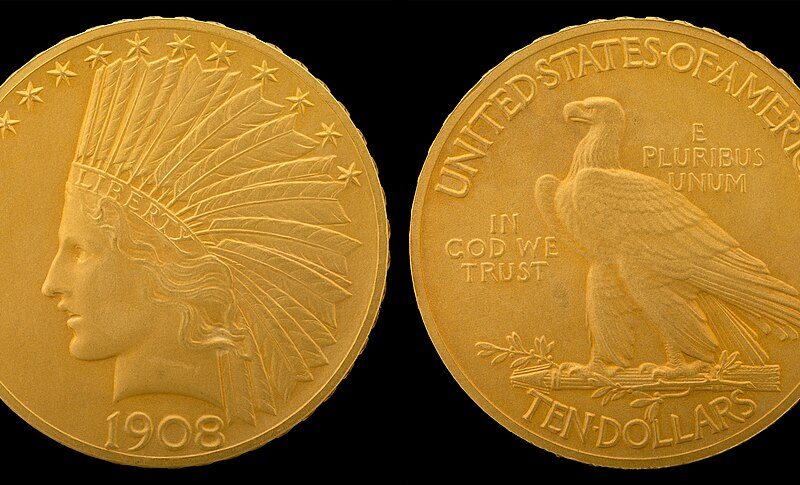
In 2026, the market value of 1908 Indian Head pennies shows a dramatic divide between the common Philadelphia issue and the scarce San Francisco issue. The 1908 Indian Head penny with no mint mark, struck at the Philadelphia Mint, is abundant and typically sells for $2 to $5 in circulated condition. In contrast, the 1908-S Indian Head penny, bearing an “S” mint mark from the San Francisco Mint, is a key date that starts at $100 and can exceed $1,000 for high-grade examples. Error varieties further complicate values, with the Repunched Mint Mark (RPM) on the 1908-S being the most valuable, adding premiums from $95 to $1,000+ based on doubling intensity and coin condition. For a comprehensive overview of Indian Head penny values, visit our Penny resource.
- The common 1908 (no mint mark) is worth $2–$5 circulated; the key-date 1908-S starts at $100 and exceeds $1,000 in high grades.
- The 1908-S Repunched Mint Mark (RPM) is the most valuable error, adding a $95 to $1,000+ premium depending on doubling strength and condition.
- Record auction sales for pristine examples hit $30,600 (1908 MS67) and $21,600 (1908-S MS67), showing the top end of the market.
1908 Indian Head Penny Values: ‘S’ Mint Mark vs No Mint Mark Comparison
Circulated Condition Prices: $2–$5 vs $100–$1,000+
| Condition Grade | 1908 (No Mint Mark) | 1908-S (“S” Mint Mark) |
|---|---|---|
| Good (G) to Very Good (VG) | $2–$5 | $100–$115 |
| Fine (F) to Very Fine (VF) | $2–$5 | $135–$155 |
| Extremely Fine (EF) to About Uncirculated (AU) | $2–$5 | $190–$270 |
| Mint State (MS-60 to MS-63) | $30+ | $320–$440+ |
The price gap between the 1908 no-mint-mark and 1908-S is vast, driven primarily by mintage. The Philadelphia Mint produced millions of 1908 pennies, while the San Francisco Mint struck only 1,115,000 1908-S cents. This low mintage makes the 1908-S a key date, meaning it is essential for completing a collection. Collectors pay a significant premium for the “S” mint mark simply due to scarcity, regardless of condition. For circulated coins, a 1908 might be worth $2, but a 1908-S in similar condition starts at $100—a 50-fold difference. This disparity highlights how mint origin can outweigh condition in baseline value for key dates.
The 1908-S also holds historical significance as the first branch mint Indian Head cent, adding to its desirability. When evaluating a coin, the mint mark is the first thing to check: no mint mark means Philadelphia, worth $2-$5; an “S” on the reverse means San Francisco, worth $100-$1,000+. This simple distinction separates common coins from valuable collectibles. The price difference is so extreme that a pocketful of 1908 pennies might total $10, while a single 1908-S could buy a decent used car.
Mint State Premiums: Record Sales of $30,600 and $21,600
The highest verified auction sales for 1908 Indian Head pennies demonstrate the extreme value of pristine condition. A 1908 (no mint mark) graded MS67 sold for $30,600, and a 1908-S MS67 realized $21,600. These prices are exceptional because coins in MS-65 and above are extraordinarily rare after 118 years. Copper coins from this era often suffered from corrosion or wear, so surviving uncirculated examples are scarce. Even lower mint-state grades command significant premiums: Philadelphia mint examples in MS-60 to MS-63 sell for $30 or more, while San Francisco mint coins in the same grade range fetch $320 to $440 or more. The value increase between About Uncirculated and Mint State is steep due to the low survival rate of uncirculated coins. Similarly, the jump from MS-63 to MS-65 can double or triple the price, as high-grade survivors become increasingly scarce. Investors and collectors seeking top value should target MS-65 and above, where prices rise exponentially. Professional grading by PCGS or NGC is crucial for unlocking these premium values.
Which 1908 Indian Head Penny Errors Boost Value?
Not all errors are created equal. For 1908 pennies, the following error varieties can increase value, listed in order of impact:
- 1908-S Repunched Mint Mark (RPM): The most valuable error, with values from $95 to $1,000+ depending on doubling intensity and grade. This error occurs when the “S” mint mark is punched twice, creating a visible shadow or doubling. It is exclusive to the 1908-S issue, making it a prime target for error collectors.
- Misplaced Date: Look for a faint extra “8” in the denticles below the primary date. In mint state, clear examples can command $600 to $1,200 based on error strength and color. This variety is rare and second only to the RPM in value.
- Die Cracks: Small cracks in the die may appear as raised lines on the coin. Minor cracks add negligible value, but severe, visually significant cracks can add a small premium of 10-20% over a clean example.
- Off-Center Strikes: When the coin is not centered during striking, the design shifts off-center. Major off-centers are rare on 1908 and can add value, but minor off-centers are common and not premium.
- Die Caps: Extremely rare, a die cap forms when the die breaks and wraps around the coin, creating a unique appearance. These are worth significant premiums but are exceptionally uncommon for 1908.
For 1908 pennies, the 1908-S RPM is the single most valuable and frequently encountered error. Collectors should prioritize identifying RPMs, as they offer the highest return on investment among error varieties. Other errors, while interesting, are less common and offer smaller premiums. Always handle coins carefully and avoid cleaning, as original surfaces are crucial for value.
1908-S: The First Branch Mint Indian Head Penny Key Date
What Is a 1908-S Indian Penny? First Branch Mint Cent
The 1908-S Indian Head penny holds a unique place in numismatic history as the first cent ever struck at a branch U.S. Mint. Before 1908, all Indian Head cents were produced solely at the Philadelphia Mint. The San Francisco Mint began cent production on November 27, 1908, very late in the year, which contributed to the low mintage of just 1,115,000 coins. This “first branch mint” status adds a layer of desirability beyond pure scarcity, as collectors value the historical milestone. The 1908-S represents a pivotal moment in U.S. coinage when branch mints started producing small change, making it a key date not just for its rarity but for its place in history. Unlike earlier issues such as the 1859 and 1863 Indian Head penny which were Philadelphia-only, the 1908-S introduced the “S” mint mark to the series.
Low Mintage Impact: Only 1,115,000 Coins Struck
The low mintage of the 1908-S is the foundation of its key-date status. Key facts:
- Exact mintage: 1,115,000 coins were produced at the San Francisco Mint in 1908.
- Comparison: The Philadelphia Mint produced millions of 1908 pennies, exact numbers not published but estimated in the tens of millions, making the 1908-S far scarcer.
- Series ranking: The 1908-S has the third-lowest mintage in the entire Indian Head cent series (1859-1909), behind only the 1877 Indian Head penny (approximately 1,000,000) and 1909-S (approximately 1,500,000).
- Scarcity foundation: This absolute low mintage drives consistent collector demand, supporting its premium value in all grades.
- Exact mintage: 1,115,000 coins were produced at the San Francisco Mint in 1908.
- Comparison: The Philadelphia Mint produced millions of 1908 pennies, exact numbers not published but estimated in the tens of millions, making the 1908-S far scarcer.
- Series ranking: The 1908-S has the third-lowest mintage in the entire Indian Head cent series (1859-1909), behind only the 1877 (approximately 1,000,000) and 1909-S (approximately 1,500,000).
- Scarcity foundation: This absolute low mintage drives consistent collector demand, supporting its premium value in all grades.
For collectors assembling a complete set, the 1908-S is indispensable. Its mintage figure is well-documented and undisputed, adding to its credibility as a key date. Compared to other key dates like the 1877, which has even lower mintage, the 1908-S is still highly desirable due to its branch mint status. The mintage difference is stark: while Philadelphia produced tens of millions, San Francisco’s output was just over one million, creating a supply imbalance that persists today.
Grade-Based Value Tiers: From Good ($100) to Mint State ($440+)
The value of a 1908-S Indian Head penny increases with grade, but not linearly. Here are the typical price ranges by grade:
| Grade | Value Range |
|---|---|
| Good (G) to Very Good (VG) | $100–$115 |
| Fine (F) to Very Fine (VF) | $135–$155 |
| Extremely Fine (EF) to About Uncirculated (AU) | $190–$270 |
| Mint State (MS-60 to MS-63) | $320–$440+ |
Value jumps are most significant between About Uncirculated and Mint State, and between MS-63 and MS-65. This is because the survival rate drops sharply for coins in uncirculated condition after over a century. For example, a 1908-S in Very Fine condition might sell for $150, but the same coin in MS-65 could fetch $1,000 or more due to the rarity of high-grade survivors. Collectors should understand that condition is critical for maximizing value, especially for the 1908-S where even small grade differences can mean hundreds of dollars. Professional grading by services like PCGS or NGC is recommended for coins in MS-60 and above to authenticate condition and unlock full market value. The grade-based tiers show that while a 1908-S in Good condition is worth $100, an MS-63 can be worth over $400, and an MS-67 can reach $21,600, illustrating the steep value cliff at the highest grades.
1908-S Repunched Mint Mark (RPM): The Most Valuable Error Variety
How to Identify a Repunched Mint Mark on 1908-S
A Repunched Mint Mark (RPM) occurs when the mint mark is initially punched into the die, then repunched in a slightly offset position, creating a visible doubling or shadow effect. On the 1908-S Indian Head penny, the “S” mint mark is located on the reverse, just to the left of the ribbon bow. To identify an RPM, examine the mint mark under 10x magnification. Look for a clear doubling of the “S” shape—this can range from a subtle shadow (light doubling) to a heavy, separated double impression (strong doubling). The intensity of the doubling directly correlates with value, with stronger doubling commanding higher premiums. Importantly, RPMs are only known on the 1908-S issue; no other Indian Head penny years have confirmed RPMs, making this error variety unique and highly sought after.
Key identification points:
- Location: Reverse, left of the ribbon bow.
- Magnification: Use 10x lens to see doubling clearly.
- Doubling types: Subtle (light shadow) to strong (clearly separated “S”).
- Exclusivity: Only on 1908-S; not found on other years.
RPM Value Spectrum: $95 to $1,000+ Based on Doubling Intensity
The value of a 1908-S RPM depends primarily on the intensity of the doubling and the coin’s overall grade. The following table outlines approximate value ranges:
| Doubling Intensity | Circulated Grade Value | Mint State Value |
|---|---|---|
| Light/Subtle | $95–$200 | $300–$500 |
| Moderate to Strong/Heavy | $500–$1,000+ | $1,000+ (depending on grade and color) |
Note: Values are approximate and depend on overall coin grade, original mint luster (red vs. brown), and market demand. A high-grade RPM with strong doubling and original red color can exceed $1,000.
The RPM premium stacks on top of the coin’s base value. For example, a 1908-S in Very Fine condition with a moderate RPM might be worth $500-$600, while the same coin without an RPM would be $135-$155. This error can multiply a coin’s value by several times, making it the top target for error hunters. Collectors should always check the mint mark of any 1908-S coin for doubling, as even a light RPM can add significant value. The RPM is the most valuable error for 1908 and is often the difference between a $150 coin and a $1,000+ coin.
Other 1908 Error Types: Misplaced Dates and Die Issues
While the RPM dominates, other error varieties exist on 1908 pennies, though they are much rarer:
- Misplaced Date: A faint extra “8” appears in the denticles below the primary date. In mint state, clear examples sell for $600 to $1,200. This error is rare and second only to RPM in value potential. Look carefully under magnification for a small, misplaced digit in the denticles below the main date.
- Die Cracks: Small cracks in the die may transfer as raised lines on the coin. Minor cracks add negligible value, but severe, visually significant cracks can add a small premium of 10-20% over a clean example.
- Off-Center Strikes: When the coin blank is not centered during striking, the design shifts off-center. Major off-centers are rare on 1908 and can add value, but minor off-centers are common and not premium.
- Die Caps: Extremely rare, a die cap forms when the die breaks and wraps around the coin, creating a unique, often cup-shaped appearance. These are worth significant premiums but are exceptionally unlikely to find on 1908.
For most collectors, the 1908-S RPM is the primary error to pursue. Other errors, while interesting, are less common and offer smaller premiums. Always handle coins carefully and avoid cleaning, as original surfaces are crucial for value. For comparison, error varieties on other dates like the 1888 Indian Head penny may differ, but for 1908, the RPM is king.
The stark reality for 1908 Indian Head pennies is that the vast majority of no-mint-mark coins in circulation are worth only a few dollars, while a tiny fraction with specific errors or high grades can be worth hundreds or thousands. The most surprising insight is that a microscopic flaw—the Repunched Mint Mark on a 1908-S—can transform a $150 coin into a $1,000+ treasure. This error is invisible to the naked eye and requires magnification to spot, meaning many valuable errors go unnoticed in collections.
If you own a 1908-S Indian Head penny, immediately examine the mint mark under 10x magnification for any doubling. If you find a potential RPM or have a coin in high grade, do not clean it. Instead, submit it to a professional grading service like PCGS or NGC for authentication and encapsulation. A certified high-grade RPM can unlock the full market value and ensure you receive the best price when selling. For common 1908 pennies without mint marks, their value remains modest at $2-$5, but always check for errors—you might have a rare variety in your pocket change. Remember, the difference between a $2 coin and a $1,000+ coin often comes down to a tiny mint mark flaw visible only under magnification.
Frequently Asked Questions About 1908 Indian Head Penny
What wheat penny is worth $100,000?
1943 Wheat Penny: During World War II, copper was diverted for military use, leading to steel cents coated in zinc. A few accidental copper pennies were minted in 1943, making them some of the most valuable coins, worth up to $100,000 or more at auction.
How do I grade a 1908 Indian Head penny?
If you think you have an uncirculated Indian Head cent, look at these areas on the coin to see if you can spot any wear. Tilt the coin from side to side under a good light. If the mint luster on the high points is unbroken, then the coin is uncirculated.
What is the mintage of 1908 s penny?
The mintage of the 1908-S Indian Head Cent was relatively low compared to other issues in the series, with only 1,115,000 coins produced. This low mintage makes the 1908-S one of the scarcer and more desirable Indian Head Cents for collectors.
How to clean a 1908 penny?
Almost nothing so we add salt to the vinegar. Add as much salt as you can with lots of mixing to make a saturated. Solution once again we get tarnished penny and dip it in.
Related Coins
 Penny
Penny
1938 Wheat Penny Coin Value (Errors List, D, S & No Mint Mark Worth)
Current 1938 wheat penny values for 2026: Compare D, S & no mint mark prices. Error varieties like DDR & RPM premiums. Auction records and condition grading guide.
1980 Penny Coin Value (Errors List, “D”, “S” & No Mint Mark Worth)
Current 1980 penny values: No mint mark, D, and S mint marks worth $0.01-$3,000+. Identify DDO, repunched mint mark, and off-center errors. 2026 price guide.
 Penny
Penny
1955 Wheat Penny Coin Value (Errors List, “D”, “S” & No Mint Mark Worth)
1955 wheat penny value ranges from $0.10 to $288,000. See current prices by mint mark (D, S, no mark) and errors like Doubled Die Obverse. Full 2026 guide.