
1909 Indian Head Penny Coin Value (Errors List, “S” & No Mint Mark Worth)
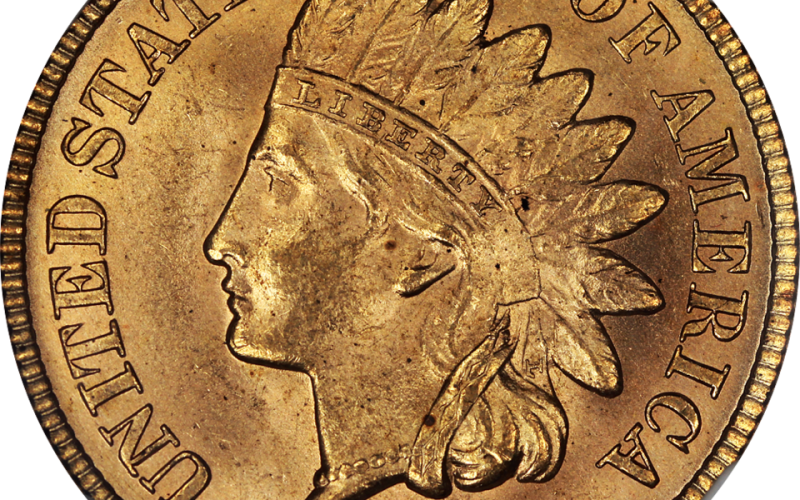
The 1909 Indian Head penny’s value depends almost entirely on its mint mark. The scarce 1909-S from San Francisco is worth $350 to over $20,000 in average condition, while the more common Philadelphia issue with no mint mark trades for $4 to $1,100+. This is the final year of the Indian Head cent series, making all 1909 pennies historically significant, but the 1909-S is the true key date due to its extremely low mintage of just 309,000 coins, while other key dates like the 1863 Indian Head penny are also highly valued.
- 1909-S is the key date with only 309,000 minted vs 14.3 million for Philadelphia
- S over Horizontal S error can add significant premium, especially in high grades
- Professional grading (PCGS/NGC) is essential for 1909-S due to huge price gaps between MS63 and MS67
1909 Indian Head Penny Value: 1909-S vs No Mint Mark
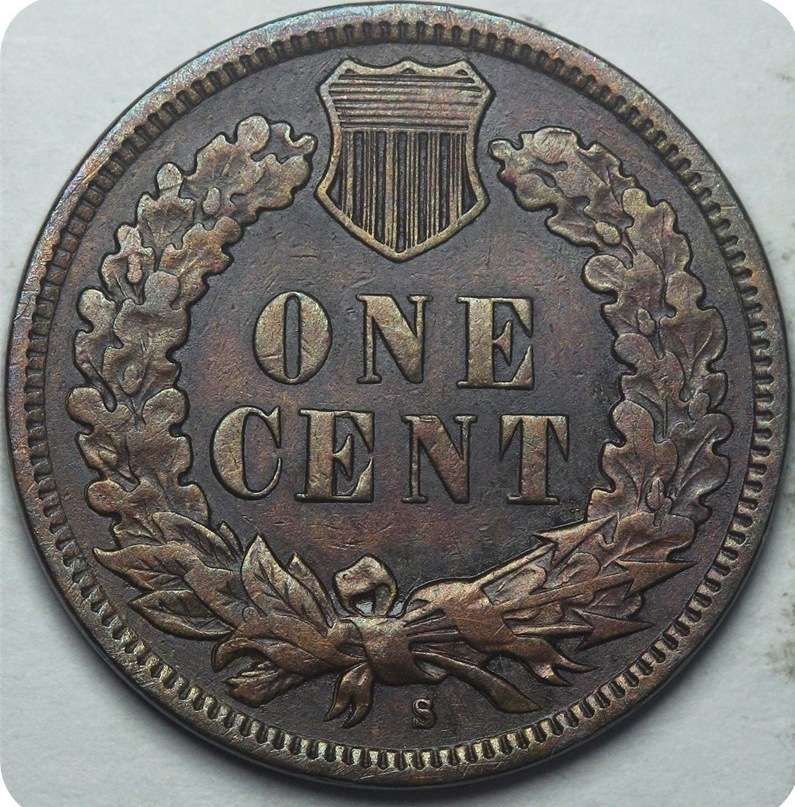
1909-S vs 1909 Philadelphia: Value Comparison by Condition
The value gap between the 1909-S and the 1909 (Philadelphia) is dramatic across all condition grades. A simple comparison shows how the San Francisco mint mark transforms a common coin into a rarity.
| Condition Grade | 1909-S Value | 1909 (Philadelphia) Value |
|---|---|---|
| Good (G) to Very Good (VG) | $350 – $640 | $10 – $25 |
| Fine (F) to Very Fine (VF) | $550 – $790 | Data varies; typically $20-$50 |
| Extremely Fine (EF) to About Uncirculated (AU) | $900 – $1,000+ | $50 – $200 |
| Mint State (MS60-63) | $1,100 – $1,500 | $200 – $500 (MS63) |
| Mint State (MS66) | $5,000 – $10,000+ | $1,000 – $1,100+ |
| Mint State (MS67+) | $20,000+ | Not applicable; extremely rare |
Even a heavily worn 1909-S is worth hundreds of dollars, while a well-preserved Philadelphia cent in similar condition may only be worth a few dollars. The premium for the 1909-S exists because of its scarcity, not its condition. Conversely, a high-grade 1909 Philadelphia can approach the value of a mid-grade 1909-S, but it never reaches the stratospheric prices of gem-quality 1909-S examples.
Mintage Disparity: 309,000 vs 14.3 Million
The fundamental driver of value is the vast difference in how many were made. The 1909-S had a mintage of just 309,000 coins, the lowest of any Indian Head cent. In contrast, the Philadelphia Mint produced 14,370,645 of the no-mint-mark version. This makes the 1909-S the second-lowest mintage of the entire series, surpassed only by the legendary 1877 Indian Head penny. Because so few 1909-S coins survived, even those in poor condition are considered key dates and carry a significant premium. The Philadelphia 1909, despite being the final-year issue, is common in circulated grades due to its high mintage, but it becomes scarce in top mint state grades because few were saved in perfect condition.
Record Auction Prices for High-Grade 1909-S
While most 1909-S pennies sell for hundreds or thousands, exceptional examples have achieved record prices. A PCGS MS67RD (Mint State 67, Red) 1909-S sold for $25,030 in a 2024 auction. Another superb gem specimen, described as a “Superb Gem,” sold for nearly $97,775. These prices represent the absolute pinnacle of the series—coins with perfect strikes, full original mint red color, and no flaws. They demonstrate the enormous upside for high-grade specimens. The price difference between a solid MS63 (around $1,200) and an MS67 (over $20,000) is one of the steepest in numismatics, highlighting why professional grading is critical for this key date.
Error Varieties: S over Horizontal S and More
S over Horizontal S Error: Identification and Value
The most famous and valuable error for the 1909-S is the “S over Horizontal S” variety. This occurred when a San Francisco mint worker first punched the mint mark horizontally, then later punched the correct vertical S over it. To identify this error, examine the mint mark on the reverse, located beneath the wreath. Look for a small portion of the underlying horizontal S protruding from the right side of the vertical S, slightly above the primary mark. This is a highly collectible variety with a significant premium.
- Value in low grades (G-VG): $100 – $125+ (already a 3-4x premium over a normal 1909-S in the same condition)
- Value in high grades: Commands multiples of the normal 1909-S price. A PCGS MS67 of this error variety sold for $32,900.
- Identification tip: Use a magnifying glass. The leftover horizontal stroke is subtle but visible on genuine examples.
Misplaced Mint Mark Varieties
Because mint marks were hand-punched in 1909, some 1909-S pennies have the “S” in an unusual position. These are called misplaced mint mark errors.
- Characteristics: The “S” may appear higher or lower than the standard position, or occasionally tilted.
- Value: These are less valuable than the S over Horizontal S variety but are still sought after by advanced variety collectors. Premiums are typically in the $50 to $300+ range depending on the severity of the misplacement and the coin’s overall grade.
- Collectibility: They represent a fascinating glimpse into the manual minting process of the era.
Repunched Date and Lamination Errors
Other minor error types exist but have lower premiums.
- Repunched Date (RPD): The date digits may show slight doubling or re-punching where the engraver corrected a mistake. These are subtle and require magnification to verify. They add a small premium, usually $20 to $100+ over the normal coin’s value.
- Lamination Errors: A flaw in the metal planchet causes a thin layer to separate or flake. This is a planchet error, not a strike error. Laminations are interesting but generally command lower premiums than mint mark varieties unless they are particularly dramatic.
1909 Indian Head Penny: Condition, Grading, and Authentication
Condition Grades Explained: G to MS
Understanding grading is essential for determining value. The scale ranges from heavily worn to perfect.
| Grade | Description | Impact on 1909-S Value |
|---|---|---|
| Good (G) | Heavily worn. Major details are merged, but the design is identifiable. | Base value: $350+ |
| Very Good (VG) | Moderate wear. Major details are clear, but some merging occurs. | Base value: $350-$500 |
| Fine (F) | Light to moderate wear. Minor details begin to show. | Value rises significantly |
| Very Fine (VF) | Very light wear on high points. Most details are sharp. | $550-$790 range |
| Extremely Fine (EF) | Very light wear, good overall luster. | $900-$1,000+ |
| About Uncirculated (AU) | Minimal wear only on the highest points of the design. | $1,000+ |
| Mint State (MS) | No wear whatsoever. Graded from MS60 to MS70. | MS60-63: $1,100-$1,500; MS67+: $20,000+ |
Each step up in grade results in a noticeable price increase, especially when moving from circulated states (G-VG) to uncirculated (MS). The jump from MS63 to MS67 for the 1909-S is particularly massive.
Why PCGS/NGC Grading Adds Thousands
For a coin like the 1909-S, third-party grading by PCGS (Professional Coin Grading Service) or NGC (Numismatic Guaranty Company) is not just helpful—it’s often necessary to achieve top dollar. These services authenticate the coin, assign a precise numeric grade, and encapsulate it in a secure, tamper-evident holder. This provides universal trust in the marketplace. An ungraded 1909-S claimed to be in MS67 could be worth $20,000, but without certification, a buyer might only offer MS63 money ($1,200). The grading fee (often $50-$200 for this coin) is a small price to pay for the liquidity and price certainty that certification provides. For high-grade 1909-S pennies, professional grading is an essential step.
How to Tell If Your 1909 Penny Is Worth Anything
Follow this step-by-step process to evaluate your coin.
- Confirm it’s an Indian Head penny. The Indian Head design features Liberty wearing a Native American headdress on the front (obverse). Crucially, check the reverse. If you see the initials “V.D.B.” at the base of the wreath, you have a 1909 Lincoln Wheat penny, not an Indian Head. The 1909 VDB Lincoln cent is a different, valuable coin, but it is not part of this series.
- Identify the mint mark. Look on the reverse (tails side) underneath the wreath.
- No mint mark (blank): This is a 1909 Philadelphia.
- Small “S”: This is a 1909-S from San Francisco.
- Assess the condition. Roughly grade the coin using the descriptions above. Is it heavily worn (G-VG) or does it have sharp details with little wear (EF-AU)?
- Check for errors. Using a magnifier, examine the mint mark for the S over Horizontal S variety. Also look for any unusual die cracks, doubling on the date, or other anomalies.
- Compare to value charts. If it’s a 1909-S in Good condition, it’s worth at least $350. If it’s a 1909 Philadelphia in similar condition, its value is likely under $25.
- Consider professional grading. If your 1909-S appears to be in Extremely Fine or better condition, or if you suspect it might be an error variety, getting it graded by PCGS or NGC could significantly increase its market value and salability.
1909 Indian Head Penny Production: Final Year of the Series
The year 1909 holds special significance as it marked the end of the Indian Head cent’s 51-year production run. The Indian Head cent was replaced by the Lincoln cent to honor the 100th birthday of Abraham Lincoln. Production of the 1909 Indian Head cents ceased early in the year, with the San Francisco Mint’s run being the shortest. This final-year status, combined with the already low mintage of the 1909-S, creates a perfect storm of collector demand. The 1909-S is universally recognized as a key date, meaning it is a must-have for any complete collection of Indian Head cents. Its scarcity is not just about the original mintage of 309,000, but also about the fact that few were saved in high grades since 1909 was the transition year to the new Lincoln design.
Most collectors will never find a 1909-S in their change. The single most surprising fact is that a worn 1909-S in Good condition is worth more than a pristine, uncirculated 1909 Philadelphia. This extreme value disparity is driven solely by the mint mark and its corresponding mintage of just 309,000 versus 14.3 million. Your immediate action step is to check every 1909 penny you own for the tiny “S” mint mark on the reverse. If you find one, even if it’s heavily worn, it could be worth hundreds of dollars. For any 1909-S that appears to be in very fine condition or better, professional grading by PCGS or NGC is strongly recommended to unlock its full market value.
Frequently Asked Questions About 1909 Indian Head Penny
What wheat penny is worth $100,000?
The fundamental driver of value is the vast difference in how many were made. The 1909-S had a mintage of just 309,000 coins, the lowest of any Indian Head cent. In contrast, the Philadelphia Mint produced 14,370,645 of the no-mint-mark version. This makes the 1909-S the second-lowest mintage of the entire series, surpassed only by the legendary 1877 Indian Head penny. Because so few 1909-S coins survived, even those in poor condition are considered key dates and carry a significant premium. The Philadelphia 1909, despite being the final-year issue, is common in circulated grades due to its high mintage, but it becomes scarce in top mint state grades because few were saved in perfect condition.
Are there any 1909 Indian head pennies?
1909-P Indian Head Cent VG–F. This last-year-of-issue 1909-P Indian Head Cent comes in Very Good to Fine (VG–F) condition. The coin was last struck more than a century ago, and most have been worn down in circulation or have been lost or destroyed.
What penny sold for $2.5 million?
Collector. He recently purchased the Birch penny dating back to 1792. The penny is named after Robert Burch its engraver.
Related Coins
 Penny
Penny
1916 Penny Coin Value (Errors List, “D”, “S” & No Mint Mark Worth)
Discover 1916 penny values for 2026. Get current prices for 1916-D, 1916-S, and no mint mark wheat pennies. Learn how error varieties can boost worth. Actionable guide for collectors.
 Penny
Penny
1991 Penny Coin Value (Errors List, “D”, “S” & No Mint Mark Worth)
1991 Lincoln pennies are typically worth just 1 cent in circulation, but a 1991-D graded MS69RD sold for $11,400 at auction in 2025, demonstrating how…
 Penny
Penny
1942 Wheat Penny Coin Value (Errors List, D, S & No Mint Mark Worth) – 2026 Guide
2026 value guide for 1942 Wheat Pennies. Get prices for no mint mark, D, S, errors (DDO, RPM), and what makes them valuable. Updated market data.