
1909 Wheat Penny Coin Value (Errors List, “S” & No Mint Mark Worth)
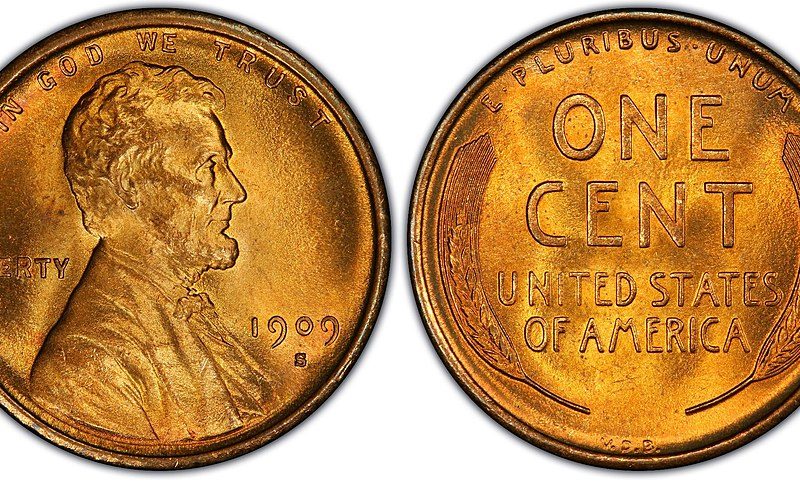
A 1909 Wheat Penny can be worth anywhere from $4 for a well-worn common variety to over $2,000 for the rare 1909-S VDB in pristine condition. The two primary factors driving this massive value spread are the mint mark (specifically an “S” for San Francisco) and the presence of the designer’s “VDB” initials on the reverse. Error varieties, such as the Double Die Obverse, can add hundreds or even thousands more to a coin’s price, making careful inspection essential for any collector.
- The most valuable regular-issue 1909 penny is the 1909-S VDB, worth $400 to over $2,000 depending on condition.
- The presence or absence of an “S” mint mark and VDB initials on the reverse are the primary drivers of value for common 1909 pennies.
- Major error coins like the Double Die Obverse can add hundreds or thousands to the value, with high-grade examples exceeding $1,000.
1909 Wheat Penny Values: Comparing S Mint Mark, VDB, and No Mint Mark
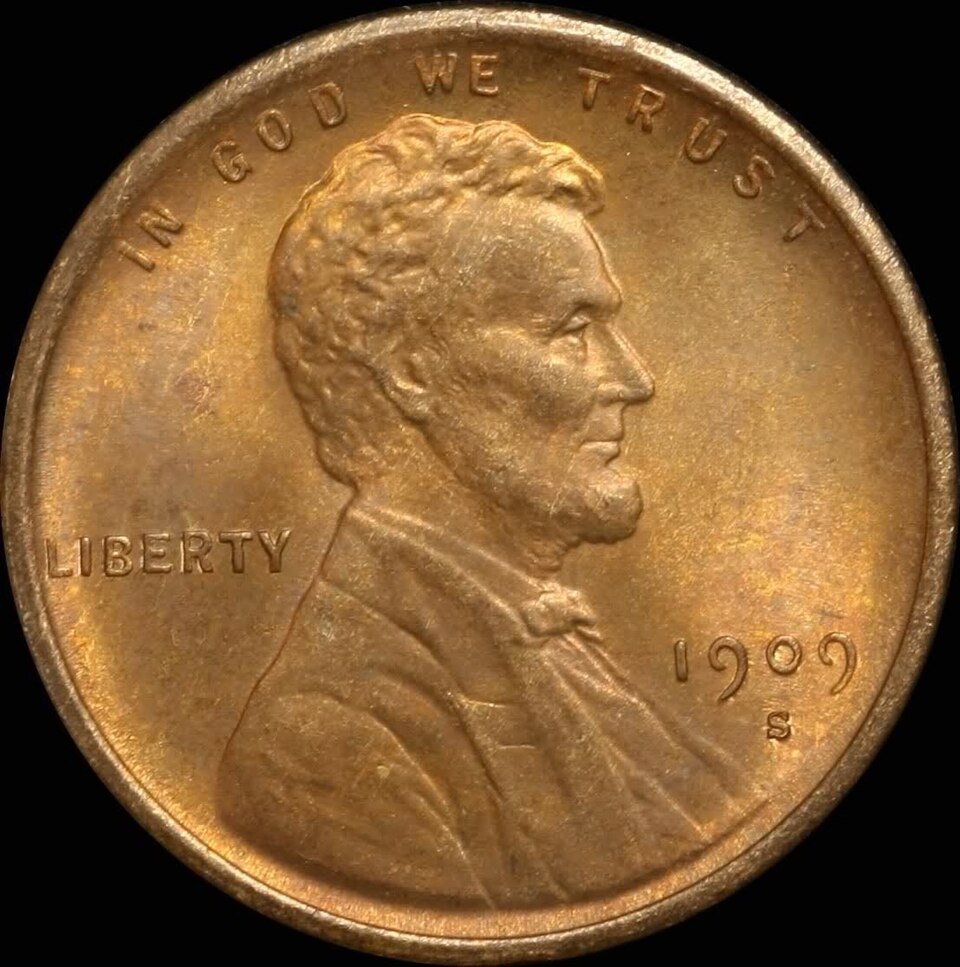
Understanding the value of a 1909 Wheat Penny starts with recognizing the four main varieties defined by mint mark and the presence of the VDB initials. These tiny details create a value spectrum spanning from a few dollars to several thousand. The table below provides a quick reference for all major issues, followed by an analysis of why the price differences are so extreme.
1909 Wheat Penny Value Comparison Table
| Variety | Key Identifier | Mintage | Value Range (Good to MS-65 Red) | Rarity Factor |
|---|---|---|---|---|
| 1909-S VDB | “S” mint mark + “VDB” initials | 484,000 | $400 – $2,000+ | Extremely low mintage, first-year key date with designer initials |
| 1909-S (No VDB) | “S” mint mark, no VDB | 1,825,000 | $90 – $310+ | Low mintage, key date without controversial initials |
| 1909 VDB (Philadelphia) | No mint mark + “VDB” initials | ~27,000,000+ | $10 – $35+ | Common in high grades, VDB adds premium |
| 1909 (No mint mark, No VDB) | No mint mark, no VDB | Very high | $4 – $27+ | Most common, lowest value |
The staggering 500-fold difference between the most and least valuable regular-issue 1909 pennies comes down to two historical factors. First, the San Francisco Mint produced far fewer coins than Philadelphia in 1909—only 1.8 million total for the “S” mint mark compared to Philadelphia’s 27 million-plus. Second, the “VDB” initials on the reverse sparked a public controversy in 1909, leading the Mint to remove them from later production. This makes the 1909-S VDB the only San Francisco issue with those initials, creating a perfect storm of low mintage and high collector demand. Condition further amplifies these disparities; a well-preserved 1909-S VDB with original red luster can fetch ten times the price of a heavily worn example, while even a perfect common 1909 rarely exceeds $100.
1909-S VDB: The Most Valuable Regular Issue
The 1909-S VDB stands as the undisputed king of Lincoln Wheat Pennies, with values ranging from $400 for heavily worn examples to over $2,000 for pristine mint-state coins with red coloration. This coin represents the first year of the Lincoln cent, designed by Victor David Brenner, a Lithuanian-born sculptor who won a competition to redesign the penny. His initials “VDB” appear in minuscule letters on the reverse, between the wheat ears. The controversy was so intense that the Mint initially recalled all 1909 VDB pennies, but public demand for the new Lincoln cent forced them to resume production without the initials. This historical drama adds to the coin’s allure. In 2026, the market for 1909-S VDB remains robust, with auction houses like Stack’s Bowers and Heritage Auctions regularly featuring high-grade examples. A PCGS MS67RD sold for $168,000 in April 2022, setting a modern record. To identify this key coin, check the obverse for the “S” mint mark below the date and the reverse for the tiny “VDB” between the wheat stalks. Counterfeits with added VDB exist, so professional authentication is recommended for any high-value piece.
1909-S (No VDB): A Low-Mintage Key Date
The 1909-S without VDB initials is the second-most valuable 1909 penny, typically worth $90 to $310+ depending on condition. Its mintage of 1,825,000 is low compared to Philadelphia’s output, but not as scarce as the VDB. However, because many early collectors focused on the VDB, high-grade examples of the 1909-S no VDB can be surprisingly difficult to find, especially in red condition. In 2026, values have stabilized after a decade of steady growth, with MS65 examples regularly trading for $250-$300. Identification is straightforward: look for the “S” mint mark below the date on the obverse; flip to the reverse and confirm the absence of “VDB” between the wheat stalks. The design otherwise matches the standard Wheat reverse. While not as famous as the VDB, it remains a cornerstone of any serious Wheat penny collection and holds strong demand among collectors seeking complete mint mark sets.
How to Identify If Your 1909 Penny Is Valuable
Determining whether your 1909 Wheat penny is worth face value or hundreds of dollars requires a systematic inspection. Follow this checklist:
- Check the obverse mint mark: Look directly below the date. An “S” indicates San Francisco and immediately raises the coin’s baseline value. No mint mark means Philadelphia.
- Examine the reverse for VDB: Flip the coin and locate the tiny “VDB” initials between the two wheat stalks at the bottom-center. Their presence adds a significant premium, especially on San Francisco issues.
- Assess condition and color: Coins with original red (RD) luster are worth the most, followed by red-brown (RB) and then brown (BN). Even a common variety in high grade can exceed $100.
- Inspect for errors: Use magnification to look for doubling on the date or “LIBERTY” (Double Die Obverse), off-center strikes, or repunched mint marks. These varieties can add hundreds or thousands to the value.
If your coin matches any of the high-value criteria—especially 1909-S, VDB, or visible errors—consider having it professionally graded by PCGS or NGC to unlock its full market potential, as is also the case with 1877 Indian Head pennies. For comparison, earlier Indian Head pennies like the 1859 Indian Head also offer valuable varieties, but the 1909 Wheat series remains the most accessible for new collectors.
What Error Varieties Boost 1909 Wheat Penny Value?
Error coins represent a third axis of value beyond mint mark and VDB. The 1909 Wheat penny exhibits several mint-made errors that collectors prize, with prices often exceeding those of even the key dates when the error is dramatic and the coin is well-preserved.
Double Die Obverse: The Premier Error
The 1909 Double Die Obverse is the most famous and valuable error for the Wheat penny series, with prices ranging from $70 for a Very Fine (VF20) example to over $1,000 for a gem-quality MS65 Red coin. The error occurred when the die used to strike the coin was doubled during the hubbing process, causing visible doubling on the date and the word “LIBERTY” on the obverse. The doubling is often dramatic and easily seen with the naked eye or low magnification. This is a classic mint error that collectors actively seek; the 1909 Double Die is particularly prized because it occurred in the first year of the Lincoln cent, making it a key error for any Wheat penny set. It is cataloged as FS-101 in the Cherrypickers’ Guide. Condition sensitivity is extreme: an MS65 Red can exceed $1,000, while lower grades remain under $200. PCGS and NGC population reports show relatively low numbers in high grades, confirming its scarcity.
1909-S over Horizontal S: A Rare Mintmark Error
A subtle but valuable variety, the 1909-S over Horizontal S (often abbreviated 1909-S/S) shows the standard “S” mint mark punched over a faint, horizontal “S” impression. Uncirculated examples typically sell for $50 to $240, with higher grades reaching the top end. The error occurred when the mint mark punch was misaligned, leaving a ghostly horizontal line beneath the normal ‘S’. It requires 10x magnification or more to see clearly. This variety adds a significant premium to an already scarce 1909-S. A regular 1909-S in MS65 might be worth $300, but the overhorizontal S variety could push into the $400+ range. It is listed as FS-502 in the Cherrypickers’ Guide and is more common on the 1909-S than on other dates, but still a niche variety. The horizontal ‘S’ is often obscured by cleaning, making unaltered examples more desirable.
Off-Center Strikes: Premiums for Dramatic Examples
Off-center strikes occur when the coin blank is not properly centered in the press, resulting in a design that is shifted toward one edge. These errors are common but only valuable when the date remains fully visible and the shift is dramatic. The value tiers are clear:
- Mild off-center (10% shift) with full date: $50 – $150
- Moderate off-center (25-50% shift) with full date: $200 – $500
- Severe off-center (date partially off): Usually minimal premium unless extremely dramatic and on a key date like 1909-S VDB.
The more dramatic the shift while retaining a full date, the higher the premium, a principle that extends to 1888 Indian Head pennies as well. An off-center 1909-S VDB can easily exceed $5,000 due to the combination of rarity and error. For comparison, error varieties on other Indian Head pennies, such as the 1863 Indian Head, also command premiums, but the 1909 Wheat errors are particularly sought after because of the series’ popularity.
A 1909-S VDB with a dramatic off-center error can sell for over $5,000, far surpassing the standard coin’s $2,000 top end—demonstrating how two rarity factors compound value. Immediately check the reverse of any 1909 penny for the “VDB” initials and the obverse for an “S” mint mark. These two tiny details determine if you have a $5 coin or a $2,000+ coin. For any coin with these features or visible errors, seek professional grading from PCGS or NGC to authenticate and maximize its market value.
Frequently Asked Questions About 1909 Wheat Penny
How do I know if my 1909 penny is worth anything?
Check mint mark and VDB initials for values: 1909-S VDB ($400-$2,000+), 1909-S ($90-$310+), 1909 VDB ($10-$35+), 1909 no mint mark ($4-$27+).
Is a 1909-S VDB penny a good investment?
Yes, due to extreme rarity with 484,000 minted, it ranges from $400 to $2,000+ in Good to MS-65 Red condition, making it a key date with high desirability.
Related Coins
 Penny
Penny
1986 Penny Coin Value (Errors List, “D”, “S” & No Mint Mark Worth)
Discover 1986 penny values for 2026: mint marks D, S, no mint mark prices, error varieties like off-center, RPM, no L in Liberty. Find out which 1986 pennies are worth money.
 Penny
Penny
1962 Penny Coin Value (Errors List, “D” & No Mint Mark Worth)
Get the 2026 value of 1962 pennies. Learn pricing for "D" and no mint mark, key errors like RPM and silver dime planchet, and condition thresholds for MS-67+ gem coins.
1978 Penny Coin Value (Errors List, D, S & No Mint Mark Worth) 2026
Get the 2026 market value of 1978 pennies. Learn about D, S, and no mint mark varieties, plus error coins worth $500 to $1,000+. Complete guide with grading tips.