
1919 Wheat Penny Coin Value (Errors List, “D”, “S” & No Mint Mark Worth)
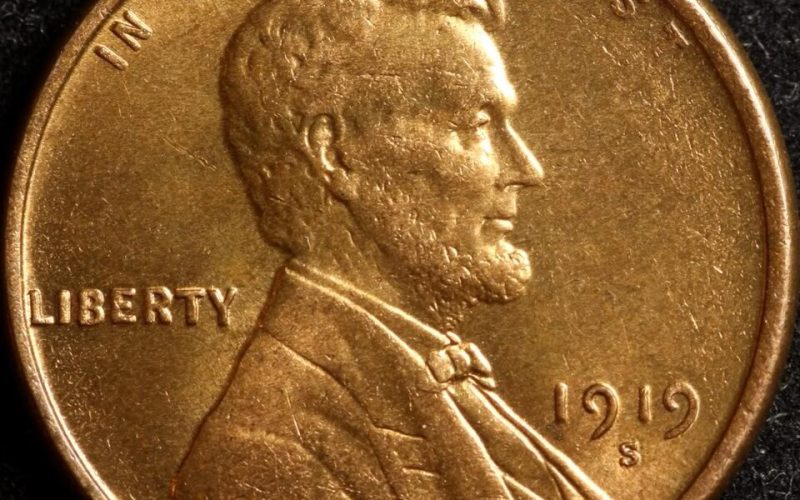
A 1919 Wheat Penny can be worth anywhere from $0.10 to over $20,000 in 2026, depending on its mint mark, condition, and any error varieties. The 1919-S in top-grade red condition leads the pack, while even common Philadelphia issues can fetch $50 if uncirculated. With three mint marks (Philadelphia no mint mark, Denver “D”, and San Francisco “S”) producing over 588 million coins combined, most 1919 Wheat Pennies are common in circulated condition. However, high-grade uncirculated examples and certain error varieties can command significant premiums. This guide breaks down exact 2026 values for each mint mark and highlights the errors that add the biggest premiums to your coin.
- 1919-S is the most valuable: $60–$150+ uncirculated, with MS-65 red gems exceeding $20,000.
- 1919-D ranks second: $75–$200+ for uncirculated coins, thanks to lower mintage (57 million).
- No mint mark (Philadelphia) is most common: $15–$50 uncirculated, up to $5,000+ for perfect red examples.
- Key errors like repunched mint marks (RPM) and doubled die obverse (DDO) can add 10% to 1000% premiums.
- Color is critical: Red (full mint luster) is worth 5–10x more than brown-toned coins of the same grade.
1919 Wheat Penny Values: What Each Mint Mark is Worth in 2026
The 1919 Wheat Penny exists in three mint mark varieties, each with distinct value ranges in 2026. circulated coins typically sell for $0.50 to $3, but uncirculated examples and those with original red luster can fetch exponentially more. The mint mark—located below the date on the obverse—is the first factor that determines a coin’s base value. No mint mark indicates Philadelphia, “D” means Denver, and “S” signifies San Francisco. Understanding these differences is essential for accurate valuation.
Value Table: 1919 Penny Prices by Mint Mark and Condition
| Mint Mark | Worn (Good) | About Uncirculated | MS-65 Red | Top Grade (MS-67+ Red) |
|---|---|---|---|---|
| Philadelphia (no mint mark) | $0.10–$0.65 | $15–$50 | $500–$2,000 | $5,000+ |
| Denver (D) | $0.30–$7 | $75–$200+ | $300–$1,500 | $3,000–$10,000 |
| San Francisco (S) | $1–$10 | $60–$150+ | $2,000–$8,000 | $20,000+ |
These ranges reflect 2026 market data from recent auction results and dealer listings. The table shows that while all three mint marks have similar low-end values in worn condition, the spread widens dramatically for higher grades, especially for the 1919-S in pristine red condition.
Mintage Numbers and Scarcity: Why Denver and San Francisco Pennies Command Premiums
The raw mintage figures explain the fundamental value hierarchy. Philadelphia produced 392,021,000 coins, Denver minted 57,154,000, and San Francisco struck 139,760,000. Denver’s output is approximately 7 times lower than Philadelphia’s, making base-scarcity the primary driver of its premium. San Francisco’s mintage sits between the two but carries an additional scarcity factor: many San Francisco coins saw heavy circulation, drastically reducing the number that survived in mint state condition. This survival rate disparity means that even though more 1919-S coins were minted than 1919-D, high-grade 1919-S specimens are often harder to find. The mint of origin establishes the baseline value before condition or errors are even considered.
The Red Factor: How Color Boosts Value to $5,000+
Color is the single most important factor after mint mark and condition. Original mint luster, known as “Red” (RD), commands exponential premiums over toned examples.
- Red (RD): Full original mint luster, no toning. This is the highest grade for color.
- Red-Brown (RB): Partial red luster mixed with brown toning. Mid-tier value.
- Brown (BN): Fully toned, no original red remaining. Lowest value for same grade.
The value difference is stark. A 1919-S graded MS-65 might be worth $150 in brown but could fetch $20,000 in red—a multiplier of over 130x. For Philadelphia issues, top red examples can reach $5,000+ despite the high mintage, simply because so few survived with full luster. Most 1919 pennies circulated heavily during the Great Depression and World War II, losing their original mint sheen. Finding any 1919 Wheat Penny with full red color is rare, but finding a 1919-S or 1919-D with full red is exceptionally valuable.
1919 Wheat Penny Error Types and Their Premium Values
Error varieties on 1919 Wheat Pennies are relatively limited compared to other dates, but the ones that exist can add substantial premiums. Three error types dominate the market: repunched mint marks, doubled die obverse, and off-center strikes. Each has distinct visual characteristics and value impacts that collectors actively seek.
What Are Common 1919 Wheat Penny Errors? The Top 3 Varieties
The only error varieties that carry significant premiums on 1919 Wheat Pennies are:
- Repunched Mint Marks (RPM) – The mint mark appears doubled or shadowed due to being punched twice in slightly different positions.
- Doubled Die Obverse (DDO) – Doubling visible on the date digits or the word “LIBERTY” caused by a doubled die hub.
- Off-Center Strikes – The coin was struck off-center, causing part of the design to be missing at the rim; premium depends on the percentage of missing design.
These three varieties represent the vast majority of error value premiums for this date. Minor errors like die cracks or light doubling without clear classification typically do not add significant value.
Repunched Mint Marks (RPM): 1919-S/S and 1919-D/D Doubling
Repunched mint marks occur when the mint mark punch is applied twice, creating a shadow or doubled appearance. On 1919 Wheat Pennies, the recognized RPM varieties are 1919-S/S and 1919-D/D. To identify an RPM, use 10x magnification and examine the mint mark area below the date. Look for a secondary, offset impression of the “D” or “S”. The strength of the doubling determines the premium: weak RPM might add $50–$100, while strong, clear doubling can add $200–$500+ depending on the mint mark and condition. For a high-grade 1919-S already worth $200, a strong RPM could push the value to $400 or more—effectively doubling the coin’s worth. RPMs are relatively common on 1919-D and 1919-S compared to other error types, making them an accessible entry point for error collectors.
Doubled Die Obverse (DDO): Rare Doubling on Date and LIBERTY
A doubled die obverse results from the die hub being doubled before striking, causing all elements on the die to appear doubled. On 1919 Wheat Pennies, doubling is most evident on the date digits and the word “LIBERTY” on the obverse. True DDOs are uncommon on this date, especially in high grades. The value impact is substantial: clear, well-defined doubling can multiply a coin’s value by 2 to 5 times. For example, an MS-65 1919-S valued at $8,000 could exceed $40,000 with a confirmed DDO. The rarity of high-grade DDO examples on 1919-S makes them particularly sought after by advanced collectors. Authentication by a major grading service (NGC or PCGS) is essential for DDO claims, as many suspected instances are actually just die deterioration or machine doubling.
Off-Center Strikes: Premiums Based on Design Missing
Off-center strikes occur when the coin blank is not properly centered in the press, causing the design to strike closer to one edge. The premium is directly tied to the percentage of design missing:
- 5% off-center: Adds approximately 10% premium to the base value.
- 10% off-center: Adds 25–50% premium.
- 15% or more off-center: Can add 100% or more, sometimes exponentially if the date remains fully visible.
For a practical example: a 1919-D in About Uncirculated condition normally worth $150 might sell for $190–$225 if it is 10% off-center. The key factors are how much of the design is missing and whether the date is fully visible—collectors prioritize off-center coins where the date remains complete. Off-center errors are relatively common in circulation but become rare in high grades, creating a niche market for well-centered high-grade examples with dramatic off-center strikes.
How to Determine if Your 1919 Wheat Penny is Valuable
Evaluating a 1919 Wheat Penny involves a systematic four-step process. Follow these steps in order to accurately assess your coin’s potential value before considering a sale or professional grading.
Step 1: Identify the Mint Mark (D, S, or No Mark)
The mint mark is the single most important initial filter. Follow these steps precisely:
- Locate the mint mark on the obverse (front) of the coin, just below the date.
- No mint mark = Philadelphia (most common, lowest base value).
- “D” = Denver (scarcer, higher base value).
- “S” = San Francisco (scarcer in high grades, often highest value).
- Use 10x magnification to confirm, as weak strikes can make mint marks hard to read.
Never assume a mint mark is missing—use magnification. A weak “D” or “S” may appear as a blob or be partially missing. Correct identification immediately narrows the value range to one of three tiers.
Step 2: Evaluate Condition and Color (Red, RB, Brown)
Condition grading follows the standard Sheldon scale, but for 1919 Wheat Pennies, color is equally critical.
Condition grades:
- Good (G): Heavy wear, major details smoothed.
- Very Fine (VF): Moderate wear, major details clear.
- Extremely Fine (EF): Light wear, minor details sharp.
- About Uncirculated (AU): Minimal wear, nearly mint luster.
- Mint State (MS): No wear, original mint luster (graded MS-60 to MS-70).
Color assessment: Hold the coin under a bright light and observe:
- Red (RD): Full original mint luster, no toning. Highest value.
- Red-Brown (RB): Mixed red and brown areas. Mid-tier.
- Brown (BN): Fully toned, no red remaining. Lowest value for same grade.
For 1919-S and 1919-D, red color is essential for achieving top prices. A brown MS-65 1919-S might be worth $150, but a red MS-65 can exceed $20,000. Always note both the grade and color when assessing value.
Step 3: Check for Error Varieties (RPM, DDO, Off-Center)
Use 10x magnification to inspect three key areas:
- Mint mark area: Look for doubling or shadowing indicating an RPM.
- Date and “LIBERTY”: Examine each digit and letter for doubling—classic DDO shows clear separation of doubled elements.
- Overall strike: Check the rim all around; if design is missing at any point, measure the off-center percentage.
Reference the detailed images and descriptions in this guide’s error section to compare your coin. Even a minor RPM on a high-grade 1919-S can add hundreds or thousands to the value. Errors are the difference between a $200 coin and a $2,000 coin.
Step 4: Use Current 2026 Price Guides and Professional Grading
After completing the visual inspection, consult authoritative 2026 price sources:
- The 2026 Red Book (A Guide Book of United States Coins) provides baseline values.
- Online databases like CoinValueChecker.com offer real-time market data.
- For coins that appear to be in high grade (MS-63+) or show clear errors, professional grading by NGC or PCGS is strongly recommended.
Graded coins command 30–100% premiums over ungraded equivalents, especially for 1919-S. The encapsulation verifies authenticity, grade, and error status, making the coin more marketable to serious collectors. For a potentially valuable 1919 penny, the grading fee is a small investment that can significantly increase return.
The most surprising fact is that the 1919-S, with a mintage of 139 million, is not the rarest 1919 penny—yet it dominates the high-end market because so few survived in perfect red condition. A coin you might dismiss as a common wheat penny could be a $20,000 gem if it has a sharp ‘S’ mint mark, full red luster, and no visible wear. Right now, take out any 1919 pennies, find the mint mark under the date, check the color, and look for doubling with a magnifier. Then compare your findings to the 2026 price tables above—you might be holding a small fortune.
For comprehensive values on all Wheat Penny dates, visit our main Penny value guide. If you’re collecting Indian Head pennies from earlier years, see our detailed guides for specific years to complete your collection’s valuation.
Related Coins
1920 Wheat Penny Coin Value (Errors List, “D”, “S” & No Mint Mark Worth)
A 1920 Wheat Penny is worth $0.50 to $2 in circulated condition, but high-grade examples can sell for $1,000 to $15,000+ depending on mint mark…
 Penny
Penny
1948 Wheat Penny Coin Value (Errors List, “D”, “S” & No Mint Mark Worth)
Discover the 2026 value of 1948 Wheat Pennies for all mint marks (D, S, no mint). Get error list with prices, mint mark comparison, and factors affecting worth. Learn what to look for!
 Penny
Penny
1929 Wheat Penny Coin Value (Errors List, “D”, “S” & No Mint Mark Worth)
1929 Wheat Penny values range from $0.25 to $5,000+ in 2026. Compare Philadelphia, Denver (D), San Francisco (S) mint marks. Error varieties like RPM, off-center, cuds add premiums.