
1942 Wheat Penny Coin Value (Errors List, D, S & No Mint Mark Worth) – 2026 Guide
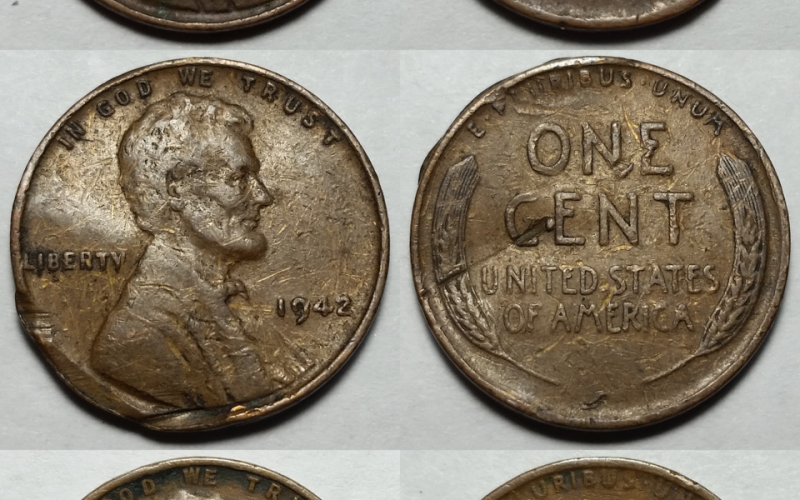
In 2026, 1942 Wheat Penny values range from $0.10 for common circulated examples to over $12,650 for high-grade error specimens, depending on mint mark, condition, and errors. The three main value drivers are the mint mark (Philadelphia no mint mark, Denver “D”, or San Francisco “S”), the coin’s condition grade (especially MS65+), and the presence of valuable errors like Doubled Die Obverse or Repunched Mint Marks. These World War II-era copper cents are common in low grades but can be exceptionally valuable when pristine or flawed.
- 1942-S pennies are the most valuable regular issue, with uncirculated examples reaching $100+ and MS68 specimens selling for $12,650 at auction.
- Error coins dramatically increase value: 1942-S/S RPM can fetch $300+ in MS65, while DDO errors add hundreds of dollars in high grades.
- Condition is paramount: MS65+ coins are worth hundreds, while red copper color adds significant premium over brown examples.
Where Do 1942 Wheat Penny Values Stand in 2026?
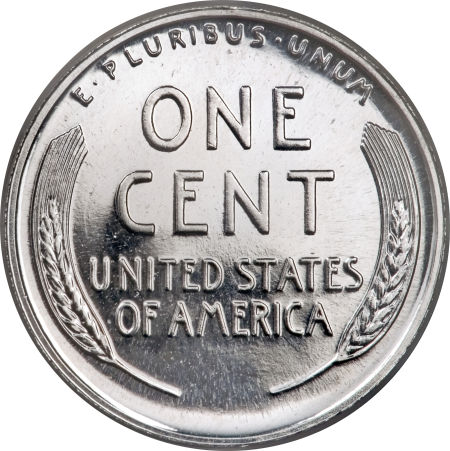
1942 Wheat Penny Values: Circulated vs Uncirculated Comparison Table
The following table outlines the key mintage figures and value ranges for 1942 Wheat Pennies from each mint facility in 2026.
| Mint Mark | Mintage | Circulated Value Range | Uncirculated Value Range (MS60+) |
|---|---|---|---|
| Philadelphia (No Mint Mark) | 657,796,000 | $0.10–$0.30 | $1+ |
| Denver (“D”) | 206,698,000 | $0.10–$0.50 | Several dollars |
| San Francisco (“S”) | 85,590,000 | $0.20–$0.50 | $7–$100+ |
| Proof (Philadelphia) | 32,600 | N/A (not circulated) | $30+ (Proof 60) |
The data reveals a clear hierarchy. The Philadelphia issue, with its massive mintage of over 657 million, is the most common and commands the lowest premiums. The Denver “D” mint, with 206 million coins struck, sits in the middle. The San Francisco “S” is the standout regular issue. Its lower mintage of 85.5 million and historically higher collector demand for San Francisco mint marks create a consistent price premium across all grades. Most notably, both the 1942-D and 1942-S have reached identical $12,650 auction records for MS68 Red examples, proving that gem-quality coins from any mint can achieve extraordinary values.
Why 1942-S Pennies Command Premium Prices: $7 to $100+ Uncirculated
The 1942-S Lincoln Wheat Cent is the most desirable regular-issue coin from this year. Minted in San Francisco with a total of 85,590,000 pieces, its values consistently outpace the Philadelphia and Denver counterparts. In average circulated condition, a 1942-S typically sells for $0.20 to $0.50, compared to the $0.10-$0.50 range for the other mints. The real divergence appears in uncirculated grades. A common 1942-S in Mint State 60 begins at around $7, while high-end examples with brilliant red luster can easily exceed $100. This premium is driven by two factors: the lower mintage relative to Philadelphia, and a long-standing collector preference for coins bearing the “S” mint mark. The auction record of $12,650 for an MS68 Red specimen, as documented by Heritage Auctions, represents the absolute pinnacle for a regular-strike 1942 penny, regardless of mint.
1942 Proof Pennies: $30+ for Proof 60, Rare with 32,600 Mintage
A distinct category is the 1942 Proof Lincoln Wheat Cent. Only 32,600 proof coins were struck at the Philadelphia Mint for sale in proof sets. These coins are not intended for circulation and feature exceptionally sharp details with mirror-like fields on a satin-like background. A 1942 Proof in Proof 60 condition, the lowest acceptable grade for proofs, is valued at $30 or more. Higher proof grades, such as Proof 63 or Proof 65, command significantly higher prices due to their superior eye appeal and sharpness. The rarity of the 1942 proof—less than 0.005% of the total mintage—and its special production method make it a sought-after item for registry set collectors and those seeking a high-quality example of the 1942 date.
Valuable 1942 Penny Errors: DDO, RPM & Rare Varieties
Doubled Die Obverse (DDO): Look for Doubling on LIBERTY, Date & IN GOD WE TRUST
The Doubled Die Obverse (DDO) is one of the most significant and visually dramatic error types for 1942 Wheat Pennies. This error occurs during the die-making process when the hub impression is made twice, creating a master die with slight doubling. That doubling is then transferred to all subsequent working dies and, ultimately, the coins. For a 1942 penny, the key areas to examine under 10x magnification are:
- LIBERTY: The letters, especially the “L” and “I,” may show clear shadowing or a secondary outline.
- IN GOD WE TRUST: The motto often exhibits doubling, most commonly on the “I” in “IN” or the “T” in “TRUST.”
- The Date “1942”: Look for a split or thickened appearance on the digits, particularly the “1” and “4.”
A confirmed DDO error on a 1942 penny can add hundreds of dollars to its value, especially in high grades like MS65 or better. The effect must be clear and distinct from normal die wear or strike weakness.
Repunched Mint Marks (RPM): 1942-S/S ($300+ MS65) vs 1942-D/D ($35 MS65)
Repunched Mint Marks (RPM) occur when a mint mark is punched into the die, then slightly repositioned and punched again, leaving a ghostly secondary mark. This creates two distinct varieties for 1942, with a massive value disparity between them.
| RPM Variety | Approx. Value (MS65) | Key Identification |
|---|---|---|
| 1942-S/S | $300+ | Look for a clear, secondary “S” protruding from behind or beside the primary mint mark. |
| 1942-D/D | ~$35 | Look for a secondary, smaller “D” overlapping or adjacent to the main “D” mark. |
The 1942-S/S RPM is vastly more valuable, trading for nearly ten times the price of its Denver counterpart in the same grade. This is directly tied to the underlying demand for San Francisco mint mark coins. Collectors seeking an S-mint 1942 penny are often willing to pay a substantial premium for the RPM variety. To spot an RPM, use magnification and examine the mint mark area beneath the date for any extra, misaligned letters “peeking” out from the main impression.
L on Rim Error: Rare 1942-S Variety Where Liberty’s L Sits on Rim
A fascinating and rare variety specific to the 1942-S is the “L on Rim” error. This is not an RPM but a distinct die variety where the “L” in LIBERTY is positioned so that it sits directly on the rim of the coin, partially or fully outside the intended design area. This results from an issue with the die’s engraving or the coin’s striking process. This variety is exceptionally scarce and is not known to exist on 1942 pennies from Philadelphia or Denver. Finding a 1942-S with this characteristic requires careful examination with magnification, focusing on the final letter of LIBERTY and its relationship to the coin’s edge. A verified “L on Rim” 1942-S penny commands a significant premium over a standard 1942-S in similar condition due to its rarity and distinctiveness.
Condition, Color & Copper: Maximizing Your 1942 Penny’s Value
MS65+ is the Sweet Spot: High-Grade 1942 Pennies Worth Hundreds, $12,650 MS68 Record
Condition is the single most important factor in determining a 1942 Wheat Penny’s value. The vast majority of these coins entered circulation in the 1940s and 1950s, surviving today in heavily worn grades (Good to About Good). Coins that escaped this fate and were preserved in mint condition are rare. A coin graded MS65 (Mint State 65) is considered a gem and is worth hundreds of dollars for any mint mark. The jump to MS66 and MS67 brings substantially higher prices. The absolute peak is MS68, a grade so elusive for 1942 that auction records show both the 1942-D and 1942-S achieving $12,650 when they appear. This demonstrates that for high-grade examples, mint mark becomes less relevant than the sheer quality of the strike and preservation. Even a one-grade difference, such as MS63 vs MS65, can mean a price disparity of several hundred percent.
Red Copper vs Brown: Color Grading Adds 2-3x Value Difference
For copper coins like the 1942 Wheat Penny, color is a critical value component, often as important as the numerical grade. The system uses three primary designations:
- Red (RD): The coin retains its original, bright copper-red color with no significant brown toning. This is the most valuable state, often commanding 2 to 3 times the price of an otherwise identical Brown coin.
- Red-Brown (RB): The coin shows a mix of original red luster and brown toning, typically covering 5-50% of the surface. This is an intermediate value.
- Brown (BN): The coin has fully toned to a brown color. This is the lowest value tier for copper, as it indicates significant oxidation and loss of original mint luster.
Original, vibrant red luster indicates the coin was carefully stored and not exposed to environmental elements that cause toning. A 1942-S in MS65 Red is worth a small fortune compared to the same coin graded MS65 Brown.
Are 1942 Pennies Magnetic? 95% Copper Composition Means No, But Steel Errors Are
A common question from new collectors is whether a genuine 1942 Wheat Penny is magnetic. The answer is no. The composition of a standard 1942 Lincoln Wheat Cent is 95% copper and 5% zinc and tin. Copper is a non-ferrous metal and is not magnetic. If you have a 1942 penny that is attracted to a magnet, it is not a genuine circulation strike. It could be a modern replica, a foreign coin, or—most intriguingly—an extremely rare experimental piece. During the early 1940s, the U.S. Mint experimented with steel cents (zinc-coated steel) due to copper shortages for the war effort. These 1943 steel cents are magnetic and highly valuable. A few 1942-dated experimental steel patterns are known to exist and would be worth a fortune. Therefore, the magnet test is a quick, preliminary way to rule out most fakes and identify the possibility of a major error coin. Regardless of its numismatic value, any 1942 penny contains enough copper to give it a few cents in intrinsic metal value.
The most surprising data point is the parallel $12,650 auction records for both the 1942-D and 1942-S in MS68 Red condition. This shows that for the absolute highest-grade examples, the mint mark premium disappears, and pure condition drives value equally. To act on this information: Examine your 1942 penny under 10x magnification. First, check the mint mark for repunching (extra “D” or “S” letters). Second, inspect the obverse for doubling on LIBERTY, IN GOD WE TRUST, and the date. If you find either feature, or if the coin appears exceptionally sharp and red, seek professional grading from a major service like PCGS or NGC to verify its condition and potential error status.
Frequently Asked Questions About 1942 Wheat Penny
What is a 1942 S?
The 1942-S Lincoln Wheat Cent is a copper business strike coin minted in San Francisco. In 2026, uncirculated examples (MS60+) are worth $7–$100+, while circulated ones range from $0.20–$0.50.
How many 1942 D wheat pennies were made?
The 1942-D Wheat Penny had a mintage of 206,698,000 coins. It is common, with circulated values at $0.10–$0.50 and uncirculated (MS60+) at several dollars.
How much is a 1942 proof wheat penny worth?
1942 proof pennies (Philadelphia mint) have a mintage of 32,600 and are worth $30+ in Proof 60 condition. They
Related Coins
1969 Penny Coin Value (Errors List, “D”, “S” & No Mint Mark Worth)
Most 1969 pennies are worth just 2 cents. But a rare 1969-S Doubled Die Obverse error can fetch over $250,000. This guide separates the three…
 Penny
Penny
1992 Penny Coin Value (Errors List, D, S & No Mint Mark Worth)
Discover the true 1992 penny value for 2026. Learn which D, S, and no mint mark errors are worth up to $25,850. Get the complete errors list and identification guide.
1947 Wheat Penny Coin Value (Errors List, D, S & No Mint Mark Worth) – 2026 Guide
Complete 1947 wheat penny value guide for 2026. Find current prices for D, S, and no mint mark coins. Error list includes Doubled Die (FS-101) and RPM varieties worth $100-$600+.