
1963 Penny Coin Value (Errors List, “D” & No Mint Mark Worth)
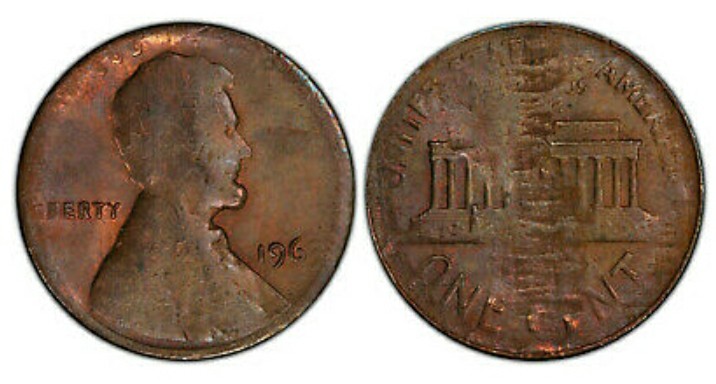
In 2026, a 1963 Lincoln penny in circulated condition typically trades for $0.02 to $0.10, but pristine MS67 examples have sold for up to $2,820, with key error varieties like doubled die or planchet mistakes pushing values even higher. This guide breaks down current market prices for both Philadelphia (no mint mark) and Denver (D) minted 1963 pennies, plus a complete error list to help you identify the most valuable specimens. For a comprehensive overview of penny values across all years, visit our Penny value guide. We’ll examine mint mark differences, condition grading impacts, and the most sought-after errors that can transform a common cent into a collector’s item.
- Most 1963 pennies are worth $0.02-$0.10 in circulated condition, but uncirculated coins (MS65+) range from $1 to $5+.
- The 1963-D (Denver) mint mark is slightly more valuable in top grades: MS67 RD sold for $2,820 vs. $2,350 for Philadelphia.
- Key error varieties include doubled die reverse, struck on dime planchet, off-center strikes, blowhole, and 1963-D offset rim.
- Proof pennies (minted 3,075,645) are worth $1-$5+ and were sold in collector sets.
1963 Penny Value: What Are They Worth in 2026?
Value Ranges by Mint Mark and Condition
In 2026, the base values for 1963 pennies vary by mint mark and condition, with circulated coins worth only a few cents and uncirculated examples commanding premiums. The following table summarizes typical price ranges:
| Coin Type | Circulated Value | Uncirculated Value (MS65+) |
|---|---|---|
| 1963 No Mint Mark (Philadelphia) | $0.02 – $0.05 | $1 – $3 |
| 1963-D (Denver) | $0.02 – $0.10 | $1 – $5 (MS67+) |
| 1963 Proof (Philadelphia) | N/A (not released for circulation) | $1 – $5+ |
Proof coins were never released into circulation, hence they have no circulated value and are always sold as uncirculated. The ‘RD’ (red) designation indicates the coin retains its original mint red color, which can add a significant premium, especially in high grades. Condition is the most critical factor; a jump from MS64 to MS65 can double the value, and MS67 examples are exceptionally scarce. For collectors of earlier issues, our 1859 Indian Head Penny value guide shows how condition affects values for that classic date.
MS67+ Auction Records: The High-End Market
The highest values for 1963 pennies are achieved at the MS67 grade and above, with recent auction prices reaching thousands of dollars. A 1963-D penny graded MS67 RD (red) sold for $2,820, while a Philadelphia MS67 RD fetched $2,350. The ‘RD’ label signifies the coin maintains its original mint red luster, a highly desirable trait. Achieving MS67 is extremely difficult for these high-mintage coins due to wear and handling; only a handful have been certified by PCGS and NGC, making them rare and valuable. The price difference between MS66 and MS67 can be substantial, underscoring the importance of professional grading for coins that appear uncirculated. In the current market, top-grade 1963 pennies continue to appreciate as collector demand for pristine modern issues grows. Similar high-grade rarities exist for other dates; see our 1877 Indian Head Penny guide for another key date with scarce MS67 examples.
Are 1963 Pennies Valuable in 2026?
Yes, 1963 pennies can be valuable, but the majority are worth only a few cents. Given the massive mintage—over 1.7 billion Philadelphia and 1.8 billion Denver—most examples in circulated condition trade for $0.02 to $0.10. However, coins that have survived in uncirculated condition (MS65+) range from $1 to $5 or more, with exceptional MS67 specimens selling for thousands. Additionally, error varieties can multiply value, sometimes by hundreds or thousands of times. Therefore, while common, these pennies are not all face-value junk; condition and errors are the key determinants of value. In 2026, the market for 1963 pennies remains stable for circulation strikes, but high-grade and error coins show strong performance at auction. Always have valuable-looking coins authenticated by a reputable grading service to ensure accurate valuation. For comparison, our 1863 Indian Head Penny error guide details how errors impact values for that earlier design.
1963 Penny Error Varieties: A Complete List
Doubled Die Reverse (DDR) and Die Errors
The doubled die reverse is the most significant die error for 1963 pennies. Collectors actively seek these varieties, and even low-grade examples command premiums. However, due to the high quality control of the era, true DDRs are scarce, making them a key target for error coin hunters.
- What is a Doubled Die Reverse? A DDR occurs when the die used to strike the coin is doubled during the hubbing process, causing a slight shadow or doubling of design elements. On the 1963 penny, look for doubling in the lettering of “UNITED STATES OF AMERICA” and “E PLURIBUS UNUM” on the reverse.
- How to Identify DDR: Use 10x magnification to examine the reverse lettering. Doubling appears as a clear, separated secondary image, often strongest on the left side of the letters. The date and mint mark are less commonly affected.
- Value Impact: DDR varieties on 1963 pennies are rare, especially on circulation strikes. Proof coins with DDR can sell for $100-$500+ depending on grade and severity. Even minor doubling adds a significant premium over normal examples.
- Other Die Errors: While DDR is the most notable, other die errors like repunched mint marks (RPM) or die cracks can occur, but they are less common and generally less valuable than DDR.
For a broader look at die errors on Indian Head pennies, see our 1889 Indian Head Penny error varieties guide.
Planchet and Striking Errors
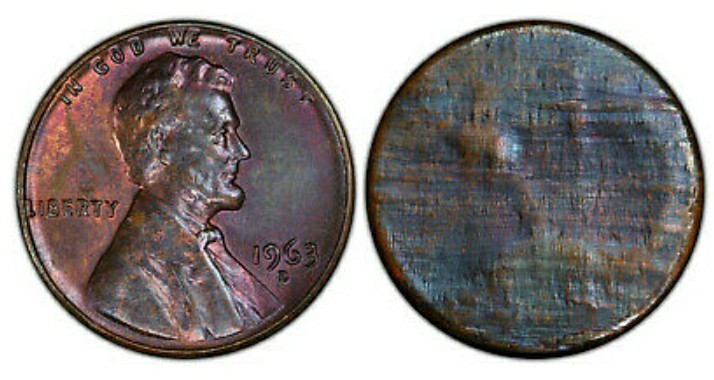
Planchet and striking errors are less common than die errors but can be highly valuable when they occur. The ‘struck on a dime planchet’ is arguably the most valuable error for 1963 pennies, often fetching thousands. Off-center strikes and offset rims are more frequently encountered but still add significant premiums. Defective planchets are usually detrimental to value unless the defect is extreme. Collectors should examine coins carefully for any irregularities in shape, weight, color, or design alignment.
- Struck on a Dime Planchet: This major error occurs when a penny is struck on a planchet intended for a dime (10-cent piece). The resulting coin weighs about 2.5 grams instead of the standard 3.11 grams, has a silver color, and may show partial design elements from the dime. These are extremely rare and can be worth $500 to several thousand dollars depending on grade and visibility of the error.
- Off-Center Strikes: The coin is not properly centered between the dies, causing part of the design to be missing or cut off. The value depends on how much of the design is lost; coins with 10-20% off-center may add $10-$50, while severe off-centers (50% or more) can reach $100-$500+.
- Defective Planchet/Blowhole: The planchet (blank metal disk) has a flaw, such as a hole or crater, before striking. This creates a visible depression or hole in the finished coin. Such errors usually reduce value unless the flaw is dramatic and the coin is in high grade; typical values are minimal, but exceptional examples may be collected as curiosities.
- 1963-D Offset Rim: Specific to Denver-minted 1963 pennies, this error features a rim that is misaligned or off-center, often due to improper die alignment. It is a type of striking error that can be valuable, with prices ranging from $50 to $200+ for well-preserved examples.
Our 1890 Indian Head Penny value article covers similar planchet errors for that year.
Are There Any Errors on the 1963 Penny?
Errors on 1963 pennies are uncommon but include doubled die reverses, planchet mistakes (like being struck on a dime planchet), off-center strikes, and the Denver-specific offset rim. These can substantially increase value, especially in high grade. To identify potential errors, examine coins under 10x magnification for doubling in lettering, irregular rims, wrong metal color, or missing design elements. Consult a professional coin dealer or grading service for authentication, as even minor errors can be worth hundreds or thousands. Condition amplifies error value; an error in MS65 is worth significantly more than the same error in circulated condition. Handle coins carefully and avoid cleaning to preserve original surfaces. For additional examples, see our 1893 Indian Head Penny guide.
Despite the U.S. Mint producing over 3.5 billion 1963 pennies, the combination of pristine condition and rare errors means that even a common date can yield a small fortune. The $2,820 auction record for a 1963-D MS67 proves that high-grade modern coins have a robust market. To uncover potential treasures in your collection, carefully examine each 1963 penny under 10x magnification: check the reverse lettering for doubled die doubling, inspect the planchet for holes or wrong metal color, and verify the rim is fully round and centered. For any coin that appears uncirculated, consider submitting it to a professional grading service like PCGS or NGC; a high grade can transform a few-cent coin into a thousand-dollar asset. For collectors exploring other key dates, our 1888 Indian Head Penny value and errors guide offers similar insights.
Frequently Asked Questions About 1963 Penny
What wheat pennies are worth $1,000,000?
GoBankingRates also said that the 1944-S Steel Wheat Penny could fetch as much as $1.1 million with “circulating coins” going for as much as $408,000 to $409,000. There are some other one-cent pieces that can bring nice pay days, too, and you can read more about them at the site, here.
Are 1963 coins valuable?
PCGS MS65 1963 pennies have sold for over $200 in online auctions on multiple occasions. As there are almost 30 examples graded MS66 (May 2013), I think a price of $150 is fairer. In any case, if you're looking for a high-grade 1963 penny but don't want to break the bank, this is your coin.
Are 1963 or 1964 pennies worth anything?
Value in 2026 As of 2026, most 1964 pennies in circulation are worth one cent. However, uncirculated examples can sell for $5 to $20, while certified high-grade coins may reach several hundred dollars.
Related Coins
1897 Indian Head Penny Coin Value (Errors List & No Mint Mark Worth) – 2026 Guide
Complete 1897 Indian Head penny value guide for 2026. Get current prices for circulated, uncirculated & proof coins. Error list includes MPD, RPD, double-struck worth $70-$50,000+. No mint mark Philadelphia origin explained.
 Penny
Penny
1944 Wheat Penny Coin Value (Errors List, “D”, “S” & No Mint Mark Worth)
Discover 1944 wheat penny values for 2026. Learn about mint marks (D, S, no mint mark), rare errors like steel and D/S over-mintmark, and how to identify valuable coins.
1947 Wheat Penny Coin Value (Errors List, D, S & No Mint Mark Worth) – 2026 Guide
Complete 1947 wheat penny value guide for 2026. Find current prices for D, S, and no mint mark coins. Error list includes Doubled Die (FS-101) and RPM varieties worth $100-$600+.