
1970 Penny Coin Value (Errors List, “D”, “S” & No Mint Mark Worth)
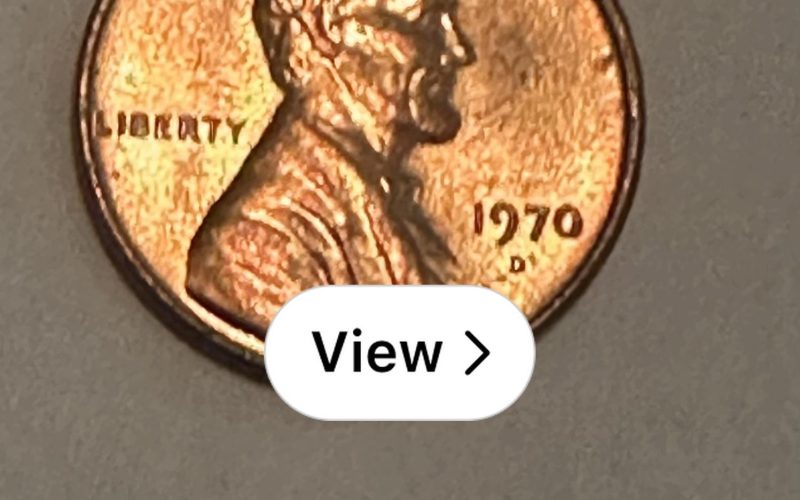
Most 1970 pennies are worth just a few cents, but a rare 1970-S Small Date doubled die penny sold for $24,000 in 2026, according to market records. For the vast majority of 1970 Lincoln cents—whether from Philadelphia (no mint mark), Denver (D), or San Francisco (S)—the current value in circulated condition ranges from $0.05 to $15.00 as of early 2026, whereas key-date Indian Head pennies like the 1890 Indian Head penny often exceed this range. The specific mint mark and any error varieties determine which end of that range your coin falls into. This guide breaks down the exact 2026 values for each mint mark and highlights the critical error features that can transform a common penny into a significant find.
- Most 1970 pennies (no mint mark, D, or large date S) are worth face value to $15 in circulated condition.
- The 1970-S Small Date is a key variety worth $60+; the doubled die version of this variety can reach $24,000 in top grade.
- The 1970-D is extremely common in lower grades but becomes scarce and valuable in MS-67 and higher condition.
1970 Penny Value by Mint Mark: 2026 Price Guide
The first step in determining your 1970 penny’s worth is identifying its mint mark. The United States Mint produced Lincoln Memorial pennies at three facilities in 1970: Philadelphia (no mint mark), Denver (D), and San Francisco (S). The San Francisco Mint exclusively produced proof coins for collectors in 1970, while Philadelphia and Denver produced coins for general circulation. For coins in average circulated condition (grades about Good to Very Fine), the base market value is nearly identical across the Philadelphia and Denver issues.
No Mint Mark (Philadelphia) & 1970-D (Denver): $0.05 – $15.00 Range
For a typical 1970 penny found in pocket change, the value is minimal.
- 1970 (No Mint Mark): $0.05 – $15.00 in circulated condition (coin-identifier.com, Jan 14, 2026).
- 1970-D (Denver Mint): $0.05 – $15.00 in circulated condition (coin-identifier.com, Jan 14, 2026).
These two issues are the most common. Both are composed of 95% copper and 5% zinc. Their high mintage numbers mean they are frequently encountered in circulation. The value at the lower end of the range reflects their intrinsic metal value and collector demand for everyday coins. At the higher end, around $15, you are looking at coins in exceptionally nice uncirculated condition (typically MS-65 or better) that have been well-preserved. For most people, a 1970 or 1970-D penny in everyday condition is worth its face value or a small premium, unlike the 1889 Indian Head penny which retains significant value even when circulated. The composition is standard for the era and does not confer special value on its own.
1970-S Large Date vs. Small Date: Identifying the $60+ Variety
The San Francisco Mint’s 1970 proof pennies present the first major value divergence. There are two distinct date varieties: Large Date and Small Date. The difference is subtle but crucial for valuation.
- 1970-S Large Date Proof: This is the more common proof variety. Its value is modest, similar to the circulation strikes, typically in the $1 to $10 range for a proof in average condition.
- 1970-S Small Date Proof: This is the key variety. The “7” in the date has a noticeably shorter stem or tail compared to the Large Date. A 1970-S Small Date proof in good condition starts at $60+ (coincollecting.com). High-grade examples command significantly more.
To identify the Small Date, hold the coin under a light and compare the length of the lower stroke of the “7” in “1970” to the same digit on a known Large Date. The Small Date’s “7” stem is shorter. This variety is the gateway to the higher values for the 1970-S mint. The Small Date was likely produced in a smaller quantity within the proof mintage, creating its scarcity. When assessing any 1970-S penny, the date size is the first and most important feature to check.
High-Value 1970 Penny Errors: Doubled Die & Mint Mark Varieties
Beyond the standard Small Date variety, specific error types on 1970 pennies, particularly the San Francisco proof, can generate extraordinary values. These errors occur during the die creation or striking process and are highly sought after by error coin collectors. The most valuable is a specific doubled die on the Small Date proof.
The $24,000 1970-S Small Date Doubled Die Obverse
The single most valuable 1970 penny variety is the 1970-S Small Date Doubled Die Obverse. This is a different, rarer error than the standard Small Date variety. A specimen graded MS-66 Red (RD) has realized up to $24,000 at auction (YouTube video description, 2026). What defines this coin?
- Diagnostic Feature: Look for clear, distinct doubling on the obverse (heads side). This doubling is most prominent on the date digits and on President Lincoln’s portrait, particularly around the eye, cheek, and bow tie. The doubling appears as a shadow or outline effect, creating a “double-struck” appearance.
- Differentiation: Not every 1970-S Small Date is a doubled die. The doubled die obverse is a separate, specialized variety. It requires magnification (10x loupe or microscope) to authenticate the doubling clearly.
- Rarity & Grading: This variety is extremely rare in any condition. Its value is almost entirely dependent on professional grading from a major service like PCGS or NGC. A high grade (MS-65 or above) with strong, clear doubling is what drives the five-figure prices. Finding one in circulation is virtually impossible; they originate from old collections or specialized rolls of uncirculated coins.
Other Sought-After 1970 Errors: D/S Mint Mark Doubling & Floating Roof
While the doubled die obverse is the king, other mint mark and design errors can add substantial premiums to any 1970 penny.
- Doubled Mint Mark (D or S): Examine the mint mark below the date closely. Use magnification. A doubled mint mark appears thicker, with a shadow or outline visible. This error is noted as something to look for on 1970 pennies (coinvalueapp.com, Mar. Update). Values for a clear doubled mint mark on a circulated coin can range from $25 to $75+, depending on the mint mark and overall grade. The effect is similar to the doubled die but confined to the single letter.
- Floating Roof Error: This is a late-stage die failure error. On the reverse (tails side) of the Lincoln Memorial, the roof detail can appear faint, broken, or seem to “float” above the building. It is mentioned in collector forums as an error found on 1960s/70s Lincoln cents, including Denver mint issues (forums.collectors.com, Feb 8, 2022). A clear floating roof on a 1970-D or 1970 (P) in nice condition can add $10 to $50+ to the base value, much like error varieties on the 1893 Indian Head penny can enhance its worth.
- Off-Center Strikes: A coin struck off-center, where the design is not centered on the planchet, is another popular error. The degree of off-centering determines value. Minor off-centers are common; dramatic ones (e.g., 5-10% off) are scarcer and more valuable.
All error values are highly dependent on the coin’s overall condition. A heavily worn error penny is worth less than a sharp, uncirculated example of the same error. Always assess the grade first, then the error’s prominence.
The 1970-D Penny: Common Circulation Coin, Scarce Gem
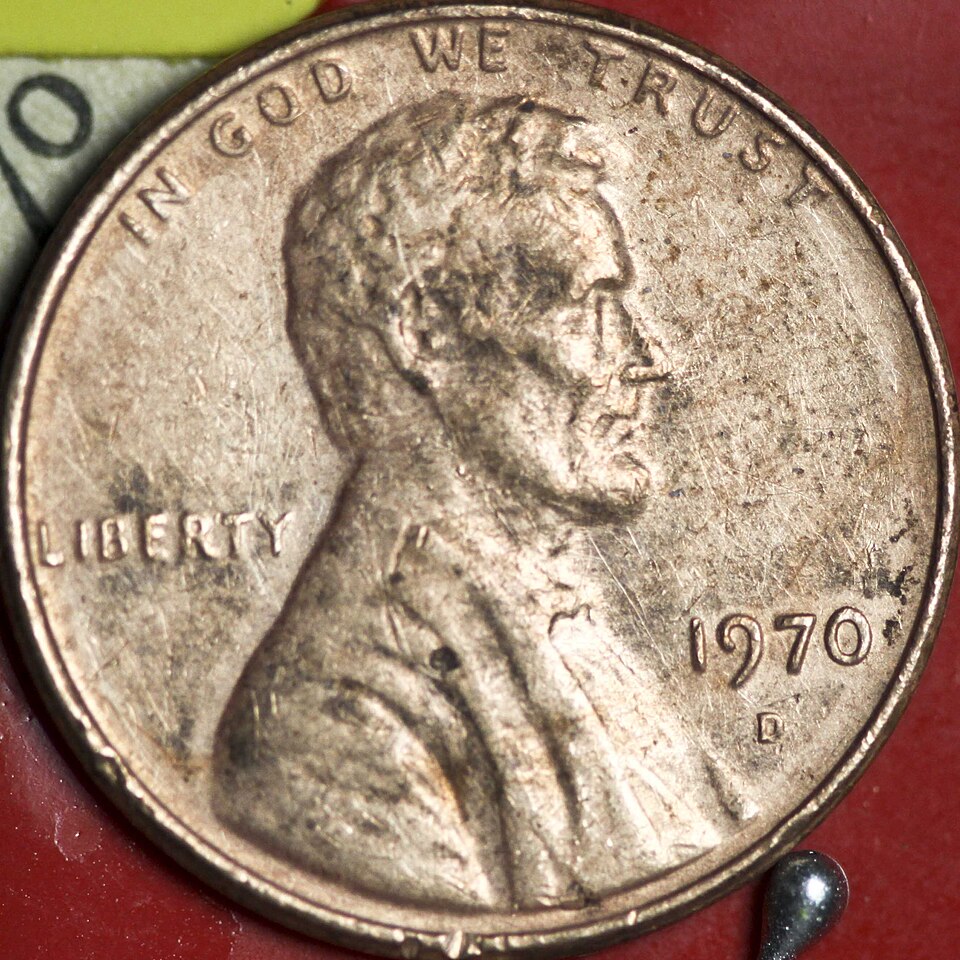
The 1970-D penny presents a fascinating case study in how mintage and condition intersect to create value, a dynamic also observed with the 1888 Indian Head penny. It is one of the most common Lincoln cents from the 1960s/70s, yet it becomes a scarce gem in the highest grades. Understanding this dichotomy is key to realistic expectations.
Mintage of 2.89 Billion: Why You Find Them Everywhere
The Denver Mint produced a staggering 2.89 billion 1970-D Lincoln cents (Q&A section). This immense supply is the primary reason you can still find 1970-D pennies in everyday pocket change today. For context, this mintage is orders of magnitude higher than the proof mintages from San Francisco. The 1970-S business strike mintage was 690,560,004, and the proof mintage was only 2,632,810 (Q&A section). The 1970-D’s sheer volume means that in grades up to about MS-64, examples are plentiful and inexpensive. You can buy rolls of uncirculated 1970-D cents for a small premium over face value. This abundance defines its baseline value: common until you reach the top tier of condition.
The MS-67+ Scarcity: When Common Becomes Valuable
The law of supply and demand takes over at the highest grades. While the Mint produced billions, very few survived in pristine, perfect-strike condition.
- The Supply Cliff: After MS-64, the available supply of 1970-D pennies drops dramatically. Coins graded MS-65 and MS-66 are less common. Coins in MS-67 or MS-68 are considered “very scarce to rare” (Q&A section).
- What is MS-67? This grade means the coin has a perfect strike with no visible flaws even under magnification, full original luster, and no contact marks. Achieving this grade from the 1970-D mintage is exceptionally difficult due to the high volume of coins struck and handled.
- Value at the Top: A 1970-D graded MS-67 or higher can command prices in the $100 to $500+ range, echoing the high values of key-date Indian Head pennies like the 1877 Indian Head penny, depending on the specific service’s population report and market demand. These high-grade gems are almost exclusively found in original, untouched mint sets or from specialized rolls that were stored perfectly since 1970. For the average find, the 1970-D is common copper. For the advanced collector seeking a perfect gem, it is a challenging and valuable target.
The 1970 penny series illustrates a core numismatic principle: mintage is only part of the story, a lesson evident in key-date Indian Head pennies such as the 1863 Indian Head penny. Condition is the other, and for modern coins like the 1970-D, the highest grades are where true scarcity—and value—reside. To find value, you must look beyond the mint mark to the date size on any “S” mint mark coin and scrutinize every mint mark and design element for doubling or other errors under magnification—this is where the real money is.
Frequently Asked Questions About 1970 Penny
What is the most valuable 1970 penny error?
The 1970-S Small Date Doubled Die Obverse is the most valuable 1970 penny error, with a value up to $24,000. This rare variety features a noticeable doubling on the obverse date and commands high prices in top condition.
Why is the 1970-D penny considered common yet scarce in high grades?
The 1970-D penny is common in circulated grades due to a high mintage of 2.89 billion, but it is scarce in gem condition (MS-65 to MS-67). Most examples are found in lower grades, making high-grade specimens rare and more valuable.
What is the value of a 1970 penny with no mint mark?
A 1970 penny with no mint mark is worth $0.05 to $15.00. Its value depends on condition; it is common in circulation but can reach the higher end of the range in uncirculated grades.
What is the value of a 1970-S proof small date penny?
The 1970-S proof small date penny is worth $60+. The small date variety is a key attribute for proof coins, significantly increasing its value compared to the large date proof ($1 to $10).
Related Coins
1939 Wheat Penny Coin Value (Errors List, “D”, “S” & No Mint Mark Worth)
A 1939 wheat penny can be worth anywhere from $0.10 for a well-circulated coin to over $14,000 for a pristine mint state example, depending on…
 Penny
Penny
2009 Penny Log Cabin Coin Value (Errors List, “D” & No Mint Mark)
Get the 2026 value of 2009 Log Cabin pennies. See price charts for no mint mark and D mint, learn which errors like die gouges increase worth. Full guide.
 Penny
Penny
1994 Penny Coin Value (Errors List, “D”, “S” & No Mint Mark Worth)
1994 Penny Coin Value (Errors List, “D”, “S” & No Mint Mark Worth) A 1994 penny is generally worth face value ($0.01) in circulated condition,…