
1972 Penny Coin Value (Errors List, “D”, “S” & No Mint Mark Worth)
The 1972 penny, struck as part of the Lincoln Memorial cent series, is one of the most common coins in American circulation. In average circulated condition, it is worth its face value of $0.01. However, the 1972 Doubled Die Obverse (DDO) error is a major exception, with values ranging from $250 to over $14,400 for high-grade examples. This guide covers the 2026 values for all 1972 penny varieties: no mint mark (Philadelphia), “D” (Denver), and “S” (San Francisco), including a full errors list. For a comprehensive overview of penny values across all years, visit our penny values guide. Each 1972 penny weighs 3.1 grams and is composed of 95% copper and 5% zinc.
- The 1972 Doubled Die Obverse (DDO) error is the most valuable, selling for $250 to over $14,400 in top condition.
- 1972 pennies without a mint mark (Philadelphia) are common in circulation but worth $100+ in MS65+ grade.
- 1972-D and 1972-S pennies have modest premiums in high grades ($10-$50 and $1-$5 for proofs), with business-strike 1972-S being scarce.
- Off-center strikes and repunched mint marks on 1972-D can add $100 to $1,000+ to value.
1972 Penny Values by Mint Mark: Philadelphia, Denver, and San Francisco
The mint mark on a 1972 penny—whether no mint mark (Philadelphia), D (Denver), or S (San Francisco)—is the primary factor determining its base value, with condition playing a secondary role. For a complete overview of penny values, refer to our penny value guide. The no mint mark indicates Philadelphia production, similar to the 1859 Indian Head Penny which also lacks a mint mark.
Value Table: 1972 Pennies by Mint Mark and Condition
| Mint Mark | Circulated Condition (Good to Very Fine) | Uncirculated Condition (MS60-MS64) | High Grade (MS65+) |
|---|---|---|---|
| No Mint Mark (Philadelphia) | $0.01 – $0.10 | $0.50 – $2.00 | $100 |
| D (Denver) | $0.01 | $0.25 – $1.00 | $10 – $50 |
| S (San Francisco) | Proofs: $1 – $5 (cameo) | Proofs: $1 – $5 (cameo) | Proofs: $1 – $5 (cameo) |
Business strikes from San Francisco are extremely scarce and not commonly encountered.
These values represent 2026 market averages for typical strikes. Exceptional coins, particularly those with errors or in superior condition, may command significantly higher prices.
Why Condition Matters: The MS65+ Premium Threshold
For modern coins like the 1972 penny, condition is paramount because billions were minted but few survived in high grades. A circulated Philadelphia 1972 penny is worth only $0.01-$0.10, but an MS65+ example can exceed $100—a multiplier of over 1,000 times. Similarly, a 1972-D in MS65+ grades for $10-$50 versus its face value. This dramatic increase occurs because MS65 denotes a coin with no visible flaws under 5x magnification, a rarity for 1972 due to heavy circulation. Collectors seeking gem-quality modern coins for registry sets drive demand for these high-grade specimens. High-grade examples from any mint are sought after, as seen with the 1863 Indian Head Penny which also sees premiums in MS65+.
San Francisco Proofs vs. Business Strikes: Weight and Rarity
1972-S pennies exist in two distinct forms: proof sets and scarce business strikes. Proofs, struck with polished dies on specially prepared planchets, exhibit a mirror-like finish and weigh 3.1 grams with 95% copper composition. They typically sell for $1-$5, with cameo contrast (frosted devices on mirror fields) adding a premium. Business strikes, intended for circulation, are extremely rare—likely fewer than 100,000 were minted—and can fetch higher prices when encountered. Identify proofs by their frosted devices and reflective fields; business strikes have a uniform satin luster. The mint mark “S” appears below the date on the obverse for both types. For mint mark information on other series, see our guides to the 1888 Indian Head Penny and 1889 Indian Head Penny.
What Makes a 1972 Penny Rare? Doubled Die Errors and High Grades
The 1972 penny’s rarity stems from two factors: the Doubled Die Obverse error and high-grade condition. While billions were minted, only a handful exhibit the dramatic doubling that collectors prize. Understanding coin grading is essential for accurate valuation; see our penny section for details.
The 1972 Doubled Die Obverse (DDO): “The King of 1972 Pennies”
A doubled die obverse occurs when the die is impressed twice during the hubbing process, causing a shadow or duplicate image of design elements. The 1972 DDO is the most significant doubled die for the Lincoln Memorial cent series. It appears almost exclusively on pennies struck at the Philadelphia Mint (no mint mark). Values range from $250 for well-worn examples to over $14,400 for pristine MS67 specimens. PCGS has designated the strongest examples as FS-101, which command the highest premiums. This error is often called “The King of 1972 Pennies” due to its scarcity and value. Doubled die errors also appear on other dates, such as the 1863 Indian Head Penny, which has its own error varieties.
How to Identify a 1972 Doubled Die: Check LIBERTY, Date, and Motto
- LIBERTY: The doubling is most evident on the letter “L”, but the entire word shows clear separation.
- Date: The digit “2” in 1972 exhibits a split or doubled appearance.
- Motto: “IN GOD WE TRUST” often shows overall doubling.
- FS-101: This PCGS variety designation indicates the strongest and most desirable doubling.
Doubled Die Values by Grade: From $250 to $14,400+
| Grade | Value Range |
|---|---|
| AG (About Good) | $250 – $300 |
| G (Good) | $250 – $300 |
| VG (Very Good) | $250 – $300 |
| F (Fine) | $250 – $300 |
| AU (About Uncirculated) | $250 – $400 |
| MS60 | $300 – $500 |
| MS63 | $500 – $800 |
| MS65 | $400 – $800 |
| MS67 | $10,000 – $14,400+ |
The value escalates dramatically at MS65 because fewer than 100 DDO examples are believed to exist in this grade or higher. This extreme scarcity pushes prices into five figures for gem-quality coins.
Other 1972 Penny Errors: Off-Center Strikes and Repunched Mint Marks
Beyond the doubled die, other mint-made errors can significantly increase a 1972 penny’s value, particularly off-center strikes and repunched mint marks. For a comprehensive catalog of error varieties across penny series, see our error varieties guide.
Off-Center Strike Errors: Premiums from $100 to $1,000+
- Off-center strikes happen when the coin is struck outside the collar, shifting the design off-center.
- The value depends on how far off-center the strike is and how much design is missing.
- 5% off-center: approximately $100
- 10% off-center: approximately $250
- 20% off-center: approximately $500
- 50% or more off-center: approximately $1,000 or more
- Critical: The date and mint mark must remain fully visible for the error to be valuable.
Repunched Mint Marks (RPM) on 1972-D Coins
A repunched mint mark (RPM) occurs when the “D” is punched twice, creating a doubled or blurred appearance. Under 10x magnification, look for a shadow or doubling of the mint mark. RPMs on 1972-D pennies add a modest $10-$50 premium over a normal 1972-D in similar condition. While not as valuable as the doubled die, RPMs are collected by variety enthusiasts and can be an accessible entry point into error coin collecting. Similar mint mark errors exist on other dates, like the 1877 Indian Head Penny. For other key dates, consult our guides to the 1890 Indian Head Penny and 1893 Indian Head Penny.
The 1972 penny is abundant in circulation, with over 2.6 billion minted across all facilities. Yet the Doubled Die Obverse error’s auction record of over $14,400 demonstrates that even the most common coin can hide extraordinary value. The key is meticulous examination: use a 10x loupe to check every 1972 penny for doubling on LIBERTY and the date. If you suspect a DDO, do not clean the coin—preserve its original state—and seek professional grading from PCGS or NGC to authenticate and certify its condition.
Frequently Asked Questions About 1972 Penny
What makes a 1972 penny rare?
Now if we look at some 1972 pennies that have that doubled die obverse you will see different prices. So for example. This one here is a 1972 double die coin. Now this one is graded at a mintstate 67.
What 1972 coins are worth money?
Such a cool coin here this one sold for $4,560.
How much should a 1972 S penny weigh?
With a weight of 3.1g and a composition of 95% copper, 5% zinc, with a beautiful red-brown color. This 1972 S Lincoln Penny is a rare find for collectors and enthusiasts alike.
Are pennies with an S mint mark valuable?
The more money your coin will generally be worth, so this coin sold for $9,775. And here’s why: it’s important to know that 1909 was the first time they minted these Lincoln wheat pennies.
Is the 1972 S penny a proof coin?
The 1972-S Proof Lincoln Cent was struck using a specialized proof coinage process. This method involves the use of carefully prepared dies and meticulously polished planchets, resulting in a coin with a sharp strike and a mirror-like surface.
Related Coins
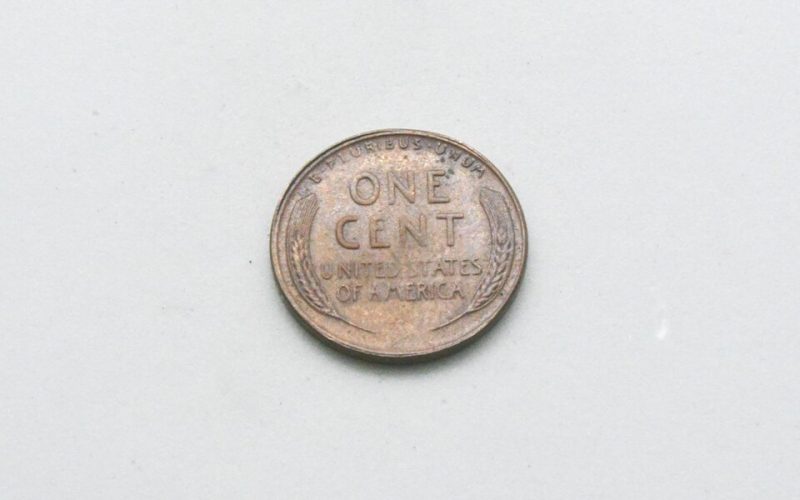 Penny
Penny
1943 Copper Penny Coin Value (Errors List, “D”, “S” & No Mint Mark Worth)
A genuine 1943 copper penny is worth $100,000 to over $1.7 million in 2026. While most 1943 pennies were struck in steel due to wartime…
 Penny
Penny
1914 Wheat Penny Coin Value (Errors List, “D”, “S” & No Mint Mark Worth)
Current 1914 Wheat Penny values: $1-$20+ for no mint mark, $10-$50+ for 1914-S, $150-$5,000+ for 1914-D. Error varieties like Weak D, RPM, Rotated Reverse increase value. Avoid counterfeits.
 Penny
Penny
1918 Penny Coin Value (Errors List, “D”, “S” & No Mint Mark Worth)
A 1918 Lincoln Wheat Penny is worth between $0.50 and $5 in typical circulated condition, but rare examples can sell for thousands of dollars. These…