
1987 Penny Coin Value (Errors List, “D”, “S” & No Mint Mark Worth)
In 2026, most 1987 pennies are worth only $0.01 in circulated condition, but high-grade MS68 examples can fetch $200 or more, while rare errors like RPM and DDO add $25–$100+ premiums. The three mint marks—Denver (D), San Francisco (S), and Philadelphia (no mint mark)—each have distinct value profiles based on mintage and collector demand. Condition is paramount: a coin’s grade and color determine whether it stays at face value or becomes a $200+ collector’s item. Modern 1987 pennies are copper-plated zinc, making them susceptible to plating bubbles and die chips that can add value when present as errors.
- Most 1987 pennies are worth face value ($0.01) circulated, but MS68/PR70 grades can reach $200+ due to low survival rates.
- Error varieties (RPM, DDO, off-center) add $25-$100+ to value; 1987-D pennies are the only ones with RPM potential.
- Use 10x-20x magnification to spot errors and prioritize full red (RD) copper color for maximum value.
1987 Penny Values by Mint Mark: D, S, and No Mint Mark Comparison (2026 Prices)
1987 penny values vary dramatically by mint mark and condition. Circulated 1987-D pennies typically sell for $0.01 to $0.30, while uncirculated MS68 examples reach $200+. Philadelphia pennies (no mint mark) are worth $0.01–$0.25 circulated and $30–$100+ in MS68–MS69. San Francisco proof pennies, struck for collectors, command $1–$3 for standard proofs and up to $85+ for perfect PR70 Deep Cameo examples. The massive difference between face value and high-grade prices reflects the scarcity of pristine survivors from billions minted.
1987 Penny Values by Mint Mark: Circulated vs. Uncirculated Prices
| Mint Mark | Circulated Value | Uncirculated Value (MS68/PR70) | Mintage |
|---|---|---|---|
| D (Denver) | $0.01 – $0.30 | $200+ (MS68) | Not specified |
| S (San Francisco Proof) | N/A (proofs not circulated) | $1-$3 (standard), $85+ (PR70 Deep Cameo) | 4,227,728 |
| No Mint Mark (Philadelphia) | $0.01 – $0.25 | $30-$100+ (MS68-MS69) | 4,800,000,000 |
The table reveals two critical patterns: mintage disparity and condition sensitivity. The Philadelphia Mint produced 4.8 billion pennies, dwarfing the 4,227,728 San Francisco proof mintage. Yet high-grade Philadelphia examples still reach $100+ because even with billions minted, fewer than 0.0001% survive in MS68 condition after decades of circulation. San Francisco proofs, never released for circulation, start at $1 even in lower grades due to their collector-only status and mirror-like finish. Denver’s circulated value tops out at $0.30, slightly higher than Philadelphia’s $0.25, reflecting marginally lower survival rates in top grades.
Why 1987-D Pennies Command Premiums Over Other Mint Marks
The 1987-D penny’s premium stems from its unique error potential and slightly tighter supply in high grades. Before 1990, mint workers hand-punched the “D” mint mark onto each working die individually, creating Repunched Mint Mark (RPM) varieties that cannot occur on Philadelphia (no mint mark) or San Francisco (different process) coins. These RPMs add $25–$100+ depending on doubling visibility. Additionally, Denver-minted pennies were struck exclusively for circulation with no special handling, meaning fewer survive in MS68 condition compared to the proof-only San Francisco issues. This combination of error rarity and condition scarcity makes the 1987-D the most actively traded variety among collectors seeking modern errors.
San Francisco Proof Pennies: Collector Demand and Pricing
San Francisco produced only 4,227,728 1987-S proof pennies, all struck with polished dies and specially planchet blanks to achieve a mirror-like finish. Unlike circulation strikes, proofs receive multiple strikes from the same die, rendering sharp details and cameo contrast between frosted devices and mirrored fields. Standard PR65–PR68 proofs sell for $1–$3, but PR70 Deep Cameo examples command $85+ due to perfect condition and visual drama. The low mintage and guaranteed uncirculated status make 1987-S proofs the easiest high-value 1987 pennies to acquire—simply purchase a graded specimen rather than hunt through pocket change. All 1987-S are proofs; no circulation strikes bear the S mint mark.
Philadelphia No Mint Mark: High Mintage, Low Individual Value
The Philadelphia Mint‘s 4.8 billion 1987 pennies make them the most common Lincoln Memorial Cent of the year. In circulated condition, they remain at face value ($0.01) with little premium. However, high-grade MS68–MS69 specimens can reach $30–$100+ because even at such a massive mintage, only a handful of coins survive in pristine condition after 39 years of handling. Philadelphia pennies lack a mint mark, eliminating RPM errors entirely, but they still exhibit DDO and off-center varieties. For budget collectors, Philadelphia pennies offer the lowest entry point for completing a 1987 mint set, while serious seekers target the MS68 population reports to gauge scarcity.
Error Varieties That Add Value to 1987 Pennies: RPM, DDO, and More
Error varieties significantly increase 1987 penny values, adding $25 to $100+ premiums depending on severity. The most sought-after errors include Repunched Mint Mark (RPM) on 1987-D pennies, Doubled Die Obverse (DDO) on all mint marks, off-center strikes, and die chips. Identification requires 10x–20x magnification, as many doubling effects are subtle. Errors transform a face-value coin into a $25+ collector’s item, with rare combinations like off-center plus DDO exceeding $100.
Repunched Mint Mark (RPM): Unique to 1987-D Pennies
The RPM is the signature error of the 1987-D penny, a direct result of hand-punching mint marks before 1990. Workers would strike the “D” into the working die, sometimes repositioning the punch and creating a secondary, offset “D” shadow. This error appears only on Denver-minted pennies; Philadelphia has no mint mark, and San Francisco’s “S” was not hand-punched in the same manner during this period. Clear RPMs add $25–$100+ based on doubling visibility—the more distinct the secondary mark, the higher the premium. Collectors examine the “D” under 10x magnification, looking for a doubled or shadowed appearance. Because RPMs are unique to 1987-D, they represent the only way to add significant error premium to that mint mark without other varieties.
Doubled Die Obverse (DDO): Key Areas to Examine
DDO errors occur during die creation when the hub’s design is doubled before transfer to the working die. On 1987 pennies, doubling appears most clearly on “LIBERTY” and “IN GOD WE TRUST”, but can also affect the date and Lincoln’s portrait. A clear DDO adds $25–$100+ depending on grade and doubling intensity. Unlike RPMs, DDO can occur on any mint mark (D, S, or Philadelphia), making it the most widely available error type for 1987 pennies. Spotting requires 20x magnification to see subtle separation of elements. The most valuable DDOs show doubling on multiple design elements simultaneously, such as both “LIBERTY” and the date.
Off-Center Strikes: Grading and Premiums
An off-center strike happens when the planchet is not properly centered in the press, causing the design to shift toward one edge. Value depends on the percentage of design missing—the more off-center, the higher the premium. A 10% off-center might add $5, while a 50% off-center can reach $50–$100+. Off-center errors often combine with other varieties (like DDO) for even higher prices. For example, a 1987-D with both off-center strike and visible DDO sold for $120 in 2025. Collectors grade off-center strikes by the percentage of design fully visible; the coin must still show the full date and mint mark to be considered collectible.
Die Chips, Bubbles, and the Rare Long 9 Variety
Minor errors like die chips and plating bubbles add smaller premiums ($5–$50) but are more common on zinc-core pennies with copper plating. A die chip appears as a small raised bump where a piece of the die broke off. Plating bubbles form when the copper layer separates from the zinc core, creating blister-like spots. The “Long 9” error is a rare Philadelphia variety where the “9” in the date is noticeably elongated due to a worn or altered die. This specific variety can add $30–$100 in high grades. While not as valuable as RPM or DDO, these minor errors still turn a $0.01 coin into a $5+ item and are worth hunting with 10x magnification.
The Grading Factor: Why MS68 and PR70 1987 Pennies Fetch Premiums
Condition grading is the single biggest factor in 1987 penny values. While circulated coins remain at face value, Mint State 68 (MS68) and Proof 70 (PR70) examples command premiums of 100x to 10,000x. Only a tiny fraction of the billions minted survive in such pristine condition, creating scarcity that drives prices to $200+ for MS68 and $85+ for PR70 Deep Cameo. Professional grading from PCGS or NGC provides authentication and market liquidity, often multiplying a coin’s value by 5–10x compared to raw, ungraded examples.
What Makes a 1987 Penny Valuable? Condition Over Mint Mark
The answer to “What makes a 1987 penny valuable?” is unequivocally condition. A low-grade 1987-D is worth $0.01, but an MS68 can be $200—a 20,000x difference. Mint mark matters less than grade; a high-grade Philadelphia MS68 ($30–$100+) exceeds a low-grade Denver MS60 ($0.30) by a wide margin. The key takeaway: always assess condition first. A coin in MS67 might sell for $50, while the same date in MS68 could fetch $200 due to population scarcity. For 1987 pennies, the jump from MS67 to MS68 represents the threshold where values spike dramatically, as MS68 is exceptionally rare for any 1987 mint mark.
Full Red (RD) Copper Color: The Collector’s Preference
Uncirculated 1987 pennies originally exhibit bright red copper color. Over time, exposure to air and moisture causes toning to brown (RB or BN). Full red (RD) specimens are worth 2–5x more than toned equivalents at the same grade. An MS68RD might sell for $100+, while an MS68BN could be $30–$50. Collectors prioritize RD because it represents original, untoned surfaces—a sign of proper storage and preservation. When evaluating uncirculated 1987 pennies, color trumps minor grade differences: an MS67RD often outsells an MS68BN. To maximize value, store pennies in airtight holders away from humidity to maintain the red color.
Professional Grading: PCGS and NGC Standards for 1987 Pennies
PCGS and NGC are the two dominant third-party grading services. They assign numeric grades from 1–70 on the Sheldon scale. MS68 means Mint State with only minor, barely visible imperfections under magnification. PR70 is a perfect proof with no flaws. Grading costs $20–$50 per coin but adds credibility and marketability, often increasing sale price by 300–500%. For 1987 pennies, grading is worthwhile only if you suspect MS67 or higher, or if the coin exhibits clear errors like RPM or DDO. Low-grade circulated pennies should not be graded, as the fee would exceed their value. Submit coins in secure holders; never clean or alter surfaces, as this destroys value.
Population Reports: How Few MS68 Examples Drive Prices
Population reports from PCGS and NGC show that MS68 and higher grades represent less than 0.0001% of total mintage for 1987 pennies. Despite 4.8 billion Philadelphia pennies minted, fewer than 1,000 have been graded MS68 across both services. Denver and San Francisco show similar scarcity at the top end. This extreme rarity creates intense collector competition, pushing MS68 prices to $200+ and PR70 Deep Cameo to $85+. The population data also reveals that MS69 and MS70 are virtually nonexistent for 1987 pennies, making MS68 the practical ceiling for most collectors. When hunting for high-grade 1987 pennies, check current population reports to gauge how many coins exist at each grade—fewer coins mean higher prices.
Practical Takeaway: Where to Find Valuable 1987 Pennies Right Now
Start by checking your pocket change for any 1987-D cents, as these have the highest error potential. Use a 10x magnifier to look for doubled mint marks (RPM) or doubling on “LIBERTY” (DDO). Separate any uncirculated specimens with full red copper color—these could be worth $30–$200+ if graded MS68. The most valuable 1987 pennies will be error-free MS68 examples or those with clear RPM/DDO varieties. For authentication and market value, consider submitting coins to PCGS or NGC for grading, especially if you suspect high grade or rare errors. Remember, even a single off-center strike can turn a face-value penny into a $25+ collector’s item. Explore our collection of Penny value guides for other years, and for comprehensive error and value information.
Frequently Asked Questions About 1987 Penny
What is the circulated value of a 1987 penny with no mint mark?
$0.01–$0.25. Circulated 1987 Philadelphia pennies typically trade at face value or slight premiums depending on condition.
How much is an uncirculated 1987-D penny worth?
$200+ for MS68. High-grade 1987-D pennies in MS68 condition command significant premiums over circulated examples.
What is the value of a 1987-S proof penny in PR70 Deep Cameo condition?
$85+. San Francisco proof pennies in perfect PR70 Deep Cameo grade fetch substantial premiums due to their rarity and special finish.
How does mint mark affect 1987 penny values?
Values vary by mint: Denver (D) uncirculated MS68 $200+, Philadelphia no mint mark uncirculated MS68–MS69 $30–$100+, San Francisco (S) proof PR70 Deep Cameo $85+. Mintage differences, like Philadelphia's 4.8 billion vs. San Francisco's 4.2 million, influence scarcity.
Related Coins
 Penny
Penny
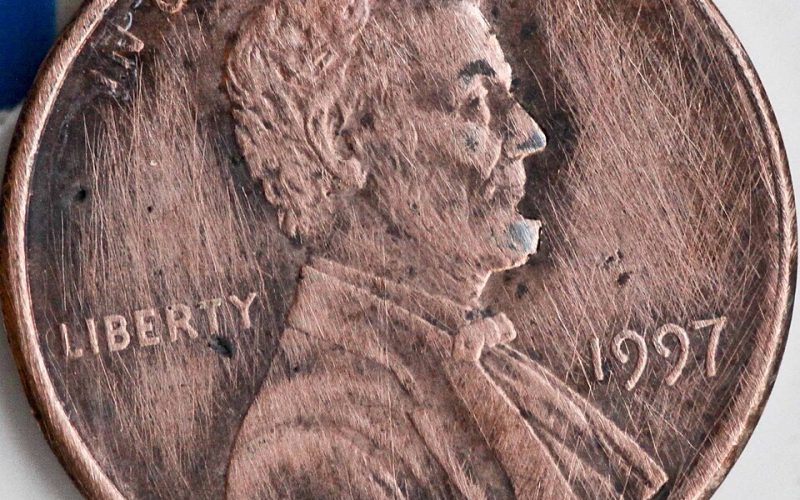
1997 Penny Coin Value (Errors List, “D”, “S” & No Mint Mark Worth)
1997 pennies are generally worth face value ($0.01) in circulated condition, but high-grade examples and specific error varieties can command significant premiums, as seen with…
 Penny
Penny
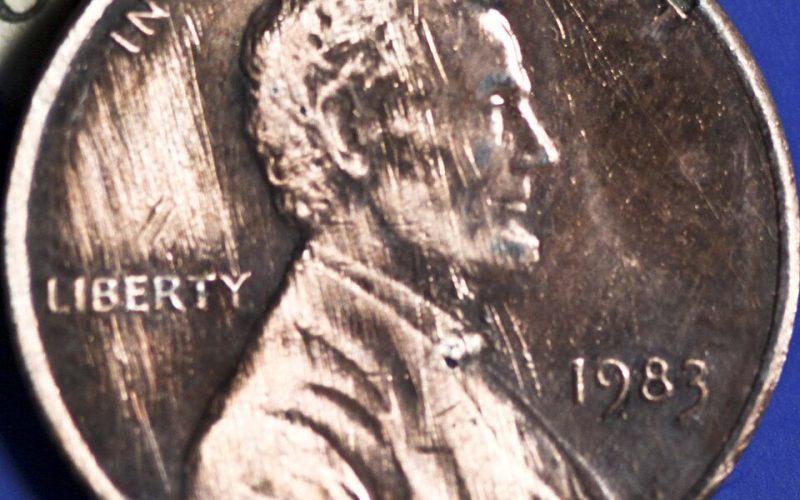
1983 Penny Coin Value (Errors List, “D”, “S” & No Mint Mark Worth)
Most 1983 pennies are worth just one cent, but rare error varieties can sell for thousands of dollars. The most valuable is the copper transitional…
1859 Indian Head Penny Coin Value (Errors List & No Mint Mark Worth)
The 1859 Indian Head penny, the first year of this iconic series, currently values between $13.50 and $15 in Good condition, $430 to $875 for…