
1999 Penny Coin Value (Errors List, “D”, “S” & No Mint Mark Worth)
A 1999 penny is usually worth just one cent, but a rare “Wide AM” error can fetch $10 to $75 or more—with record sales exceeding $100,000. This guide breaks down exactly which 1999 pennies (D, S, no mint mark) are valuable based on errors and condition, using 2026 market data. Most 1999 pennies are common and only worth face value, but specific error varieties and high-grade examples can command significant premiums. Whether you’re checking pocket change or building a collection, knowing what to look for can turn a penny into a small fortune. For a broader overview of penny values across all years, consult our comprehensive Penny value guide.
- The 1999 Wide AM error (spaced “AM” on reverse) is the most valuable variety, typically $10-$75+ for circulated examples.
- Mint marks matter: 1999-D with Double Die Reverse (DDR) error ($7-$30+), 1999-S proofs ($1-$5+), and Philadelphia (no mint) only in high grade (MS67+, $10-$20+).
- Most 1999 pennies are face value unless they exhibit these specific error varieties or are in exceptional condition.
- Always check the reverse for Wide AM spacing and the obverse for mint marks (D, S, or none) to identify potential premiums.
1999 Wide AM Penny Error: The Most Valuable Variety
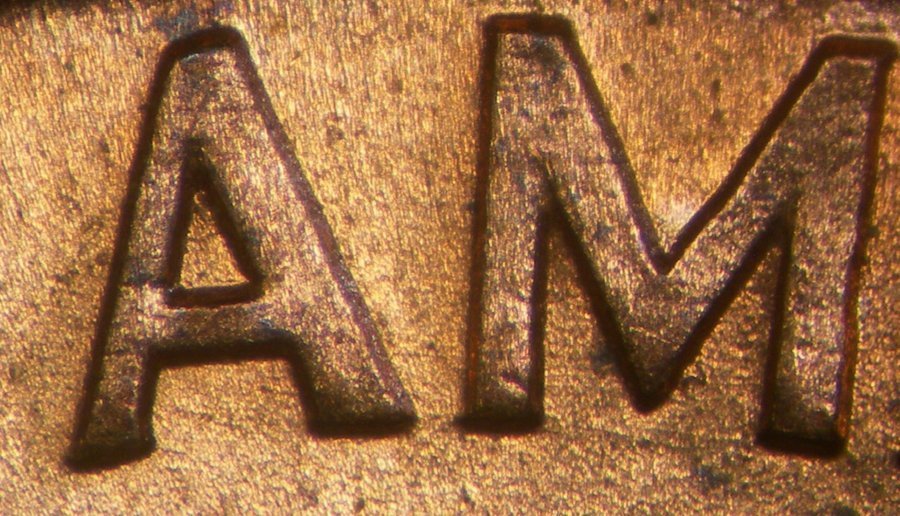
The 1999 Wide AM penny stands as the most valuable and sought-after variety in the entire 1999 Lincoln Memorial cent series. This error occurred exclusively at the Philadelphia Mint (no mint mark) and is characterized by a noticeable gap between the letters “A” and “M” in the word “AMERICA” on the reverse. In contrast, the common “Close AM” variety has these letters touching. The Wide AM is part of a trio of dates (1998, 1999, 2000) that exhibit this spacing, but the 1999 version is the rarest of the three, making it a key modern error. Collectors prize it for its distinct appearance and scarcity; finding one in circulation is a rare event. According to market analysis, it is considered the most rare and valuable 1999 penny variety. The error resulted from a misaligned die during production, which was quickly corrected, limiting the number of Wide AM coins released. For anyone sorting 1999 pennies, this is the primary variety to look for, as it transforms an ordinary cent into a collectible worth tens or even hundreds of dollars.
What Is the 1999 Wide AM Error?
The 1999 Wide AM error is a minting mistake that appears on the reverse (tails) side of the coin. The word “AMERICA” is inscribed along the upper rim, and in the Wide AM variety, the letters “A” and “M” are spaced apart—there is a clear gap between them. This spacing is not present on the standard Close AM version, where the two letters touch. The error occurred only on pennies struck at the Philadelphia Mint in 1999, meaning these coins have no mint mark on the obverse. The cause was a die that was not properly aligned during the hubbing process, creating a slightly widened spacing for those specific letters. This variety was not recognized immediately, so many Wide AM coins entered circulation before collectors identified them. Today, they are cataloged as a distinct and valuable error. To identify one, use a magnifying glass or loupe: examine the spacing between the A and M in AMERICA. If you see a gap, you have a Wide AM. This simple check can reveal a coin worth many times its face value. The error is subtle but unmistakable once you know what to look for, and it remains one of the most exciting modern finds for coin roll hunters.
1999 Wide AM Value: $10 to $75+ Typically
The standard market value for a 1999 Wide AM penny in circulated condition ranges from $10 to $75+, depending on grade and visual appeal. Coins in higher mint states, such as MS-65 or better, can reach the upper end of this range or exceed it. The wide spacing between the A and M is the sole identifier; all other design elements are normal. While these prices represent typical dealer and auction listings, exceptional examples have commanded much higher sums. For instance, a record sale of $138,000 was reported for a pristine, professionally graded specimen (result 11). However, such prices are reserved for coins in perfect condition with certification from major grading services like PCGS or NGC. For the average collector, finding a Wide AM in circulation is already a rare event; finding one in top condition is even rarer. Most examples trade within the $10-$75 range, making it an accessible yet valuable error for those who know what to look for. Condition is critical: a heavily worn Wide AM might be worth only $10, while a sharp uncirculated example could be $75 or more. Market demand for this variety remains strong in 2026, driven by its status as a key modern error.
Can a 1999 Wide AM Penny Reach $10,000?
The question of whether a 1999 Wide AM penny can reach $10,000 is common among collectors. The answer is yes, but with important caveats. Compare typical values: a circulated Wide AM sells for $10-$75, while high-grade uncirculated examples can reach $100-$300 or more. However, the record auction price of $138,000 (result 11) demonstrates that five-figure sums are possible. To achieve $10,000+, the coin must be in exceptional condition, typically graded MS-67 or higher by PCGS or NGC, with perfect strike, luster, and no flaws. Such coins are extraordinarily rare; most 1999 Wide AM pennies are found in lower grades due to handling and circulation. Additionally, the coin must be properly attributed and certified to command such premiums. In practice, $10,000 is at the high end of the spectrum, with most sales occurring in the $10-$75 range for average examples. The $138,000 sale represents a near-perfect, museum-quality coin that is an outlier. For most collectors, the realistic goal is to find a Wide AM in any condition, which already carries a premium over face value. But if you suspect you have a high-grade example, professional grading is essential to unlock its full potential.
Which 1999 Penny Mint Marks Are Worth Money?
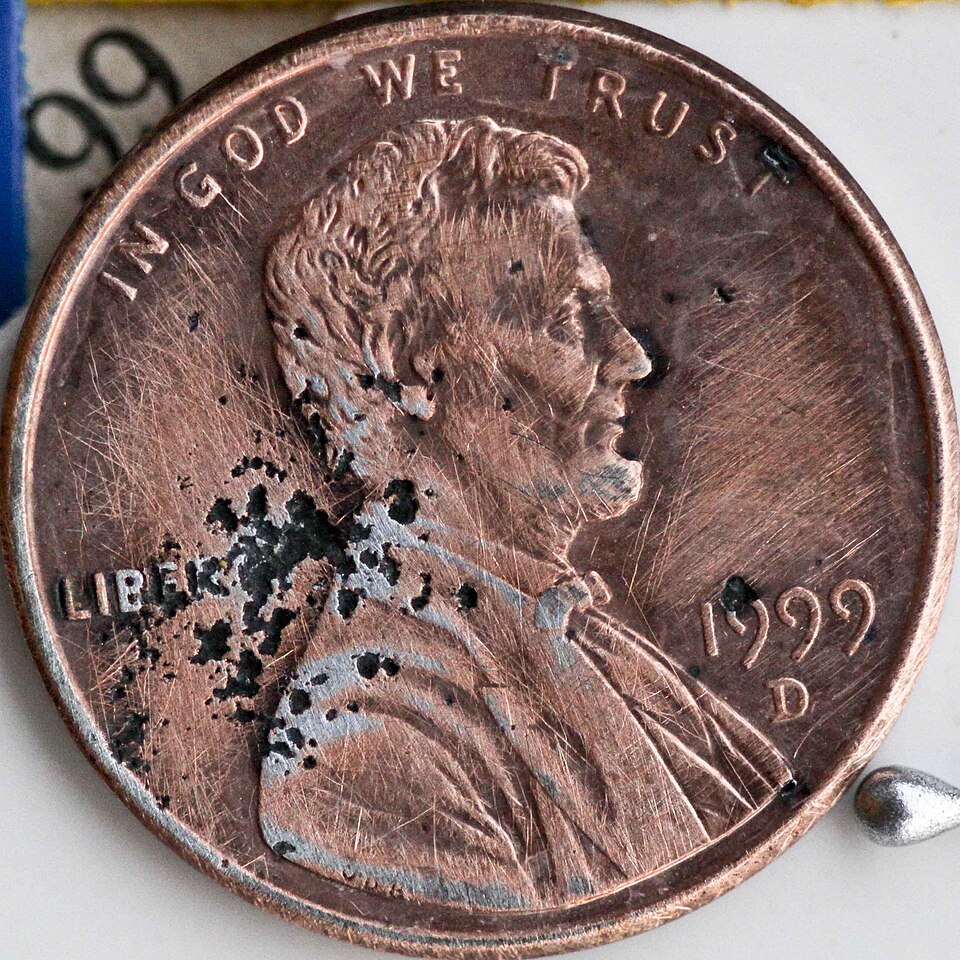
Understanding mint marks is crucial for evaluating 1999 pennies. The three mint marks that appear on 1999 Lincoln Memorial cents are “D” for Denver, “S” for San Francisco (proof only), and no mint mark for Philadelphia. Each has different value drivers. Regular circulation strikes from Denver and Philadelphia are common and usually worth only one cent unless they possess specific errors. The San Francisco proof is a collector-only issue that carries a baseline premium. The key is to recognize which mint marks, combined with errors or condition, create value. According to 2026 market data, only Denver coins with a Double Die Reverse (DDR) error, San Francisco proofs, and Philadelphia coins in high grade or with the Wide AM error exceed face value. All other 1999 pennies, regardless of mint mark, are worth minimal amounts unless they exhibit exceptional preservation. This section breaks down the value potential for each mint mark, highlighting the specific varieties that matter.
What Makes a 1999-D Penny Valuable? The DDR Error
Regular 1999-D pennies are abundant and typically worth only face value. The valuable variety is the Double Die Reverse (DDR) error. This occurs when the die used to strike the reverse side is doubled, creating a noticeable thickness or doubling on certain letters.
Key identification features:
- Thick, doubled letters on “ONE”, “CENT”, and “AMERICA”
- Extra serif on the ‘N’ and ‘T’ of “CENT”
- Doubling on the ‘R’ of “AMERICA”
The DDR error on 1999-D pennies is rare but not as scarce as the Wide AM. According to 2026 market data, values range from $7 to $30+ depending on grade and the severity of doubling. Higher grades (MS-63 and above) command premiums. To spot a DDR, compare your coin to known examples using magnification; the doubling is often subtle but visible on the lower part of the letters. This error adds significant value to an otherwise common coin. Not all 1999-D pennies have DDR; it’s a specific variety that represents a small fraction of the mintage. If you find a 1999-D, check the reverse carefully for doubling before dismissing it as face value.
1999-S Proof Penny: Collector Value $1-$5+
The 1999-S penny is a proof coin struck at the San Francisco Mint exclusively for collectors. These coins bear the “S” mint mark on the obverse below the date. Proof coins are produced with specially polished dies and planchets, resulting in sharp details, frosted devices, and mirror-like fields. They are never released into circulation and are sold in special mint sets or as individual proofs. As such, they are inherently more valuable than their circulation-struck counterparts. In 2026, a typical 1999-S proof in good condition sells for $1 to $5+. The exact price depends on the coin’s grade, with higher grades (PR-65 and above) and deep cameo contrast fetching premiums. Proof pennies are popular among collectors completing date and mint mark sets. Their value is stable and primarily driven by collector demand rather than rarity, as mintage numbers are relatively high compared to error varieties. If you have a 1999-S proof, it’s worth at least a few dollars, and proper storage in a protective holder can preserve its condition and value over time.
1999 Philadelphia (No Mint Mark): High-Grade Only
Pennies with no mint mark were produced at the Philadelphia Mint and are the most common 1999 Lincoln Memorial cents. In everyday circulation, they are worth exactly one cent. However, two factors can increase their value: the Wide AM error (covered in the first section) and exceptional condition. For a regular 1999 Philadelphia penny without errors, only those graded MS67 or higher by major services like PCGS or NGC consistently sell for premiums. In 2026, such high-grade examples fetch $10 to $20+. Achieving MS67 on a modern coin is difficult because the zinc-core planchets are prone to handling marks and striking issues. Most uncirculated 1999 pennies grade around MS-63 to MS-65, which are still relatively common and not worth much above face value. Therefore, if you have a 1999 no-mint-mark penny, first check for the Wide AM spacing. If it’s a Close AM, then only consider it valuable if it’s in truly outstanding condition with a professional grade of MS67 or better.
How Condition Affects 1999 Penny Value
For modern coins like the 1999 penny, condition is often the deciding factor between face value and a collector premium. While error varieties like Wide AM or DDR add significant value regardless of grade, for regular strikes, the grade is everything. The Sheldon scale, ranging from Poor (P-1) to Perfect Mint State (MS-70), quantifies a coin’s state of preservation. Uncirculated coins (MS-60 and above) are much rarer than circulated ones because they have never been in general circulation. Even a small improvement in grade can mean a large price difference. For example, a 1999-D penny in MS-63 might be worth $1, while the same coin in MS-67 could be $5 or more. This is because high-grade modern coins require perfect striking, flawless surfaces, and no contact marks—criteria that are hard to meet due to mass production and handling. Collectors seeking high-grade examples for registry sets or investment purposes drive demand for top-condition coins. In 2026, the market values condition highly, especially for mint marks that are otherwise common. Therefore, when evaluating any 1999 penny, always consider its grade alongside mint mark and error status.
1999 Philadelphia Penny: MS67+ Unlocks $10-$20+ Value
Specifically for the 1999 Philadelphia (no mint mark) penny without errors, the grade threshold for realizing a premium is MS67 or higher. According to 2026 market data, coins graded MS67 by PCGS or NGC typically sell for $10 to $20+. This premium exists because MS67 is exceptionally rare for this date and mint. The zinc-core planchets used since 1982 are soft and prone to bag marks and scratches, making it difficult to find examples in pristine condition. Even coins that appear uncirculated to the naked eye often grade below MS67 under magnification. Lower grades, such as MS65 or MS66, may only fetch $1-$2, if any premium at all. The jump from MS66 to MS67 is substantial in both scarcity and value. If you believe your 1999 no-mint-mark penny is in outstanding condition, professional grading is recommended to verify its grade and potentially unlock the $10-$20+ value. Without certification, buyers may be hesitant to pay a premium due to the risk of overgrading.
The odds of finding a 1999 Wide AM penny in your change are estimated at less than 1 in 10,000, and finding one in MS67+ condition is perhaps 1 in a million. Yet that one penny could be worth $138,000. This dramatic contrast highlights the importance of checking your coins. Action step: Take all 1999 pennies from your pocket change, examine the reverse under a magnifier for spaced “AM” letters, and note the mint mark on the obverse (D, S, or none). If you suspect a Wide AM or a high-grade example, contact a professional grading service like PCGS or NGC for authentication and valuation. For more on penny values across different years, explore our comprehensive Penny value guide, which covers everything from Indian Head pennies to modern zinc issues. You may also be interested in our guides to error varieties and values.
Related Coins
 Penny
Penny
1955 Wheat Penny Coin Value (Errors List, “D”, “S” & No Mint Mark Worth)
1955 wheat penny value ranges from $0.10 to $288,000. See current prices by mint mark (D, S, no mark) and errors like Doubled Die Obverse. Full 2026 guide.
 Penny
Penny
1926 Wheat Penny Coin Value (Errors List, “D”, “S” & No Mint Mark Worth)
Complete 2026 value guide for 1926 Wheat Pennies. Current prices for D, S, and no mint mark varieties. Error coins like Capped Die and Off-Center strikes valued up to $600+.
 Penny
Penny
1994 Penny Coin Value (Errors List, “D”, “S” & No Mint Mark Worth)
1994 Penny Coin Value (Errors List, “D”, “S” & No Mint Mark Worth) A 1994 penny is generally worth face value ($0.01) in circulated condition,…