
1901 Indian Head Penny Coin Value (Errors List & No Mint Mark Worth)
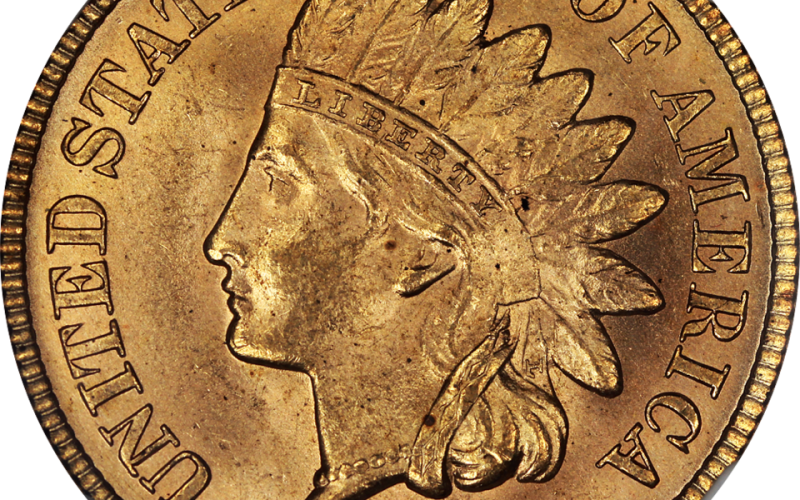
A 1901 Indian Head penny is typically worth $1–$3 in circulated condition, rising to $35–$150+ for uncirculated examples, with rare errors fetching $50 to $600+. All 79,609,158 of these cents were struck at the Philadelphia Mint with no mint mark, making them common in circulated grades but highly collectible in pristine condition. Error varieties like die cracks, off-center strikes, and doubled dies can dramatically increase value, while color (red vs. brown) and professional grading play crucial roles in determining worth.
- Circulated 1901 Indian Head pennies typically fetch $1-$3, while uncirculated MS examples range from $35 to $150+ depending on color and grade.
- Error varieties like die cracks ($50-$180), off-center strikes ($100+), and doubled dies can significantly increase value.
- All 1901 pennies were struck at Philadelphia (no mint mark) with a mintage of 79.6 million, but high-grade red (RD) specimens are sought after by collectors.
1901 Indian Head Penny Values: What Condition Means for Your Coin’s Worth
According to CoinWeek (2024), at the MS64 grade level, red (RD) and red-brown (RB) examples of the 1901 Indian Head penny are worth $200 to $300, while brown (BN) examples sell for $100 to $150.
Condition is the primary driver of value for any 1901 Indian Head penny. With nearly 80 million minted, most surviving coins show wear from circulation. However, uncirculated examples with original mint luster command premiums, and color designations further refine pricing. Understanding the Sheldon grading scale and color hierarchy helps collectors accurately assess their coin’s market potential.
Condition Grade Values: From Good to Mint State
| Condition Grade | Value Range | Notes |
|---|---|---|
| Good (G) / Fine (F) | $1–$4 | Light to moderate wear; major details remain clear |
| Very Fine (VF) / Extremely Fine (EF) | $6–$15 | Moderate wear with some original luster possible |
| Mint State (MS-60 to MS-63) | $45–$100 | Uncirculated but may have contact marks or minor flaws |
| Mint State (MS-64 to MS-65) | $100–$300+ | High-grade with good luster; color affects final price |
| Mint State (MS-66) BN | ~$600 | Exceptional brown example (as of August 2023) |
Values fluctuate based on market demand and specific coin attributes. A 1901 Indian Head penny in average circulated condition typically sells for $1–$3, while uncirculated examples start around $35 and can exceed $150 for top grades with original color. The MS66 BN price of $600 demonstrates how high grade can overcome color limitations.
Color Designation: Red (RD) vs Red-Brown (RB) vs Brown (BN)
- Red (RD): Original mint red luster intact. Most valuable color designation. At MS64, RD examples reach $200–$300.
- Red-Brown (RB): Partial red with brown toning. Mid-range value. MS64 RB also falls in the $200–$300 range.
- Brown (BN): Fully toned brown. Least valuable for mint state, but high grades still command premiums. MS64 BN: $100–$150. MS66 BN: $600.
Original luster and color are critical; cleaning or harsh toning reduces value drastically. Collectors prioritize coins with undisturbed original surfaces. A 1901 Indian Head penny in MS65 RD can be worth double or triple the same grade in BN, highlighting color’s importance.
How to Grade a 1901 Indian Head Penny
Grading assesses wear, luster, contact marks, and overall eye appeal. The Sheldon scale (1–70) is standard, with Mint State (MS) indicating no circulation wear. Begin by examining high points (Indian’s cheek, hair, and lettering) for signs of friction. Luster should be visible under good lighting; dull surfaces suggest cleaning or heavy wear. Contact marks from storage or other coins affect grade, especially in MS63 and below.
Never clean a coin—it reduces value by up to 90% according to experts. Even gentle cleaning can damage original surfaces. For coins suspected to be high-grade (MS64+), professional grading from services like PCGS or NGC adds credibility and marketability. A 1901 Indian Head penny in MS65 RD may sell for $200–$300 raw, but a graded example with certification often achieves higher prices at auction.
1901 Penny Errors: Die Cracks, Off-Center, and Doubled Die Obverse
Error varieties on the 1901 Indian Head penny can increase value from $50 to $600+, with die cracks, off-center strikes, and doubled dies being the most sought after; the 1890 Indian Head penny similarly features valuable error varieties. While the majority of 1901 pennies are common, minting mistakes create scarcity within the error niche. Identifying these errors requires careful examination, but the premium can be substantial compared to normal examples.
Die Crack Errors: $50 to $180 Premiums
Die cracks occur when the steel die develops a fracture during use. On 1901 pennies, these appear as raised lines on the coin surface. Value depends on crack size, location, and overall condition.
- Hairline die cracks: Thin, less noticeable. Value at lower end: $50–$80.
- Prominent die cracks: Thick, clearly visible, especially around lettering or design elements. Value $100–$180.
- Location matters: Cracks near key features (like “LIBERTY” or the date) add more value.
Die cracks are relatively common, but prominent examples in high-grade coins fetch the strongest premiums. According to CoinValueApp (2026), die crack errors on 1901 pennies typically sell for $50 to $180, with the exact price depending on how prominent the crack appears and the overall coin condition.
Off-Center Strikes and Doubled Dies: $100+ Values
| Error Type | Identification | Value Range | Rarity |
|---|---|---|---|
| Off-Center Strike | Coin not centered; design shifted from center; lettering may be cut off on one side | $100+ (slightly off-center) to $300+ (severely off-center) | Common but desirable in error collections |
| Doubled Die Obverse (DDO) | Doubling visible on “LIBERTY” or the date; letters appear shadowed or duplicated | $100+ for moderate doubling; $300+ for dramatic doubling | Rare to very rare depending on severity |
Off-center strikes happen when the coin blank is not properly positioned in the press. Even a slight shift can add $100+ to value. Doubled die obverse (DDO) results from a misaligned die hub during creation, causing duplication of design elements. Look for doubling on “LIBERTY” or the date. Both errors are highly sought after and can transform a common 1901 penny into a valuable collectible.
How to Identify a Rare 1901 Penny Error
- Clean the coin gently: Use mild soap and water to remove dirt. Avoid harsh cleaning or polishing, which destroys value.
- Use 10x magnification: A loupe helps spot subtle doubling, cracks, or strike issues invisible to the naked eye.
- Check the date and lettering: Look for doubling on “LIBERTY” or the date. Compare letters to see if any appear shadowed or duplicated.
- Inspect the edges: Off-center strikes show uneven spacing between design and rim. Use a ruler or caliper if needed.
- Examine the entire surface: Look for die cracks, especially around lettering, the Indian’s head, or the wreath. Also check for strike-through errors (missing details from debris).
- Compare to known normal examples: Use reference images from reputable sources like CoinWeek or USA Coin Book to spot abnormalities.
Subtle errors can be valuable, so careful inspection is worthwhile. Many valuable error coins are found in everyday collections because the flaws are not immediately obvious without close examination.
What Wheat Penny is Worth $100,000? A Quick Comparison
A common question among collectors is which wheat penny reaches $100,000. The answer is the 1943 copper wheat penny, a rare planchet error where copper planchets were mistakenly used during wartime steel production. Only about 40 are known, and they can exceed $100,000 at auction. This contrasts sharply with 1901 Indian Head errors, which max around $600 even in exceptional grades, while the 1893 Indian Head penny has its own error values depending on variety. The 1943 copper’s value stems from extreme rarity due to historical circumstances, while 1901 errors are limited by mintage and condition. Different error types have different scarcity factors; the 1901’s most valuable errors are still die-related, not planchet errors like the 1943 copper.
1901 Indian Head Penny Mintage: 79.6 Million and the No Mint Mark Story
The 1901 Indian Head penny’s high mintage of 79,609,158 makes it a common date in the series; in contrast, the 1889 Indian Head penny had a lower mintage. All were struck at the Philadelphia Mint with no mint mark, as was standard for cents until 1980. While this abundance keeps circulated values low, high-grade examples and errors create opportunities for collectors. Understanding the minting context clarifies why “no mint mark” is normal and not a special variety.
1901 Mintage: 79.6 Million Coins and Common Status
With nearly 80 million produced, the 1901 is not a ‘key date’ like the 1877 or 1909-S; for instance, the 1863 Indian Head penny has different value dynamics. Its abundance in circulated grades means most examples sell for $1–$3. However, high-grade original red (RD) specimens are sought after because few survived over a century without wear. The survival rate in MS65+ is low, creating a niche market for pristine coins. A 1901 Indian Head penny in MS66 BN sold for around $600 as of August 2023, proving that condition can overcome commonness. The phrase “common but condition is king” perfectly describes this coin.
Philadelphia Mint: Why No Mint Mark?
All 1901 pennies were minted at the Philadelphia Mint, while other dates such as the 1888 Indian Head penny were struck at multiple mints with mint marks. Until 1980, Philadelphia did not use mint marks on cents; the ‘P’ mint mark is a modern addition for some commemoratives but was absent on regular issue coins of 1901. Therefore, a 1901 Indian Head penny with no mint mark is completely standard. It does not indicate a special variety or error. Some collectors mistakenly think no mint mark implies Philadelphia, but that was simply the practice at the time. The absence of a mint mark is a neutral characteristic, not a value driver.
Proof vs Circulation: The $245+ Premium
| Feature | Proof | Circulation |
|---|---|---|
| Value | ~$245+ | $1–$3 (circulated) |
| Details | Sharper, more defined | Worn, less detail |
| Fields | Mirror-like, highly reflective | Dull, matte |
| Rarity | Scarcer (only a few thousand minted) | Common (79.6 million) |
| Purpose | Made for collectors and presentation | General circulation |
Proof coins were struck with specially polished dies and planchets, resulting in superior detail and finish. The 1901 Proof Indian Head penny sells for $245+, a significant premium over circulated examples. These were not intended for everyday use but for collectors and exhibition. The contrast between proof and circulation strikes illustrates how minting method affects value independent of date or mint mark. A 1901 Proof in MS65 RD can exceed $300, while a circulated coin in similar color might be worth only a few dollars.
Despite 79.6 million minted, a 1901 Indian Head penny can be worth $600 if it’s a high-grade error or exceptional mint state. The key is to examine your coins carefully for errors, color, and condition. Never clean a coin—it destroys up to 90% of its value. If you suspect a high grade or valuable error, consider professional grading from a reputable service. For a broader view of Indian Head penny values across all years, explore the main Penny guide. Other dates like the (a key date) or the offer different value dynamics worth comparing.
Related Coins
1987 Penny Coin Value (Errors List, “D”, “S” & No Mint Mark Worth)
In 2026, most 1987 pennies are worth only $0.01 in circulated condition, but high-grade MS68 examples can fetch $200 or more, while rare errors like…
 Penny
Penny
1909 Indian Head Penny Coin Value (Errors List, “S” & No Mint Mark Worth)
Get 2026 values for 1909 Indian Head pennies. Compare 1909-S ($350-$20,000+) vs no mint mark ($4-$1,100+). Learn about S over Horizontal S errors and grading. Current prices.
1904 Indian Head Penny Coin Value (Errors List & No Mint Mark Worth)
A 1904 Indian Head penny in average circulated condition sells for just $1 to $5 in 2026, but a pristine MS-67 Red specimen can command…