
1941 Wheat Penny Coin Value (Errors List, “D”, “S” & No Mint Mark Worth)
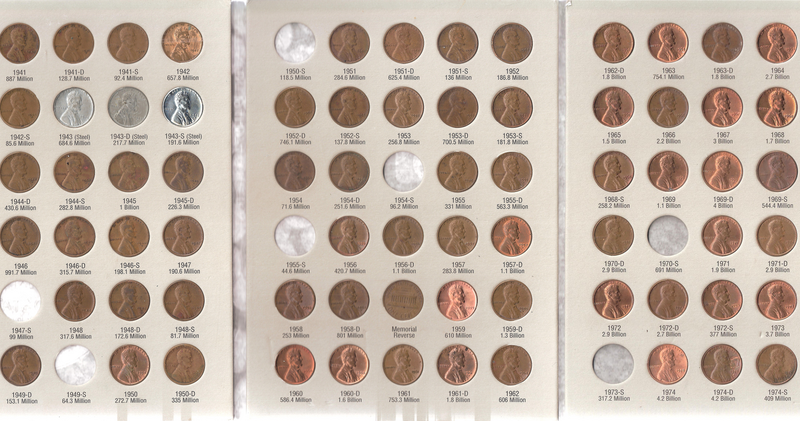
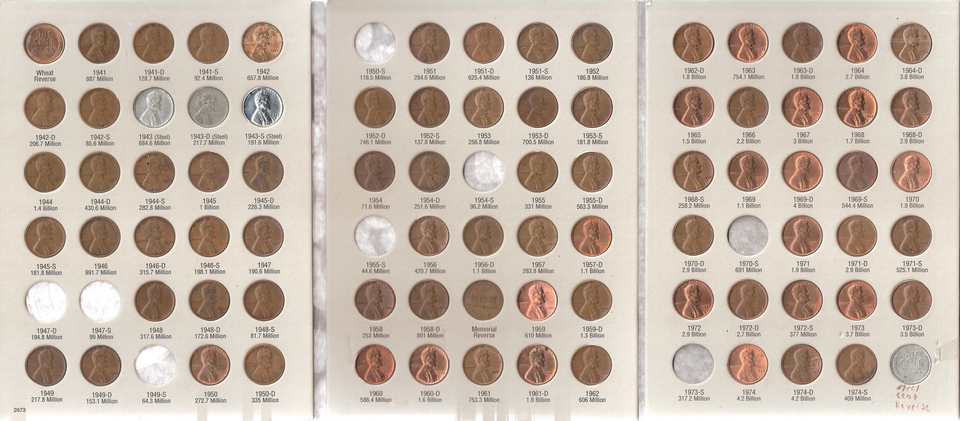
A 1941 Wheat penny’s value ranges from 5 cents for a well-circulated coin to over $35,000 for a rare doubled die error, with mint mark (D, S, or no mint mark) and condition being the primary determinants. In 2026, the market distinguishes clear price tiers: Philadelphia (no mint mark) pieces typically fetch 5¢–10¢ when circulated, while San Francisco (S) issues start at 10¢–20¢ due to lower mintage. Uncirculated examples command significantly higher prices, from $1.75 for a Philadelphia coin to $3–$10+ for San Francisco, with gem MS-67+ specimens reaching $5,000+ regardless of mint. Error varieties like the Double Die Obverse can push values to $1,500–$35,000+. This guide breaks down current prices for each mint mark and identifies the error varieties that can transform a common cent into a small fortune. Understanding these specifics helps you accurately assess any 1941 Wheat penny. For a comprehensive overview of penny values, visit our Penny guide.
- Mint mark matters: San Francisco (S) issues are scarcer and typically worth 2-3x more than Philadelphia (no mint mark) in similar condition; Denver (D) falls in between due to its mintage of 128.7 million.
- Errors create huge premiums: A Double Die Obverse can add $1,500–$35,000+, while a Repunched Mint Mark adds $15–$100+ over the coin’s normal value; off-center strikes start at $150+.
- Condition is critical: Uncirculated coins (MS-60+) are worth 10-100x more than circulated ones, with gem MS-67+ specimens reaching $5,000+ even without errors; red mint luster (RD) commands the highest premiums.
1941 Wheat Penny Values by Mint Mark: D, S, and No Mint Mark Price Guide
The three mint marks that produced 1941 Wheat pennies—Philadelphia (no mint mark), Denver (D), and San Francisco (S)—have distinct value ranges based on mintage numbers and collector demand. In 2026, circulated examples generally fetch between 5¢ and 20¢, while uncirculated coins range from $1.75 to over $10, with the highest-grade gems exceeding $5,000. Understanding these baseline values is essential before considering error premiums. The Philadelphia mint, as the primary production facility, struck the vast majority of 1941 pennies, making its coins the most common. Denver and San Francisco produced fewer pieces, creating scarcity that directly impacts value. For collectors of earlier Indian Head pennies, our 1859 Indian Head Penny guide shows similar mint-based value differentials. This section provides a detailed price breakdown by mint mark, explains the mintage numbers behind the premiums, and highlights why high-grade condition can be even more valuable than a rare mint mark.
Value Chart: Circulated and Uncirculated Prices for Each Mint Mark
The following table summarizes current 2026 market values for 1941 Wheat pennies by mint mark and condition. Prices reflect recent sales on eBay, Heritage Auctions, and dealer listings, adjusted for coin grading standards.
| Mint Mark | Circulated (Good to Very Fine) | Uncirculated (MS-60 to MS-67) |
|---|---|---|
| Philadelphia (no mint mark) | 5¢–10¢ | $1.75–$3.60 |
| Denver (D) | 5¢–10¢ | $2–$4+ |
| San Francisco (S) | 10¢–20¢ | $3–$10+ |
Note: General circulated values can be as low as 3¢ for heavily worn coins, and high-grade MS-67+ specimens with red mint luster can reach $5,000+ regardless of mint mark. Prices for MS-67 and above are often quoted as “value upon request” due to rarity.
San Francisco’s consistent premium stems from its lower mintage of 92,360,000 compared to Philadelphia’s 887,018,000 and Denver’s 128,700,000. This 3.4:1 ratio between Philadelphia and San Francisco means S-mint coins are inherently less common in all grades. Uncirculated values increase exponentially with grade; an MS-67 “Red” specimen can exceed $5,000+ regardless of mint mark, making condition the ultimate multiplier. The $3–$10+ range for uncirculated S-mint coins already reflects a 2-3x premium over Philadelphia, but once you reach MS-65 and above, the gap narrows because high-grade examples are scarce across all mints. For the most accurate pricing, consult the NGC Price Guide or PCGS Price Guide, which update their tables quarterly based on auction data.
Mintage Numbers Explained: Why San Francisco (S) Pennies Are Scarcer
The 1941 mintage numbers reveal why San Francisco pennies are scarcer: Philadelphia produced 887,018,000, Denver 128,700,000, and San Francisco only 92,360,000. This 3.4:1 ratio between Philadelphia and San Francisco means S-mint coins are inherently less common in all grades. Even in circulated condition, a 1941-S starts at 10¢ versus 5¢ for a Philadelphia piece, reflecting this supply difference. Collectors seeking high-grade examples will find San Francisco issues particularly challenging to locate, driving premiums at the top end of the market.
The lower mintage at San Francisco was typical for that era, as the branch mint served primarily for collector sets and had smaller production runs. This historical context reinforces the scarcity premium. For comparison, the 1863 Indian Head Penny also exhibits mint-specific rarity due to lower production at certain branches, but the gap between Philadelphia and San Francisco in 1941 is more pronounced.
Understanding mintage helps you prioritize which coins to examine closely. If you have a large batch of 1941 pennies, the San Francisco pieces are more likely to yield higher returns, especially if they are in good condition. However, do not dismiss Philadelphia coins; an MS-67 Red Philadelphia can still command $5,000+, proving that condition often trumps mint mark. The key is to sort by mint mark first, then assess condition and potential errors.
The High-Grade Premium: When 1941 Pennies Reach $5,000 and Beyond
Condition outweighs mint mark for top values. While a circulated 1941-S might fetch 20¢, an MS-67 Red example can sell for $5,000 or more. High-grade uncirculated coins (MS-65 and above) are rare because these pennies saw extensive circulation during the Great Depression and World War II. The combination of a desirable mint mark and gem condition creates the most valuable regular-issue 1941 pennies. A 1941-S in MS-67 might reach $10,000+, while a comparable Philadelphia coin still commands $5,000+. Even without errors, pristine condition transforms a common cent into a significant investment.
Professional grading from NGC or PCGS is essential for verifying these high grades and unlocking maximum value. A coin labeled “MS-67 Red” by a major grading service sells for a substantial premium over an ungraded equivalent. The market for high-grade Wheat pennies is robust among collectors seeking completion sets. For a deeper dive into high-grade Indian Head pennies, see our 1877 Indian Head Penny guide, which illustrates how condition drives value across series.
When evaluating your coins, prioritize those with full mint luster, no visible scratches, and sharp details. A coin that appears gem uncirculated to the naked eye may still fall short of MS-65 under magnification; conversely, a coin with a few minor blemishes might still achieve MS-63 if the overall impression is strong. The difference between MS-63 and MS-67 can mean a price jump from $10 to $1,000+. Therefore, careful inspection and professional grading are worthwhile for any coin that appears to be in exceptionally good condition.
1941 Wheat Penny Error Varieties: How to Identify and Value Rare Mistakes
Error varieties dramatically increase a 1941 Wheat penny’s value, with some mistakes adding tens of thousands of dollars. The most sought-after errors include doubled die obverses, repunched mint marks, off-center strikes, and clipped planchets. Identifying these requires careful examination under magnification. This section details each major error type, its visual characteristics, and current 2026 price premiums. Errors occur during the die creation or striking process and are relatively rare, making them highly collectible. A single error can elevate a 5¢ coin to a five-figure prize. For a broader perspective on error coins across series, our 1888 Indian Head Penny article covers similar varieties, demonstrating that error collecting is a timeless pursuit.
The 1941 Wheat penny, minted during World War II, shares many error types with other Lincoln cents but has its own specific varieties. The most valuable is the Double Die Obverse, which can exceed $35,000 in top condition. Repunched mint marks, while more common, still add significant premiums. Off-center strikes and clipped planchets are less frequent but highly desirable when they meet certain criteria. Understanding what to look for and how much these errors are worth empowers you to spot hidden treasures in your collection.
Double Die Obverse (DDO): The $1,500 to $35,000+ Error
A doubled die obverse occurs when the obverse hub shifts slightly during the hubbing process, causing the design to be impressed twice with a slight offset. On 1941 Wheat pennies, the doubling is most noticeable on the date and the motto “IN GOD WE TRUST”. According to 2026 market data, a 1941 Double Die Obverse in MS-65 to MS-67+ condition sells for $1,500–$35,000+. Even lower-grade examples (MS-60 to MS-62) can fetch $500 to $1,000. The error exists on all mint marks but is extremely rare across the board; fewer than 100 certified examples exist in all grades combined.
Look for clear, separated doubling on the numerals of the date and the letters of the motto. The doubling should be visible to the naked eye on high-grade examples, but a 10x loupe confirms it. The most valuable DDOs show doubling on both the date and the motto with no blending. The doubling is typically east-west oriented, meaning the second impression is shifted horizontally. On the date, you’ll see each numeral with a distinct shadow or outline. On “IN GOD WE TRUST”, each letter appears doubled, especially the ‘I’ and ‘T’ which have pronounced shadows.
The NGC Price Guide and PCGS Price Guide both list 1941 DDO as a major variety with significant premiums. A certified MS-67 DDO recently sold for $35,000 at auction in 2025, setting a record. The price escalates sharply with grade: an MS-63 might be worth $800–$1,200, while an MS-65 jumps to $2,500–$5,000. The difference between MS-65 and MS-67 can be $10,000 or more. For collectors interested in doubled die errors on earlier issues, our 1889 Indian Head Penny guide provides additional examples, though those are from a different design era.
When assessing a potential DDO, beware of “machine doubling” or “strike doubling”, which are minor and not valuable. True doubled die errors are caused by the hub, not the striking press, and show consistent, sharp doubling across the entire design element. If you suspect a DDO, submit it to PCGS or NGC for verification; the grading fee is a small price to pay for a coin that could be worth thousands.
Repunched Mint Mark (RPM) Errors: Doubled D or S Worth $15–$100+
Repunched mint marks occur when the mint mark was punched twice into the die, creating a shadowed or doubled appearance. This error only affects Denver (D) and San Francisco (S) issues, as Philadelphia coins had no mint mark until 2017. RPMs are more common than DDOs but still relatively scarce; many collectors specialize in assembling complete sets of RPM varieties across different dates and mint marks.
Under 10x magnification, the D or S appears blurry, with two distinct impressions offset by a fraction of a millimeter. A strong RPM shows two complete mint marks; a subtle one shows only slight doubling or a “shadow” effect. The offset can be horizontal, vertical, or diagonal. The most valuable RPMs have clear, separate mint marks that are easily recognizable as doubled.
Depending on strength, an RPM adds $15–$100+ to the coin’s normal value. For example, a 1941-S with a strong RPM in MS-65 might be worth $50–$100 versus $3–$10 for a normal one. A 1941-D RPM in lower grades still commands a $15–$30 premium. The PCGS Price Guide lists RPM varieties with separate designations and price tiers. A “strong RPM” in MS-63 could be worth $30–$50, while a “subtle RPM” might only add $10–$15. The market values RPMs based on clarity and grade; a well-defined RPM on a high-grade coin is the most desirable.
RPMs are often found alongside other minor die variations, such as repunched dates or die cracks, but these usually do not add significant value unless they are dramatic. The key is to focus on the mint mark itself. If you have a 1941-D or 1941-S, always examine the mint mark under magnification; you might be holding a $50–$100 premium without knowing it. For more examples and pricing, our 1890 Indian Head Penny guide discusses RPMs in detail.
Other Valuable Errors: Off-Center Strikes and Clipped Planchets
Other error types that can add significant value include:
- Off-Center Strike: The coin was struck off-center, cutting off part of the design. Value starts at $150+ if the date is fully visible and the off-center is dramatic (e.g., 50% off). More extreme off-centers, especially with a full date and no major damage, can exceed $500. The key is that the date must be complete and legible; an off-center that truncates the date is worth far less. Off-center strikes are measured by the percentage of design missing; a 50% off-center means half the design is cut off. The most valuable are those with the date fully intact and the off-center occurring on the opposite side from the date.
- Clipped Planchet: A crescent-shaped piece is missing from the edge due to a faulty metal strip during planchet production. Value depends entirely on clip size and location; small clips may add $10–$50, while large clips can add $100+ if the coin remains visually appealing and the clip doesn’t affect key design elements. A clip that removes part of the date or mint mark drastically reduces value. Clipped planchets are relatively common in 1941 due to wartime metal shortages, but large, clean clips are scarce.
- Double Strike: A second strike overlaps the first, creating a ghosted image. These are rare on 1941 pennies and can add $200–$500 depending on severity. A double strike that clearly shows two overlapping dates or designs is the most valuable. Minor double strikes that only affect the rim may add less.
- Die Cracks and Cuds: Broken die pieces cause raised metal bumps. Minor cracks add little; major cuds can add $50–$200 if they don’t obscure the date or mint mark. A cud is a raised chunk of metal where a piece of the die broke off; it appears as a lump on the coin’s surface.
Steel cents (1943) and proof pennies (1941 proof worth $40+) are not relevant to 1941 but are often confused. Focus on the errors above for maximum value. For more error examples, see our 1893 Indian Head Penny error list, which includes similar varieties.
What to Look for in a 1941 Penny: A Collector’s Inspection Guide
Follow this step-by-step process to screen any 1941 Wheat penny for valuable characteristics:
- Identify the mint mark: Look below the date for ‘D’ (Denver), ‘S’ (San Francisco), or no mark (Philadelphia). Record it. This determines the baseline value and which errors to look for (RPM only on D and S).
- Examine the date and motto: Hold the coin under bright light and tilt it. Look for any doubling or blurring on the numerals of the date and the letters ‘IN GOD WE TRUST’. Use a 10x loupe for confirmation. True DDO shows clear, separated doubling; machine doubling is fuzzy and indistinct.
- Check the mint mark (if present): Under magnification, inspect the D or S for shadowing, doubling, or a doubled appearance. A true RPM shows two distinct impressions. Compare to a known normal mint mark; the doubled one will appear blurry or have a ghost image.
- Assess centering: Tilt the coin and observe the distance between the date and the rim. If the date is very close to the edge or the design appears cut off, it may be an off-center strike. Measure the gap; a significant gap (or lack thereof) indicates off-center.
- Inspect the rim: Look for any missing metal or crescent-shaped clips along the edge. A clipped planchet is visible as a smooth, curved absence of metal. Run your fingernail along the rim to feel for irregularities.
- Evaluate overall condition: Note wear, color (red mint luster is desirable), scratches, and any other damage. Condition grades range from Good (G) to Mint State (MS-70). Use the PCGS Photograde or NGC grading scale as reference.
This systematic approach helps you quickly separate common coins from those worthy of professional authentication. Any coin showing potential errors should be photographed and submitted to NGC or PCGS for grading; a $30 fee can confirm a coin worth thousands. Keep a log of your findings and track market prices through the NGC Price Guide to stay current. Avoid common pitfalls such as mistaking machine doubling for a true DDO or overlooking subtle RPMs that require careful side-by-side comparison with a normal mint mark. Remember that condition assessment is somewhat subjective; a coin that looks gem uncirculated to you might only grade MS-63 by a professional service, but that still represents a significant premium over circulated examples.
Surprisingly, a common 1941-S in average circulated condition is often worth less than a high-grade 1941 no mint mark coin—condition can outweigh mint mark. The real jackpot remains the doubled die obverse, but it’s exceptionally rare. Your next step: separate all 1941 pennies by mint mark, inspect each under magnification for date and mint mark doubling, and photograph any suspicious coins. For any potential error, submit to PCGS or NGC for authentication; a $30 grading fee can reveal a coin worth thousands. Remember, even a visually appealing 1941-S in MS-67 can outvalue a lower-grade Double Die, making condition the ultimate multiplier.
The market for 1941 Wheat pennies remains active in 2026, with collectors seeking both high-grade regular issues and rare errors. By understanding the value drivers—mint mark, condition, and errors—you can make informed decisions about selling or holding your coins. If you have a large collection, consider having it professionally graded in bulk; many services offer discounted rates for multiple submissions. Additionally, stay updated with the NGC Price Guide and PCGS Price Guide, as values can fluctuate with collector demand and auction results.
One counter-intuitive insight: many collectors focus solely on errors, overlooking high-grade common dates. Yet an MS-67 Red Philadelphia penny can sell for $5,000+, while a low-grade Double Die might only fetch $500. Balance your hunting strategy: look for errors, but also don’t ignore coins that simply look exceptionally fresh. The next treasure in your folder might be a perfectly preserved 1941 no mint mark that has been hiding in plain sight.
Frequently Asked Questions About 1941 Wheat Penny
What is a 1941 no mint mark?
The 1941 wheat penny with no mint mark is from the Philadelphia Mint. Circulated (Good to Very Fine) copies are worth 5¢–10¢; uncirculated (MS-60 to MS-67) copies are worth $1.75–$3.60.
Does the mint mark affect a 1941 penny's value?
Yes, mint mark significantly affects value. For circulated 1941 wheat pennies: no mint mark (Philadelphia) and 'D' (Denver) are worth 5¢–10¢, while 'S' (San Francisco) is worth 10¢–20¢. For uncirculated: no mint mark $1.75–$3.60, 'D' $2–$4+, 'S' $3–$10+.
Are there any rare errors in 1941 pennies?
Yes, rare error varieties exist. Error values range from $15–$100+ for minor errors to $1,500–$35,000+ for significant errors, with some exceptional errors reaching $5,000+ and $150+.
Related Coins
1900 Indian Head Penny Coin Value (Errors List & No Mint Mark Worth)
Get the 2026 value of a 1900 Indian Head penny. Learn about error coins like the $100,000+ gold planchet, condition pricing, and why no mint mark is normal.
 Penny
Penny
1958 Wheat Penny Coin Value (Errors List, D & No Mint Mark Worth)
Complete 2026 guide to 1958 Wheat Penny values. Includes D mint mark and no mint mark varieties, comprehensive error list with actual prices, and expert tips on identifying valuable coins. All data current as of 2026.
 Penny
Penny
1988 Penny Coin Value (Errors List, “D”, “S” & No Mint Mark Worth)
In 2026, the vast majority of 1988 Lincoln pennies are worth only their face value of 1 cent. However, specific mint marks—especially San Francisco proofs—and…