Everything We Know About Project Helix, the Next Xbox
What a six years it’s been for Xbox. The Xbox Series consoles’ lifespan has seen Microsoft’s gaming ambitions shot into the stratosphere by the $67.9 billion acquisition of Activision Blizzard. At the same time, the Series X and Series S consoles — despite being arguably Xbox’s best hardware to date — have sold poorly, falling behind even their unpopular predecessor Xbox One, never mind PlayStation 5 and the all-conquering Nintendo Switch.
The results have been chaotic: a leadership change, mass layoffs, the closure and divestment of several studios. Console exclusivity for first-party was seemingly abandoned, but is now (partially) back on the menu. Game Pass is in flux, with multiple changes in bundling and pricing strategy, and more on the way. Microsoft has finally solved the drought of first-party games that plagued it during the Xbox One era and the first years of the Xbox Series — but, ironically, it seems to have nowhere useful to put all those games.
All that being the case, predictions of the death of Xbox consoles are not hard to come by. But Microsoft has already announced the next generation of Xbox console, codenamed Project Helix. What form will it take? Here’s what we know so far.
What is the latest news about the next Xbox, Project Helix?
A new report in Fortune, profiling Xbox CEO Asha Sharma, says that Microsoft's projections set the cost of the next Xbox between $1,200 and $1,800. It is possible, however, that the cost could be brought down if Microsoft decides to subsidize it.
The report also gives us the firmest indication yet of a release date, saying that the plan is to release the new console in time for the 2028 holiday season. More surprisingly, perhaps, it seems the dream of an in-house Xbox handheld has not died, and the device could be coming sooner than you might think. A "next-generation handheld device" is planned in time for holiday 2027. Read our full report.
Image: Microsoft
What is Project Helix’s release date?
According to reporting by Fortune, Microsoft plans to release the next Xbox console by the 2028 holiday season. This appears to be a delay: in early 2026, reporting and comments from chip supplier AMD pegged the console for a late 2027 release.
A 2027 release would have been consistent with an industry-standard seven-year lifespan for the Xbox Series consoles, which launched in late 2020. But the delay is not surprising. Sony is reportedly pushing PlayStation 6’s debut back to 2028 or even 2029 due to the RAM crisis which is causing chip shortages and price spikes for all kinds of computing hardware, as the world’s supply of computer memory is snapped up by tech giants building out AI datacenters.
In March, 2026, Microsoft said it would release "alpha" Project Helix hardware to developers in 2027.
What will Project Helix’s price be?
A Fortune report states that Microsoft projects the price of Project Helix to be astronomically high compared to any previous console: between $1,200 and $1,800. The report notes it's possible that Microsoft will choose to subsidize the console to make it more affordable.The price reflects both the current global shortage in computer memory that is making all kinds of devices more expensive, as well as Microsoft's ambitions to create a high-performance console that will compete with gaming PCs.
Former Xbox executive Sarah Bond said the next Xbox would be a “very premium, very high end” device, which is clear code for “very expensive.” Reports indicate that it will be a Windows-based device akin to a powerful gaming PC. Microsoft recently put a $1,000 price tag on the Asus ROG Xbox Ally X handheld, so a higher price for the console isn't that surprising.
It is surprising how much higher it might be, though. Microsoft's reported projection is considerably above an earlier estimate from gaming tech YouTuber Moore's Law is Dead that put the likely price range between $1,000 and $1,200.
Will Project Helix be a PC?
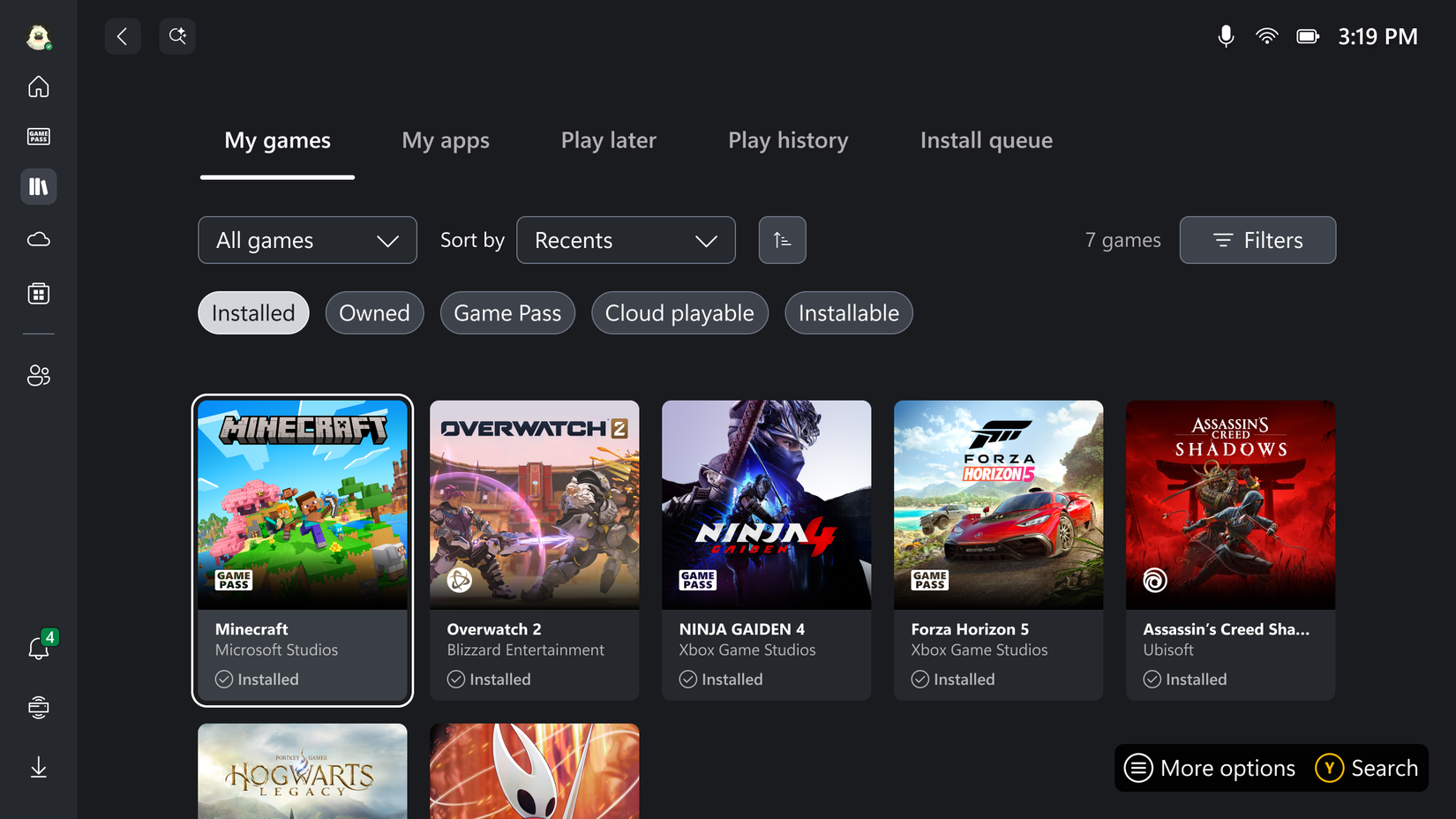
Yes, pretty much. Microsoft has confirmed that Project Helix will play "your Xbox and PC games." Reporting from multiple sources as well as public comments made by Bond strongly suggest that the next Xbox is a Windows-based device. Windows Central’s Corden reports that the Xbox Ally handheld is “essentially an early version of what the next Xbox is going to be like.” The Ally’s Xbox Full Screen Experience gives Windows a console-like interface that will work with controllers and TV displays.
There are positives and negatives to this Windows approach. Positives: Project Helix, as hinted by Bond, will be an open platform able to run other stores and game launchers, like Steam and Battle.net, giving Xbox players access to an unimaginably vast library of games.
The downside? Windows is not an elegant or efficient platform for gaming, and based on mixed results with the Xbox Ally, the Full Screen Experience in its current form needs a lot of work before it’s as reliable and quick to use as other console interfaces.
Will Project Helix be backward-compatible?
Yes! Microsoft has already committed to this, despite the machine’s similarity to a PC.
Currently, Windows gaming devices like the Xbox Ally don’t play Xbox console games. But, announcing Microsoft’s partnership with AMD on the new machine, Bond vowed “compatibility with your existing library of Xbox games.”
It’s not clear how Microsoft’s engineers will achieve this, but it’s a must for the new console. From Xbox One onward, Xbox has spearheaded a backward-compatibility drive that forced the hand of Sony and Nintendo, and set in stone players’ expectations that they can carry their game libraries forward. There’s no going back now.
What games will Project Helix have?
It’s too early to name next-gen Xbox titles with any certainty, particularly with the possibility that the console will be delayed past 2027.
It’s worth pointing out that its library will be quite unlike any console’s before it, though. Given its price point, Project Helix may not have any exclusive games, with Xbox Series X remaining active as an entry-level Xbox. On the other hand, it will be able to run vast numbers of PC titles, past and present. As long as they play well with a controller, you should be able to load them.
In terms of Microsoft-published titles that are likely to launch on Project Helix, The Elder Scrolls 6 is perhaps the biggest. A full-blown new Halo game from the franchise's new stewards, Activision, would make a good partner for a new console. Among third-party games, Larian’s new Divinity seems a likely bet for next-gen. And perhaps The Witcher 4 will end up as a next-gen, or cross-gen, title.

What will the next Xbox controller be like?
It seems unlikely that radical change is coming to the controller for the next-generation Xbox. The Xbox Series controller is itself a pretty subtle refinemenet of the design of the Xbox One pad, after all, and Microsoft's pad design has become the closest we have to a standard across console and PC gaming.
Recent reports indicate that Microsoft has a few controller prototypes in development, including a third-generation Elite controller. These variously have features like haptic feedback, adaptive triggers, a LED status bar, and direct cloud connection. It seems like Microsoft may be seeking to catch up with the features of Sony's more advanced PS5 DualSense controller.
What are Project Helix’s tech specs? How powerful will it be?
Nothing has been announced about the next Xbox’s technical makeup yet, beyond the fact that Microsoft will partner with AMD once again — just like Sony. The two console makers have used similar AMD architectures in their last two generations, making third-party developers’ lives much easier.
Just like PS6, Project Helix is reportedly based on AMD’s forthcoming Zen 6 processor and RDNA 5 graphics unit. And just like PS6, the target performance is 4K resolution at 120 frames per second (which is not to say that all games will hit this target — far from it).
However, there are rumors that Microsoft is looking to substantially outgun its rival on power this time around. Moore’s Law is Dead says the final silicon has a larger die size than PS6’s, is more similar to a PC than a console design, and will be both more powerful and more expensive than the Sony device. These reports are consistent with bullish comments made by former Xbox boss Bond in 2024. She said the Xbox team was targeting “the largest technical leap you will have ever seen in a hardware generation.”
More power than PS6 for a higher price: It’s a risky strategy that hasn’t been tried in the console market for a long time. Will it work?
What about the next-gen Xbox handheld?
Plans for Xbox to make its own handheld, which had been openly discussed by former CEO Phil Spencer, were thought to have been sidelined after Xbox's partnership with Asus on the ROG Xbox Ally handheld gaming PCs. But Fortune's reporting says that a handheld is planned for release as early as holiday 2027, and has been the subject of tussles between the Windows and Xbox teams over how its operating system will be built. For her part, Sharma has apparently used the phrase "family of devices" when discussing Helix.
Aside from that, nothing is known about the handheld device. It seems safe to assume that, unlike the Xbox Ally, it run Xbox console games. Will it also run PC games, as Helix will? We'll find out, perhaps sooner than later.