
1978 Penny Coin Value (Errors List, D, S & No Mint Mark Worth) 2026
A 1978 penny is generally worth face value ($0.01), but high-grade specimens (MS67+ RD) or those with errors can be worth $5 to over $100, with rare examples hitting over $1,000. The year 1978 produced three distinct varieties: the no mint mark (Philadelphia) circulation strike, the 1978-D from the Denver Mint, and the 1978-S proof coin from San Francisco. Understanding mint mark differences, error types like filled mint marks or missing FG initials, and the critical importance of original red luster (RD) grading is essential to determining true value.
- 1978-D pennies in MS67+ RD condition can sell for $500 or more, despite a mintage of 4.28 billion.
- 1978-S proof coins are collector-only issues; PR70 Deep Cameo examples exceed $1,000 in value.
- The missing FG error on 1978-D pennies is a rare reverse variety that adds significant premium.
1978 Penny Values: Mint Mark Comparison 2026
The three mint marks for 1978 pennies represent vastly different production contexts and collector markets. The Philadelphia Mint (no mint mark) and Denver Mint (D) produced billions of coins for circulation, while the San Francisco Mint (S) produced a small batch of proof coins specifically for collectors. This fundamental difference drives their value structures.
Mint Mark Values: D, S, and Philadelphia Compared
| Mint Mark | Mintage | Typical Circulated Value | High-Grade Value (MS67+ RD or PR70 Deep Cameo) |
|---|---|---|---|
| 1978-D (Denver) | 4,280,233,400 | $0.01 | $500+ |
| 1978-S (San Francisco Proof) | 3,127,781 | N/A (proofs not circulated) | $1,000+ |
| 1978 (Philadelphia, no mint mark) | 5,558,605,000 | $0.01 | $170 |
The high-grade value disparity between the 1978-D ($500+) and the 1978 no mint mark ($170) is notable given their similar massive mintages. This difference stems from collector preference for Denver-minted Lincoln Memorial cents in top grades, coupled with the 1978-D’s potential for valuable error varieties like the missing FG or repunched mint mark. The 1978-S proof commands the highest premium because it was never intended for circulation; its proof-only status and the pursuit of Deep Cameo contrast make PR70 examples exceptionally valuable.
What Makes a 1978 D Penny Special?
The 1978-D penny is the most sought-after circulation strike of the three, primarily due to its error potential and conditional scarcity. Despite a mintage of over 4.2 billion, finding a 1978-D in pristine MS67+ condition with original red luster is difficult because most were heavily circulated. Furthermore, the Denver Mint issue exhibits several collectible errors. A filled mint mark appears “blob-like” due to overused dies. A repunched mint mark (RPM) shows a doubled or misaligned “D” from hand-punching the die before 1990. Most significantly, the “No FG” error—missing the initials of Chief Engraver Frank Gasparro on the reverse near the Lincoln Memorial—is a rare variety that adds a substantial premium. These characteristics make the 1978-D the key date for circulation strikes in this series.
High-Grade Premiums: MS67+ RD and PR70 Deep Cameo
- MS67+ RD for 1978-D: Minimum value $500+. This grade represents exceptional preservation with full original red luster.
- MS67 RD for 1978-P (Philadelphia): Minimum value ~$170. High-grade but slightly less premium than the Denver equivalent.
- PR70 Deep Cameo for 1978-S: Minimum value $1,000+. Proof coins with perfect cameo contrast between frosted devices and mirrored fields.
These grading thresholds are the absolute cutoff for significant premiums because below MS67, even for copper coins, the market is flooded with common examples. The “RD” (Red) designation is non-negotiable for high value; any toning to brown (BN) or red-brown (RB) drastically reduces desirability and price. For proofs, the Deep Cameo (DCAM) finish is the pinnacle, with strong contrast being essential for top dollar.
Error Varieties on 1978 Pennies: Filled Mint Marks, RPMs, and Missing FG
Error coins represent a major pathway to value for 1978 pennies beyond simple condition rarity. The most frequently documented and collected errors for this year are filled mint marks, repunched mint marks, and the missing FG reverse variety.
Filled Mint Marks: Blob-like D and S from Worn Dies
A filled mint mark occurs when the working die used to strike the coin becomes worn or clogged, causing the “D” or “S” to appear partially filled, blobby, or incomplete rather than sharp and clear. This is caused by overuse of the die before it was replaced. Both Denver (D) and San Francisco (S) mint marks can exhibit this trait on 1978 pennies. The value impact is a slight premium over a normal strike, but the coin must still be in good condition and the filled feature clearly visible to be desirable to error collectors.
Repunched Mint Marks (RPM): Doubled or Misaligned Punches
Before 1990, mint marks were hand-punched into each working die by mint workers. This manual process sometimes resulted in the punch being applied twice or at a slightly different angle, creating a repunched mint mark (RPM). On a 1978-D penny, an RPM appears as a doubled, shadowed, or misaligned “D” under magnification. These are a well-known and actively collected variety for the Denver Mint issue. The degree of doubling and the clarity of the repunch affect the premium, which can range from a few dollars to a significant amount for a dramatic example in high grade.
Missing FG Initials: Rare Reverse Error on 1978-D
The “FG” initials on the reverse of the Lincoln Memorial cent represent Frank Gasparro, the Chief Engraver of the U.S. Mint. They are located on the bottom step of the Memorial, just below the center. A 1978-D penny missing these initials is a recognized error variety. This occurs when the die was prepared without the engraver’s punch or the punch failed to transfer. This error is specific to the Denver Mint issue and is considered a collectible variety that adds a meaningful premium, especially when the coin is also in high grade. It is one of the most valuable non-proof errors for the 1978 series.
Grading Standards: Why MS67+ RD and PR70 Deep Cameo Matter
For modern copper coins like the 1978 penny, grading is the single most important factor determining value. The Sheldon scale, from 1 to 70, measures wear and strike quality. For 1978 pennies, two specific thresholds dominate the market: MS67+ RD for circulation strikes and PR70 Deep Cameo for proofs.
Color Matters: Red (RD) vs. Brown (BN) vs. Red-Brown (RB)
Copper coins are graded not just on wear but also on color retention. Red (RD) indicates the coin retains its original mint luster with no significant oxidation or toning. This is the highest designation and is essential for achieving top market value. Red-Brown (RB) means the coin shows a mix of original red and brown toning, typically about 50/50. Brown (BN) indicates the coin has fully oxidized to a brown color. For a 1978 penny to be worth hundreds or thousands of dollars, it must be RD. BN and RB coins are worth only a small premium over face value, regardless of grade.
Grading Thresholds: MS67+ RD and PR70 Deep Cameo
| Grade | Coin Type | Minimum Value |
|---|---|---|
| MS67+ RD | 1978-D (Denver) | $500+ |
| MS67 RD | 1978-P (Philadelphia) | ~$170 |
| PR70 Deep Cameo | 1978-S (San Francisco Proof) | $1,000+ |
These are the absolute minimum thresholds for significant premiums. An MS66 1978-D, while a high grade, will not command the $500+ price point. The “+” in MS67+ indicates that even within MS67, coins with superior eye appeal and luster can exceed the baseline. For proofs, PR70 is perfect, and the Deep Cameo (DCAM) designation requires strong contrast between the frosted design and mirror-like fields; without cameo, a PR70 proof is worth less.
How Rare Are High-Grade 1978 Pennies?
The combined mintage for all 1978 pennies exceeds 9.7 billion (5.56 billion Philadelphia + 4.28 billion Denver + 3.1 million proofs). This astronomical number makes them common in lower grades. However, conditional rarity is extreme. Very few of these billions survived the last 48 years in MS67+ condition with full red luster. Wear from circulation, improper storage leading to toning, and the simple passage of time have destroyed the mint luster on the vast majority. High-grade examples are a tiny, tiny fraction of the original mintage, which is why they command such premiums despite the coin’s overall abundance. The market for these coins is driven by the scarcity of survivors in top condition, not the scarcity of the coin itself.
For penny values across different years, see guides on 1859 Indian Head Penny Coin Value (Errors List & No Mint Mark Worth), 1863 Indian Head Penny Coin Value (Errors List & No Mint Mark Worth), and 1877 Indian Head Penny Coin Value.
Despite being minted in the billions, a 1978 penny in perfect condition with original red luster or a desirable error can still be worth $1,000 or more. The most surprising finding is that conditional rarity trumps absolute mintage. Your immediate action: examine your 1978 pennies under good light. Look for vibrant red (RD) color, check the mint mark for being sharp or “filled,” and inspect the reverse of any 1978-D for the presence or absence of the “FG” initials. If your coin appears to be in high grade with red luster or shows a clear error, consider submitting it to a major grading service like PCGS or NGC for authentication and grading.
Frequently Asked Questions About 1978 Penny
What year is penny worth $2000000?
Rare & Valuable $2,000,000 1974 D Aluminum Lincoln Cents Are Still In Circulation Today! Penny.
How much does a 1978 no mint penny weigh?
This 1978 Cent Penny is a rare find for collectors and enthusiasts alike. With a weight of 3.1 grams and the absence of a mint mark, this coin is a unique addition to any collection. The coin features the iconic Lincoln Memorial on the obverse and was minted in the United States.
Is there a 1978 S penny?
This 1978-S Lincoln Cent is a rare find for collectors! Graded PR69 by PCGS, this coin boasts a stunning red color and a beautiful proof strike. Made of 95% copper and 5% zinc, it weighs 3.11 grams and has a diameter of 19.00 millimeters.
Related Coins
 Penny
Penny
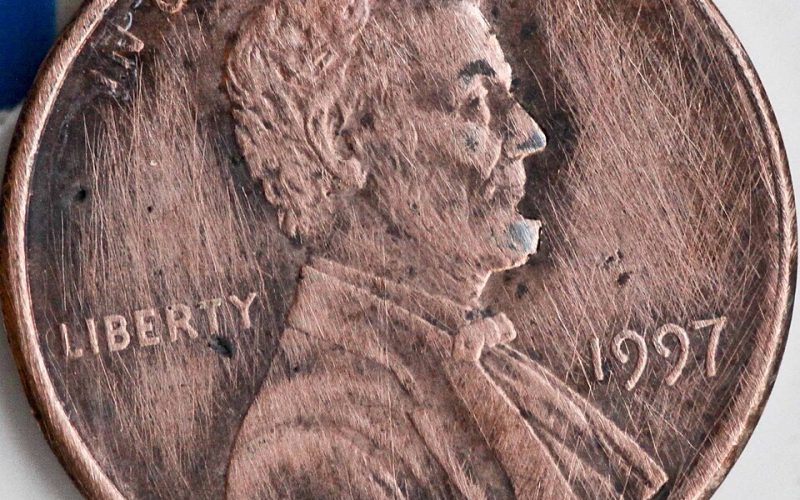
1997 Penny Coin Value (Errors List, “D”, “S” & No Mint Mark Worth)
1997 pennies are generally worth face value ($0.01) in circulated condition, but high-grade examples and specific error varieties can command significant premiums, as seen with…
 Penny
Penny
1929 Wheat Penny Coin Value (Errors List, “D”, “S” & No Mint Mark Worth)
1929 Wheat Penny values range from $0.25 to $5,000+ in 2026. Compare Philadelphia, Denver (D), San Francisco (S) mint marks. Error varieties like RPM, off-center, cuds add premiums.
 Penny
Penny
1973 Penny Coin Value (Errors List, “D”, “S” & No Mint Mark Worth)
Discover the 1973 penny value for no mint mark, D, and S varieties. Learn which errors like Railroad Rim and DDO increase worth. Get 2026 pricing and grading tips.