
1983 Penny Coin Value (Errors List, “D”, “S” & No Mint Mark Worth)
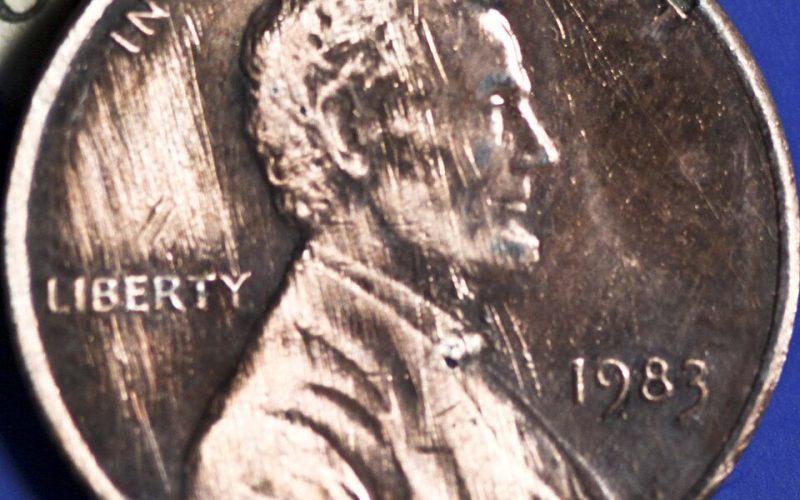
Most 1983 pennies are worth just one cent, but rare error varieties can sell for thousands of dollars. The most valuable is the copper transitional error, struck on leftover 1982 bronze planchets, which commands $3,000 to $15,000 or more in certified condition. Equally sought after is the Double Die Reverse error, featuring dramatic doubling on the reverse text, with values from $300 to $7,000+. Understanding the differences between mint marks—no mint mark (Philadelphia), D (Denver), and S (San Francisco)—is essential for accurate valuation.
- The most valuable 1983 penny errors are the Double Die Reverse ($300–$7,000+) and the copper transitional error ($3,000–$15,000+), both requiring expert verification.
- Standard 1983 pennies have low value: no mint mark (Philadelphia) $0.10–$0.50, 1983-D (Denver) face value to $200+ for high-grade red coins, and 1983-S (San Francisco) proofs at $1–$3.
- Identify valuable errors by weighing the coin (3.1g = potential copper error vs. 2.5g standard) and inspecting the reverse for strong doubling on “ONE CENT” and “E PLURIBUS UNUM.”
1983 Penny Error Values: Double Die, Copper, and Off-Center
For a complete overview of penny values across all years, consult our main Penny guide.
High-Value 1983 Penny Errors: Price Comparison Table
| Error Type | Description (Key Visual/Text Clue) | Value Range (MS-65+) | Rarity Note |
|---|---|---|---|
| Double Die Reverse (DDR) | Strong, clear doubling on reverse text: “ONE CENT” and “E PLURIBUS UNUM.” Occurs on no-mint-mark (Philadelphia) coins only. | $300 – $7,000+ | Only about 5,000 examples minted before die was corrected. One of the rarest modern doubled die errors. |
| Copper Transitional Error | Struck on leftover 1982 bronze planchets instead of standard 1983 zinc core. Must weigh 3.1g (vs. 2.5g standard). | $3,000 – $15,000+ | Extremely rare. Only a handful known to exist. Weight is the only definitive test; many fake copper-plated coins circulate. |
| Off-Center Strikes | Date or design shifted off-center, with incomplete rim or missing elements. Value increases with percentage of off-center. | Premium varies: $50 – $500+ depending on severity and grade | Relatively common error type, but high-percentage off-center strikes in high grades are scarce and desirable. |
The extreme price differences among these errors stem primarily from rarity. The Double Die Reverse (DDR) was minted in only about 5,000 examples before the die was corrected, making it one of the scarcest modern doubled die errors. The copper transitional error is even rarer, with only a handful known, as it resulted from accidental use of leftover 1982 bronze planchets during the 1983 material switch. Off-center strikes vary in frequency, but high-grade examples with significant misalignment are scarce.
Collector demand also drives premiums. Modern errors like the 1983 DDR are highly popular because they represent a clear, dramatic mistake that is still affordable for many collectors compared to rare early-date coins. The copper error appeals to those interested in the historical metal transition from bronze to zinc, adding a narrative element. Off-center errors offer visual distinctiveness that attracts error specialists. All three types command significant premiums over face value, with the copper transitional error representing the pinnacle of 1983 penny rarity.
For a deeper look at early error varieties, see our 1859 Indian Head Penny guide.
The Double Die Reverse (DDR): How Doubling Creates a $7,000 Error
A doubled die error occurs when the hub (master die) is doubled during the die-making process, transferring that doubling onto all coins struck from that die. The 1983 Double Die Reverse (DDR) is one of the most dramatic and valuable modern examples. It features strong, clear doubling on the reverse text—specifically “ONE CENT” and “E PLURIBUS UNUM.” The doubling is so pronounced that it is easily visible under low magnification.
Importantly, the 1983 DDR occurs exclusively on no-mint-mark (Philadelphia) coins. Not all doubling on 1983 pennies is valuable; many minor die variations exist that carry little premium. The DDR is distinguished by its heavy, well-defined doubling on both words of the reverse inscription. For top values of $300 to $7,000+, coins must grade MS-65 or higher, with the most valuable examples reaching MS-67 or MS-68. This error remains one of the most sought-after modern doubled die varieties among collectors.
The doubled die phenomenon also appears in other years; our 1863 Indian Head Penny article covers similar errors.
Copper Transitional Error: The Rare 3.1g Bronze Penny
In 1983, the U.S. Mint changed the composition of the Lincoln cent from 95% copper (used in 1982 and earlier) to 97.5% zinc core with a thin copper plating. A transitional error occurred when a small number of leftover 1982 bronze planchets (blank discs) were accidentally used in 1983 production. These coins weigh 3.1 grams, compared to the standard 1983 zinc cent’s 2.5 grams.
The weight difference is the only definitive test. Visual inspection alone cannot confirm a copper error because some individuals have plated zinc cents with copper to mimic the error. A genuine copper transitional error will have the darker, older toning typical of bronze coins, but weight is non-negotiable. These errors are extremely rare, with only a handful certified by grading services like PCGS and NGC, and command $3,000 to $15,000+ in MS-65 or better condition. Any 1983 penny weighing between 3.0g and 3.2g should be considered a candidate for professional authentication.
1983 Mint Mark Values: Philadelphia, Denver, and San Francisco
1983 Penny Values by Mint Mark: Philadelphia, Denver, San Francisco
- No Mint Mark (Philadelphia): Standard circulated coins are worth $0.10 to $0.50. The Double Die Reverse (DDR) error is exclusive to this mint and worth $300–$7,000+ in high grades.
- 1983-D (Denver): Common circulation coins are worth face value. High-grade “red” specimens (MS-68) can reach $100–$200+. No major error varieties are associated with the Denver mint for 1983.
- 1983-S (San Francisco): Proof coins only. Common proofs in good condition are worth $1–$3. No circulation strikes were produced at San Francisco in 1983.
The San Francisco Mint has produced proof coins for collectors since the 1960s, while circulation strikes are handled by Philadelphia and Denver. In 1983, San Francisco struck only proof Lincoln cents, identifiable by the “S” mint mark below the date and a sharper, mirror-like finish. Denver and Philadelphia produced the vast majority of 1983 pennies for everyday transactions, with Philadelphia producing the no-mint-mark coins and Denver adding the small “D” mint mark. The proof-only status of the 1983-S explains its consistent small premium over face value, even in average condition.
Mint mark placement and significance have evolved over time; explore the 1877 Indian Head Penny for historical context.
Proof vs. Business Strike: Why 1983-S Pennies Are Different
Proof coins are specially manufactured for collectors using polished dies, specially prepared planchets, and often multiple strikes to achieve a sharp, mirror-like appearance. The 1983-S Lincoln cents are proof-only issues, meaning they were never released for general circulation. They feature a cameo effect where the design elements appear frosted against a mirror background, and the details are noticeably sharper than on business strikes.
Even common 1983-S proofs in average condition carry a modest premium of $1 to $3 over face value simply because they are uncirculated and were sold directly to collectors. In contrast, business strikes—the no-mint-mark (Philadelphia) and 1983-D (Denver) coins—were mass-produced for everyday use. These circulation coins typically show wear and have a standard satiny finish. The proof status makes the 1983-S inherently more collectible, though it lacks the major error varieties found on Philadelphia coins.
Proof coinage techniques have changed since the 19th century; our 1888 Indian Head Penny guide compares vintage proofs to modern issues.
How to Identify Valuable 1983 Pennies: Weight, Doubling, and Mint Marks
Weighing Your Penny: The Critical 3.1g vs. 2.5g Test
Weighing is the single most important test for identifying the copper transitional error. Standard 1983 Lincoln cents have a zinc core with copper plating and weigh exactly 2.5 grams. The rare copper error, struck on a solid bronze planchet leftover from 1982, weighs 3.1 grams—a difference of 0.6 grams that is easily detectable with a precise scale.
Invest in a digital scale accurate to at least 0.01 grams; these are available for under $20 online. Place the penny on the scale carefully, avoiding touching the coin’s surfaces. A reading between 3.0g and 3.2g should be considered a strong candidate for professional authentication, as wear or cleaning can slightly alter weight. Visual inspection alone cannot confirm a copper error, as many fakes exist. If your 1983 penny weighs 3.1g, handle it by the edges and contact a reputable grading service like PCGS or NGC for verification.
Weight is a key diagnostic for many vintage errors as well; see the 1889 Indian Head Penny for examples.
Visual Identification: Spotting Doubling and Mint Marks
A basic visual inspection can quickly flag potential errors before weighing or professional grading. Follow these steps:
- Mint Mark: Locate the small mint mark letter beneath the date on the obverse (front) of the coin. A “D” indicates Denver, an “S” indicates San Francisco, and the absence of a mint mark means Philadelphia. This first step tells you which mint produced the coin and what value range to expect.
- Double Die Reverse (DDR): Using a magnifier (10x power is ideal), examine the reverse (back) of the coin. Look for clear, separated doubling on the text “ONE CENT” and “E PLURIBUS UNUM.” The doubling should be obvious and appear on both phrases. Minor die doubling is common and not valuable; the DDR features heavy, well-defined doubling that is unmistakable when genuine.
- Other Errors: Check for off-center strikes by seeing if the date or design elements are shifted from the coin’s center. Also look at the spacing between the letters “A” and “M” in “AMERICA”—a wider spacing (“Wide AM”) can carry a small premium, though it is far less valuable than the DDR.
Visual inspection remains the first line of defense; our 1890 Indian Head Penny article provides a detailed error spotting guide.
Common Mistakes to Avoid: Cleaning and Handling
Never clean, polish, or scrub a 1983 penny—or any collectible coin. Cleaning destroys the original surface and patina, which are critical to a coin’s value. Even a potential $15,000 copper transitional error can be reduced to face value if cleaned, as collectors prize original, undisturbed surfaces.
Always handle coins by their edges, using clean fingers or cotton gloves, to avoid transferring oils or causing scratches. Store coins in proper holders such as Mylar flips or hard plastic cases. For any 1983 penny that shows signs of being an error (unusual weight, visible doubling, etc.), the only correct action is to have it graded by a third-party service like PCGS or NGC. These services authenticate, grade, and encapsulate coins in sealed holders, which is essential for realizing maximum value in the marketplace. Attempting to clean or alter the coin to “improve” its appearance will only diminish its worth.
Proper handling preserves value across all collectible coins; learn more in our 1893 Indian Head Penny preservation tips.
The most surprising fact about 1983 pennies is that the most valuable errors exist because of a material transition. The copper transitional error resulted from leftover bronze planchets from 1982 being accidentally used in 1983, the first year of zinc-core cents. This simple production mistake created a handful of coins worth tens of thousands of dollars.
Take action today: obtain a digital scale accurate to 0.01g, and weigh every 1983 penny you own. If any read 3.1g, handle it exclusively by the edges and contact a professional grading service such as PCGS or NGC for authentication. You could be holding a coin worth 15,000 times its face value.
Frequently Asked Questions About 1983 Penny
Which 1983 penny is worth a lot of money?
How much is it worth? The U.S. minted about 7.7 billion pennies in 1983 but only about 5,000 of them have the doubling error. The mistakes and the rarity are what drive the price up, with some of the coins, known among collectors as the 1983 Penny With No Mint Mark, selling for as much as $7,000.
How can you tell if a 1983 D penny is copper?
Those ones without the mint mark below 83. And the ones minted in Denver with the Denver mint mark below the 1983. All you have to do is use a lightweight scale to weigh a penny from 1983.
What errors increase a 1983 penny’s value?
Conclusion. While nearly all the circulating 1983 pennies are copper-coated zinc coins only worth a cent, exceptions like solid copper type or doubled die reverse error make it worthwhile to inspect each coin.
How rare is a 1983 penny with no mint mark?
It is estimated that only 5,000 of these coins were made without a mark. The coin is circulated and has a business strike type. The color of the coin is RD, and it has a fineness of 0.75.
Related Coins
 Penny
Penny
1934 Wheat Penny Coin Value (Errors List, “D” & No Mint Mark Worth)
1934 Wheat Penny Value by Mint Mark: Current Price Ranges … There’s no section with ID 456. I think the “Section 1” might refer to…
 Penny
Penny
1965 Penny Coin Value (Errors List & No Mint Mark Worth)
1965 penny value in 2026: common coins worth $0.01-$0.10, but rare errors like doubled die or dime planchet can fetch $300+. No mint mark explained.
 Penny
Penny
1909 Indian Head Penny Coin Value (Errors List, “S” & No Mint Mark Worth)
Get 2026 values for 1909 Indian Head pennies. Compare 1909-S ($350-$20,000+) vs no mint mark ($4-$1,100+). Learn about S over Horizontal S errors and grading. Current prices.