
1995 Penny Coin Value (Errors List, “D”, “S” & No Mint Mark Worth)
Most 1995 pennies are worth exactly one cent, but a few rare errors can sell for thousands. The most valuable is the 1995 Doubled Die Obverse (DDO), which can fetch $50 to over $4,800 depending on condition. High-grade 1995-S proof pennies also command premiums, with perfect PR70 examples exceeding $2,500. These values stem from low mintages and production mistakes. This guide breaks down 1995 penny values by mint mark—Denver (D), San Francisco (S), and Philadelphia (no mint mark)—and details how to identify the key error varieties that increase worth. For comprehensive penny values across all years, visit our Penny hub.
- Typical 1995 pennies (no mint mark, D, or S in circulated condition) are worth $0.01 face value.
- The 1995 Doubled Die Obverse (DDO) is the most valuable error, with prices ranging from $50 for lower grades to over $4,800 for high-grade examples.
- 1995-S proof pennies in perfect PR70 condition can exceed $2,500, while lower-grade proofs sell for $2-$5.
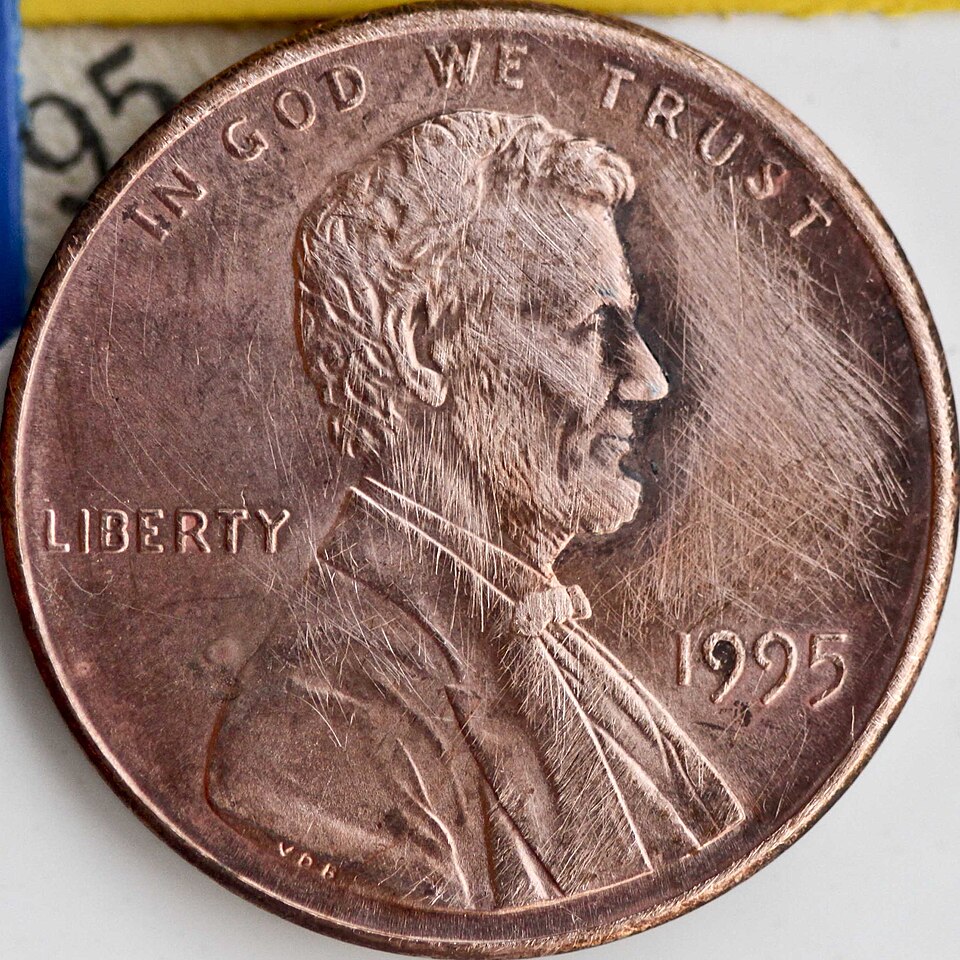
- Check for doubling on “LIBERTY” and “IN GOD WE TRUST,” and note mint marks: D (Denver), S (San Francisco), or no mint mark (Philadelphia).
Most Valuable 1995 Penny Varieties: Doubled Die & High-Grade Proofs
The most valuable 1995 pennies are the Doubled Die Obverse (DDO) errors and high-grade proof coins, with prices ranging from $50 to over $4,800 for DDOs and up to $2,500+ for perfect proofs. These varieties represent the pinnacle of 1995 penny collecting due to their scarcity and desirability. While billions of common circulation strikes exist, error coins and pristine proofs are exponentially rarer, creating significant market premiums. Understanding these top-tier varieties is essential for anyone looking to identify valuable 1995 pennies in their collection or change.
1995 Doubled Die Obverse (DDO) Values: From $50 to $4,800+
The 1995 Doubled Die Obverse (DDO) is the most sought-after error in the series, with values spanning from $50 for well-worn examples to over $4,800 for flawless MS-70 specimens. Both Philadelphia (P) and Denver (D) mint marks produced DDOs, though the 1995-P is generally scarcer and commands slightly higher prices at comparable grades.
| Grade | 1995-P DDO Value | 1995-D DDO Value |
|---|---|---|
| MS-65 | $50-$150 | $60-$180 |
| MS-66 | $150-$300 | $180-$350 |
| MS-67 | $300-$800 | $350-$900 |
| MS-68 | $800-$1,500 | $1,000-$2,000 |
| MS-69 | $1,500-$3,000 | $2,000-$3,500 |
| MS-70 | $3,000-$4,800+ | $3,500-$5,000+ |
Prices increase dramatically at MS-67 and higher because very few 1995 pennies survived in such pristine condition. With billions minted, most were heavily circulated, making high-grade examples scarce. Collectors pay a significant premium for coins with original mint luster and no wear, especially for error varieties like the DDO.
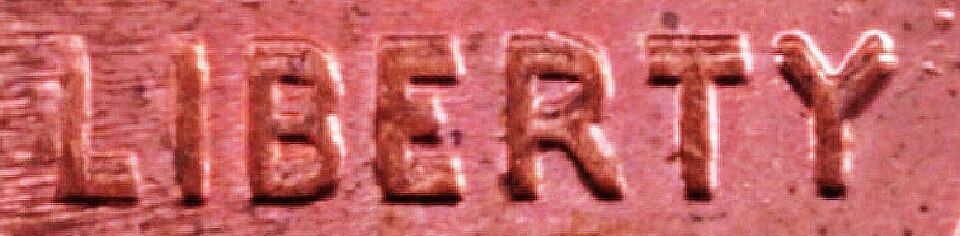
To authenticate a 1995 DDO, examine the obverse letters under 10x magnification. Clear doubling is visible on “LIBERTY” and the “IN GOD WE TRUST” inscription, particularly on the ‘U’ in ‘TRUST’. The date may also show slight doubling, but the lettering is the most reliable indicator. Be cautious: many 1995 pennies exhibit minor doubling from die wear that is not valuable. True DDOs show sharp, well-defined doubling from a misaligned die impression.
1995-S Proof Penny Values: $2 to $2,500+
The 1995-S proof penny is a low-mintage specialty coin that carries premiums even in modest condition. All 1995-S pennies were struck as proofs at the San Francisco Mint exclusively for collectors, with a mintage of 2,797,481 (approximately 2.8 million).
- Mintage: 2,797,481 proof coins
- Value by grade:
- PR-65: $2-$5
- PR-66: $5-$10
- PR-67: $10-$25
- PR-68: $25-$100
- PR-69: $100-$500
- PR-70: $2,500+
- Key identifiers: All 1995-S pennies are proof-only issues with an “S” mint mark. They feature a Wide AM (separated A and M in AMERICA) on the reverse, as all San Francisco proofs used Wide AM dies.
- Why proofs are valuable: Proof coins are struck with specially polished dies and planchets, resulting in mirror-like fields and frosted devices. The 1995-S proof has a low mintage of just 2.8 million compared to billions of circulation strikes, making it inherently scarce. The cameo contrast (frosted devices on mirrored fields) in high-grade examples adds desirability.
Even lower-grade 1995-S proofs sell for a few dollars, while perfect PR70 specimens can exceed $2,500. The combination of low mintage, proof-only status, and the Wide AM variety makes the 1995-S a standout in the series. Older Indian Head pennies like the 1859 Indian Head Penny also have proof issues that are highly valued.
High-Grade Uncirculated Pennies (MS67+ RED) Command Premiums
Beyond error varieties, high-grade uncirculated 1995 pennies in MS67+ RED condition can also carry significant premiums. “MS67+” refers to Mint State 67 or higher on the Sheldon scale, indicating a coin with excellent luster and minimal contact marks. “RED” denotes the original copper color without toning or oxidation.
For 1995 pennies, surviving in MS67+ RED is challenging due to the massive mintage figures—over 7 billion for the Denver mint alone. Most were released into circulation and suffered wear. Coins that were saved early and stored properly can achieve these grades, but they are rare. For example, a 1995-D in MS68 condition can sell for $140 to $200 or more, as noted in recent appraisals. The original red color adds a substantial premium over brown-toned examples, as collectors prize the mint-fresh appearance.
When evaluating a 1995 penny, condition is paramount. A coin graded MS67 RED might be worth 10 to 100 times its face value, while the same date in lower grades remains at one cent. Always check for both grade and color when assessing value. Other dates like the 1863 Indian Head Penny also show condition-driven premiums.
1995 Penny Values by Mint Mark: Denver, San Francisco & Philadelphia
1995 penny values vary significantly by mint mark. Denver (D) and Philadelphia (no mint mark) issues are common and typically worth face value, except for error varieties. San Francisco (S) proofs are scarcer and command premiums even in lower grades. Understanding the baseline values for each mint mark helps collectors identify when a coin is worth more than its face value.
1995-D Penny: Mintage Over 7 Billion, Value Typically Face Value
The 1995-D penny was minted in enormous quantities: 7,128,560,000 coins. This high mintage keeps common circulated examples at face value. However, uncirculated grades and error varieties can be worth significantly more.
| Condition | Value |
|---|---|
| Circulated (Good to Very Fine) | $0.01 |
| Uncirculated, MS-68 | $140-$200+ |
For circulated coins (Good to Very Fine), the value is typically $0.01. Uncirculated coins start around $0.10 for MS-60 and increase with grade, with MS-68 commanding $140-$200+. The jump to MS-68 reflects the scarcity of high-grade survivors from such a massive mintage. The 1995-D Doubled Die Obverse (DDO) is a notable exception that can reach thousands of dollars, as covered earlier.
1995-S Proof Penny: Low Mintage of 2.8 Million
The 1995-S penny exists only as a proof coin; no circulation strikes were produced at San Francisco this year. With a mintage of 2,797,481, it is the scarcest regular-issue 1995 penny by a wide margin.
- Mintage: 2,797,481 (proof only)
- Value by grade: See previous section for detailed breakdown; even PR-65 examples sell for $2-$5, while PR-70 exceeds $2,500.
- Key identifiers: Look for the “S” mint mark and Wide AM on the reverse.
- Comparison to circulation strikes: Proofs are struck with specially polished dies and planchets, giving them a mirror finish and frosted devices. This quality, combined with low mintage, ensures that even lower-grade 1995-S proofs are worth more than common circulation pennies.
No Mint Mark (Philadelphia) Pennies: Face Value in Circulation
Philadelphia-minted 1995 pennies bear no mint mark. These are the most common, with mintage figures comparable to Denver. In circulated condition, they are worth exactly one cent. Uncirculated examples generally fetch less than $1, as the AI Overview notes, because high-grade survivors are scarce but not as scarce as error varieties. The 1995-P penny is a Close AM variety, which is standard for Philadelphia issues and does not add value unless paired with a doubling error. The most valuable Philadelphia 1995 penny is the Doubled Die Obverse (DDO), covered earlier, which can reach $50 to over $4,800 in high grades. For other Indian Head penny dates, such as the 1877 Indian Head Penny, mint mark and condition similarly drive value.
Identifying 1995 Penny Errors: Close AM, Doubling & Other Varieties
To spot valuable 1995 pennies, look for two key error types: Close AM/Wide AM letter spacing and doubled die obverse doubling. These varieties are identifiable with magnification and knowledge of mint-specific standards. While many 1995 pennies show minor anomalies, only specific, well-documented errors carry significant premiums.
Close AM vs Wide AM: Which 1995 Pennies Have Touching Letters?
The “AM” in “AMERICA” on the reverse can appear either touching (Close AM) or separated (Wide AM). For 1995 pennies, the mint mark determines which is normal:
- Philadelphia (no mint mark) and Denver (D): All struck with Close AM, where the serifs of the A and M touch.
- San Francisco (S): All struck with Wide AM, where there is a clear gap between the A and M.
This distinction is crucial because a Close AM on a 1995-S would be an error, but all standard 1995-S are Wide AM. Conversely, a Wide AM on a 1995-D or Philadelphia would be unusual but not necessarily valuable unless combined with other errors.
To check, use a 10x magnifier or a ruler with millimeter markings. The gap (or lack thereof) between the A and M is often less than 0.5mm. Close AM is standard for P and D, so finding one does not increase value unless the coin also exhibits doubling or is in exceptionally high grade. Wide AM is standard for S proofs, so it’s expected.
Remember: the AM variety alone is not a major value driver for 1995 pennies; it’s the doubling errors that command the highest premiums. The AM concept also applies to earlier Lincoln and Indian Head cents, such as the 1888 Indian Head Penny.
How to Spot Doubling on 1995 Pennies: Key Areas to Check
- LIBERTY: The most prominent doubling appears on the word “LIBERTY” on the obverse. Look for thick, shadowed, or notched letters, especially on the ‘B’ and ‘T’.
- IN GOD WE TRUST: The word “TRUST” often shows clear doubling on the ‘T’ and ‘U’. This is a key diagnostic for the 1995 DDO.
- Date: The date “1995” may exhibit slight doubling, but it’s usually weaker than the lettering.
- Reverse lettering: Some doubled die errors also affect the reverse, such as “ONE CENT” or “UNITED STATES OF AMERICA”, but these are less common.
- Use 10x magnification: Doubling can be subtle; a loupe is essential.
- Distinguish true DDO from die deterioration: Many 1995 pennies show minor doubling from die wear, which is not valuable. True DDOs have sharp, well-defined doubling from a misaligned second strike.
The most sought-after doubling is on the 1995-P and 1995-D cents. These are the varieties that can sell for $50 to over $4,800. When examining a 1995 penny, start with the LIBERTY and IN GOD WE TRUST inscriptions. If you see clear, consistent doubling, have the coin authenticated by a professional grading service like PCGS or NGC to confirm its variety and condition. Doubled die errors also appear on other series, including the 1889 Indian Head Penny.
Despite billions minted, the 1995-D Doubled Die Obverse remains a stealth rarity because few were saved in high grades. Most 1995 pennies are worth face value, but that could change if you find a DDO or a perfect proof. Next time you check your change, pull out a 10x magnifier and inspect the “LIBERTY” and “IN GOD WE TRUST” letters on any 1995 penny. Clear doubling could mean you have a coin worth $50 or more. Focus especially on 1995-D and 1995-P cents, as these are the most likely to exhibit the coveted DDO error. For the 1995-S proof, look for the “S” mint mark and Wide AM; even lower-grade proofs are worth a few dollars. Explore other key dates like the 1890 Indian Head Penny and 1893 Indian Head Penny for more collecting insights.
Frequently Asked Questions About 1995 Penny
How much is a 1995 D penny worth?
Estimated value of 1995-D Lincoln Memorial Penny is worth $0.36 or more in uncirculated (MS+) mint condition. The coin has a 'melt value' of $0.0074 (bare minimum metal value of coin).
What is the error on a 1995 D penny?
Because it’s the letters on the front that are doubled. And you actually really especially see it on TRUST on the U. So if you ever come across a 1995 Denver penny with the D underneath the date.
What to look for in a 1995 D penny?
This 1995 D Lincoln Penny is a rare find for coin collectors. With a Close 'AM' variety and Doubled Die Obverse and Reverse errors, this penny is sure to be a valuable addition to any collection. The RB color and Denver mint location add to the uniqueness of this coin.
Which 1995 penny is worth $5000?
Detail at link below 👇👇👇 TOP 4 VALUABLE 1995 PENNY TYPES 1. 1995 Doubled Die Obverse (DDO) – Worth Up to $5,000 How to Spot It: Clear doubling in “LIBERTY” or the date “1995” (use 10x magnification)…
How much is a 1955 D penny worth?
As of 2024, the value of a 1955-D Wheat Penny typically ranges from $0.10 to $2 in circulated condition. Uncirculated examples can be worth between $2 and $10 or more, depending on their quality.
Related Coins
1898 Indian Head Penny Coin Value (Errors List & No Mint Mark Worth)
An 1898 Indian Head penny typically sells for $3 to $4 in average circulated condition, but mint-state examples can exceed $60, and high-grade specimens can…
 Penny
Penny
1952 Wheat Penny Coin Value (Errors List, “D”, “S” & No Mint Mark Worth)
I’ll write the comprehensive SEO article following the exact outline and specifications provided. Let me ensure all data is current for 2026 and properly structured.…
1920 Wheat Penny Coin Value (Errors List, “D”, “S” & No Mint Mark Worth)
A 1920 Wheat Penny is worth $0.50 to $2 in circulated condition, but high-grade examples can sell for $1,000 to $15,000+ depending on mint mark…