
1982 Penny Coin Value (Errors List, “D”, “S” & No Mint Mark Worth)
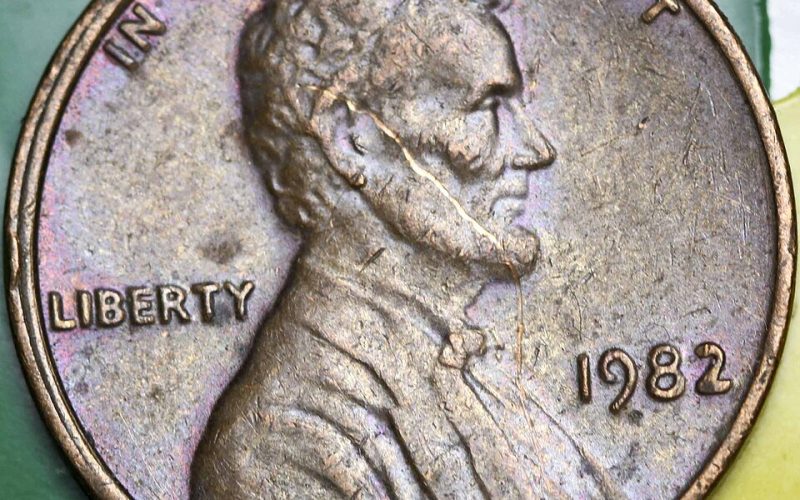
The most valuable 1982 penny is the 1982-D Small Date Copper, worth $10,000 to $25,000 or more in 2026, due to its extreme rarity as a transitional error. But several other 1982 penny varieties—including no-mint-mark copper cents and proof ‘S’ mint marks—also command significant premiums. This guide lists current values for all 1982 penny errors and mint marks, and shows you exactly how to identify the valuable ones in your pocket change. In 1982, the U.S. Mint transitioned from copper to zinc cents, creating eight distinct varieties that collectors seek today. Understanding which mint marks, date sizes, and weights signal value can turn a common penny into a small fortune.
- The 1982-D Small Date Copper (3.11g) is the king, worth $10,000–$25,000+ in high grades.
- Weight is critical: 3.1g indicates copper (valuable if small date), 2.5g indicates zinc (usually common).
- Small date vs large date matters: small date “2” has a curved tail, “8” has a smaller top loop.
- Most 1982 zinc pennies are worth face value, but high-grade uncirculated can reach $1–$5.
- Proof ‘S’ mint mark pennies are not rare errors but still fetch a few dollars.
Which 1982 Penny Errors and Mint Marks Are Worth the Most Money?
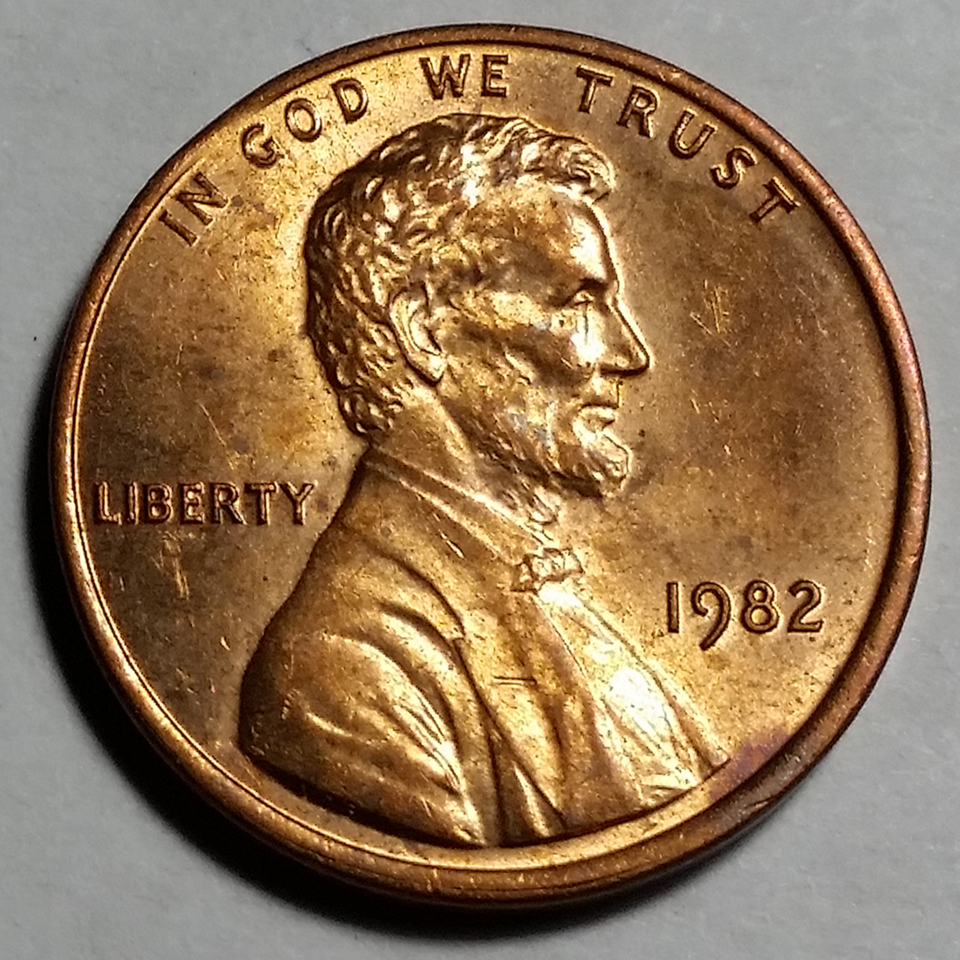
Complete 1982 Penny Value Table by Variety and Mint Mark
The 1982 penny series is complex due to the mid-year composition change. The table below lists the six main varieties and their 2026 values.
| Variety | Mint Mark | Weight | Date Size | Typical Value (2026) | Notes |
|---|---|---|---|---|---|
| 1982-D Small Date Copper | D | 3.11g | Small | $10,000–$25,000+ | Extremely rare transitional error; only a handful known. |
| 1982 Small Date No Mint Mark Copper | None | 3.11g | Small | Rare; comparable to 1982-D Small Date Copper | Valued highly, often similar to the 1982-D error. |
| 1982 Small Date No Mint Mark Zinc | None | 2.5g | Small | $40–$250+ | Uncommon in high grades. |
| 1982-D Large Date Copper | D | 3.11g | Large | Premium over face | Less desirable than Small Date variant, but still worth more than face value. |
| 1982 Large/Small Date Zinc | D or none | 2.5g | Large or Small | $0.01–$5 | Common; most 1982 pennies are this type. |
| 1982-S Proof | S | Varies | Large or Small | $2–$10 | Proof coins with collector value; not rare errors. |
The 1982-D Small Date Copper sits at the top of the value hierarchy. This coin is a transitional error: the Mint had largely switched to zinc planchets (2.5g) but a few copper blanks (3.11g) remained in the production line at the Denver Mint. These copper planchets were struck with small date dies, creating an extremely rare combination. Only a handful of examples are known to exist, explaining the $10,000–$25,000+ price tag. The Philadelphia Mint also produced a small number of copper small date cents (no mint mark), which are similarly rare and valuable, often fetching comparable prices. The rarity of these coins is compounded by the fact that they were not recognized as errors at the time, so many entered circulation and were lost to wear.
The fundamental divide is between copper (3.11g) and zinc (2.5g) composition. Copper cents are inherently more valuable because they contain precious metal and are scarce. Any 1982 penny weighing 3.1g is a candidate for high value, but the small date feature multiplies the premium. Zinc pennies are common and typically only worth face value, except for the small date no-mint-mark variety, which is uncommon in high grades and can reach $40–$250. Understanding this weight distinction is the first step in identifying valuable 1982 pennies. For a complete overview of penny values across all dates, visit our Penny value guide.
What 1982 Penny Is Worth $10,000? The Small Date Copper Answer
The $10,000+ question on many collectors’ minds is: which 1982 penny is worth that much? The answer is the 1982-D Small Date Copper. This coin is the holy grail of 1982 pennies due to its extreme rarity. Only a few examples are known to exist, all struck on copper planchets (3.11g) with the small date design at the Denver Mint. The small date is characterized by a curved tail on the “2” and a smaller top loop on the “8”. The combination of copper composition, small date, and “D” mint mark makes this variety uniquely valuable. In 2026, prices for this coin range from $10,000 for lower grades to over $25,000 for pristine MS-65+ specimens.
Equally rare is the 1982 Small Date No Mint Mark Copper (Philadelphia). This variety shares the same copper composition and small date, but lacks the “D” mint mark. It is also highly sought after and can reach similar price levels, though it may be slightly more available than the Denver version. Both coins are transitional errors from the year the Mint switched materials, and their survival rate is extremely low.
If you encounter a claim that a 1982 penny is worth $18,000, it is likely referring to a high-grade example of one of these copper small date varieties. The $18,000–$25,000 range is realistic for MS-65+ coins certified by major grading services. Lower-grade examples still command five-figure sums but may be priced closer to $10,000–$15,000. The key takeaway: any 1982 penny that weighs 3.1g and has a small date—whether from Denver or Philadelphia—is a potentially life-changing find. Collectors of earlier Indian Head pennies should also see our 1859 Indian Head penny value guide.
How Condition Impacts Value: MS65+ Premiums
Condition grading dramatically influences 1982 penny values, but its effect varies widely between varieties. For the rare copper errors—the 1982-D Small Date Copper and the 1982 Small Date No Mint Mark Copper—condition is everything. A coin graded MS-65 (Mint State) or higher can be worth ten times or more than the same coin in a lower grade. For instance, a 1982-D Small Date Copper in MS-65 might sell for $15,000–$20,000, while an MS-63 example could be only $5,000–$8,000. The difference becomes even more pronounced at the highest grades; an MS-67 can exceed $25,000. This is because high-grade survivors of these transitional errors are exceptionally scarce.
In contrast, for common zinc pennies, condition has minimal impact on value. Most 1982 zinc cents are worth face value in circulated condition. Even in uncirculated (MS-60 to MS-63), they typically only reach $1–$5. The one exception is the 1982 Small Date No Mint Mark Zinc, which is already uncommon and can see a premium in high grades—$40–$250 for MS-65+ examples. Thus, if you find a copper 1982 penny, preserving its condition is crucial to maximize its worth. For zinc pennies, unless it is the small date no-mint-mark variety, condition matters little. Our 1863 Indian Head penny guide discusses condition impacts in detail.
How to Identify Valuable 1982 Pennies: Weight, Date, and Mint Mark Guide
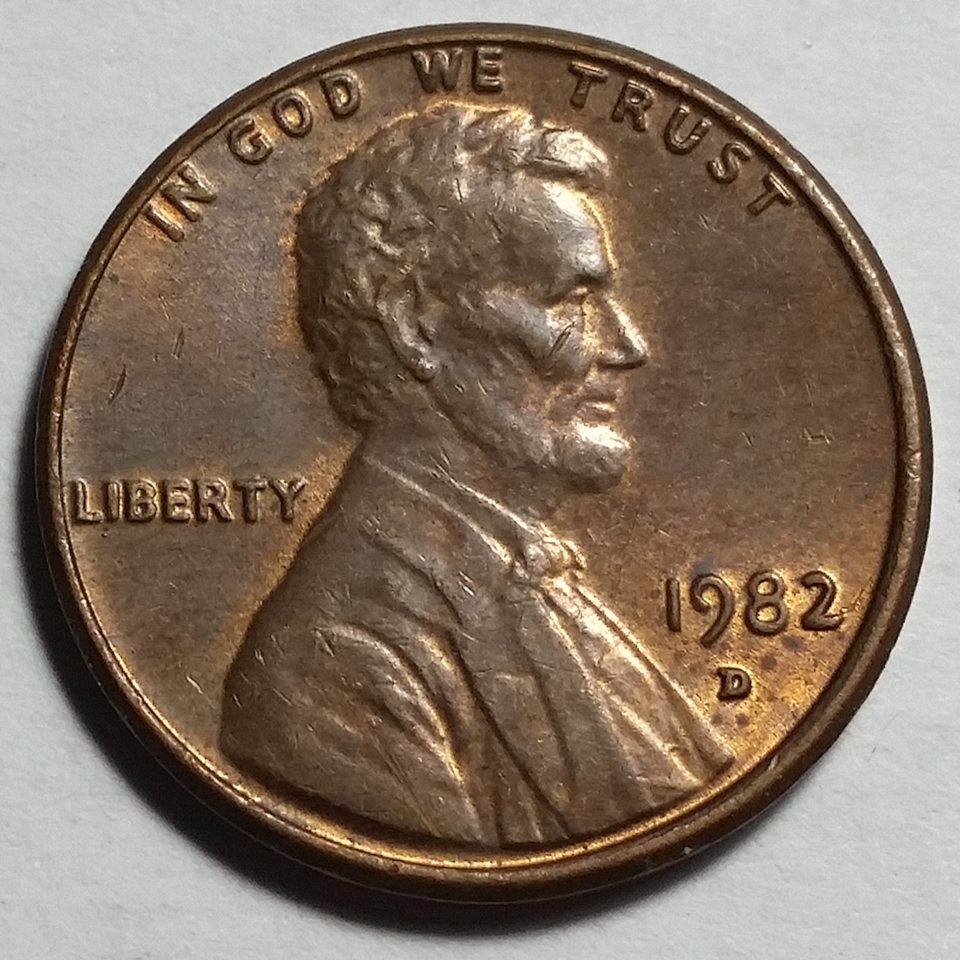
Weight Test: The Critical 3.1g vs 2.5g Difference
- Obtain a precise scale: Use a digital scale that measures to at least 0.01g. A coin-specific scale or a kitchen scale works well.
- Weigh the penny: Place the 1982 penny on the scale and record the weight. Ensure the scale is calibrated and the coin is clean of debris.
- Interpret the result: If the weight is approximately 3.1g (typically 3.11g), the penny is copper—this is a potential high-value error if it also has a small date. If the weight is approximately 2.5g, the penny is zinc—usually common, unless it is a small date with no mint mark (which can still be worth $40–$250 in high grades).
- Why weight is decisive: The U.S. Mint’s 1982 composition change means copper planchets are rare. A 3.1g reading immediately flags a coin worth closer inspection, while 2.5g indicates the common zinc composition.
Weight is the most efficient first filter because it instantly separates the scarce copper planchets from the billions of zinc cents produced. A digital scale costs under $20 and provides definitive results. Always weigh before examining other features to prioritize your search. If the coin weighs 3.1g, proceed to check the date size and mint mark, as these determine whether it is the ultra-rare 1982-D Small Date Copper or another copper variety. If it weighs 2.5g, it is likely common unless it meets the small date no-mint-mark criteria. For similar identification techniques applied to earlier Indian Head pennies, see our 1877 Indian Head penny value guide.
Date Size Identification: Small Date vs Large Date Features
The date size on 1982 pennies is a critical differentiator, as the small date is significantly rarer and more valuable than the large date. To distinguish them, focus on the digits “2” and “8”:
Small Date: The “2” has a distinctly curved tail that sweeps down and to the left, creating a rounded shape. The “8” features a smaller, tighter top loop that is more closed. The overall date appears compact and delicate.
Large Date: The “2” has a nearly straight vertical tail with only a slight curve, giving it a more angular appearance. The “8” has a larger, more open top loop that is rounder and more spacious. The date looks bolder and heavier.
These differences are subtle but consistent across all 1982 pennies. The small date was used only during the early production months before the die was replaced with the large date version. As a result, small dates are much less common, especially on copper planchets. When examining a 1982 penny, use a magnifying glass if necessary to compare the date size to known examples. Remember that the mint mark (D, none, or S) is separate from date size and must be checked as well. A small date with a “D” mint mark and 3.1g weight is the most valuable combination. On heavily worn coins, the date may be indistinct, making size determination difficult. In such cases, weight becomes even more important. However, for coins in good condition, the date size is clearly visible. Collectors should familiarize themselves with the differences by viewing side-by-side comparisons online or in reference books. The small date’s rarity means that even a zinc small date with no mint mark can be worth $40–$250, while a large date zinc is common and worth only face value. Our 1888 Indian Head penny guide also covers date variations for that year.
Mint Mark Guide: D, No Mint Mark, and S Proofs
The mint mark on a 1982 penny is located on the obverse (front) just below the year. It indicates which facility produced the coin. There are three possibilities:
- D: Denver Mint. This is the most common mint mark for 1982 pennies, but it becomes highly valuable when combined with a small date and copper composition (3.1g). The 1982-D Small Date Copper is the most valuable 1982 penny.
- No mint mark: Philadelphia Mint. These are also common, but like Denver, the copper small date version is extremely rare. The small date zinc (no mint mark) is an exception among zinc pennies, fetching $40–$250 in high grades.
- S: San Francisco Mint. This mint mark appears only on proof pennies, which were sold in special sets. Proof 1982 pennies are not rare errors but still carry a collector premium of a few dollars (typically $2–$10). They are struck with extra care and have a mirror-like finish.
Understanding mint marks helps narrow down which variety you have. Always check for the presence or absence of a “D” or “S” below the date. The vast majority of circulation-struck 1982 pennies are either no mint mark (Philadelphia) or “D” (Denver). The “S” is exclusively for proofs and is not found on regular circulation coins. For more on mint marks across Indian Head pennies, consult our 1889 Indian Head penny value guide.
The Copper vs Zinc Sound Test: Ring vs Dull Thud
- Copper ring: Drop a copper penny onto a hard surface like tile or concrete. It produces a clear, high-pitched ringing sound that resonates.
- Zinc thud: A zinc penny makes a dull, flat thud with no ringing quality.
- Caution: This test can scratch or otherwise damage the coin’s surface. Only use it on coins you can afford to lose, or rely on the weight test first for a non-destructive method.
The sound test exploits the difference in density between copper and zinc. Copper’s higher density creates a resonant ring, while zinc’s lighter composition results in a dead thud. However, because it risks harming the coin, the sound test is best reserved for coins that are already heavily circulated or of low value. For any 1982 penny that might be copper (based on weight), avoid this test to preserve its condition. Our 1890 Indian Head penny guide discusses additional identification methods.
Other 1982 Penny Errors: Repunched Mint Marks and Cud Die Breaks
Repunched Mint Mark (RPM) Errors: How to Spot and Value
Beyond the major varieties, two error types are worth noting: repunched mint marks (RPM) and cud die breaks. A repunched mint mark occurs when the mint mark die is punched more than once, causing a blurry, doubled, or “spread” appearance. On a 1982-D penny, look closely at the “D” under magnification; if it appears fuzzy or shows a ghost image, it may be an RPM. These errors are not as rare as the copper small date but still command premiums. Values range from $2 for a subtle RPM on a circulated coin to $25 or more for a clear, well-preserved example on a high-grade coin. RPMs can appear on both copper and zinc 1982 pennies, and they are relatively common among error collectors.
To spot an RPM, use a 10x loupe and examine the mint mark from multiple angles. The repunching often creates a slight offset or doubling of the letters. While not life-changing, an RPM can add a nice $5–$20 to a coin’s value beyond its normal variety worth. For serious collectors, RPMs are an affordable entry into error coin collecting. For more on mint mark errors, see our 1893 Indian Head penny value guide.
Cud Die Break Errors: Rim Blobs Worth $40–$80+
A cud error is a raised, blob-like area on the coin’s rim caused by a piece of the die breaking off. This leaves a small mound of metal that did not strike properly. On 1982 pennies, cuds appear as irregular, raised spots along the edge, often near the date or mint mark. They are relatively common on modern coins due to die wear, but still add significant value. A typical cud on a 1982 penny can be worth $40–$80, depending on size, location, and the coin’s overall grade. Larger, more prominent cuds near the obverse or reverse designs are the most desirable.
To identify a cud, inspect the rim carefully with a loupe. Look for areas where the metal appears raised or where the design is incomplete. Cuds are different from other rim errors like die cracks (thin lines) or clips (missing metal). They are usually easy to spot once you know what to look for. While not as rare as the copper small date, a cud error can turn an otherwise common 1982 zinc penny into a $50+ coin. Always check the rim of any 1982 penny you are evaluating, as this simple inspection could uncover an extra payday.
While billions of 1982 pennies were minted, the 1982-D Small Date Copper exists in only a handful of examples—yet it could be sitting in your jar because the Mint switched materials mid-year. This transitional error hides among common zinc cents. This week, pull out all 1982 pennies, weigh them on a $10 digital scale, and check the date size. Any 3.1g coin with a small date could be worth $10,000+; even a 2.5g small date zinc can fetch $250. Start your search today—you might strike it rich. Remember to also inspect mint marks and look for repunched mint marks or cud errors, which can add $40–$80 to your coin’s value. With careful examination, your pocket change could hold a small fortune.
Frequently Asked Questions About 1982 Penny
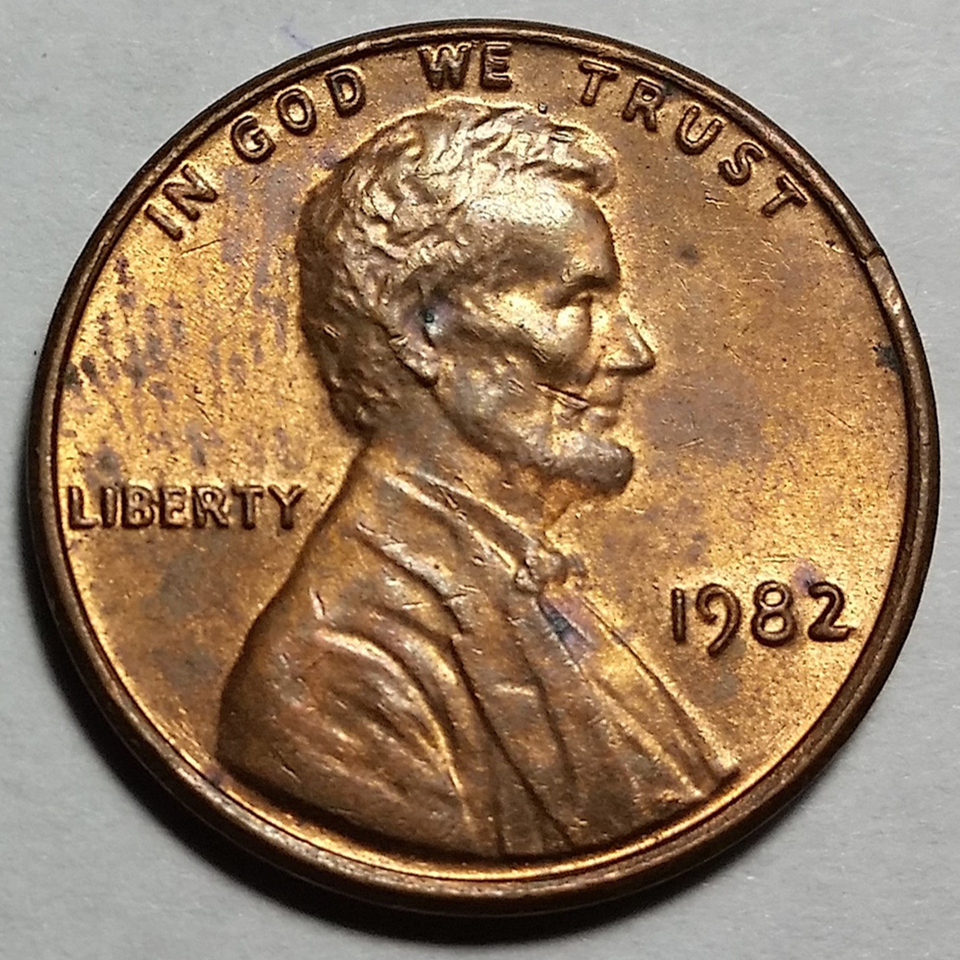
What is the value of a 1982-D Small Date copper penny?
1982-D Small Date Copper pennies are worth $10,000–$25,000+ (2026). They weigh 3.11g and feature a small date, making them extremely rare transitional errors.
How much are 1982 pennies with no mint mark worth?
Small Date Copper (no mint mark) are rare and valued similarly to 1982-D Small Date Copper, $10,000–$25,000+. Small Date Zinc (no mint mark) weigh 2.5g and are worth $40–$250+.
What weight indicates a valuable 1982 penny?
Valuable 1982 penny errors weigh 3.11g (copper) for Small Date varieties. Zinc versions weigh 2.5g and are worth $40–$250+, while copper errors are worth $10,000–$25,000+.
Related Coins
1940 Wheat Penny Value (2026): Errors List, D, S & No Mint Mark Worth
2026 values for 1940 wheat pennies. Compare no mint mark, D, & S mint marks. See error values: Doubled Die Obverse ~$70, Repunched Mint Mark $100-$175+. MS67-MS68 red coins reach $1,500-$7,500+.
 Penny
Penny
1943 Steel Penny Value: Errors List, D, S & No Mint Mark Worth (2026 Guide)
Get the 2026 value of 1943 steel pennies. Learn how mint marks (D, S, no mint) and errors like doubled die affect price. Ranges: $0.10–$0.50 circulated, $5–$30 uncirculated, copper errors $100k–$1.7M.
 Penny
Penny
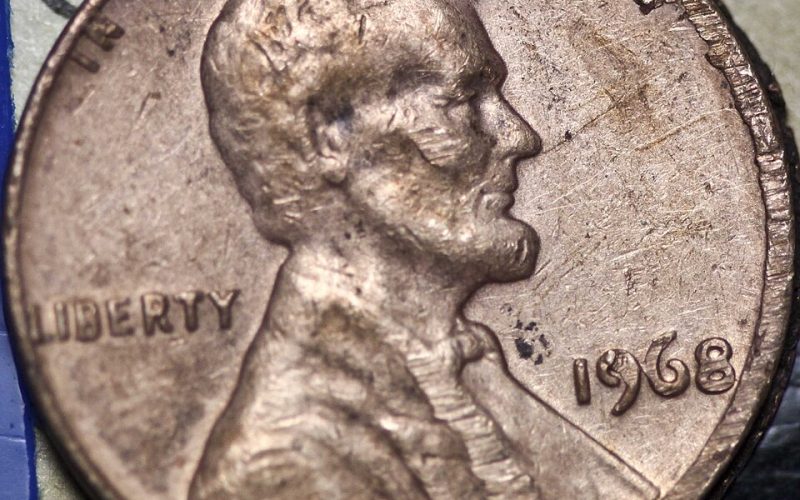
1968 Penny Coin Value (Errors List, “D”, “S” & No Mint Mark Worth)
Complete 2026 value guide for 1968 pennies. Find current prices for 1968-D, 1968-S, and no mint mark varieties. Error list includes RPM, DDO, DDR, and rare varieties worth up to $5,000+.